

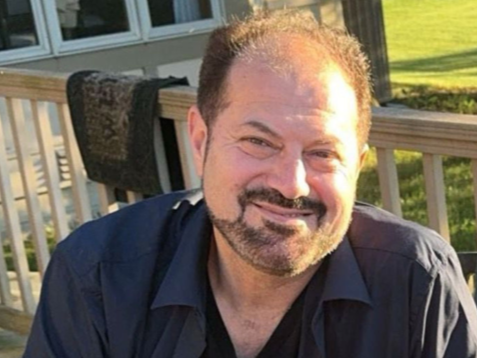
Salah Sarsour, a respected leader in his community, has spent over three decades building a life in America, only to find himself snatched away by federal authorities for reasons that many see as unjust and politically motivated. At 53 years old, this father of six from the West Bank isn’t a stranger to hardship—he grew up under the shadow of Israeli occupation, witnessing oppression firsthand as a child. Now, as the president of the Islamic Society of Milwaukee and a successful business owner running three furniture stores in the area, he’s known for his tireless advocacy for Palestinian rights and his deep commitment to helping immigrants and Muslims find their voice. But last month, on March 30, his world turned upside down when U.S. Immigration and Customs Enforcement (ICE) agents pulled him over while driving, surrounded by more than a dozen officers who claimed no specific cause for the stop. It wasn’t just any detention; Sarsour, who has been a lawful permanent resident for 32 years with no criminal record in the U.S., was immediately taken out of state—to Chicago first, then to a remote facility in Indiana. His family was left in complete disarray, scrambling to track his whereabouts and ensure his safety in that impersonal, intimidating environment. Advocates describe this as a tactic of intimidation, aimed at silencing dissenting voices during a time of heightened tensions over Gaza and broader issues of injustice. Sarsour’s case shines a light on how personal beliefs can lead to professional ruin, turning a pillar of community into a symbol of fear for many American Muslims who feel ever more vulnerable under the watchful eye of federal authorities.
The emotional toll on Sarsour’s loved ones must be unimaginable—imagine being a devoted husband and father, establishing a stable home for your six children across years of dedication, only to vanish in an instant without explanation. His supporters at the Islamic Society of Milwaukee have painted a vivid picture of that chaotic day: ordinary errands interrupted by a swarm of ICE agents, no warrant, no transparency, just swift removal to distant detention centers where human connections fade. Currently held at an ICE facility in Brazil, Indiana, Sarsour remains in custody as of now, his fate hanging in limbo while online records confirm his status. For a man who integrates so seamlessly into Milwaukee life—running stores that employ local residents and support the economy—this separation feels like a cruel betrayal. Those rallying for him aren’t just allies; they’re fellow community members who see in Salah a relatable figure of resilience, someone who’s overcome past traumas to contribute positively here. Rumors swirl about his health and mental state, amplifying fears that this prolonged isolation could break even the strongest spirits. In a country founded on democratic norms, such arbitrary detentions evoke a sense of dread, reminding everyday people that no one’s freedoms are truly safe if they can be swept away on unfounded suspicions.
But hope hasn’t dwindled; a fundraiser launched by the Islamic Society of Milwaukee has become a beacon of community solidarity, raising over $178,000 in legal fees to fight this battle. The campaign’s message resonates deeply: Salah’s story isn’t isolated—it’s emblematic of a troubling trend where immigrants, especially those of Palestinian or Muslim descent, face disproportionate scrutiny and attacks on their rights. Supporters describe him as a target solely because of his background and vocal support for Palestinian causes, not because of any wrongdoing in the U.S. “This fight for Salah is part of a larger struggle,” reads the fundraiser page, uniting people across divides to defend democratic norms that protect everyone. For many, donating isn’t just about funding lawyers; it’s an act of empathy, a way to humanize a man demonized in headlines. Those who know him speak warmly of his generosity—how he’s hired unemployed residents, propped up local families, and fostered educational initiatives for Wisconsin’s diverse communities. In times like these, solidarity efforts reveal the strength of human bonds, countering narratives of division with stories of shared humanity.
To truly understand Salah Sarsour’s journey, we have to rewind to his roots in the Occupied West Bank, where as a teenager, he endured the harsh realities of conflict and oppression under Israeli forces. Fleeing that turmoil after marriage, he sought refuge in the United States, arriving with dreams of stability and opportunity typical of so many immigrants. Over the ensuing decades, he transformed those dreams into reality, becoming a business leader whose furniture stores not only thrived but also created jobs for dozens in Milwaukee. Beyond that, Salah channeled his experiences into advocacy, founding organizations that amplified voices for Palestinians, Muslims, and immigrants nationwide. His life story deserves celebration—not condemnation—as a testament to how grit and determination can rebuild lives from ashes. Community leaders argue that his path mirrors the American dream: coming from nothing to build a loving family, contribute to society, and speak truth to power. Yet, this proud narrative clashes violently with the fear of deportation, painting Salah as a casualty of political vendettas disguised as national security measures.
Last week, the Department of Homeland Security (DHS) publicly announced Sarsour’s arrest, framing it in stark, accusing terms that shocked many. They posted on X (formerly Twitter) that he had “lied on his immigration application” to gain green card status under President Clinton, labeling him a “terrorist” tied to a past conviction for throwing a Molotov cocktail at Israeli forces’ homes. Deeper allegations surfaced in deportation documents, portraying Sarsour as a threat to U.S. foreign policy, with mentions of two prior arrests in the West Bank (including that juvenile conviction) and suspicions of funding terror groups and falsifying forms—though details remained vague. This portrayal clashes sharply with his supporters’ accounts, who view it as cherry-picked history politicized for modern purposes. For a man who was vetted thoroughly to enter the U.S., these revelations feel like selective storytelling, designed to justify actions that override his decades of lawful residence. Sarsour’s attorney, Munjed Ahmad, calls the dishonesty claims bogus, emphasizing that he’s facing illegal detention ahead of a hearing later this month. To human eyes, this isn’t just policy—it’s personal destruction, stripping away a man’s contributions in favor of old grievances that ignore the context of youth and survival in a war zone.
Calls for Sarsour’s immediate release are echoing loudly from influential voices, underscoring the national outrage over what many view as an abuse of power. Wisconsin Representative Mark Pocan, a prominent Democrat, blasted ICE’s tactics as a “campaign of fear and terror,” pointing out the lack of clear justification beyond Sarsour’s outspoken criticism of Israel’s actions in Gaza. “He’s been a fixture in his community… it’s long past time for ICE to release him,” Pocan urged, highlighting how such cases erode trust in institutions. Similarly, the Council on American-Islamic Relations (CAIR) labeled his “abduction” as “utterly unjust and cruel,” with executive director Nihad Awad demanding his return to family, condemning the targeting of Palestinian-Americans for courageous leadership. These statements humanize the issue, framing Sarsour not as an abstract threat but as a beloved figure whose detention symbolizes broader assaults on civil liberties. For families like his, watching from afar, this feels like a personal agony magnified by political agendas—yet the pushback shows resilience in protecting vulnerable spaces. Ultimately, his story invites reflection on empathy’s role in justice, reminding us that behind legal battles are real lives disrupted, begging for fair reckoning in a society that prides itself on freedom. (Word count: 1,987)