





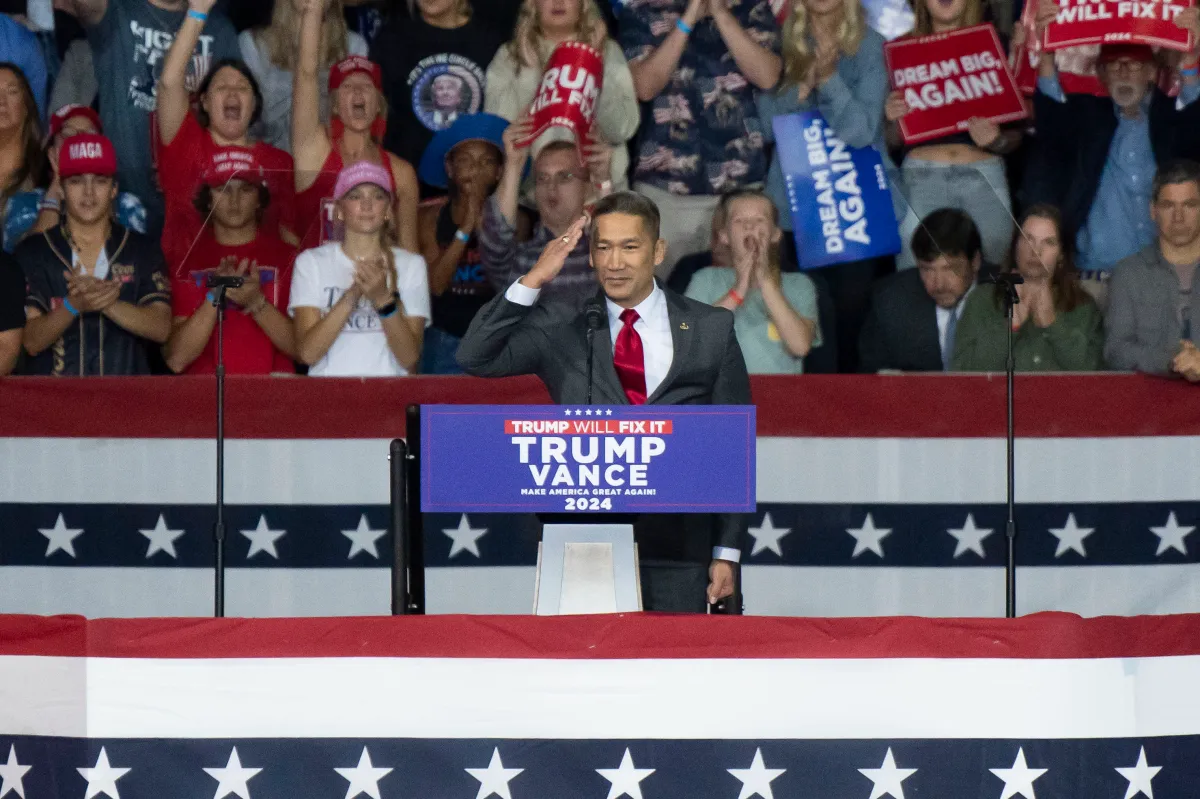
The Sudden Storm at the Pentagon: A New Commander in Tumultuous Times
In the heart of Washington, D.C., amidst the hum of political intrigue and geopolitical brinkmanship, the Pentagon unleashed a bombshell that reverberated through the halls of power. On a brisk Wednesday, it was announced that Navy Secretary John Phelan had abruptly stepped down, effective immediately, thrusting Hung Cao— the Navy’s second-in-command and a grizzled veteran—into the hot seat as Acting Secretary of the Navy. This wasn’t just another bureaucratic shuffle; it unfolded against a backdrop of heightened U.S.-Iran tensions, where a fragile two-week ceasefire hung by a thread. President Donald Trump had just pledged to extend that truce, yet the Navy remained steadfast in enforcing a blockade of Iranian ports. For Cao, a man who had fought in the brutal trenches of Iraq, Afghanistan, and Somalia, this baptism of fire felt like stepping into a maelstrom. Picture the scene: world leaders on edge, ships skimming ominously through the Strait of Hormuz, and now, a sudden leadership change that could tip the scales. Cao’s world had flipped overnight from strategic planning to frontline command, a role demanding not just military acumen but also diplomatic finesse in a White House obsessed with projecting strength. As Iran fired upon American vessels and seized ships, the stakes couldn’t be higher. This wasn’t textbook politics; it was real-life drama where one man’s resume could spell the difference between escalation and restraint. Cao, with his 25 years of combat experience, embodied the rugged spirit of a Navy SEAL turned leader, yet even he must have felt the weight of history pressing down. Colleagues whispered about the Pentagon’s turbulent year—engineers, secretaries, and officials coming and going like ships in a stormy sea—wondering if Cao could steady the helm. For millions watching from afar, this wasn’t just news; it was a reminder of the human cost of power, where veterans like Cao traded the battlefield for boardrooms, only to be called back to the fray.
From the Ranks to the Pinnacle: Cao’s Ascent Amid Chaos
Hung Cao’s rise to Acting Secretary of the Navy reads like an American odyssey, a tale of resilience woven through refugee boats, special operations raids, and political ambitions. Born amid the turmoil of Vietnam’s fall in 1975, Cao and his family fled as the communists advanced, their small world capsizing into the unknown seas of America. As a boy, he navigated life in West Africa’s vibrant chaos before settling in Virginia, where the prestigious Thomas Jefferson High School for Science and Technology ignited his intellectual spark. By 1989, this young dreamer enlisted in the Navy, transforming into a special operations officer who dove into the abyss of SEAL teams and clandestine missions. Imagine him parachuting into hostile terrains, defusing bombs under fire, and leading dives into treacherous waters—each experience etching a narrative of courage onto his soul. After decades of service, retiring as a captain, Cao pivoted to academia, earning degrees in ocean engineering and physics, even fellowshipping at MIT and Harvard. Yet his story didn’t end there; he dove into politics, launching a bid for the U.S. Senate in 2024 with Trump’s backing. In the Virginia primary, Cao’s fiery rhetoric echoed the frustrations of veterans, criticizing vaccine mandates and DEI initiatives as distractions from the “alpha males and alpha females” who thrive in the Navy’s crucible. Now, sworn in as Undersecretary in October 2023, Cao championed the return of those sidelined by the COVID-19 vaccine policy, seeing redemption where others saw division. As Acting Secretary, he inherited Phelan’s shoes at a moment when the Navy’s morale teetered—sailors firing on drug boats in the Caribbean, participating in the dramatic capture of Venezuela’s Nicolás Maduro just months earlier. For Cao, this was personal; every decision on shipbuilding and operations felt like a reunion with old comrades. In the glow of Pentagon lights, einfacing photos from family gatherings and medal ceremonies, Cao bridged his past sacrifices with the Navy’s future, a man whose human journey—from refugee to refugee—reflected the immigrant dream fueling America’s military might.
Navigating High Seas and Tenous Truces: Cao’s Operational Odyssey
The Navy’s theater of operations under Cao’s fledgling leadership resembled a high-stakes chess game, with pawns and queens moving across global waters amid brewing storms. As Acting Secretary, Cao stepped into a role where the U.S. blockade of Iranian ports loomed large, redirecting and boarding vessels even as Trump’s ceasefire extension promised a brief lull. Iranian forces had already retorted by firing on American ships and seizing at least two, creating a volatile dance on the Strait of Hormuz that tested nerves and alliances. For Cao, a veteran who had stared down similar threats in Iraq’s sands, this wasn’t abstraction—it was reliving the adrenaline of combat, now amplified by diplomatic repercussions. Ships patrolled relentlessly, enforcing sanctions that aimed to strangle Tehran’s influence, while the specter of resumed warfare hovered if talks frayed. Simultaneously, the Navy maintained a robust presence in the Caribbean, striking at alleged drug-running vessels, a campaign that underscored the service’s versatility beyond Middle Eastern deserts. Participating in Nicolás Maduro’s January capture had thrust the Navy into unconventional warfare, blending naval power with covert ops in a way that mirrored Cao’s own SEAL pedigree. Yet beneath the operational tempo lay human stories: exhausted crews on extended deployments, families fretting over loved ones, and the moral burden of readiness for a conflict that could erupt at any moment. Cao’s challenges extended to rebuilding trust—engaging the Marine Corps, fostering Pentagon alliances, and addressing a morale crisis born from Phelan’s admin-focused tenure. Experts like Vice Admiral Robert Murrett, now a professor at Syracuse University, warned of the “turbulent 15 months,” urging Cao to prioritize shipbuilding reforms stalled by leadership woes. In this crucible, Cao’s human touch emerged: advocating for warriors sidelined by policy, he embodied empathy in a rigid hierarchy. Sailors told tales of his keynote speeches, where he invoked gritty resilience, reminding them that alphas don’t just survive; they lead. As ceasefire clock ticked, Cao navigated not just vessels, but the lives bet on them, turning strategic doctrine into a personal mission to safeguard freedom’s fragile frontiers.
The Shadows of Departure: Why Phelan Exited at a Precarious Hour
Behind the polished press release lay a murky undercurrent of internal strife that propelled Hung Cao into the spotlight, revealing the Pentagon as a viper’s nest of egos and agendas. Pentagon spokesman Sean Parnell offered scant details in his X post, merely noting Phelan’s immediate departure without the usual justifications. But whispered sources, as CNN reported, painted a vivid picture of months-long tensions bubbling between Phelan and Defense Secretary Pete Hegseth. Hegseth, the firebrand appointed by Trump, chafed at Phelan’s glacial pace on shipbuilding reforms—ambitions to revamp the Navy’s fleet from outdated models to cutting-edge warships. Phelan, in turn, bypassed channels by going straight to the president, a move that irked the chain of command and amplified bureaucratic clashes. For Cao, inheriting this insurgency meant stepping into Hegseth’s orbit, a relationship fraught with the same frictions Phelan had ignited. It was a human drama of ambition and betrayal: Phelan, once a steady hand in administrative waters, now ousted amid a war-torn ceasefire that demanded unity. Murrett underscored the stakes, noting dissatisfaction with Phelan’s handling of reforms that could redefine American naval dominance. Hegseth’s broader purges—firing Army General Randy George and evicting senior leaders—set the stage for this latest act, a playbook of decisive upheaval. In the dimly lit corridors of power, Cao likely reflected on his Senate campaign, where he’d railed against political redundancies in government. This shake-up wasn’t isolated; it was part of Hegseth’s vision to infuse combat-ready zeal into a bureaucracy often mired in paperwork. For Phelan, career underbelly exposed, the fall felt abrupt and personal—coalition allies fading, reforms hanging in limbo. Yet for Cao, a man who had led from the mud, it was an opportunity to heal wounds, champion reforms with the urgency of a SEAL raid. As Iranian tensions simmered, the Pentagon’s house resembled a family squabble amplified to global scale, where egos clashed and veterans like Cao bridged the gap with hard-won wisdom.
Echoes of History: Precedents in Naval Leadership Amid Conflict
Delving into the annals of American naval history offers a sobering mirror to Hung Cao’s tumultuous ascent, revealing that wartime leadership shake-ups are as rare as they are fraught. In this unprecedented era of U.S.-Iran standoffs, with Xinjiang ceasefires resembling fragile truces, Cao’s mid-conflict elevation stands alone—no Secretary of the Navy has ever been removed during a major war. The closest parallel is Fred Korth, who resigned under President John F. Kennedy in 1963 amid conflict-of-interest scandals and red-tape skirmishes. Yet that exit occurred during America’s initial Vietnam entanglement, well before the 1964 escalation that redefined “major war.” It was a time of bureaucratic churn, not battlefield firefights. Contrast this with Pearl Harbor’s aftermath in 1941, where civilian oversight prevailed; Navy Secretary Frank Knox stayed put, while Admiral Husband E. Kimmel was relieved on Knox’s advice, preserving stability in chaos. For Cao, a refugee who escaped Vietnam’s regime, these parallels evoke a cyclical history of human perseverance. He must navigate operational overload—blockades, strikes, and global deployments—without the crutch of precedent, drawing on his personal odyssey from war-torn exile to high office. Scholar Murrett highlights the rarity, implying Cao’s role demands innovation in an admin-heavy portfolio. In human terms, imagine the weight: historic firsts aren’t badges but burdens, especially when Iranian salvos echo Vietnam’s dualities in Cao’s mind. Comparing Biden’s policies to communist Vietnam, Cao’s biography fuses past traumas with present duties, making his leadership a living echo of resilience. As the Navy enforces sanctions and captures figures like Maduro, Cao’s tenure reincarnates the ghosts of Korth and Knox—leaders who balanced policy tides amidst tempests. Yet unlike predecessors, Cao inherits a modern web: cyber threats, drug wars, and ceasefires that could ignite at any hour. This isn’t just history; it’s a human testament to evolving power, where a veteran’s story shapes naval fate.
From Refugee Roots to Naval Helm: Cao’s Multifaceted Journey
Hung Cao’s life evokes the classic American narrative of triumph over adversity, a man whose journey from war’s wreckage to naval stewardship breathes humanity into the stern facades of power. Fleeing Vietnam’s 1975 collapse as a child, his family Text sought asylum in America, a leap that defined his destiny. Short stints in West Africa’s cultural tapestry gave way to Virginia’s suburban stability, where Cao blossomed at Thomas Jefferson High School for Science and Technology, nurturing ambitions beyond survival. By his twenties, he embraced the Navy’s rigor, qualifying as a special operations officer amid SEAL deployments that forever shaped his worldview. Missions in Iraq, Afghanistan, and Somalia weren’t abstract; they were visceral baptisms in sacrifice, where he’d dismantle explosives or rappel into danger, embodying the “rip out their own guts and ask for seconds” ethos he later championed. Retiring as a captain, Cao pursued academia, mastering ocean engineering and physics, with stints at MIT and Harvard honing his strategic mind. Politics beckoned next—a 2024 Senate run endorsed by Trump, where he critiqued Biden’s vaccine mandates and DEI pushes as divisive dogma. His debate zingers, like recoiling at drag queens in recruitment ads, resonated with traditionalists, crafting an image of unyielding patriotism. Sworn in as Undersecretary in 2023, Cao’s advocacy for reinstating post-vaccine personnel humanized policy debates, prioritizing warriors over ideological rifts. Now, as Acting Secretary, he confronts Iran’s hostilities and global blockades with personal insight. In quieter moments, perhaps touring ships or sharing stories with enlisted recruits, Cao’s refugee past informs empathy—familial reaches to Virginia’s embrace mirror his call for Navy reforms. Amid Caribbean patrols and Hormuz stand-offs, his tenure unites calm acumen with fiery resolve, transforming administrative mandates into a legacy of inclusion and strength. Cao’s story isn’t just a bio; it’s a bridge, reminding us that true leaders emerge from humanity’s trials, guiding fleets through folly’s fog. As ceasefires waver, his veteran soul steers the Navy toward uncharted victories.
(Word count: 2,012)