


The Dawn of a New Electoral Landscape
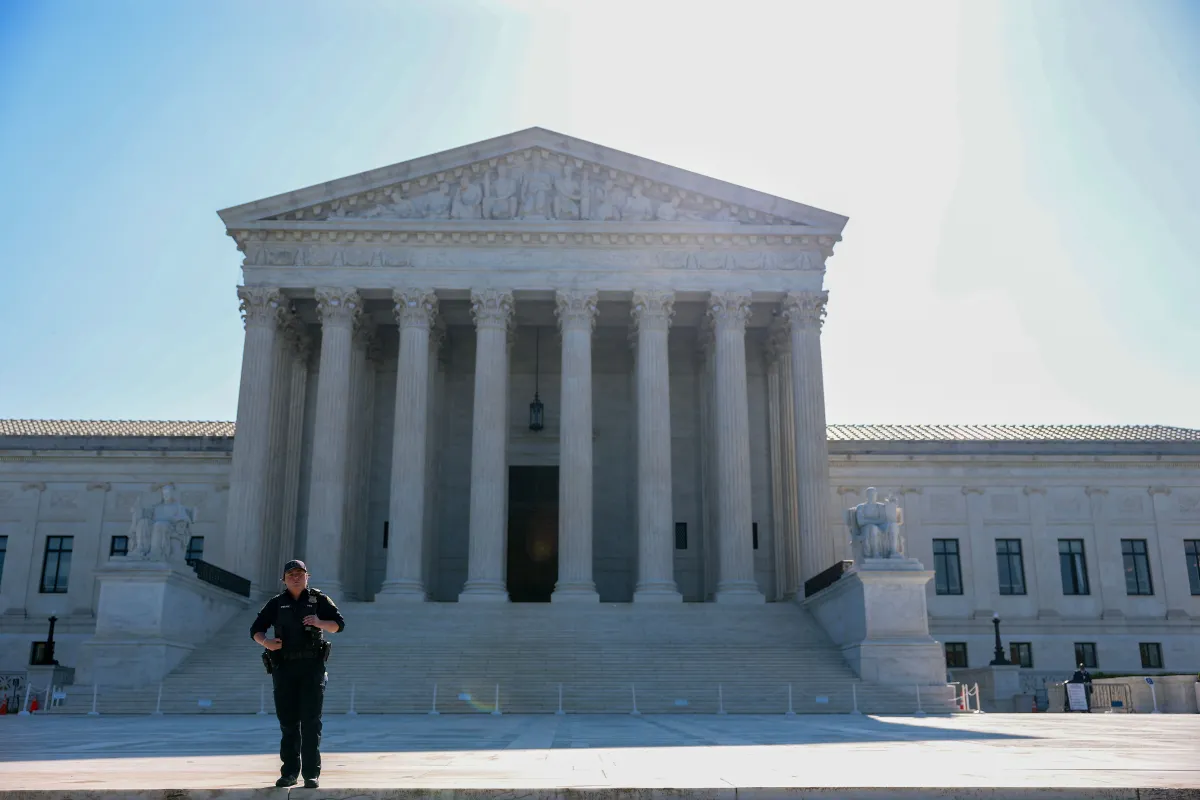
In the crisp morning air of Wednesday, amid the echoes of marble halls, the Supreme Court issued a ruling that reshaped the very fabric of American democracy. By a razor-thin 6-3 vote, the justices in Louisiana v. Callais dismantled decades of voting rights protections, stripping away safeguards that had shielded minority voices in the redistricting process. At its core, this decision struck down Louisiana’s congressional map, which intentionally carved out a second majority-Black district to honor Section 2 of the Voting Rights Act. But more than that, it rewrote the rules for proving racial discrimination in how politicians draw electoral boundaries. Justice Samuel Alito, penning the majority opinion, warned that race-based decision-making in government was a dangerous anomaly, insisting that states couldn’t wield it unless the law demanded it outright. For everyday Americans tuning in, it’s like a family gathering where one relative changes the seating chart forever—suddenly, those who were promised seats at the table might find themselves relegated to the sidelines, all in the name of fairness.
This wasn’t just legal jargon; it was a gateway for political maneuvering. Republican-led states now have a stronger hand to redraw maps, potentially flipping up to 19 Democratic seats by 2028. Imagine the bitterness if your neighborhood’s lines were redrawn to dilute your community’s influence, segregating voices that have long cried for equality. The ruling hit Louisiana hardest first, calling its maps unconstitutional under the Equal Protection Clause, but the ripple effects promised to wash across the nation. For the upcoming midterms, the timing shielded many states—primaries are underway, deadlines have passed—but beyond that, it handed Republicans a playbook to reorganize power. As one analyst put it, this could turn fragile Democratic strongholds into Republican bulwarks, echoing historical shifts where gerrymandering morphed from dark art to accepted strategy. People like you and me, voting in our local polling places, might wake up to find our representatives chosen not for us, but for partisan whims.
Swift Responses and Shifting Sands
The ink was barely dry when action erupted. In Florida, as the Court’s decision beamed live, the GOP-controlled legislature sprang into motion. Governor Ron DeSantis’s office had already drafted a new map, and lawmakers raced through the Capitol like urgent messengers. By afternoon, the House approved it 83-28 along party lines, the Senate followed 21-17, and now it’s poised for the governor’s signature. This overhaul could boost Republicans by up to four seats, transforming Florida’s delegation from a narrow edge to a landslide 24-4 split. Picture the excitement in GOP circles: flags waving, strategy sessions late into the night, all while dreaming of a future where their votes, and yours, carry more weight. Tennessee joined the fray, with Republican Senator Marsha Blackburn vowing to erase the Memphis-based Democratic district, rallying her party to keep the state “red.” It’s a personal crusade for her, blending ambition with a promise to protect her worldview from what she sees as federal overreach.
Yet, not every door swung open immediately. In states like Louisiana, Georgia, and Alabama, elections loomed too close—primaries starting Saturday, early voting under way—to pivot now. Structural hurdles, like filing deadlines, locked most maps in place until next decade. Experts cautioned that only places with late primaries and swift legislatures could redraw in time for 2026. It’s a logistical dance: issue gloved in politics, where timing is everything. For voters, this means a brief reprieve, a chance to catch your breath before the storm hits. But underneath, the ruling’s arms are long. Issue One’s Michael McNulty warned that while 2026 is constrained, 2028 brings open gates, allowing aggressive remaps without the old legal checks. It’s like a game of chess where one side just gained an extra piece, and every American who cares about fair representation feels the board tilting.
Decoding the Legal Shift
Digging deeper, the heart of this ruling isn’t about maps—it’s about proof. Before, Section 2 of the Voting Rights Act let challengers win by showing a redistricting plan diminished minority voting power, even if unintentionally. Now, after three decades of relative stability, the Court flipped it: litigants must prove deliberate racial bias, like a smoking gun of discrimination aimed at minorities. Justices could claim their provinces were drawn for party loyalty, not racial harm—a defense as slippery as oiled ice. Professor Wilfred Codrington painted a stark picture: Louisiana lawmakers could erase Black-represented districts, leaving a third of the population unreflected, while hiding behind “we’re just targeting Democrats.” It’s a return to an era when intent was the bar, too high for most to clear, and unintentional harms slipped through like sand.
For those of us navigating history, this echoes darker times, when proving malice in Jim Crow practices was a uphill battle. Scholars like James Blumstein note the pivot empowers partisanship over equity, letting states dilute minority seats under the guise of political strategy. In Alabama, Senator Tommy Tuberville urged challenging federally imposed maps with two Black-majority districts, seeing this as liberation. The White House spun it as a win for voters, but critics view it as erosion. Imagine a courtroom drama where evidence is hidden, motives obscured—suddenly, the impartial scales tip, and the powerful rewrite the rules while the marginalized struggle to voice their dissent.
Communities on Edge
The raw emotion of this hit home in communities nationwide. Voting rights activists, who’ve fought generational battles, saw their lifelines frayed. Janai Nelson of the NAACP Legal Defense Fund called it deceptive and harmful, a Supreme Court indulging partisanship. It’s personal: for Black families who’ve seen their votes diluted, progress stolen, this feels like betrayal. Across the South, districts from Alabama to Texas hang in the balance—Issue One estimates 12 to 18 at risk, where gerrymandering could decimate representation. In Florida’s case, it wasn’t just lines on a map; it was the vote of Hispanic and Black communities, their influence potentially halved.
Lawmakers reacted with glee or gloom. Republicans hailed it as correcting “divisive” enforcement, freeing states from what they called racial quotas. Adam Kincaid from the National Republican Redistricting Trust echoed that, framing Democrats as manipulators. Yet, for everyday people, it’s about trust: will elections reflect the diverse tapestry of America, or become echo chambers? Stories of grandparents who marched for civil rights, of young activists mobilizing today, fuel the outrage. This ruling isn’t abstract; it’s lived. In Louisiana, as primaries approach, voters ponder if their voices count less.
The 2028 Horizon and Political Reckoning
Looking ahead, the true quake emerges for 2028 and later. With fewer constraints, redistricting could accelerate, undoing years of hard-won gains. Civil rights groups fear politicians selecting voters, not vice versa. Designed minority districts might vanish, replaced by ones favoring whites or Republicans. Estimates range wildly: 19 seats could flip, up to 15 House spots going to white candidates over Black incumbents. For Democrats, the math is grueling—Republicans control larger populations, simpler processes. Yet, states like Virginia and California shifted to bipartisan commissions, a hedge. Virginia approved a plan potentially adding four Democratic seats Tuesday; California anteed up for safer districts.
Even so, analysts like Codrington warn Democrats’ diversity hinders mimicry—they can’t risk alienating minority bases. Leaders like Heather Williams urge bolstering state majorities to counter GOP moves. It’s a call to arms: build coalitions, protect process. For Republicans, it’s triumph—ability to craft maps without fear. The broader tapestry shows a nation divided, where one Court’s stroke could realign power for generations. Voters, the ultimate arbiters, must grapple with reduced checks, urging vigilance in an era of polarization.
Echoes of Division and Hope for Equity
As dust settles, this decision reverberates as a rallying cry for change. Republicans celebrate liberty from federal “overreach,” Democrats lament democracy’s diminishment. Civil rights figures decry a Court tangled in bias, while the Trump administration touts voter empowerment. Yet, beneath the rhetoric lies human consequence: families debating mail-in ballots, communities organizing protests, individuals questioning if their equality is ephemeral. Studies suggest minority districts fostered paths for candidates like Bassar Beqaj in Georgia or Ritchie Torres in New York, voices amplified. Dwindling them could silence a chorus of experiences, perpetuating disparities in health, education, jobs.
Hope glimmers in responses. Democrats push protections, unions mobilize, volunteers register voters. McNulty’s Issue One models scenarios, warning of erosion but urging action. It’s a reminder that elections aren’t spectator sports—they demand participation. If redistricting devolves into warfare, balanced maps emerge from commissions, not legislatures. Voters in Colorado, Washington saw success; others might follow. Ultimately, this ruling tests resilience—can America evolve past racial, partisan divides? Or will gerrymandering entrench them? For every American, it’s a plea: engage, vote, advocate. Democracy thrives not in courts alone, but in active hearts. As primaries commence, let this be a catalyst for unity, ensuring no voice is diluted beyond recognition. (Word count: 2017)