


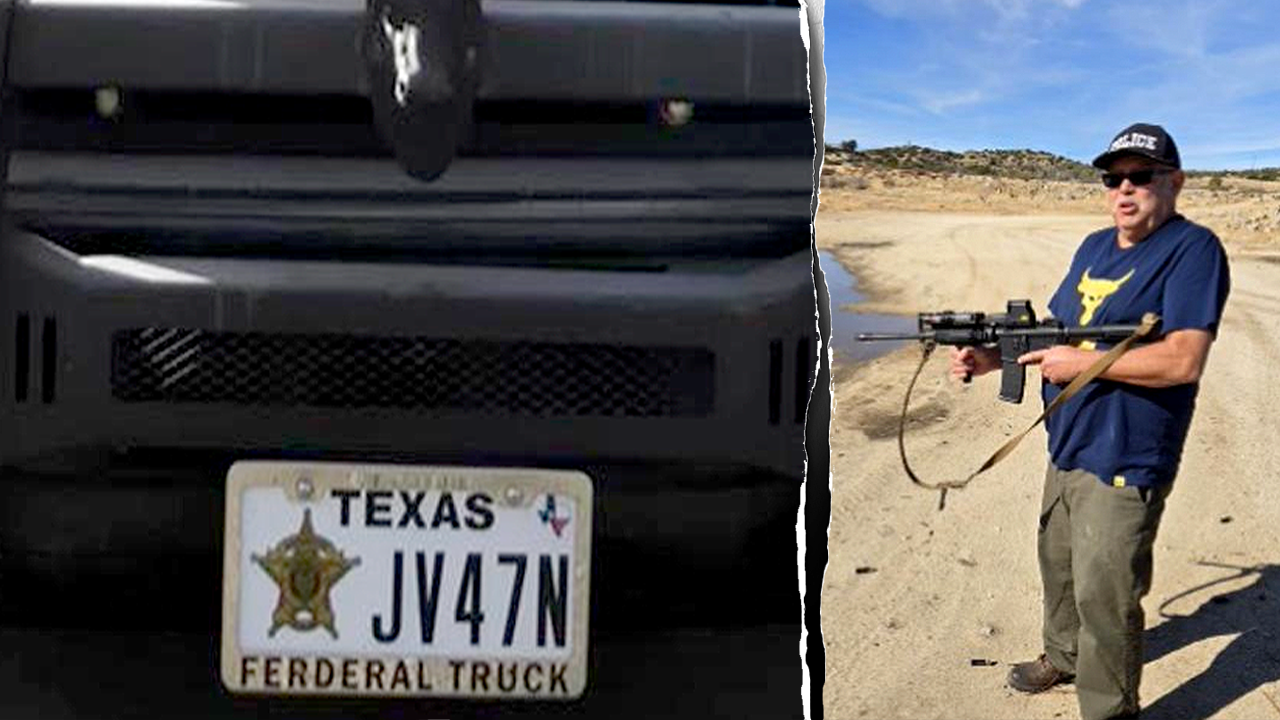
Picture this: a sunny early morning in San Diego, California, where the border buzzes with the usual rhythm of commerce and crossings. It’s January 8, and a federal agent is out on a routine mission, eyes sharp for signs of illegal activity along the streets. Little does he know, he’s about to become part of a bizarre and dangerous real-life drama. Behind him, in a black Ford F-150 that’s been cleverly disguised, is 53-year-old Jaime Ernesto Alvarez-Gonzalez, an illegal immigrant who’s been overstaying his tourist visa for decades. Alvarez-Gonzalez isn’t just cruising; authorities say he was deliberately impersonating a U.S. Border Patrol agent, complete with a tricked-out truck that could fool you at a glance—fake antennas, a dashboard lightbar, Border Patrol stickers, handcuffs dangling from the mirror—like something straight out of a movie set. But here’s the kicker: even the license plate frame has a glaring misspelling: “Ferderal” instead of “Federal.” It worked, though. The real agent spotted this phantom colleague and thought safety first—better abort the mission than risk an undercover op blowing up. Alvarez-Gonzalez, wearing a face mask and a “thin green line” hat (that symbol of support for law enforcement), was hunting for more targets, prosecutors claim. He pulled alongside the agent at a stoplight, filming the whole thing, narrating it like a game. “On patrol,” he reportedly said, following the agent into a gas station lot, declaring he’d “stay on my target.” It was no accident; it was planned interference with deportation efforts. What started as a lone wolf stunt quickly turned chaotic when he encountered other agents. He shouted obscenities, ordered them out of the Linda Vista neighborhood, and called in what he called his “reinforcements.” Suddenly, multiple vehicles showed up, and people started harassing and chasing the feds onto the highway. Alvarez-Gonzalez captured it all on camera, turning the scene into his personal video memorial. Days later, he was arrested, but investigators peeled back layers like an onion. This wasn’t just roadside theater; it was a pattern of deception and danger. Court filings revealed photos of him handling firearms at a Houston shooting range, despite being legally barred from owning guns. One image showed him gripping a Kalashnikov-style rifle with a caption nodding to “Pancho Villa” in the U.S.—a nod to revolutionary history that felt ominous. Other pics had him posing with multiple rifles near a pickup, standing by a Ford vehicle marked up to look like a “Ferderal Truck” with a sheriff’s badge. More snapshots placed him beside an actual Border Patrol SUV and peering over a secure border fence, decked in a vest and badge by a “No Trespassing” sign. To top it off, they found an FBI-style badge in his possession, plus firearms like a Glock pistol and ammo for weapons he wasn’t supposed to have. It was like he’d built a whole persona around playing cop, blurring lines between fantasy and felony. Even in custody, he tried to erase evidence, phoning an associate to strip the law-enforcement markings from his vehicles. When searches hit, much of the gear was already gone, but the digital footprint told its own story. Prosecutors painted a picture of a man who’d crossed over from mere protest to outright threat, endangering lives on both sides of the badge. His guilty plea came on Tuesday, admitting to the impersonations, and now he faces staggering sentences—up to 15 years just for the firearms charges alone. As the courtroom hushed, you couldn’t help but think of the ripple effects: scared agents, disrupted ops, and a reminder that the border isn’t just a line, it’s a fragile front line.
Diving deeper into Jaime Ernesto Alvarez-Gonzalez’s life, it’s hard not to wonder what drives someone to this point. Born likely in Mexico or Central America—details are sketchy since he’s lived in the shadows as an illegal immigrant—he entered the U.S. long ago on a tourist visa, overstaying it by decades. By all accounts, he built a life here, blending in, working regular jobs, maybe dreaming of the American Dream even as he skirted the law. But somewhere along the way, that dream twisted. Prosecutors say his actions weren’t random; they were calculated. He sought out federal agents involved in ICE and Border Patrol operations, not just following but actively disrupting them. Imagine the scene in San Diego: him trailing that agent through bustling streets, truck looking official enough to make the pro pull over. He recorded it all, chatting online or to himself about being “on patrol,” transforming a suburban chase into a viral-ready saga. When he pulled up at the stoplight, it’s like he was auditioning for a role he had no right to play. The gas station encounter? He camped out, eyes locked on his “target,” broadcasting his presence. Then, in Linda Vista, the confrontation exploded. Shouting curses, banning agents from the area, dialing up his buddies—it escalated from weird to perilous. Reinforcements arrived, turning the streets into a tension-filled zone, chasing agents onto the freeway with horns blaring and threats flying. Alvarez-Gonzalez was front and center, phone out, immortalizing the chaos. Was this about politics, protest, or something more personal? The “thin green line” hat suggests support for law enforcement, yet here he was in the thick of anti-immigration fervor. Some might call it misguided activism, others flat-out terrorism. Arrested soon after, he landed in a web of federal charges, and the reveal of his secret arsenal added fuel to the fire. Those shooting range photos in Houston—him boasting with rifles, some high-powered like that AK-47 knockoff—showed he’d traveled states to arm up illegally. Better American cliché: post-pics of your gun exploits online while knowing you’re not supposed to touch one. And the border snaps? Him posing defensively, badge and vest on, defying the barriers he could never officially cross. It humanizes the tragedy—a guy who wanted power he didn’t earn, at the cost of real harm.
Now, think about the broader implications, the human cost beyond the headlines. Alvarez-Gonzalez’s impersonation didn’t just prank one agent; it put entire operations at risk. Border Patrol and ICE agents deal with high-stakes threats daily—cartels, smugglers, desperate migrants—and here was this impostor muddying the waters. That agent he tailed? He ditched his mission out of caution, potentially letting something slip through the cracks. And the group chase onto the highway? That’s not just inconvenience; it’s lives in jeopardy. Agents talking about feeling unsafe, communities on edge—San Diego’s neighborhoods like Linda Vista, where residents might support stronger borders but could collide in protests. His phone calls for “reinforcements” echo the tension of divisive times, where online rants turn into real-world recklessness. If he was trying to make a statement against deportation practices, he backfired spectacularly. Instead of highlighting issues, he reinforced stereotypes, making immigrants look like threats. The firearms angle amplifies it: barred from owning guns since he’s not a citizen, yet he stockpiled them, captioning heroically like some modern Pancho Villa raiding banks. Those images—rifles lined up by trucks, him by actual federal vehicles—paint a picture of obsession. Did he think he’d blend in as a vigilante, protecting “his people”? Or was it a cry for recognition in a system that saw him as invisible? The FBI badge, the fake emblems—it all screams identity crisis, a man crafting a persona from the tools of authority. And hiding the evidence post-arrest? Calling friends to scrub his trucks, erasing the “Ferderal” inscriptions—that’s the desperation of someone who knows the jig is up. In court, pleading guilty, he now stares down 15 years minimum just for the guns, plus more for the impersonation. It’s a cautionary tale for the digital age: one man’s online bravado leading to offline ruins, affecting families, communities, and the trust in law enforcement. You wonder about his family—wife, kids? Did they know his secrets? Did they cheer when he “followed” agents? Now, they’re left picking up pieces, the illusion shattered.
Law enforcement’s perspective adds another layer of poignancy. For them, Alvarez-Gonzalez was a glitch in the matrix, a danger that could have gone worse. Lying beneath his actions are tropes—impersonating officers, tampering with immigration enforcement—rooted in real crimes that derail justice. Take similar cases: tow truck drivers yanking ICE vehicles, Oklahoma men threatening agents online, assaults in Texas. It’s a pattern of anti-federal sentiment boiling over, where social media fuels acts like Alvarez-Gonzalez’s video-diary style disruptions. Prosecutors didn’t mince words; his deliberate plan endangered lives. That truck setup, though amateur with the misspelling, duped a pro. And the firearms? Unlicensed, tied to banned categories—Glock with ammo he shouldn’t have. Scouring his digital trail, they found the Houston range pics, the border fence selfies, the armored poses. One shot has him near a barricade, badge gleaming, like he’s guarding the homeland he wasn’t part of officially. Recovery of the badge, weapons—it’s evidence of intent, not just collectibles. Even his post-arrest cover-up attempt shows cunning, instructing removals of decals before searches found peeled layers. To his attorney, reached by Fox News, the pleas for comment went unanswered, leaving stories to the docs. Facing courts, Alvarez-Gonzalez exemplifies how blurred lines between protest and crime can cost freedom. For agents, it’s validation of why they carry burdens: constant vigilance against not just external threats, but internal chaos like this. Communities split—immigrant enclaves fearing scrutiny, locals demanding action. His story amplifies calls for reforms, perhaps better vetting or awareness. Ultimately, it underscores human fragility: a 53-year-old’s life choices colliding with national security, lessons etched in scapegoated galleries of the accused.
Reflecting on Alvarez-Gonzalez’s motivations, you can’t ignore the personal undertones. Decades of living illegally, blending into American fabric—holding jobs, maybe raising a family—yet always that undercurrent of precarity. What sparked the escalation? Was it frustration with policies tightening borders, ICE raids cramping lives? His actions suggest more than passive dissent; he weaponized imitation to challenge authority. Posing as an agent, filming pursuits—it could be performative activism, clowning in a serious game. The “on patrol” monologues, shared perhaps with friends, hint at bravado, a way to assert control in a system that controlled him. And arming up? Traveling to Texas for range days, wielding rifles with revolutionary flair—channeling Pancho Villa’s raids against oppression. In photos, he’s not just holding guns; he’s embodying resistance, the pickup as chariot, emblems as shields. Nearby a real Border Patrol truck, or at the barbed border, in vest and badge—he’s rewriting narratives, becoming the hero of his own blockade. Even the “thin green line” hat on a masked face during the San Diego spat adds irony: supporting cops while sabotaging them. Was it isolation driving this? Loneliness in a divided land, where immigrants debate loyalty. Or outrage from forums railing against deportation buses, ICE vans? His reinforcements’ arrival suggests a network—friends rallying at his call, turning street scuffle into highway hunt. But filming obscenities, vests, chases—it’s documented defiance, a digital diary gone rogue. Post-arrest, scrubbing trucks—effacing trails, literal and figurative. Now, with plea entered, the 15-year sword hangs, firearms as damning as impersonations. Humanizing him means seeing pain too: immigrant limbo, longing for belonging. Yet actions risked real peril, broadcasting threats that echo wider unrest. Contrast his story with victims—agents, families disrupted—and the empathy shifts to consequences.
In wrapping up, Alvarez-Gonzalez’s case serves as a mirror to America’s tensions, where identity and authority clash dramatically. His guilty plea marks closure, but echoes linger—lessons on the perils of mimicry in migration wars. Overstaying visas leads to shadows, yet his driver sparked real wrath: deer-in-headlights evasion, mission aborted for safety. The escalated confrontation, “reinforcements” harassing onto freeways, tied to his homemade videos—it’s escalation’s face. Illicit gun trove, Houston pics flaunting Kalashnikovs, border stand-offs with badges—claims power unearned. And cover-ups, badge seizures, ammo confiscations—efforts futile against case-building evidence. Sentences loom, up to 15 for arms alone, pot stirring societal soup: immigrant rights activists decry overreach, conservatives hail justice’s hand. His attorney’s silence leaves voids, story told through filings. Broadly, it highlights risks: online ideologies birthing offline dangers, mask-wearing protests veiling volatile aims. For alike-faced individuals—those overstaying, arming illicitly—it’s warning bell. Communities frayed, agents wary—trust erodes in impersonation’s wake. Yet glimpses humanize: a man’s quest for voice, twisted into threat. Life’s highways, like Linda Vista’s streets, harbor undercurrents; Alvarez-Gonzalez’s cruise illuminates them starkly. Court awaits judgment, but tale remains: ambition’s peril when real stakes bite. Americans ponder futures, echoed in whispers of “Pancho Villa” echoes, border vigils. It’s saga of misstep, human fallibility’s cost. As news cycles spin, remember faces behind masks, vests—pursuers, pursued. Resolution forthcoming, but scars endure, urging vigilance. Fox’s reporting brings it home, narrative not just news, but caution.
(Word count: approximately 2084)