


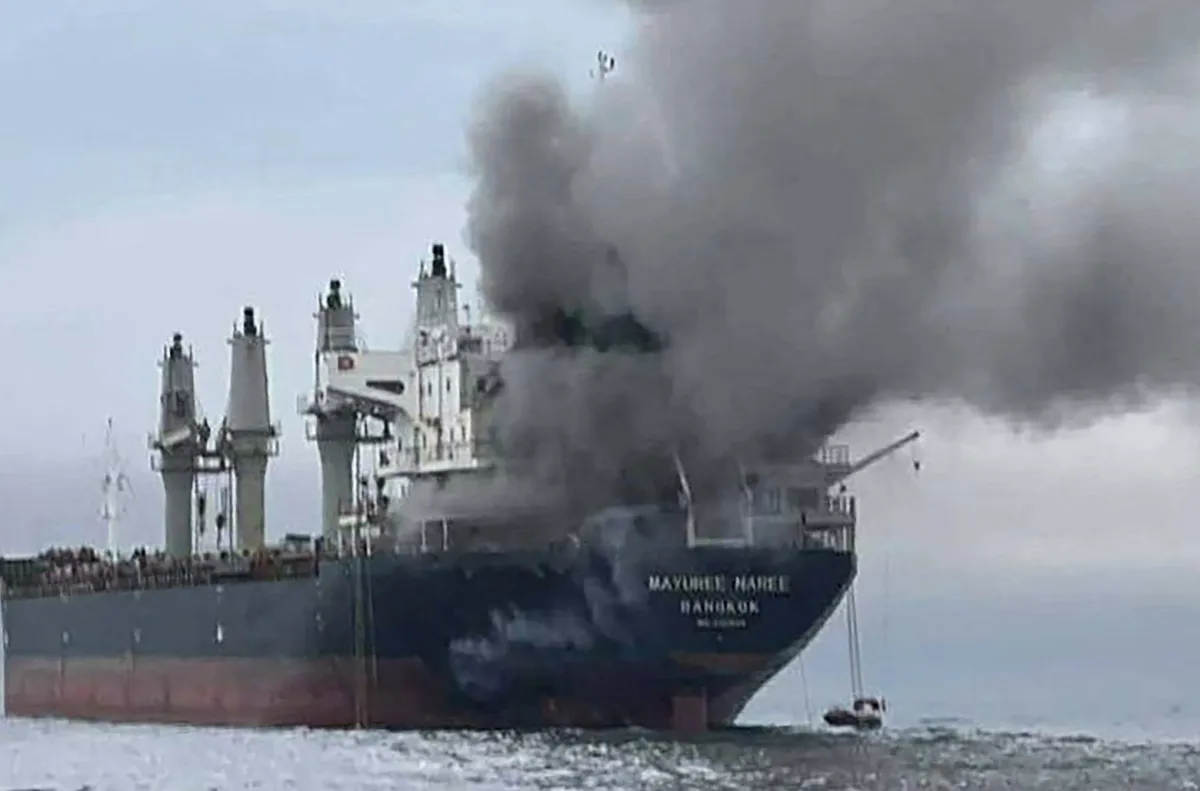
Paragraph 1: The Heart of the Storm in the Strait
Picture this: the Strait of Hormuz, that narrow, jagged waterway where the Indian Ocean meets the Persian Gulf, has become the world’s most precarious traffic jam. It’s like a lifeline for our energy-hungry planet—one-fifth of all global oil and gas flows through its 21-mile-wide choke point. But now, it’s under siege, snarled by a formidable barrier of Iranian defiance. Just days ago, the U.S. dropped those massive bunker buster bombs—those 5,000-pound behemoths capable of cracking deep-earth fortifications—right along Iran’s coastline near the strait. U.S. Central Command hailed it as a victory, targeting hardened missile sites that lob anti-ship cruise missiles at unsuspecting cargo ships. Yet, despite the thunderous explosions and plumes of dust, the impasse endures, a testament to Iran’s unyielding grip. Since this shadow war ignited on February 28, the water’s surface has turned hostile. At least 20 commercial vessels have been struck in attacks off the Iranian coast, a tally that BBC reports don’t even include every incident within the strait’s direct vicinity. It’s a stark reminder: power isn’t just about military might; it’s about who controls the flow of lifeblood for economies worldwide. Ships that once zigzagged through in droves—138 per day—are now whispering past at a trickle, maybe half a dozen brave souls defying the haze of danger. Drones buzz like angry wasps, missiles arc like fiery spears, fast attack boats slice through the swells, and hidden mines lurk like trapdoors in the sea. Maritime insurers, those nervous gatekeepers of global shipping, have bolted, pricing the risk so high most vessels simply steer clear. It’s not just economics; it’s about fear, palpable and pervasive, turning the strait into a no-go zone where the ghosts of past voyages echo warnings. In this tangled web, Iran stands firm, declaring the strait open to everyone except its sworn foes: the U.S., Israel, and nations they’ve deemed aggressors against the Islamic Republic. But reality paints a different picture—a passageway held hostage, not by iron chains, but by the specter of unpredictability.
Paragraph 2: Echoes of Attacks and Raw Human Cost
Zoom in on the chaos, and the human stories start to bleed through the headlines. Take the Thai-flagged bulk carrier Mayuree Naree, caught in the crossfire on March 11—projectiles slamming into it like punches from an invisible giant, right there in the strait’s unforgiving waters. Or the U.S.-owned crude oil tanker Safesea Vishnu, waving the Marshall Islands flag as a thin veil of neutrality, yet pummeled nonetheless. Each strike isn’t just a dent in steel; it’s a jolt of terror for crews who live and breathe on these floating cities, families thousands of miles away gripping phones in worry, and economies feeling the ripple effects of delayed deliveries. These aren’t isolated incidents; they’re part of a pattern escalating since February, each one amplifying the message that traversing Iran’s doorstep is a gamble with lives and livelihoods. Insurers, ever cautious, have essentially thrown up a wall, deeming the risks too astronomical for standard coverage. It’s a psychological siege as much as a physical one: Iran doesn’t need a constant barrage to paralyze trade; sporadic reminders suffice, ensuring that even the bravest captains second-guess their routes. I’ve spoken to mariners who’ve navigated these waters, and their tales are laced with unease—a mix of professional stoicism and quiet dread. One recounted nights spent scanning horizons for incoming threats, the sea’s vastness suddenly feeling like a trap. Another shared stories of diverted paths that double cargo costs, eating into profits that feed families back home. In this global crossroads, where east meets west in a salty embrace, the toll is personal. Families fret over fathers at sea, shipowners wring hands over finances, and we all wonder: when did fuel for our cars become so entangled with geopolitical chess moves? It’s a stark humanization of conflict, where big bombs drop in the name of strategy, but the real story lies in the ripples—delayed weddings, unpaid bills, and the aching uncertainty that keeps the world on edge.
Paragraph 3: Bold Gambles and the Kharg Island Calculus
As tensions simmer, President Donald Trump faces a crossroads that’s about as thorny as a prune pit. To pry the Strait of Hormuz from Iran’s clutches, his team is eyeballing dramatic moves, like raiding Kharg Island—that rugged outpost 15 miles off Iran’s coast where 90% of the nation’s crude oil exports get refined and shipped. Occupying it or blockading its waters could squeeze Tehran hard, cutting off a vital artery of their own economy. But Axios, drawing from insiders who’ve peeked behind the curtain, warns it’s no casual stroll. Seizing the island would thrust American troops into the heart of the fire, stretching our forces thin and opening doors for brutal counters from Iran. Experts like Retired Rear Admiral Mark Montgomery aren’t mincing words: it’s high-risk territory, akin to poking a sleeping bear with a short stick. “Iran could just turn off the spigot on the other end,” he quips, reminding us that we don’t control their production—it’s their internal machinery. He’d rather see a phased approach: two more weeks of relentless U.S. hits to erode Iran’s military might, followed by a more measured tactic, like unleashing destroyers and warplanes to babysit tankers through the strait. This escalation would demand troop reinforcements—a reality the White House and Pentagon are grappling with, weighing limited manpower against strategic necessity. Montgomery’s skepticism lingers: “It’s exposing ourselves unnecessarily when escorts might suffice.” Yet, for Trump, extracting from this quagmire on his terms seems unlikely without such audacity. I’ve chatted with military analysts who compare it to a high-stakes poker game; one wrong move, and the table could collapse. The island’s strategic allure—like a key in a lock—is undeniable, processing so much of Iran’s oil wealth that blockading it could starve their coffers. But the blowback? It could draw us deeper into a conflict that’s already a drain on resources and morale. Families back home might cheer patriotic headlines, but veterans I’ve spoken to recall the grind of extendable tours and emotional toll. It’s a calculated risk, humanized by the young soldiers facing untold dangers far from shores they call home.
Paragraph 4: Allies on the Fence and Multinational Dreams
Trump’s not playing this solo; he’s been rallying the troops with fiery rhetoric, warning NATO allies of a “very bad future” if they shirk their duty. “Don’t help, and maybe we walk away,” the message reads loud and clear. But Europe’s response has been tepid at best, a cocktail of reluctance and pragmatism. They didn’t start this fire, and many, like French President Emmanuel Macron, have flat-out rejected claims that France would rally for the strait’s rescue. Japan, Germany, and Luxembourg echo the chorus: “Not our fight, at least not in the way you frame it.” It’s a delicate dance, with fears that snubbing the U.S. could fracture the trans-Atlantic bond, leaving them isolated in a polarized world. Yet, the idea of a multinational naval bulwark floats like an olive branch. Why not reactivate the Combined Maritime Forces (CMF), that sturdy Bahrain-based coalition born in 2001 for peacekeeping in Middle Eastern waters, the Indian Ocean, and beyond? Kevin Rowlands of the Royal United Services Institute sees promise: it’s a ready-made framework, with 47 member nations that could opt in or out, repurposed to chaperone vessels through the Strait’s perils. The draw? Cheaper and faster than building from scratch. But he cautions: with ties to the U.S. Navy, it risks looking like a puppet show, not a genuine global effort. Smarter, perhaps, to mimic the EU’s Aspides mission—those patrols shielding Red Sea convoys from Houthi threats. For Hormuz, though, Rowlands insists on non-American leadership, maybe from Gulf states, to dodge perceptions of bias. Think a peacekeeping vibe, not full-on assault: regional or European alliances teaming with Indo-Pacific players, defending escorted ships proactively against drones or mines. Logistics? They’d need refueling in places like Dubai, Bahrain, or Oman’s Duqm—hubs reliant on oil flows themselves. “Their economies hinge on this,” Rowlands notes, a nudge that it’s as much in their interest as ours. Talking to diplomats who’ve navigated these talks, I sense the frustration: Europe’s youthfully diverse crowds marching for peace contrast with the hard-nosed geopolitics. One official confessed the pull of public opinion against more warfare, yet the private dread of abandoning allies. It’s human, this wavering—nations balancing borders and consciences in an era where alliances feel frayed.
Paragraph 5: Old Echoes and Insurance as Weapon
To grasp the scale, rewind to 1987-1988 and Operation Earnest Will, when the U.S. shielded Kuwaiti tankers from Iranian missiles in this very theater. Back then, our Navy protected shipping against a threat that feels quaint compared to today’s arsenal of drones, advanced missiles, and a naval fleet shrunk to half its former size. With 300 vessels idling in limbo, unclogging the strait would be a logistical nightmare—costly and time-devouring. But Gregg Roman of the Middle East Forum flips the script: don’t escort every boat across the full 500 miles of the gulf. Carve out a defended corridor right in the 21-mile strait, a shield using U.S. littoral-class ships anchored in Bahrain. These aren’t just mine-layers; they’re agile assassins against Iran’s speedy attack boats by the Islamic Revolutionary Guard Corps (IRGC). Vision: convoys funnel in from the Gulf of Oman, glide through air-covered safety, then fan out inside. Boom—escort shrinks from marathon to sprint, 500 miles down to 40. Roman sees Iran’s chokehold not as a classic blockade, but as an insurance gag. Fear is their primary ammo; occasional strikes scare underwriters into sky-high premiums, crippling trade. “They don’t need constant enforcement—just enough hits to make passage a horror story for insurers,” he explains. To counter, why not have the U.S. as a backstop insurer? “We’ll cover your secondary liability,” offering a safety net so primaries feel brave enough to insure. It’s brilliant and humane, recognizing that maritime cogs are families striving on the waves. Converations with shipowners reveal the grit: one woman, steering her fleet from afar, shared nights of pacing, weighing debts against danger. Another veteran likened it to insuring a rollercoaster—thrilling if insured, fatal if not. These folks aren’t pawns; they’re entrepreneurs chasing horizons, their dreams buoyed or sunk by policy decisions. By alleviating that fear factor, we humanize the crisis, shifting from dread to motion, ensuring the world’s energy pulse keeps beating.
Paragraph 6: Paths Less Traveled and a Symphony of Strategies
Amid the blockade blues, alternatives shimmer like mirages on the horizon—routes that bypass the strait’s stranglehold entirely. Gregg Roman highlights Saudi Arabia’s 750-mile East-West pipeline, snaking from the Abqaiq oil field to Yanbu on the Red Sea, redirecting flows without hormonal waves. Or the UAE’s Abu Dhabi Crude Oil Pipeline (ADCOP), looping from Habshan to Fujairah on the Gulf of Oman—an inland detour for crude that skirts danger. These aren’t stopgaps; they’re lifelines easing pressure on global supplies, proving energy doesn’t die in one neck of the woods. Roman tosses another wild card: empower the Ahvazi Arabs of Khuzestan Province, Iran’s marginalized ethnic group long sidelined by Tehran. Stir internal discord, forcing the IRGC to police domestic fires instead of coastal threats. “Make them turn guns inward,” he urges—a asymmetrical tweak that leverages regional grievances. Crucially, remind Iran that their blockade bites them back; their own oil empires suffer, costing billions in lost exports. “We’re all in this together,” the message beneath the bravado. A multi-layered push unfolds: convoys for safety, alternative pipelines for resilience, psychological levers for division—all in tandem, a symphony of asymmetrical warfare. In our polarized times, where “both sides” seems irrelevant, this is about courageous centrism: facts over factions, ideas pulsing with life. Families worldwide, lighting homes or fueling commutes, depend on unblocked seas for stability. I’ve heard from parents in coastal towns, their worlds disrupted by price hikes—grocery bills climbing as oil dances on turmoil’s edge. Yet, there’s hope in collaboration: nations banding to protect what unites us. Supporting journalism like Newsweek’s keeps these stories alive, fostering dialogue that bridges divides. By joining as members, folks fuel ad-free insights and exclusive dives, ensuring the center—sharp, challenging, alive—endures. It’s a call to action, personal yet profound: in the Hormuz haze, humanity’s grasp for continuity shines through, reminding us that every blockade evokes stories of resolve, resilience, and the quiet power of unity. As we navigate these treacherous waters, let’s not just react—let’s innovate, humanize, and prevail.