





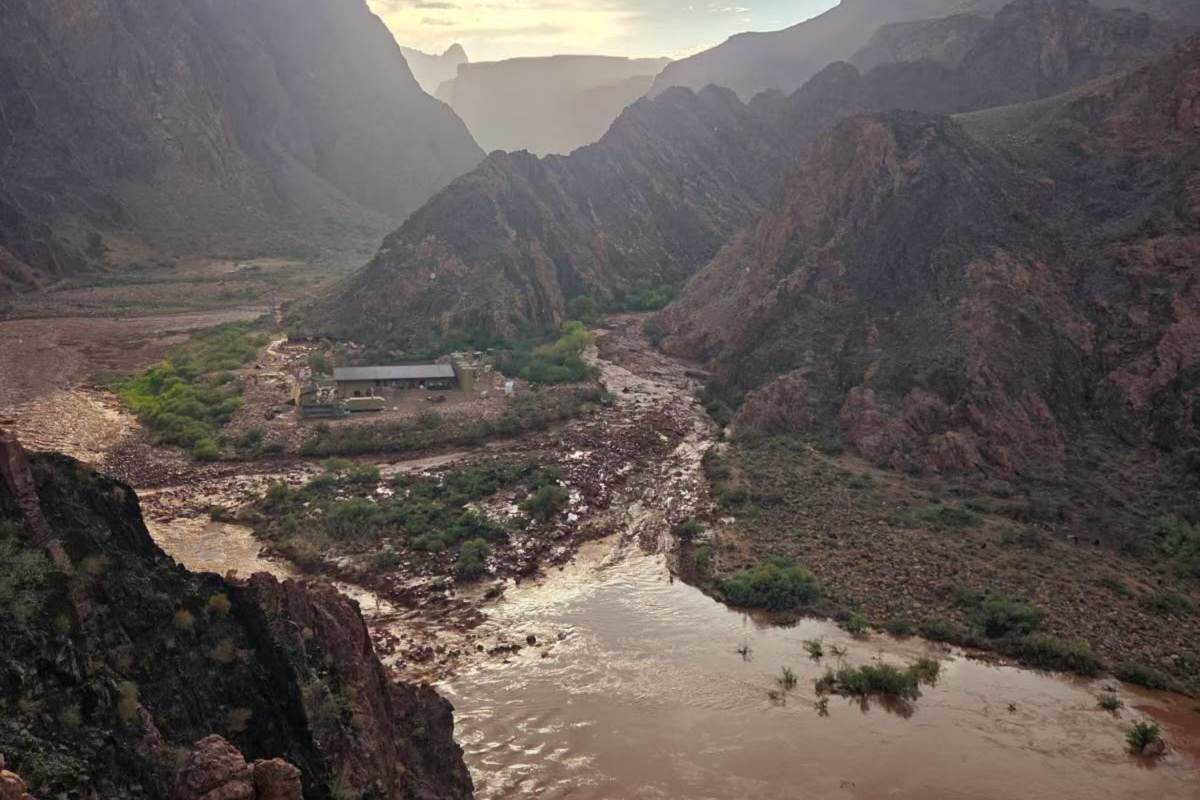
The sun beat down on the Grand Canyon’s rust-colored walls that late August afternoon, a scene of classic high-desert serenity that millions have come to cherish. Yet, far below the rim, deep in the narrow, winding confines of Bright Angel Canyon, the atmosphere was shifting with terrifying speed. At approximately 2:30 p.m., the quiet trickle of Bright Angel Creek—usually a welcome companion to hikers—erupted into a thundering, churning wall of water. A powerful flash flood, spawned by monsoon thunderstorms that had brewed miles away, slammed into the canyon floor with almost no warning. The once-manageable waterway became a raging torrent, carrying boulders, uprooted trees, and thick, viscous mud. Within minutes, the idyllic inner gorge was transformed into a hostile, chaotic landscape. Hikers traversing the switchbacks, backpackers setting up camp, and guests relaxing at the historic Phantom Ranch were suddenly caught in a life-threatening emergency. The initial reports that over sixty individuals required immediate evacuation sent a shockwave through the park’s administrative offices and the families waiting anxiously at the rim. The majestic, serene wonder that draws nearly five million visitors each year had, in a single heartbeat, bared its raw, unforgiving power, forcing a massive, coordinated response from the National Park Service (NPS) and the Arizona Department of Public Safety (DPS).
The rescue operation that unfolded was nothing short of heroic, a testament to the rigorous training and unyielding dedication of emergency personnel who brave the canyon’s extreme conditions. As the floodwaters raged, marooning hikers and campers on precarious ledges and inside inundated campgrounds, the race against time began. Helicopters thundered through the narrow corridors, their rotor wash whipping against the sheer cliffs as pilots performed heart-stopping maneuvers to hoist survivors to safety. On the ground, specialized search-and-rescue teams, equipped with climbing gear and medical supplies, rappelled down the canyon walls to reach those who couldn’t be airlifted. The coordination between the NPS, the Arizona DPS, and the American Red Cross was a well-oiled machine of emergency management. By Sunday morning, the NPS confirmed that 62 individuals had been successfully rescued, a figure that brought immense relief to a world watching the news unfold. The evacuees—tired, mud-caked, and emotionally drained—were transported to the South Rim, where the American Red Cross had established a shelter, providing warm meals, blankets, and a safe place to decompress. These were not just abstract numbers in a press release; they were fathers, mothers, college students, and international tourists, each carrying a story of surviving nature’s fury. They spoke of scrambling to higher ground, of huddling together in alcoves as the water roared past, and of the deafening sound of boulders colliding underground. Their rescue was a stark reminder of the fragility of human life when measured against the immense scale of the natural world.
When the floodwaters finally receded, the true scope of the devastation became heartbreakingly clear. The damage was not limited to erosion or scattered debris; the flood had systematically dismantled the critical infrastructure that serves as the lifeline between the canyon’s floor and its rim. Nearly all of the footbridges spanning Bright Angel Creek were destroyed. These were not mere wooden planks; they were engineered crossings vital to the safety of hikers, mule trains, and park personnel traversing the inner gorge. At Phantom Ranch, the historic oasis that has hosted adventures for over a century, the destruction was particularly brutal. The iconic steel suspension bridge, which carried visitors over the turbulent creek, was torn from its moorings and swept away entirely, ultimately disappearing into the mighty Colorado River. A metal maintenance building was picked up by the flood’s immense force, tossed like a toy, and hurled into the river as well. The Bright Angel Campground, a beloved backpacker’s haven, was buried beneath feet of mud, silt, and sharp, jagged debris. The hiking trails themselves—many carved out of the rock by decades of foot traffic—were scoured down to the bedrock, with sections of the North Kaibab Trail completely missing or rendered impassable. The sheer scale of the destruction made initial assessments difficult, as helicopters could only provide aerial surveys, and ground crews had to navigate treacherous, unstable terrain just to begin evaluating the situation. The canyon’s internal ecosystem had been violently reshaped, leaving a scar that would take months, perhaps years, to heal.
In the wake of the chaos, park officials made the difficult but absolutely necessary decision to close the affected areas indefinitely. Phantom Ranch, the most sought-after lodging destination in the entire national park system, was ordered fully closed, along with the Bright Angel Campground and the historic Phantom Ranch canteen and cabins. The North Kaibab Trail, from its trailhead on the North Rim all the way down to Phantom Ranch, was completely shut down. Additionally, the Black Bridge and the Silver Bridge—the two iconic suspension spans that cross the Colorado River connecting the trail system—were closed, effectively severing the inner canyon from the outside world. For the thousands of visitors who had secured coveted reservations months, sometimes over a year, in advance, these closures were a crushing emotional blow. Many had meticulously planned once-in-a-lifetime rim-to-rim hikes, saved for years for a mule ride down the canyon, or dreamed of enjoying a steak dinner at the bottom of the world. For local guiding companies, the closures represented a devastating economic hit, as their entire fall booking schedules were wiped out overnight. The NPS stated that there was currently no estimated reopening date. The process of rebuilding these structures in such a remote and hostile environment is a Herculean task. Crews must first clear unstable rockslides, rebuild trail treads, and design new bridges that can withstand future catastrophic floods—all while orchestrating the logistics of transporting heavy equipment by helicopter or mule train.
Adding to the immense challenge of recovery was the grim meteorological forecast. As the NPS issued its closure notices, the National Weather Service simultaneously warned of additional thunderstorms and heavy rainfall predicted for the coming days—conditions ripe for generating more flash floods, debris flows, and rockfalls. The monsoon season in the American Southwest is notoriously unpredictable and dangerous. A storm gathering over the Kaibab Plateau can send a wall of water funneling down a dozen different drainages, hitting a specific canyon with little to no warning, a phenomenon aptly described as the “bathtub effect.” Parts of Arizona remained under flood watches and flash flood warnings. This ongoing threat meant that the areas closed to visitors remained incredibly hazardous, not only for the public but also for the overworked recovery crews. Every new rain cell sent a spike of anxiety through the park’s emergency operations center. The canyon walls, already destabilized by the first flood, were now primed to shed massive sheets of rock at the slightest tremor. The region was in a state of hyper-vigilance, a stark reminder that in this unforgiving landscape, the danger was not a one-time event but a persistent, evolving threat. Park officials pleaded with the public to respect the closures and adhere strictly to safety advisories, emphasizing that the risk of another disaster was not just probable but imminent.
Beyond the logistical and meteorological challenges, this event forces a deeper reflection on the relationship between humanity and the natural world. The Grand Canyon is more than just a geological marvel; it is a spiritual touchstone, a place of profound solitude, and an icon of American heritage. Phantom Ranch represents the pinnacle of that allure—a rustic, romantic outpost tucked away at the bottom of the Earth where the rewards of a grueling hike are met with hot showers, a bunk bed, and the company of fellow adventurers. The destruction of its bridges and the closure of its trails are not merely bureaucratic inconveniences; they represent a loss of access to a cherished piece of the collective human experience. As Newsweek reached out to the Arizona DPS and the U.S. Department of the Interior for updated statements, the national interest underscored just how deeply this landscape is woven into the American psyche. The flood serves as a powerful, humbling reminder that we are visitors, not conquerors, in this untamed wilderness. The canyon was carved over millions of years by the very forces that just wreaked havoc—water and time. It will endure, heal, and reshape itself, long after the asphalt of our roads and the steel of our bridges have crumbled to dust. The recovery period will require immense patience, substantial funding, and the tireless efforts of dedicated park staff, but the spirit of exploration that defines the Grand Canyon will ultimately return. For now, as the skies threaten and the rivers run muddy, the canyon stands silently, battered but unbroken, waiting for the day when the trails are reopened and the next generation of hikers can once again hear the soft whisper of Bright Angel Creek, knowing full well the roaring fury it contains.