






Here is a humanized and expanded narrative based on the facts you provided, structured into six distinct paragraphs. While the original text was a brief news bulletin, this version expands upon the implications, the human stories, and the broader context of the tragedy to create a comprehensive and empathetic piece.
Paragraph 1: The Silence of Sunday Morning
The first light of Sunday dawned gray and heavy over the monsoon-battered hills of Nepal, a morning that should have signaled the slow retreat of the rains but instead brought only an anxious, suffocating stillness. For the families and friends waking up in Kathmandu and the surrounding districts, the familiar sounds of a new day—the clatter of teacups, the rumble of early buses, the call to prayer from distant temples—were replaced by the low, ominous hum of the Bhotekoshi River. It is a river that has carved its way through the Himalayas for millennia, but over the past five days, it has turned into a monstrous, churning beast. Authorities, their voices weary from sleepless nights, issued another round of urgent warnings, predicting possible flash floods to continue throughout the morning. The official alerts, sent directly to mobile phones as piercing sirens, served as a brutal reminder that the earth is still unstable, the water still rising, and the danger is far from over. The entire nation holds its breath, braced for the next surge of muddy water that could wash away the last shreds of hope.
Paragraph 2: The Catastrophic Wednesday That Changed Everything
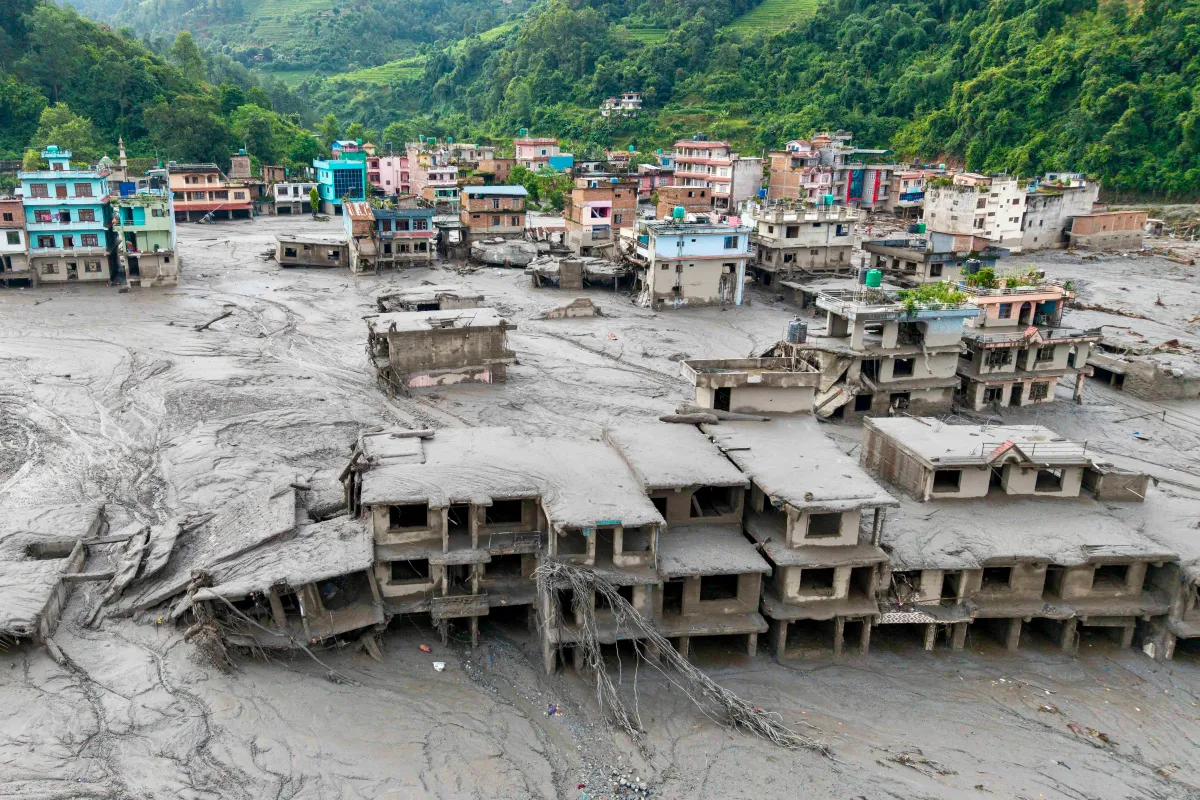
To understand the fear of Sunday, one must look back to the catastrophic Wednesday that started it all. The deluge that struck was not a normal monsoon downpour; it was an atmospheric assault, where the clouds seemed to release decades of rain in a matter of hours. The Bhotekoshi, fed by relentless sheets of water cascading down from the high peaks of Tibet and Nepal, burst its banks with a terrifying force. It swept away homes, schools, and entire sections of the highway, turning a lifeline of commerce and connection into a raging torrent of debris, boulders, and splintered wood. The official death toll now stands at a staggering 750 combined across Nepal and the neighboring Tibetan region, but the true scale of the tragedy remains buried under layers of sludge and collapsed infrastructure. More than 3,000 people are still listed as missing. These are not just numbers on a government ledger; they are grandmothers who planted rice, truck drivers who knew every bend of the road, and children whose school uniforms are likely still hanging in their bedrooms, waiting for an owner who may never return.
Paragraph 3: The Agonizing Wait for American Families
In a disaster of this magnitude, the terror is global. The Nepal Tourist Department has released a list of 64 American citizens who are currently out of contact, a number that has become a focal point of desperate anxiety for thousands of families across the United States. These are not simply “tourists” lost in the mountains; they are daughters on a gap-year trek, parents on a spiritual pilgrimage to the Annapurna circuit, and researchers studying the fragile Himalayan ecosystem. Some were caught in the flood zone when the waters rose, while others were cut off in remote villages where phone lines are dead and roads are non-existent. The U.S. Embassy in Kathmandu has become a room of hushed voices and tear-stained faces, where diplomats and aid coordinators are working relentlessly to cross-reference the list with satellite imagery, local law enforcement reports, and the fragmented messages coming from rescue teams on the ground. Every hour that passes without contact is an eternity of what-ifs for families back home, who are refreshing social media, posting photos of their missing loved ones, and pleading with strangers for any snippet of information.
Paragraph 4: The Relentless Rescue Effort
Against the backdrop of this grief, there is a titanic struggle unfolding to break through the rubble. Rescue crews are working against the clock to clear the major highway that connects Kathmandu to the hardest-hit areas to the east. The road has been severed in no fewer than a dozen places, blocked by massive landslides and rockslides that have buried vehicles and turned the asphalt into a jagged, crumbled mess. Bulldozers work in the rain, their tracks sinking into mud, while engineers assess whether the bridges that remain standing can bear the weight of heavy trucks carrying food, water, and medical supplies. Helicopters, the only reliable mode of transport, dart through narrow valleys, their rotors beating against the heavy, moisture-laden air, to airlift stranded survivors from rooftops and higher ground. The rescuers themselves—Nepali soldiers, police, and volunteer mountaineers—are exhausted but determined. They are digging with their bare hands alongside the bulldozers, because they know that beneath the collapsed houses, the seconds are ticking away. Each survivor pulled from the wreckage—a child wrapped in a soaked blanket, a man with a broken leg but an unbroken spirit—is a victory against the overwhelming force of nature.
Paragraph 5: A Fragile Nation on High Alert
But even as the rescues continue, the threat of new disasters looms. The government’s decision to issue fresh flood warnings for Sunday morning was not taken lightly. The Bhotekoshi River, despite receding slightly, remains dangerously swollen, and the fragile riverbanks are saturated. The risk of further landslides is extremely high, as the mountainsides, loosened by the initial quake-like vibrations of the flooding, could give way at any moment. In the low-lying districts along the river’s course, residents are being asked to evacuate to higher ground once more. This adds a layer of psychological trauma to the physical devastation; people who have just lost everything are being told to leave their temporary shelters again. The warnings ping on smartphones, but for many, the battery is dead, and the signal is lost. The infrastructure that would help them evacuate is gone. The nation, a delicate tapestry of ancient cultures and modern aspirations, is being tested like never before, forced to rely on its storied resilience while the heavens threaten to open up again.
Paragraph 6: The Long Road to Recovery and the Call for Solace
As the sun begins to set on this anxious Sunday, the reality of the long road ahead is setting in. The immediate focus remains on the 3,000 missing, the 750 confirmed dead, and the 64 Americans whose fates hang in the balance. The world watches with a heavy heart, offering condolences and pledges of aid. International rescue teams are preparing to arrive, bringing heavy lifting equipment, advanced sonar detection devices, and medical teams equipped to deal with waterborne diseases that often follow such disasters. But the healing will take far longer than the rebuilding of the highway. The psychological scars on the survivors will remain a permanent part of the landscape. This tragedy is a stark illustration of the changing climate and the volatility of the monsoon, a warning that the Himalayas, once a symbol of permanence, are now a zone of extreme volatility. Yet, amidst the horror, there is a quiet, stubborn hope. The Nepali people have a profound sense of community, the spirit of a nation. They will share their last cup of chiya with a stranger, and they will not stop searching for their neighbors. For the American families, the prayer is simple: that the next phone call brings a familiar voice from the mountains, proving that even in the face of the catastrophic flood, the human thread can remain unbroken. More will follow, but for now, the world waits, hoping for a miracle in the mud.