






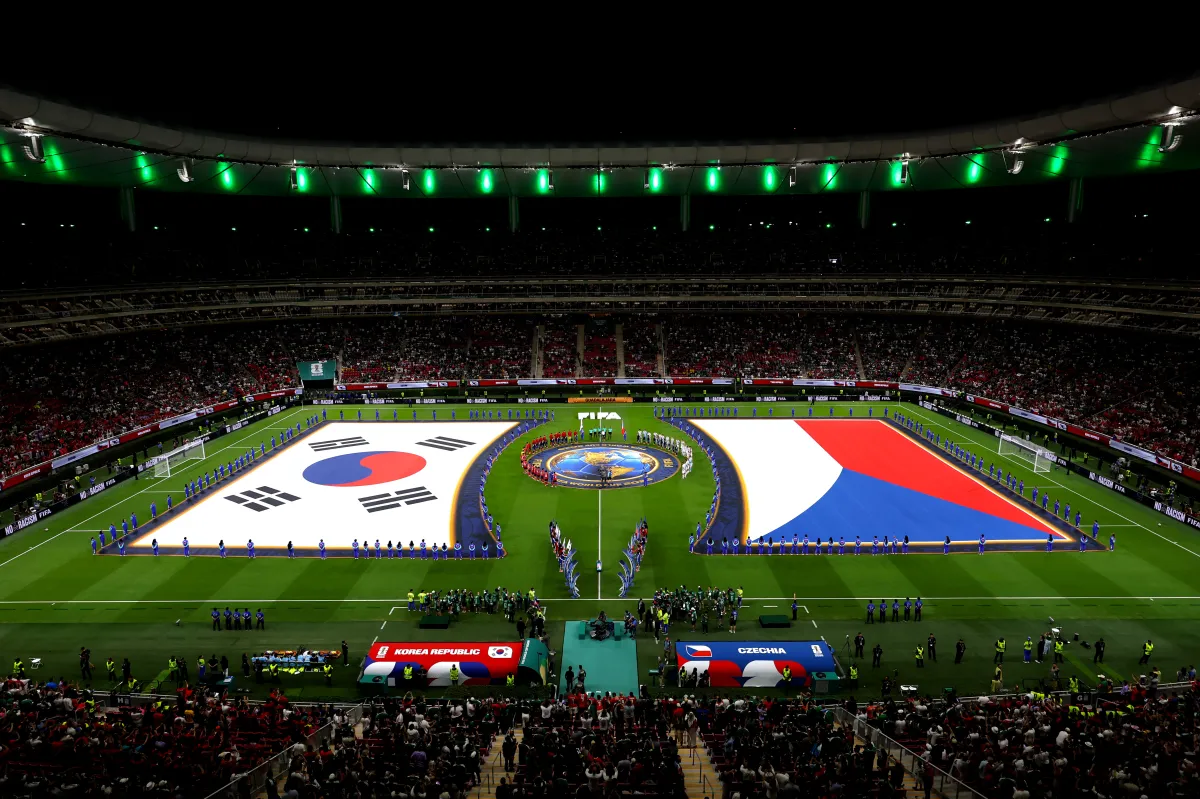
The grand spectacle of the 2026 FIFA World Cup is universally envisioned as the ultimate celebration of global unity, a vibrant mosaic of diverse cultures and raw athletic drama unfolding under the bright arena lights. This promise of unparalleled passion was supposed to define the Group A showdown between South Korea and Czechia, held under the warm night sky of Guadalajara, Mexico, at the architectural marvel known as Estadio Akron. On the pitch, the match delivered everything a football romantic could hope for, culminating in a fierce, high-stakes 2-1 victory for the resilient South Korean side that kept the crowd on the edge of their seats until the final whistle. Yet, as the celebratory cheers echoed and the focus shifted from athletic achievements to the administrative realities of the tournament, a bizarre numerical controversy erupted that instantly dampened the evening’s triumphs. FIFA officially declared that the night’s attendance stood at an impressive 44,985 spectators, a staggering figure that would indicate the stadium was operating at an almost absolute maximum density, sitting less than a thousand people short of its physical capacity limit of 45,664. On paper, it was a roaring success, painting a pristine corporate picture of a packed, roaring cauldron of global fandom. However, the moment this official statistic flashed across television screens and digital media platforms, it was met not with applause, but with immediate, widespread disbelief from everyone who had visually engaged with the match. The massive disconnect between the mathematically perfect data announced by soccer’s governing body and the physical reality on the ground initiated a wave of skepticism that quickly spiraled into a full-blown public relations crisis, highlighting the growing chasm between administrative narrative and authentic human experience. This opening salvo of the tournament set a tense, defensive tone, leaving fans to wonder whether their own eyes were playing tricks on them or if they were witnessing a carefully managed illusion designed to mask the quiet realities of a modern, hyper-commercialized sporting event.
The skepticism was far from a groundless conspiracy theory; rather, it was backed by an overwhelming deluge of visual evidence captured by fans, journalists, and television cameras alike. As the game progressed, social media feeds were flooded with high-definition photographs and panning video shots of the Estadio Akron’s seating bowl, revealing massive, undeniable swaths of empty red chairs. To even the most casual observer, it was painfully obvious that there were not just a few vacant spots scattered here and there, but entire sections that appeared completely devoid of human presence, with some estimators suggesting that as many as twenty thousand seats sat unoccupied during the thick of the first-half action. This stark visual layout ran completely contrary to the narrative of a near-capacity crowd, prompting immediate and justified outrage from a fanbase that has felt increasingly alienated by the high financial barrier to entry of modern tournaments. This public anger did not occur in a vacuum; it boiled over at a time when FIFA is already facing intense, global scrutiny for its controversial adoption of a “dynamic pricing” policy, a capitalistic mechanism that sees ticket prices fluctuate wildly based on perceived demand. For many local supporters in Guadalajara and traveling enthusiasts worldwide, these pricing strategies have effectively locked ordinary people out of their own local stadiums, turning what was historically a populist sport into an exclusive luxury event reserved only for the corporate elite. Seeing thousands of brightly colored, empty plastic seats while knowing that countless passionate, working-class fans were forced to watch from home due to exorbitant pricing added a layer of deep moral frustration to the logistical discrepancy, making the official attendance figure look less like an administrative error and more like an active insult to the global football community. Consequently, the empty spaces in the stadium became a silent, visual protest against the aggressive gentrification of the world’s favorite game, signaling a critical fracture in the sport’s traditional relationship with its most loyal followers.
Faced with a rapidly compounding public relations disaster as screenshots of the barren stands went viral, FIFA Media was forced to step into the metaphorical line of fire on Friday morning, releasing a formal statement to defend their heavily disputed metrics. Instead of admitting to any logistical errors or acknowledging that ticket prices might have deterred physical attendance, the governing body opted for a highly technical explanation that seemed almost comedic in its corporate phrasing. FIFA asserted that their official attendance figures are not based on visual assessments of seating occupancy at any given moment, but are rather calculated from the precise number of tickets scanned at the security turnstiles and the total number of spectators present anywhere within the stadium’s footprint. To explain the vast oceans of empty red seats visible on global television broadcasts, the statement offered a creative defense: they claimed that thousands of ticketed fans simply chose to spend the duration of the match socializing, eating, and standing in the spacious concourse areas of Estadio Akron rather than sitting down in their assigned, paid-for seats. The official press release meticulously detailed that FIFA works in lockstep with stadium authorities and ticketing teams to verify all operational dataset values, emphasizing that the published numbers are firmly grounded in verified digital transactions rather than aesthetic perceptions. By attempting to redefine what “attendance” actually means, FIFA sought to pivot the conversation away from empty stadium bowls to the abstract layout of the entire commercial venue footprint. However, this bureaucratic maneuvering did little to soothe the public, instead serving to highlight a deeper institutional disconnect where spreadsheet data is prioritized over the lived reality of a sporting event. The explanation seemed to treat the stadium not as a theater of athletic competition where the match is the central attraction, but as a giant outdoor mall where the game itself is merely background noise. This clinical defense of scanned barcodes over actual human bodies in seats only added fuel to the fire, prompting a wave of collective eye-rolling from fans who felt their intelligence was being actively insulted by a disconnected corporate hierarchy.
The public response to FIFA’s concourse defense on various social media platforms was swift, merciless, and deeply human, characterized by a mixture of biting sarcasm and genuine heartbreak. Fans were quick to deconstruct the logical absurdities of the official statement, asking why anyone would pay extortionate, dynamically inflated ticket prices only to spend ninety minutes standing in a crowded concrete hallway eating expensive concessions instead of watching world-class athletes play. One online observer passionately questioned what “spectators present within the stadium footprint” actually meant in practice, pointing out that if twenty thousand seats were visibly vacant, it defied common sense to suggest that a small town’s worth of people were permanently hiding in the restrooms or food lines. Others pointed out the hypocrisy of the explanation by comparing the night’s bizarre turnout to regular domestic matches in Guadalajara, noting with sharp irony that such massive concourse migrations mysteriously never seem to happen during Chivas de Guadalajara or Mexican national team fixtures, where ticket pricing remains within the realm of sanity and the stadium is routinely packed to the gills with active, visible supporters. The word “embarrassing” was echoed across forums, with fans lambasting the administrative team for presenting such a thin, insulting narrative to save face in front of global sponsors. For these supporters, who represent the true heartbeat of the sport, the sheer audacity of the excuse was symbolic of a governing body that has lost all touch with reality, preferring to spin fairy tales about crowded concourses rather than address the cold, hard truth of their pricing structures. This digital backlash was not merely about stadium seating; it was an emotional outlet for a community tired of being treated as passive financial assets. The collective voices of these disillusioned fans formed a cohesive critique against a system that attempts to gaslight its audience rather than engage in honest self-reflection, proving that the passion of football supporters cannot be easily pacified by corporate jargon.
This controversial episode under the heavy night of Guadalajara acts as a perfect microcosm of a much broader, systemic crisis currently threatening the very soul of modern football. Over the last few decades, the transition of soccer from a historically working-class, community-centric pastime to a multi-billion-dollar global entertainment product has created a profound cultural rift. The introduction of aggressive monetization techniques, corporate luxury suites, and opaque ticket distribution systems has slowly but surely squeezed out the passionate, localized fanbases that originally gave clubs and international tournaments their legendary atmospheres. When a stadium at a World Cup—the absolute pinnacle of the sport—displays yawning gaps of empty seats during a crucial group stage match, it serves as a glaring, visual symptom of a beautiful game that is losing its accessibility and connection to its roots. The prioritization of corporate ticket sponsors, VIP experimental packages, and high-paying casual tourists over genuine, die-hard fans results in quiet, sanitized stadium atmospheres that look dreadful on television and feel even worse in person. This shift has turned the beautiful game into a commodified product, where the organic noise, color, and emotional investment of the crowd are replaced by artificial fan-zones and corporate compliance. These empty seats were a stark reminder that you can secure sponsorship deals and mandate high ticket prices, but you cannot manufacture authentic passion, nor can you force people to fill empty spaces when the financial demands of attendance exceed their economic reality. By prioritizing maximum yield per ticket over a packed house of vocal supporters, administrators have inadvertently created a sterilized environment where the true spirit of international football is suffocated under the weight of financial greed, sparking a deep sense of mourning among purists who remember when the World Cup was a democratic festival accessible to all.
As the 2026 World Cup continues its journey across North America, the controversy surrounding the attendance at the South Korea versus Czechia match of group play serves as a vital cautionary tale for the remaining fixtures of this massive tournament. It stands as an undeniable truth that while stadium administrators, ticketing software, and corporate executives can easily manipulate spreadsheets, issue carefully worded media statements, and control numerical inputs on official websites, they are entirely powerless to control the ultimate narrative when the global public is actively watching. The stark power of a single camera lens, broadcasting high-definition reality to billions around the globe, will always triumph over the sanitized, highly polished statements drafted in corporate boardrooms. If FIFA hopes to maintain the integrity, magic, and prestige of this historic tournament—and protect its own institutional reputation—it must urgently address the underlying structural issues of ticket affordability and accessibility before more iconic venues are defined by empty, red seats rather than roaring human voices. The beautiful game belongs to the people, and any attempt to prioritize profits over human presence will inevitably result in more silent stadiums, more public skepticism, and a lasting damage to the cultural legacy of the tournament. Ultimately, football’s true value lies not in the number of scanned barcodes or the profit margins of dynamic pricing algorithms, but in the collective, unscripted joy of a fully packed stadium where ordinary people can yell, cry, and cheer together in unison, a human truth that no amount of corporate PR can ever hope to replace or falsify. If the organizers fail to listen to this warning, the legacy of the 2026 World Cup risks being remembered not for glorious goals, but as the moment when the governing bodies finally pushed the commercialization of the game too far, leaving the stands empty and the soul of the sport hollowed out.