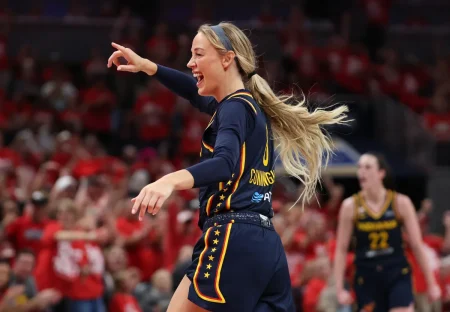



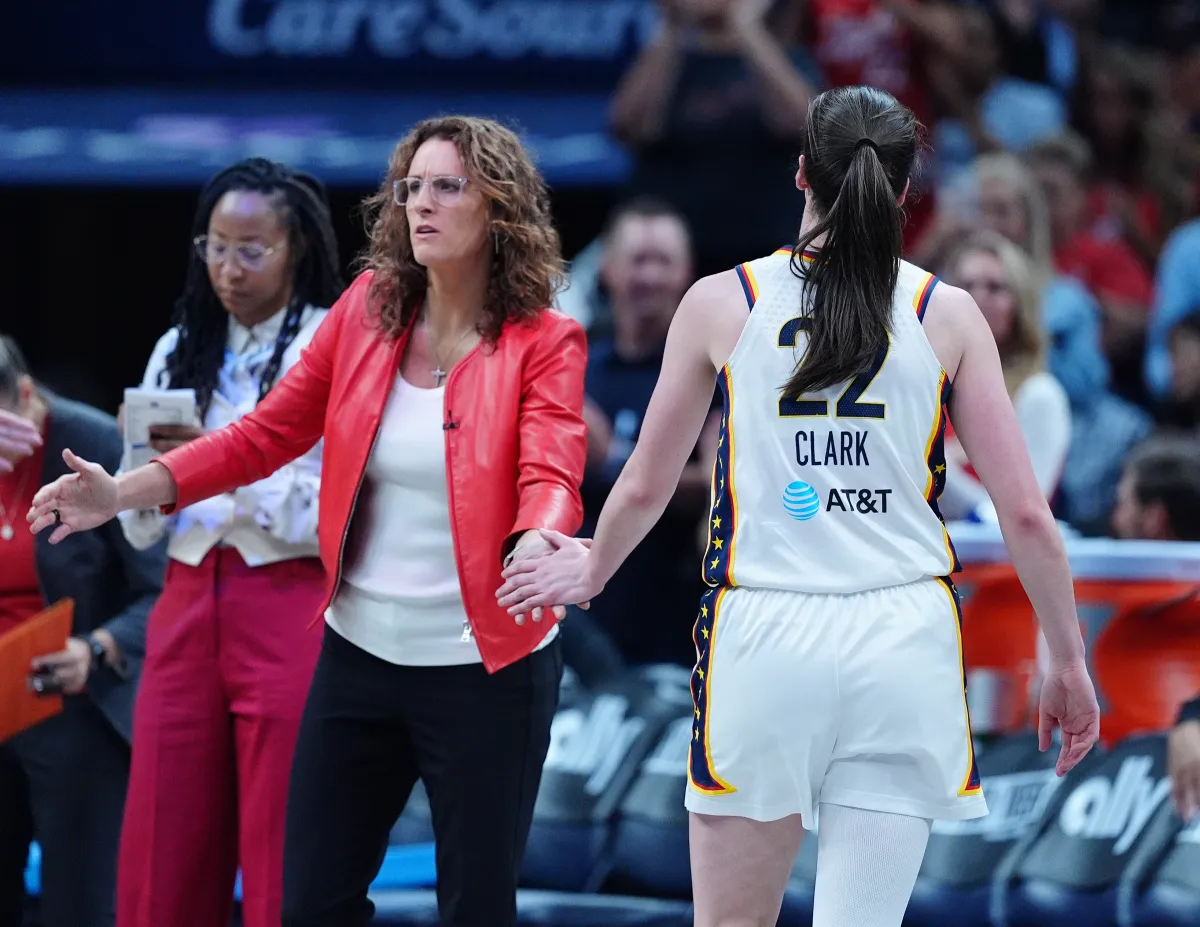
Before the Indiana Fever delivered one of their most impressive wins of the season Tuesday night, a different kind of energy filled Gainbridge Fieldhouse. As head coach Stephanie White made her way to the floor, she was met with boos from the home crowd. The reaction did not come out of nowhere. Days earlier, White had made comments that many fans interpreted as defending DiJonai Carrington, the Chicago Sky guard who was ejected from a recent game after committing a hard foul on Fever guard Sophie Cunningham. For a fan base that had watched one of their players absorb a punishing hit, hearing their coach sound anything less than fully outraged felt like a betrayal. The boos were loud enough to be noticed, and they turned a basketball game into a moment of reckoning for a team that has spent the season under an unusually bright microscope. Yet whatever tension simmered in the stands, White and her players managed to turn the page once the ball was tipped. By the end of the night, the Fever were celebrating a 106-92 victory over the New York Liberty, and the conversation had shifted—at least a little—from controversy to performance. Still, the booing was a reminder of just how passionate, personal, and complicated WNBA basketball has become in this era. It also served as an early test for a coaching staff trying to keep a talented roster focused on the bigger picture, with the playoffs approaching and every game carrying added weight. For White, hearing boos from her own crowd was surely jarring, but it was also a sign of how much this fan base cares. They want their coach to be as fierce as they are, especially when one of their own is hurt. The audience’s reaction wasn’t simply about one comment; it was about loyalty, protection, and the emotional investment that turns casual viewers into devoted supporters. In an environment where WNBA stars are becoming household names, every word a coach says is magnified, and every perceived misstep is dissected in real time. This was one of those moments where the game itself threatened to become a backdrop to a larger drama, even before the opening tip.
The incident that sparked the friction occurred earlier in the week, when Carrington was thrown out of a game after laying a hard foul on Cunningham. The play was physical, sudden, and severe enough that officials decided it crossed the line. For Fever fans, it was a moment that demanded solidarity. They wanted to see outrage from their coach, public defense of Cunningham, and perhaps a fiery statement about protecting players. Instead, White’s comments struck many as measured and even understanding toward Carrington. To those fans, it sounded as though White was downplaying the severity of the foul or excusing an opponent at the expense of her own guard. Social media amplified the frustration in the hours that followed, and the frustration followed White into the arena. It is never easy for a coach to be booed by the fans who usually cheer for her, and White’s situation was particularly delicate because she had spent the season building trust with a team and a city. The reaction showed how much the Fever have come to mean to Indiana—and how protective fans can be when one of their players is hurt. It also highlighted the tightrope White walks as a coach who tries to respect opponents while still fighting for her own players. In the heat of a playoff race, nuance often gets lost, and a single comment can be reduced to a headline. That is, in part, what happened here. The coach’s broader body of work, her communication style, and the relationships she has built with players all seemed to fade from the conversation. What remained was a simple, painful image: a beloved coach standing in front of a crowd that did not feel heard, her words echoing through a building that usually reserves its loudest cheers for her. For any leader, that is a humbling experience, but it can also be clarifying. It forces a moment of reflection, a chance to decide whether to shrink from criticism or meet it directly.
Kelly Krauskopf, the Fever’s president, stepped in with a clear and forceful message. “Coach White has done a tremendous job leading the Fever and for the second-consecutive season, has us in great position for a playoff push,” Krauskopf said. “She has kept our team focused and united, all while under the brightest spotlight our team and our league have ever experienced. She has the full support of leadership.” Those words carried real weight, because they came from the top of the franchise. In a league that is growing faster than ever, with more media attention, more star power, and more scrutiny than ever before, Krauskopf’s message was designed to remind everyone that the person steering the ship has the confidence of the front office. The statement did not directly address the booing, but it did not need to. By vouching for White’s leadership, character, and ability to manage pressure, Krauskopf was drawing a line between outside noise and the organization’s belief in its coach. It was a public vote of confidence at a moment when White could have felt isolated, and it signaled that the Fever intend to remain steady amid the storm. In professional sports, that kind of backing matters. It tells the locker room that the coach is not coaching for her job, and it tells the fans that the people making decisions trust the process they see every day. For White, who has spent the season handling everything from injuries to expectations to the intense debate around her own comments, that support likely meant as much as any victory. It also gave the team a clear directive: keep moving forward, trust the leadership, and let the outside world sort out its own emotions. The franchise’s confidence in White was not a reaction to one game or one comment. It was a judgment formed over months of watching her guide a young, talented group through the most demanding environment the league has ever seen.
Then came Tuesday night’s game, and the Fever responded in the best way possible. Facing the 2024 WNBA champion New York Liberty, Indiana played with composure, energy, and a clear sense of purpose, rolling to a 106-92 victory that served as a statement not just to the rest of the league, but to the doubters in the stands. The score itself was impressive, but the way the Fever handled the moment was even more telling. Rather than allowing the pregame booing to become a distraction, the players seemed to channel the emotion into focus. They moved the ball, defended with intensity, and made big shots when they needed to. The victory improved Indiana’s record to 21-12 on the season, placing the Fever at the top of the Eastern Conference standings and fourth overall in the WNBA. Given how competitive the league has become, that is no small achievement. It puts the Fever in the conversation as a legitimate contender, not just a team with a promising young core. It also gives White a powerful answer to her critics: results. In sports, winning does not erase every concern, but it certainly changes the mood. The fans who booed White before tipoff had to spend the night watching her team execute at a high level, and by the final buzzer, the most important story in the building was the scoreboard. Basketball has a way of simplifying things. For one night, at least, performance outweighed controversy, and the Fever proved that their focus remains on the things that happen between the lines. It was the kind of victory that can define a season, not because of the standings alone, but because of what it revealed about the team’s character. When everything around them was noisy and tense, they found their calmest basketball of the year. That is a credit to the players, and it is also a credit to White, who helped build a culture strong enough to absorb a difficult moment and turn it into positive energy.
The bigger picture is worth remembering here. White is in her first season with the Fever, and she has already helped steer the team deep into the postseason conversation. According to the information shared alongside Tuesday’s events, Indiana appeared in the WNBA semifinals under White, pushing the eventual champion Las Vegas Aces to five games before falling short. That kind of season represents real progress, especially for a franchise that has been rebuilding and repositioning itself in a league filled with powerhouse teams. White’s coaching has been defined by more than just wins and losses, though. Teammates have talked about her ability to communicate, her attention to detail, and the way she fosters a culture of accountability and care. She has had to navigate injuries, roster adjustments, and the unique pressure of coaching a team that includes Caitlin Clark, whose every move draws enormous attention. Krauskopf’s reference to “the brightest spotlight our team and our league have ever experienced” was not hyperbole. The Fever have become one of the most talked-about teams in women’s basketball, and with that attention comes an endless stream of opinions, hot takes, and viral moments. White has remained steady through all of it, and the team’s standing is evidence of that discipline. A semifinal appearance in her first season is the kind of achievement that would make any organization confident in its choice of coach. It also explains why the front office was so quick to offer support when the boos rang out. They have seen what White can do, and they believe she is the right person to lead the Fever into the future. The pressure surrounding Indiana is not something every coach could handle. Some would wilt under the constant scrutiny or let the noise seep into the locker room. White, in contrast, has kept her team anchored to its principles, and that stability is exactly what a young, ambitious roster needs when the stakes are this high.
Now the Fever turn their attention to what comes next. They have a few days of rest before meeting the Dallas Wings on Friday, Aug. 14, and that break comes at a valuable time in the season. Teams competing for playoff position need every opportunity to reset, especially after emotionally charged games like the one against New York. The victory over the Liberty gave Indiana momentum, and the extra days should allow players to heal, prepare, and refocus on the bigger goal. There are still challenges ahead, and the conversation around the Fever is unlikely to quiet down anytime soon. Sophie Cunningham, for her part, has already blamed WNBA media for creating distractions around the team, adding another layer to the ongoing narrative. That comment, like White’s earlier remarks, is part of a larger story about how the Fever are being covered and how the outside world perceives their season. But in many ways, the team has already proven how it handles noise. The booing before Tuesday’s game was uncomfortable, but it did not break the Fever. The front office rallied around the coach, the players rallied around each other, and the team went out and beat the defending champions. That is the mark of a mature organization and a resilient roster. As the playoffs approach, Indiana will need that same toughness, both physically and mentally. Coach White may not win over every fan with every comment, but she has earned the trust of the people who matter most inside the building. And if Tuesday night was any indication, the Fever are more than capable of turning even the most uncomfortable moments into fuel for success. The road ahead will be demanding, but for a team with this much talent, this much support, and this much resolve, the season still holds endless possibilities. In the end, the boos may fade into memory, but the response to them—the win, the support, the unity—might be what carries Indiana through the postseason and into a future that looks brighter with every passing game.