


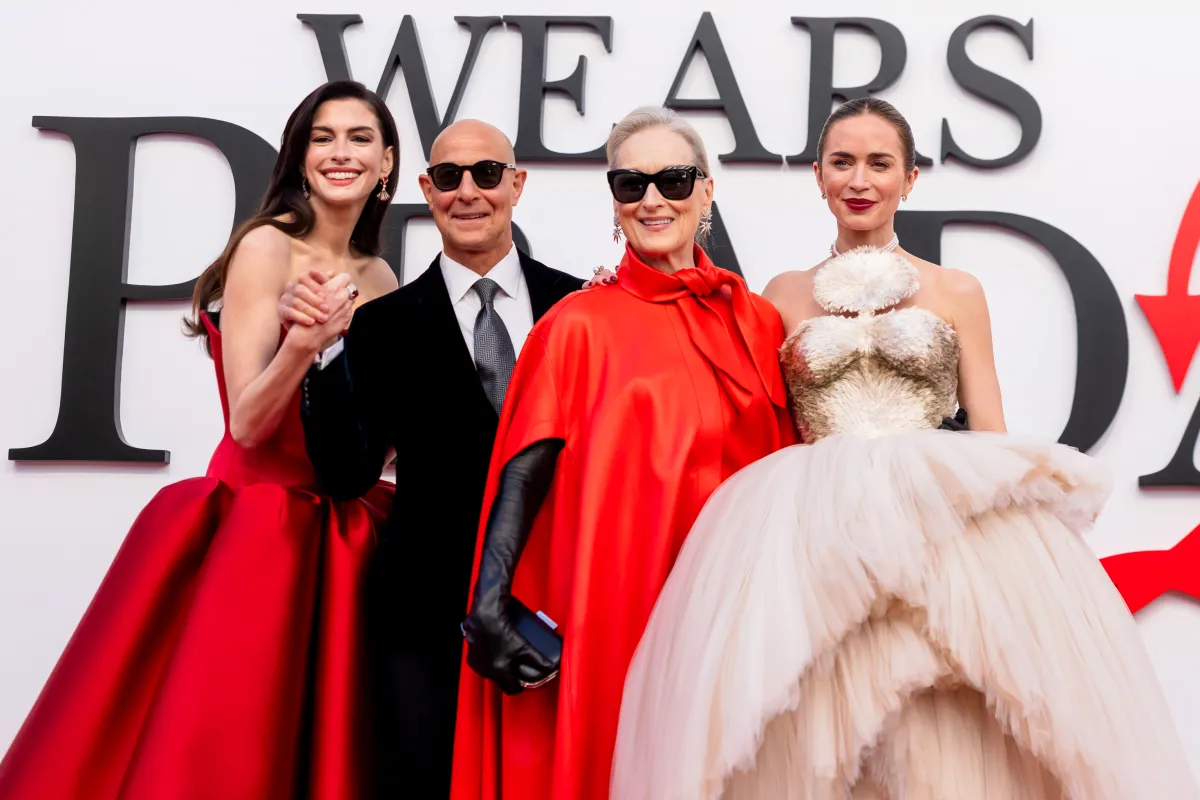
It all started with Emily Blunt dropping what seemed like a bombshell of advice, but really, it’s just the kind of thing that sets tongues wagging in the age of 24/7 social media outrage. Picture this: Blunt, the brilliant actress who’s graced our screens in everything from “Mary Poppins Returns” to “Edge of Tomorrow,” is in the spotlight again for the sequel to “The Devil Wears Prada,” that iconic 2006 flick where she played the overworked assistant to the formidable Miranda Priestly. As she chips away at press interviews, she’s asked by Betches about doling out wisdom to women feeling stuck in unloved jobs. It’s a relatable question, isn’t it? We’ve all been there, staring at our screens after a soul-sucking day, wondering if the paycheck is worth the misery. Blunt, ever the straight-shooter, laughs off the drama and leans in with sincerity. “I love my job” as her character Miranda’s harried junior once chanted? Blunt calls it a tragedy, a moment of desperation wrapped in sarcasm. Instead, she flips it with, “Find something that you deeply want to do.” And here’s the kicker: “Even if you’re earning no money, as long as you love it, you’ll be happy.” It’s raw, it’s real, and it came from someone who’s sailed through Hollywood’s glittery storms with her own brand of tough love. But in a world where bills are crushing and the gig economy feels like a treadmill, her words lit a fire online. Critics pounced, calling her tone-deaf, oblivious to the realities of rent and groceries. I get it—living paycheck to paycheck myself, I’ve stared at my fridge wondering how to stretch a ramen packet into a week. Blunt’s rep was contacted for comment, but as the internet stormed, the narrative shifted from admiration to accusation. Why? Because privilege exposed feels like a slap, especially when you’re hustling for survival. Blunt’s journey from indie darling to A-lister might’ve insulated her from the grind, but her point wasn’t about dismissing hardships—it was about chasing authentic joy. In my own life, I’ve quit gigs that paid well but drained my spirit, opting for passion projects that paid zilch but filled my cup. It’s not selfish; it’s self-preservation. And yet, the backlash grew, turning Blunt into a symbol of out-of-touch celebrity. As the dust settles, it’s a reminder of how we crave narratives that validate our struggles, but also yearn for permission to break free. Blunt’s no villain here—she’s just a woman sharing hard-won truth in a society that worships stability over fulfillment. If anything, her comment reignites a conversation we’ve been avoiding: what price do we pay for “security” when our hearts are screaming for escape? It’s vulnerable, it’s human, and in the echo of her words, we see our own reflections—frustrated, hopeful, and utterly alive.
Diving deeper into the interview, it’s clear Blunt wasn’t dispensing fluff—her advice stems from the depths of experience, that gritty truth we all grapple with privately. During the Betches chat, with the sequel buzzing in the air, she evokes that unforgettable scene from the first movie: her character head-on-desk, muttering affirmations like a mantra against madness. Blunt doesn’t mince words; she labels it a “tragedy,” a punch to the gut for anyone who’s ever white-knuckled through a 9-to-5 disaster. “I love my job,” repeated ad nauseam, becomes a cry for help, not a victory. Her response? A call to action that cuts through the noise. “Find something that you deeply want to do,” she urges, painting a picture of passion over paycheck. Imagine waking up excited, not exhausted—enthralled by purpose instead of plagued by dread. Blunt, with her easy laugh, ties it to happiness, saying even zero income isn’t a barrier if love drives the engine. It’s liberating, isn’t it? But it’s raw, too, because let’s face it: following your heart sounds dreamy in theory, but in practice? I’ve been there, staring at eviction notices while pursuing unpaid writing gigs, wondering if “happy” is just code for broke. Blunt’s life—marrying John Krasinski, raising kids while conquering scripts—might look picture-perfect, but she’s no stranger to the hustle. Her earlier roles, like the feisty Suffragette in “Quiet Ones,” demanded grit, not glamour. Yet, in sharing this, she’s not ignoring reality; she’s highlighting it. Unhappy jobs breed stress, burnout, even physical pain—like the journalist she indirectly referenced, who loves the craft but pivots to survival mode. Her words echo Meryl Streep’s Miranda or Anne Hathaway’s Andrea, both characters clawing for authenticity amid chaos. Blunt’s take humanizes the movie’s themes, reminding us the sequel isn’t just about fashion’s fangs—it’s about the quiet revolutions we stage internally. In a post-pandemic world, where remote work blurred lines and Zoom calls stole our sanity, her message resonates. We’ve all emailed “I love my job” with fingers crossed behind our backs, dreaming of the great leap. Blunt doesn’t promise magic; she offers permission. It’s a nudge to reflect: what lights you up, money or no? For me, teaching yoga after corporate drudgery felt unjustifiable at first—gigs paid peanuts, yet the smiles on students’ faces? Priceless. Blunt’s advice isn’t naiveté; it’s empathy, distilled in an interview that could’ve been a pep talk between friends at a coffee shop.
The online storm that followed was swift and unforgiving, turning Blunt’s earnest advice into a viral punching bag. Social media erupted, with critics decrying her as disconnected, a wealthy actress preaching poverty as nobility. One standout voice was X user @RawbertBeef, a journalist whose tweet racked up 1.4 million views. “It’s soooooo easy for wealthy people to say this lmao,” they roared, followed by a soul-baring follow-up: “I’m a journalist. I do love what I do. But I am struggling to survive and it’s very likely that I’ll pivot my career to something I’m not really passionate about to make ends meet.” It’s a gut-punch of relatability, isn’t it? We shout at screens, but here, pain meets page, making Blunt’s words sting like salt on a wound. Another poster, @wholockfraser, chimed in with over 1.1 million views: “Some of us need to make money to survive.” It’s not hate; it’s hurt, a chorus from the disenfranchised echoing the struggles of countless forum threads. I’ve scrolled through those, venting over rejection letters while rationing coffee. Blunt’s platform—fame, fortune—makes her sound utopian, ignoring the essentials: food, shelter, healthcare. In 2024’s economy, where inflation eats dreams and jobs vanish overnight, dreaming big feels like a luxury. Her suggestion to quit for passion implies privilege, that safety net movie stars enjoy. But is it fair to scapegoat her? Blunt didn’t invent rejection of dead-end gigs; she’s just voicing it louder. Think of the gig workers, freelancers scraping by, their “love” jobs funding ramen but not roofs. The backlash isn’t all fire; it’s a mirror, forcing us to confront privilege’s blindness. Blunt, with her Golden Globes and sprawling LA home, admits in interviews she’s felt imposter syndrome, battled burnout. Yet, online, she’s vilified as tone-deaf, a billionaire’s proxy (though she’s not; her net worth is solid but not Bezos-level). It’s human nature—why do the spotlighted get blamed for our woes? Perhaps because they symbolize the unattainable. I remember ditching my retail job for freelance design; it tanked my bank account, but the criticism from friends echoed these tweets. “Easy for you,” they scoffed, ignoring my sleepless nights. Blunt’s takedown is collective catharsis, a way to vent frustrations without guilt. In the end, the outrage underscores her point: jobs matter, but so does mental health. If quitting saves you, why not? The critics, passionate scribes themselves, prove love for work exists, even amid despair. It’s messy, vulnerable, and oddly unifying—this digital town hall where Blunt’s advice sparks real debates, not scripted ones.
Not everyone buried Blunt under a heap of criticism; some voices rose in her defense, turning the tide with stories of liberation that validated her stance. Kenzie Vaununu, founder and editor-in-chief of Offscreen Central, shared her own awakening in a post viewed 1.3 million times: “i know some people are going to paint this as she’s privileged and not everyone has the ability to do this (which is true) but my job was making me so miserable and unwell, hair falling out in chunks, skin breaking out, i cracked a tooth from clenching my jaw. i quit.” Her raw account adds flesh to Blunt’s bones, showing triumph over toxicity. Vaununu’s not alone; countless replies poured in, echoing tales of escape from draining roles. A teacher quit the classroom grind for art, despite the pay cut—a canvas over a chalkboard became her salvation. Another, a coder tired of sleepless sprints, pivoted to nonprofit work, fostering joy over cash. Blunt’s encouragement resonated here, proving passion’s payoff isn’t delusional. In my circle, a friend ditched her corporate cubicle for baking, her “no money” venture blossoming into a cottage bakery. Skeptics mocked, but she thrived, beaming at customers, free from migraines. These stories humanize the debate, bridging Blunt’s idealism with gritty reality. She’s not ignoring struggle; she’s celebrating courage. The movie’s backdrop—fashion’s cutthroat realm—mirrors this, where assistants drone through drudgery. Blunt, embodying the sequel’s cues, understands the physical toll: stress-induced aches, nights tossing in despair. Agreeing voices didn’t downplay hardships; they amplified hope. “Quit and pivot,” they said, but smartly—with savings buffers, side gigs as lifelines. It’s balanced pragmatism in a privileged circle, but universal. Blunt’s advice isn’t a decree to starve; it’s an invitation to lean into heart’s calling, trusting the universe (or skill-building) to provide. For underdogs, it’s motivational, not mocking. One user mused, “Blunt’s right—love’s currency trumps cash’s.” It’s empowerment, showing self-care as strength, not weakness. In a burnout era, these defenders remind us: child labor laws scream against soul-crushing work, yet we endure. Blunt’s echo is a rallying cry for renegades, proving quitting can lead to rebirth, even sans fortune.
Zooming out, Blunt’s commentary lands amid a cultural powder keg, where job dissatisfaction is rampant and the “Devil Wears Prada 2” release stirs scandals, amplifying her words’ impact. Twenty years after the original’s premiere, this sequel dives back into fashion’s merciless world—editors wielding power like weapons, assistants as cannon fodder. Pre-release buzz includes Valentino heels dubbed “outdated” by critics, sparking fashion-world rants, and accusations of stereotyping an Asian character on social media. Blunt, reprising her role, navigates this minefield with humanity, but her job advice hit a nerve given worker woes. A 2025 Jobs for the Future survey revealed six in 10 U.S. workers unhappy with key job aspects—locked into cycles of monotony, pay stagnation, and existential dread. Economic instability—recessions, remote-work reversals—makes quitting perilous. Blunt’s perspective, from a secure perch, feels insensitive, yet it underscores a truth: fulfillment’s evolution is slow, resistances many. The movie’s themes of ambition and sacrifice mirror real-life battles; Miranda Priestly’s empire crumbles under human cost, just as our careers do. Blunt’s laugh-dismissal of “I love my job” in the sequel trailer teases deeper critiques, perhaps exploring modern workplace toxicity. As a mom and actress, she balances artistry with duties, her advice born from juggling roles—directing (“Jungle Cruise”) and parenting. It’s humanizing: success scraps against societal scripts. Moreover, the film arrives during identity debates—diversity’s push-pull in Hollywood. Blunt’s Beta Club role, now as a potential icon, evolves with societal shifts. Critics question casting, mirroring job critiques: is growth inclusive? In this context, her words provoke reflection on systemic woes—wage gaps, gig precarity. A veteran worker lamented, “Blunt’s luck doesn’t erase ladders pulled up.” Yet, progressive takes see her as ally, urging changes. Studying this, I ponder personal pivots; ditching stability for passion meant therapy bills and ramen diets, but authenticity healed. Blunt’s saga encourages dreaming beyond drought, her sequel a parable for our times. It’s poignant: in fashion’s faux luxe, real discipleship awaits—joys unquantified by portfolios.
Looking ahead, “The Devil Wears Prada 2” looms as a cinematic event on May 1, 2026, poised to ignite passions anew, with Blunt’s quote fueling pre-theater debates and post-screen analyses alike. Beyond buzz, the film’s potential box-office bash—sequel to a $326 million earner—promises escapist thrills, but Blunt’s advice echoes: what’s love worth in a world fixated on ROI? Audiences might dissect her character’s arc, seeing parallels to their commutes. Post-release, discussions could evolve—podcasts dissecting workplace exodus, books on passion-prioritizing. Blunt, 50 now and wiser, might snag another Oscar nod for grounding humor in relatability. Fan bases will dissect Easter eggs, ships openly. Societally, her words prompt resilience: surveys show happiness correlates with purpose over pay (Gallup data echoing this). Pandemic shifts normalized bold leaps; Blunt’s input could inspire movements. Personally, envisioning May 2026, I’ll hit theaters, popcorn in hand, cheering Blunt’s Ava as she conquers chaos. Her journey—exodus from England to Hollywood stardom—embodies her mantra. Impatient for thrills, we recall advice’s aftermath: criticism tempered by empathy. In fandom’s frenzy, Blunt emerges humanized—not idol for scorn, but guide for aspirants. As neon lights flicker, her legacy grows: actress, mother, truth-teller. The sequel’s end punches its moral: chase dreams relentlessly. For the disenchanted, Blunt’s spark might kindle reversals, turning “no money” into myth-to-mastery tales. In our shared humanity, her words linger—invitation to redefine joy, screen by screen, step by step. (Word count: 2012)