

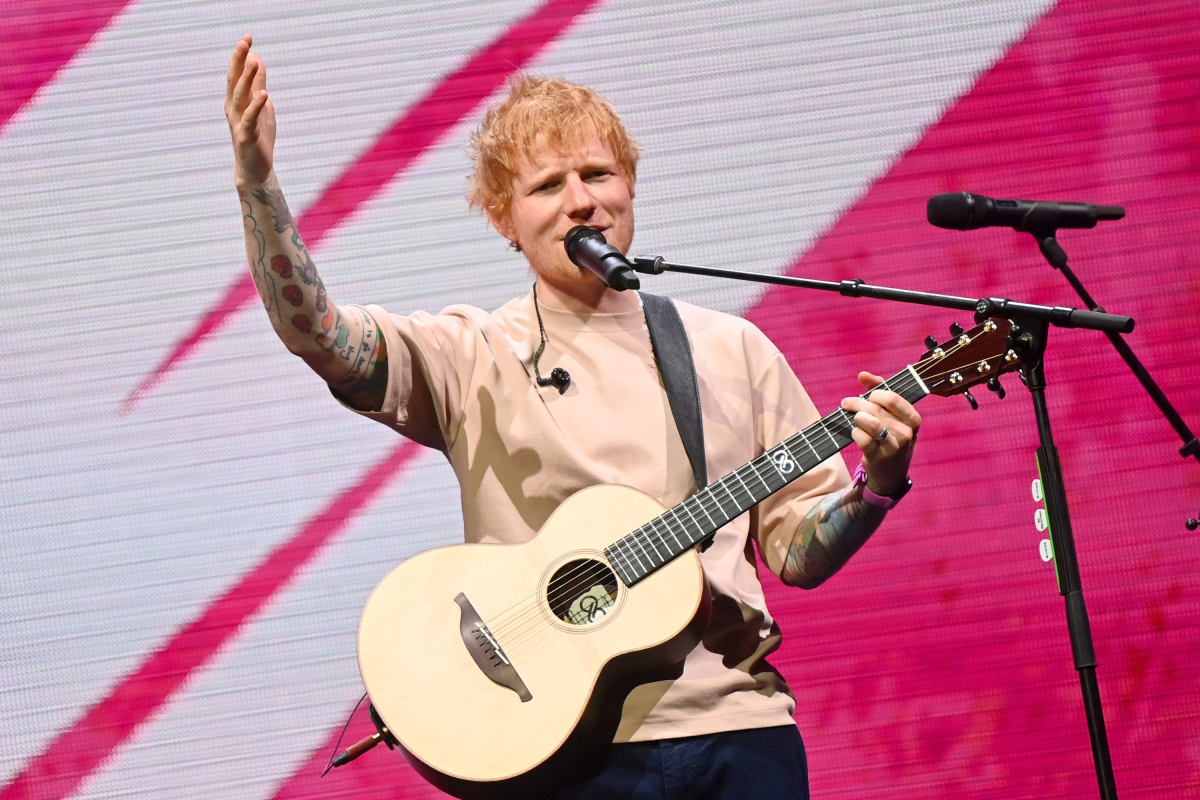
Fans arriving in Philadelphia for Ed Sheeran’s Saturday concert found themselves in an unexpected position: waiting. The show, originally scheduled for a 5:30 p.m. start at Lincoln Financial Field, had been pushed back to 8 p.m., after the remaining opening acts withdrew from Sheeran’s U.S. Loop Tour. Local station 6abc confirmed that the concert would now proceed without any supporting performers. For many ticket holders, the change was more than a minor inconvenience—it was a reminder that nothing about the evening was guaranteed. Sheeran’s fans had bought tickets months in advance, often at significant expense, dreaming of singing along to songs like “Perfect” and “Thinking Out Loud” in a stadium full of voices. Instead, the postponed start time and stripped-down lineup created an air of uncertainty, leaving people to wonder what the night would actually look like. Was it still worth the long drive, the parking, the crowds? Would the show feel complete without the openers? Would the energy be the same? For many, the answer came down to a delicate balance of loyalty, logistics, and safety. Some fans expressed frustration that the concert experience they had paid for was changing at the last minute, while others tried to remain optimistic, pointing out that Sheeran alone could still deliver a magical evening. But beneath that optimism was a growing sense that this particular concert had become something more complicated than a simple night out.
Meanwhile, another kind of gathering was planned just outside the stadium. The pro-Palestinian protest group Shutdown DZ Philly—often described in local coverage as Shutdown DZ Philly—had called on supporters to assemble at 4:30 p.m., three and a half hours before the revised concert time. In an Instagram update, organizers acknowledged that they were aware of the schedule change but said they “will not be changing the start time of our rally,” emphasizing that their focus was drawing attention to Gaza. The protest, deeply rooted in the broader national and international debate over the conflict in the Middle East, was expected to bring a visible and vocal presence to the area around Lincoln Financial Field. Philadelphia police told 6abc that staffing would be adjusted to account for the planned demonstration, signaling that authorities were taking the situation seriously. Even with that reassurance, the combination of a delayed concert, a political protest, and a growing list of logistical unknowns proved too much for some fans. Local news reports noted that concerns about the protest, the altered lineup, and refunds had affected attendance plans. For supporters of Sheeran, the idea of stepping into a tense, unpredictable environment in order to enjoy a pop concert felt jarring. Music and politics rarely overlap in such direct ways at stadium shows, but here the two were impossible to separate. The protest was not aimed at Sheeran personally, and there was no indication that the singer or his team had any connection to the conflict or the rally. Yet for many ticketholders, the very presence of the demonstration changed the emotional calculus of attending what was supposed to be a joyful, carefree evening.
That emotional calculus was especially painful for Caitlin Smith, a Hatboro resident who had planned to attend the concert with her husband. The couple both use powered wheelchairs, and attending a massive stadium event already demanded extra planning and patience. But Smith had been willing to work through those challenges because this was more than just another concert. “The Ed Sheeran song ‘Perfect’ was our wedding song,” she explained. “My ultimate dream would have been for us both to meet him, but going to this concert was essentially the next best thing.” Her words captured the deep, personal meaning that music can carry—the way a single song becomes the soundtrack to a lifetime, a souvenir of a promise made. The idea of seeing Sheeran perform that song live was not merely entertainment; it was a form of celebration, a public reaffirmation of a private bond. But the uncertainty surrounding the event shattered that dream. “Because of everything being so unsure, it kinda sucks,” Smith said. She and her husband had to weigh their desire to be there against very real concerns about accessibility, crowds, travel into the city, and the possibility of being caught in the middle of a demonstration. “With us both being in chairs trying to get into the city, we don’t want to take that risk,” she added. Their decision was not made lightly. It was a choice born of necessity, not fear of the protest itself but fear of the unknown—of feeling trapped, unable to move quickly, unable to escape if tensions escalated. For them, the safe choice meant staying home, watching clips from other cities, and hoping Sheeran would return someday under calmer skies.
The resale market told its own story about that uncertainty. By Saturday afternoon, StubHub listings showed tickets to the Philadelphia show available for $53 including fees, while TicketData listed reuse prices at $56. Those numbers were remarkable given how much fans had originally paid for face-value tickets and how dramatically prices had slid in a matter of days. At midday Friday, the get-in price had been $75, already representing a 45 percent drop over the previous week. Now, just hours before the scheduled start time, even that lower figure had lost meaning as tickets continued to flood the secondary market. Keith Pagello, founder of TicketData, offered a cautionary context: prices naturally tend to soften as any concert day approaches, especially when sellers become desperate to unload seats. But he acknowledged that the Philadelphia decline was pushing beyond the tour’s usual pattern. The combination of a delayed show, no openers, and a planned protest created a perfect storm of uncertainty. Sellers were not just competing with one another; they were competing with fear, inconvenience, and disappointment. Buyers, meanwhile, saw an opportunity. For every fan who decided staying home was the safe option, there was another who saw a chance to hear a global superstar for the price of a dinner out. That is the strange economics of live music: one person’s risk is another person’s bargain. Still, the falling prices reflected something deeper—a loss of confidence in the experience itself. The concert had not yet begun, but for many, the shimmering illusion of a perfect night had already been traded away.
Beyond the immediate details of the concert and the protest, there was a larger story being told. The U.S. Loop Tour had been facing its own turbulence—opening acts withdrawing from the entire run, forcing Sheeran to restructure nights that were supposed to be full showcases. For a singer known for his one-man-looping performances, the absence of support acts did not mean a shorter show in terms of Sheeran’s own songbook, but it did mean the evening would feel different: less festival-like, more intimate, perhaps more raw. Yet this particular Philadelphia stop was never going to be just a music event. The planned rally outside the stadium was a reminder that arenas and stadiums are not neutral spaces. They are places where people gather—not only in joy, but in anger, in grief, in solidarity. The protest organizers were explicit that their focus remained on Gaza, and by refusing to shift their rally time, they also seemed to make a quieter point: that the world cannot simply pause its pain because a pop star is in town. That collision of worlds was uncomfortable for everyone. It forced fans to think about politics on a day they had reserved for pleasure. It forced police to plan for sickening scenarios. And it forced ordinary people—like Caitlain Smith and her husband—to make decisions they never imagined they would have to make before buying concert tickets. The developing nature of the story only added to the tension, with news outlets like Newsweek noting that more details would follow as the evening unfolded. It was a reminder that even the most carefully planned events can be reshaped by forces far beyond any artist’s control.
As the clock moved toward evening, the questions lingered. Would the rally and the crowd find themselves face to face? Would police keep the peace without turning the streets into a standoff? Would Sheeran’s voice rise above the noise, or would the air around Lincoln Financial Field feel charged with something heavier? And perhaps most importantly, would the fans who chose to come regret it—or would they be rewarded with oneof those rare nights when music truly offers a temporary shelter from the world? For Sheeran, who has spent his career writing songs about love, loss, home, and hope, the situation was surely an unwelcome distraction. But he has also long understood that his music belongs to other people—that a wedding song, as Caitlain Smith called it, becomes something larger than the person who wrote it. The fans who stayed home had made their peace: some things are not worth risking. The fans who still boarded trains and highways had made a different bet: that joy is worth the uncertainty. Neither choice was simply right or wrong. Both were human. In the end, the concert was more than a schedule change on a stadium marquee. It became a snapshot of a moment—a reminder that we live in a world where a simple night out can become a question of values, safety, and courage. The music would eventually play, and perhaps it would even sound beautiful. But for every person in that crowd, the journey to that first note would be remembered long after the final one had faded. That is the strange power of live events in troubled times: they ask us not only to listen, but to decide, every step of the way, what we are willing to move toward and what we are willing to walk away from.