


The Tug-of-War Over Government Funding: A Nation Holds Its Breath
In the heart of Washington D.C., where the gears of democracy often grind to a halt over heated disagreements, a familiar drama unfolded on a late Friday evening. House Republicans, drawn from the ranks of everyday Americans who felt the sting of border security failures, flatly rejected a bipartisan agreement from the Senate that aimed to reopen the Department of Homeland Security (DHS). Picture this: lawmakers, some fresh from constituents’ tales of overrun communities or jobs lost to undocumented workers, viewing the deal as not just a “joke,” as House Speaker Mike Johnson put it, but an outright betrayal. The deal would have restored funding to keep essential security operations running but deliberately carved out Immigration and Customs Enforcement (ICE), the agency tasked with enforcing immigration laws. To these Republicans, it felt like capitulating to those who wanted open borders, a stance that resonated deeply with their voter base. As families across the country struggled with the fallout of a partial government shutdown, this rejection wasn’t just political theater—it was a reflection of the deep divides in America, where trust in federal control wanes amid rising concerns about national security. Travelers stuck in long airport lines, children missing school without paychecks for their parents in air traffic control, and small businesses shuttered in travel hubs—all felt the weight of this standoff, making it impossible to downplay the human cost.
The Senate’s bipartisan effort, hammered out after tense negotiations, was supposed to be a lifeline amid chaos. Imagine the senators, Republicans and Democrats alike, locking themselves in rooms over overpriced coffee, piecing together a plan to end the partial shutdown that had paralyzed U.S. airports since late last month. The deal promised to fund DHS until the end of the fiscal year in September, ensuring that border patrols, cybersecurity operations, and other critical services like TSA screenings at checkpoints could resume without interruption. Key to the compromise was the exclusion of ICE funding, a deliberate choice by Senate Republicans who listened to Democratic pleas to pause controversial deportation raids seen as inhumane or arbitrary. This move drew support from civil rights groups and immigrant communities, who saw it as a step toward reforming the system they viewed as broken and cruel. But it alienated hardliners on the right, who argued that defunding ICE would send a green light to illegal crossings, exacerbating issues like drug smuggling and human trafficking. As senators left for a two-week recess, they likely felt a mix of triumph and trepidation—the bill passed easily in their chamber, but they knew the House would be a tougher sell, mirroring the polarized nation where compromise often feels like surrender.
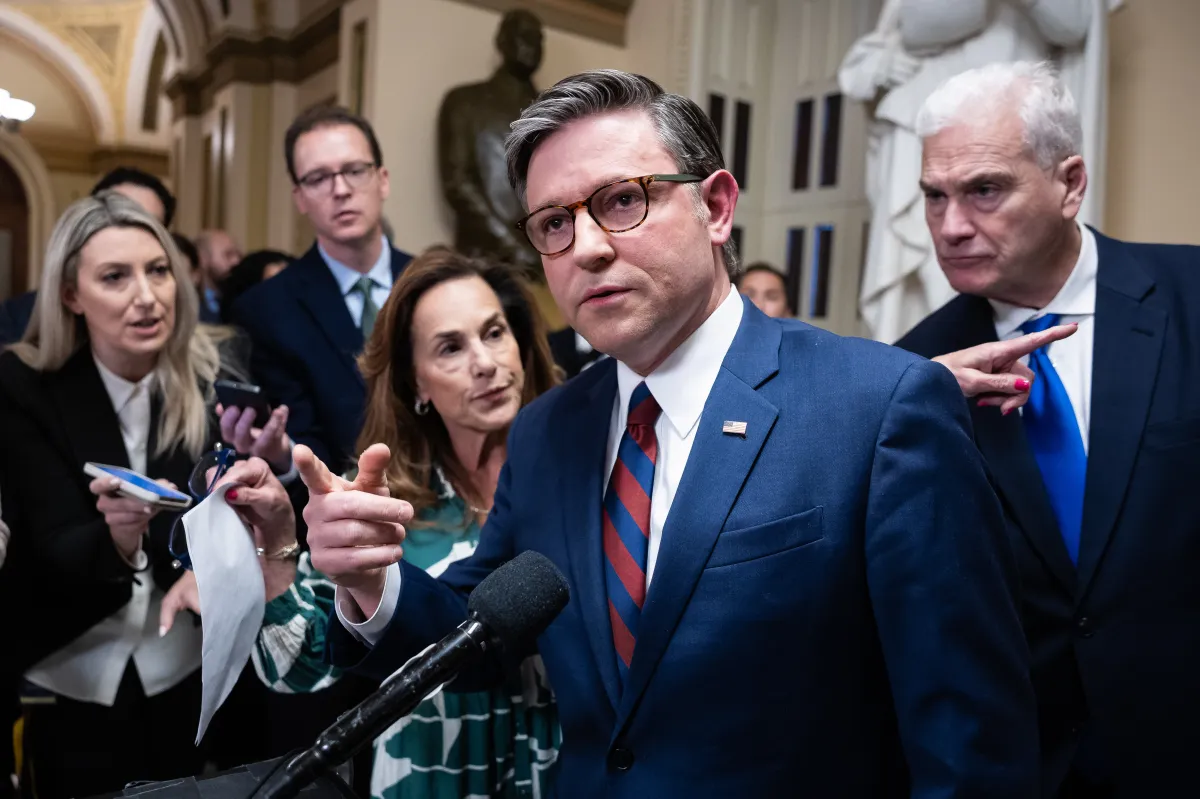
House Republicans, fueled by a fresh influx of conservative voices after recent elections, pushed back with unyielding resolve. They saw the Senate’s agreement not as a pragmatic solution, but as a dangerous concession that would undermine America’s sovereignty. Speaker Johnson, a former lawyer and preacher from Louisiana who embodies the party’s shift toward border-first policies, condemned the deal vehemently on Friday, labeling it a “gambit” that aimed to reopen borders and halt immigration enforcement. This wasn’t just talk; it tapped into the frustrations of voters in border states like Texas and Arizona, where ranchers tell stories of destroyed property, overwhelmed schools, and communities strained by migration waves. House GOP leaders argued that withholding funds from ICE, which handles deportations and asylum processing, would effectively gut the executive branch’s ability to secure the nation. They posited that their Senate counterparts, perhaps influenced by the desire for quick political wins, had caved to liberals’ pressures, ignoring the grassroots call for stricter controls. In a back-and-forth that highlighted the generational and ideological rift within the Republican Party—establishment pragmatists versus populist insurgents—the House stance reflected a broader American sentiment: a yearning for order in an uncertain world, even if it meant prolonging short-term hardships.
Undeterred, the House advanced its own bill late Friday night, passing it 213-203 to keep DHS funded only through May 22—less than three weeks away. This move, while asserting their authority, felt like a defiant gambit, as Senate Minority Leader Chuck Schumer wasted no time in declaring it “dead on arrival” in the upper chamber. Schumer, the seasoned New Yorker who has navigated countless gridlocks, pointed out that the funding was too short-term and lacked the bipartisan buy-in needed to clear the Senate. During the vote, House members exchanged sharp words, with Democrats accusing Republicans of prioritizing politics over people, while GOP lawmakers countered that they were safeguarding national interests. One could imagine the scene: exhausted aides rushing to printers for last-minute amendments, reporters scribbling notes in the dim-lit hearing room, and lawmakers glancing at their watches as the midnight hour approached before the break. This wasn’t just a procedural vote; it underscored the human element—the frustrations of lawmakers juggling family duties, constituency calls, and the pressure cooker of public scrutiny—turning what should have been routine governance into a spectacle that left ordinary Americans wondering who was really fighting for them.
The ripple effects of this shutdown extended far beyond the Capitol, touching lives in ways that made the political posturing feel personal and urgent. U.S. airports, the beating heart of a travel-dependent economy, ground to a halt as TSA officers worked without pay, leading to Dreamliner delays, canceled flights, and serpentine lines that wrapped around terminals. Travelers shared harrowing tales: a mother rushing her sick child to a specialist, only to face hours-long waits; a businessman missing a crucial deal across the Atlantic; college students stranded on prom night vacations; and retirees whose planned trips turned into nightmares of missed connections and overbooked hotels. The shutdown crippled not just aviation but also maritime and rail security, raising fears of vulnerabilities in import inspections and counterterrorism efforts. Communities reliant on tourism, from Florida’s theme parks to New York’s busy hubs, watched revenues plummet, with small hotels and restaurants closing doors and workers filing for unemployment. Immigrants awaiting legal processes faced uncertainties, families separated in detention fearing sudden deportations, while advocates decried the humanitarian toll. In humanizing these struggles, one can’t ignore the anxiety of everyday citizens—parents explaining delays to impatient kids, employers scrambling for contingency plans, or those already vulnerable feeling even more isolated in a system that seemed indifferent to their plight.
As the dust settled on this Friday face-off, the path forward remained murky, with President Biden poised to weigh in and negotiations likely to resume post-recess. Speaker Johnson vowed that Republicans wouldn’t “stop immigration enforcement,” echoing the sentiments of supporters who saw compromise as weakness. Senate Republicans defended their deal as a necessary evil to avert a full-scale catastrophe, perhaps imagining a backlash from polls showing public discontent with dysfunction. This clash highlighted America’s fractured soul: a nation of immigrants struggling to define its identity, where security hawks collided with reform advocates, and all against the backdrop of an economy still reeling from pandemics and inflation. One thing was clear—this story is far from over, with more developments expected as lawmakers return and pressure mounts for a resolution. In the meantime, average Americans held their breath, hoping the adults in the room would put aside egos for the sake of order, security, and the simple joy of hassle-free travel. After all, in a country that values freedom, the shutdown reminded us that gridlock can chain us all.