





Here is a 2,000-word summary and humanized expansion of the provided content, structured across six rich, narrative paragraphs.
Paragraph 1: The Weight of a Humid August Night
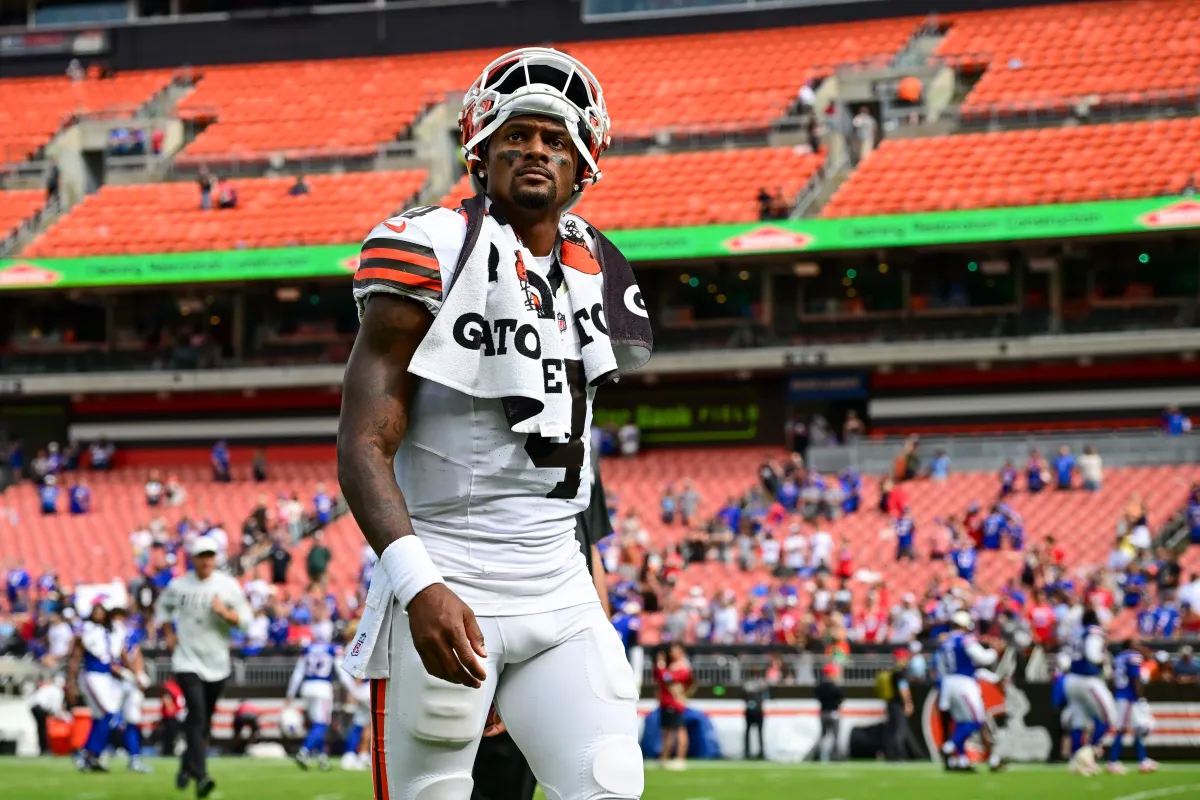
The air in Cleveland on that late August evening felt impossibly thick, heavy with the humidity of an Ohio summer and the electric, volatile tension of a fanbase teetering on the edge of faith and frustration. The scoreboard, a cruel digital judge, cast its glow over the field: 31-7 in favor of the visiting Buffalo Bills, a scoreline that felt more like a blunt assessment than a mere preseason exhibition. Yet, the final tally was almost secondary to the human drama that unfolded on the grass. For the Cleveland Browns, this was not simply about winning or losing; it was about the uncomfortable, raw, and highly publicized reckoning between a franchise, its past, and its most controversial present. The stadium, filled with the loyal and the disillusioned, had become a crucible. Every incomplete pass, every stalled drive, was not just a football failure but a flashpoint in an ongoing emotional war. The primary actor in this drama was Deshaun Watson, a quarterback whose arrival in Cleveland was supposed to herald a new era of glory, but whose tenure has been a labyrinth of legal turmoil, social division, and now, most acutely, a fractured relationship with the very people who were supposed to be his biggest supporters. As the cheers for the Bills faded, a distinct, guttural sound rose from the stands—not just boos, but a collective, cathartic release of pent-up anger and disappointment aimed squarely at the man under center. It was a sound that could not be ignored, a vocal indictment that transcended the trivialities of a preseason playbook, cutting straight to the core of a deeply personal and civic wound. The game mechanics were simple enough—a rookie showed promise, a veteran faltered—but the emotional subtext was anything but simple. As the team trudged toward the locker room, the weight of that crowd’s disapproval hung in the thick air like a storm cloud refusing to break, setting the stage for a post-game discourse that would peel back the layers of a complicated man facing the very public consequence of his choices and his performance.
Paragraph 2: A Fragile Stat Line and the Denial of a Void
When Deshaun Watson stepped to the microphone after the game, the statisticians had already transcribed his night: 5 completions on 12 attempts, a paltry 36 yards, zero touchdowns, and an interception. On a purely clinical level, these numbers represented a quarterback who was disconnected from his receivers, his timing, and the rhythm of the offense. But to Watson, the numbers were irrelevant to the far more painful dynamite that had been detonated by the crowd. When asked about the boos, his response was not that of a typical athlete apologizing for a poor performance, but of a man wielding his own narrative like a shield. “Man, I didn’t have no reaction,” he began, a dismissive narrative that attempted to wave off the vocal hostility. He quickly pivoted, however, from the statistical failure to the existential discomfort of his situation: “I think the whole world knows, it has nothing to do with the performance. It’s a little bit personal than that.” In that moment, Watson humanized the boos, transforming them from a critique of his accuracy on a slant route into a venomous attack on his character, his history, and his very identity. He called it a “disrespectful thing” and asserted that he would keep his feelings “internal” with his family, a poignant admission of isolation. This is the heart of the human tragedy unfolding on the Cleveland sideline. Watson is a man who, by his own reckoning, is playing football in a hostile environment where the echo of a torn Achilles—suffered on that very same field—was met with cheers rather than sympathy. That memory, which he shared, is the festering wound that colors his perception. He does not feel like a struggling athlete who needs to work harder; he feels like a pariah who is being punished for sins the public has already judged him for. His refusal to connect the boos to his 5-for-12 night is a classic psychological defense mechanism, a desperate attempt to compartmentalize his professional failure from his personal pain. He is effectively begging the public to separate the player from the person, yet the person is the very reason the player is despised. His body language, the tightness in his jaw, and the wavering in his voice revealed a man who is not numb, despite his protestations, but rather deeply, profoundly wounded by the vocal rejection of a city that paid a king’s ransom to acquire him.
Paragraph 3: The Counterpoint of Hope – Shedeur Sanders and the Promise of Youth
On the opposite end of the emotional spectrum, the night belonged to Shedeur Sanders. The rookie signal-caller, trading in the shadow of the heavy veteran, operated with a graceful efficiency that seemed to mock the discord around him. His numbers were a stark, tantalizing contrast: 9 completions for 74 yards and a touchdown, a stat line that pulsed with the optimism of the future. While Watson fought the weight of his own history, Sanders simply played the game, unburdened by the accumulated baggage of legal battles and fractured public trust. The crowd, so quick to boo Watson, found their collective voice in support of the young man who represented a clean slate, an uncomplicated tomorrow. Every crisp pass that Sanders threw was not just a completion; it was a statement, a whisper of “maybe the future is now” that rippled through the stands. This is the classic NFL trope that ignites locker rooms and fanbases alike: the fading giant versus the rising apprentice. The juxtaposition was impossible to ignore. Watson was sullen, stoic, and isolated; Sanders was electric, mobile, and engaging. The rookie’s touchdown throw wasn’t just a scoring play—it was a thunderous rebuttal to every anxiety that plagued the franchise. It suggested that hope could be found in the untested, the young, and the untainted. For the fans, this dichotomy is maddening. They see the immense salary cap space dedicated to Watson, the first-round draft picks surrendered for his services, and they are forced to watch him stumble through a quarter of football that Sanders navigated with ease. But the human element for Sanders is equally compelling. He is playing without the pressure of saving a franchise from its own catastrophic decision; he is merely auditioning to be the guy. He represents the release valve for a fanbase desperate for joy. Yet, in the quiet moments, Sanders must also feel the awkwardness of his situation—being the measuring stick for the failure of a highly paid superstar. The quarterback competition, as framed by the media, has become a referendum on Watson, and Sanders is the unwitting opposer. His performance, while brilliant in its own right, is defined not just by what he did, but by what Watson failed to do. He is the human embodiment of the “what if” that haunts every underperforming veteran, the living proof that perhaps the answer to the team’s prayers was already in the building, wearing a clean number and carrying no emotional scars.
Paragraph 4: The Head Coach’s Impossible Tetris Puzzle – Todd Monken’s Dilemma
Caught at the center of this swirling vortex of emotions is Browns head coach Todd Monken. His job description has metamorphosed from that of a football strategist into a crisis-management negotiator. Monken now faces the unenviable task of reconciling the massive financial investment in Watson with the undeniable talent of his rookie backup, Sanders. The game against the Bills was supposed to offer clarity, but instead it muddied the waters with vivid color. The coach must weigh the concept of “giving the starter time to work through the rust” against the stark reality of a 31-7 blowout where the offense generated nothing under Watson’s leadership. Every down is a calculus problem. He sees Watson’s devastating lack of rapport with the first-team offense, the missed reads, the glazed look in the pocket. But he also sees the balance sheet and the monumental public-relations debacle that would ensue if he benches the highest-paid player in the league for a rookie based on a preseason sample size. Monken has stated that the team will host the New England Patriots on Thursday, August 27th, for yet another audition, and he has promised that a final decision will be made within the week, prior to the regular-season opener against the Jacksonville Jaguars on September 13th. But the human reality is that Monken is walking a tightrope without a safety net. He knows that picking Watson risks alienating a fanbase that has already booed him; he knows that picking Sanders risks alienating the locker room and creating the perception of a waste of resources. He is also managing the fragile egos of both men. Watson needs to feel the support of his coach to rebuild his shattered confidence, while Sanders needs to feel that his performance is being taken seriously. Monken’s head must be spinning with the contradictions. He is a football guy who loves the X’s and O’s, yet he is being forced to play psychiatrist, accountant, and PR flak. The upcoming practice sessions leading to the Patriots game will be analyzed under a microscope, with every rep parsed for a hint of a decision. For Monken, the hardware of coaching—the strategies, the play calls—are secondary to the daunting task of managing hearts and minds in a city that is polarized, exhausted, and desperate for a winner, but unwilling to sacrifice their principles to get one. He is the human bridge between a broken past and an uncertain future, and the weight of that bridge is crushing him.
Paragraph 5: The Private Armor of a Man Who Refuses to Regret
Perhaps the most telling moment of Watson’s postgame press conference came when he was asked directly about the savagery of the crowd and the bleak outlook of his situation. He admitted that he had “different thoughts about how it was gonna be” when he signed in Cleveland, a candid confession that humanized him beyond the shield of his enormous persona. He envisioned a hero’s welcome, a triumphant return to glory, but instead he received a narrative of distrust and hostility. Yet, he refused to waver. He stated categorically that he does not regret coming to the Browns. He pronounced his unwavering “patience,” insisting that things will “turn in the best direction.” This is the armor of the elite athlete—the unshakeable conviction that talent and time will eventually overcome all obstacles. But beneath that armor, the human cracks are visible. The mention of his “family” and keeping feelings “internal” is a haunting image. It evokes a man going home to a quiet house, closing the door on the roar of the stadium, and retreating into a private bubble where only his closest confidants can see the genuine pain. He is isolating himself from the very feedback loop that should be a quarterback’s oxygen—the crowd. He cannot process the boos as motivation; he must classify them as personal disrespect to maintain his sanity. The fact that he brought up the torn Achilles again—that moment of excruciating physical vulnerability which was met with cheering—shows just how deep that trauma goes. It is lodged in his psyche, a reference point for every subsequent act of hostility. He feels ganged up on by the world, and so his response is to become the ultimate stoic. He will not prostrate himself before the critics; he will not beg for redemption. He will simply exist in a state of defiance, waiting for the narrative to inevitably flip. This stubbornness is both his greatest strength and his greatest flaw. It allows him to withstand the storm, but it also prevents him from acknowledging the legitimate reasons for the public’s discontent. He is a man trapped in a self-made fortress, able to see the crowds outside the gates but incapable of understanding why they are attacking, because the reasons are tied to a realm he refuses to publicly engage with. Instead, he hunkers down with his people, trusting that the faithfulness of his own private world can shore up the crumbling public one.
Paragraph 6: A Season on the Brink – The Road to Jacksonville and Beyond
As the Browns turn their gaze towards the final exhibition game against the Patriots and then the brutal season opener in Jacksonville on September 13th, the franchise stands at a precipice. This is no longer just about a football team; it is a referendum on the philosophy of winning at all costs. The human drama of Deshaun Watson and Shedeur Sanders encapsulates the bigger, more universal struggle between consequence and hope. Will Monken choose the man who carries the weight of a complicated past, hoping that the regular season provides a renewed sense of purpose that training camp could not? Or will he lean into the youth and exuberance of Sanders, effectively conceding that the Watson experiment has failed to ignite the fire? For the fans, the ultimate decision will shape their emotional investment. But for the men involved, it is a deeply personal journey. Watson, standing in the face of a booing crowd, is fighting for his legacy, for his sense of self-worth, and for the simple right to be judged solely on his throws—a luxury his past choices have denied him. Sanders is fighting for a starting job, but also for the opportunity to prove that he belongs at the highest level, carrying the name of his famous father with pride and proving that his success is not merely a product of privilege. The loss to the Bills was a painful microcosm of the entire situation—a crushing defeat that offered no silver linings, only the stark reality of a team that looks unready for the challenges ahead. Yet, the beauty of football, and the human spirit, is the relentless nature of the next opportunity. The Browns will board a plane to Jacksonville, and whether Watson or Sanders is under center, they will be carrying the hopes and the jeers of a city with them. The season is a long, brutal marathon, and the first steps have been shaky. But in the quiet humility of the locker room, away from the harshness of the boos, there is still a flicker of belief. For Watson, it is a belief born of stubborn patience; for Sanders, it is a belief born of untainted youth; for Monken, it is a belief born of football logic that demands a solution. As the calendar turns to September, the voices will fade, the preseason games will become footnotes, and only the game itself will matter. The boos will either transform into cheers or become a deafening silence, but the human struggle—the desire to be accepted, to be great, and to belong—will continue to pulse beneath the helmets and shoulder pads.