






The sudden and shocking news that reverberated across the professional basketball landscape on Tuesday, May 19, shook sports fans to their core: the Dallas Mavericks had officially parted ways with head coach Jason Kidd. For many, this was not just a surprising executive decision, but an outright stunning dismissal that defied almost all conventional basketball logic. Over his highly decorated five-season tenure, Kidd had not only established himself as a steadying presence on the sidelines, but he had also delivered tangible, elite-level success to the city of Dallas. He had guided the franchise to a highly coveted Western Conference championship banner, secured a memorable appearance in the NBA Finals, and masterminded numerous deep, gritty playoff runs that captured the imagination of the fan base. Yes, the recently concluded 2025–26 campaign had been an unmitigated disaster on paper, culminating in a dismal 26–56 record that left the team far outside the postseason picture. Yet, almost any objective observer of the league understood that the blame for this collapse did not fall on the shoulders of the coach. Kidd was widely seen as a masterful manager of human egos who had been dealt an impossibly bad hand, forced to steer a luxury cruise ship through a Category 5 hurricane of injuries, roster tear-downs, and front-office restructuring. To fire him now, especially when he still had four years and a colossal $40 million left on his highly lucrative contract extension, felt like a dramatic, cold-blooded pivot. It signaled that the franchise was no longer interested in stability or working through the natural growing pains of a rebuild; instead, it was a declaration of war on the status quo, signaling a desperate desire for an entirely new identity and a fresh, evolutionary voice to lead the team forward.
To truly understand the sheer magnitude of the uphill battle Jason Kidd faced during his final year in Dallas, one must examine the chaotic, almost surreal sequence of events that dismantled the Mavericks’ roster. The entire organization was still operating under the heavy, lingering shadow of the monumental trade that sent generational superstar Luka Doncic elsewhere, a franchise-altering transaction that tore out the competitive heart of the team and forced them into a frantic, reactionary state. In a desperate bid to remain immediately competitive and appease a restless fan base, the front office engineered a series of high-profile blockbuster transactions, bringing in superstars Anthony Davis and D’Angelo Russell. However, this star-studded experiment proved to be a highly volatile, short-lived illusion; as the team struggled to find chemistry and plummeted down the standings, the front office panicked yet again, moving both Davis and Russell at the trade deadline in a massive fire sale. Adding to this tactical whiplash was a devastating rash of bad luck on the medical front. Dereck Lively II, the young, energetic big man who was supposed to be the anchor of Dallas’s interior defense and the perfect pick-and-roll partner, was sidelined with severe injuries for almost the entire season. Concurrently, the mercurial but brilliant Kyrie Irving did not play a single minute of basketball the entire year, leaving the Mavericks completely devoid of elite, veteran playmaking on the perimeter. Kidd was essentially forced to coach two completely different, incomplete teams over the course of eighty-two games, relying on G-League call-ups and temporary rotation players to survive. Under such extraordinarily turbulent parameters, his dismissal serves as a stark, humanizing reminder that in the high-stakes world of the NBA, loyalty and past credit are easily discarded when a franchise decides to seek a clean break from its past.
The architect behind this radical clean break is none other than Masai Ujiri, the brilliant and fiercely independent new president of basketball operations, whose arrival in Dallas has instantly injected a sense of high-stakes drama and massive expectation into the franchise. Ujiri is a visionary executive who has never been afraid to make the kind of ruthless, deeply unpopular decisions required to build a championship culture, famously exemplified by his historic trade of DeMar DeRozan for Kawhi Leonard during his legendary run with the Toronto Raptors. In Dallas, Ujiri looks out at a landscape of immense, tantalizing potential that far belies the team’s recent twenty-six-win season. The absolute crown jewel of this promising new era is Cooper Flagg, the reigning NBA Rookie of the Year, whose breathtaking freshman campaign showcased the kind of transcendent, two-way superstar potential that franchises spend decades praying to find in the draft. Flagg is a basketball prodigy whose unique blend of defensive versatility, offensive poise, and competitive fire makes him the perfect cornerstone upon which to build a modern powerhouse. Furthermore, Ujiri holds a highly envious vault of assets to construct a supportive ecosystem around his young star, including the No. 9 and No. 30 overall picks in the upcoming 2026 NBA Draft, alongside a treasure chest of future first-round draft capital acquired during the great Doncic reset. This rare combination of a generational young superstar, high-value draft equity, and financial flexibility has instantly transformed the Dallas coaching position into the single most attractive, highly coveted opening in all of professional sports. Ujiri is not looking for a safe, uninspiring retread to fill the seat; he wants a developmental genius and a cultural visionary who can take this raw clay and sculpt it into a dynastic masterpiece.
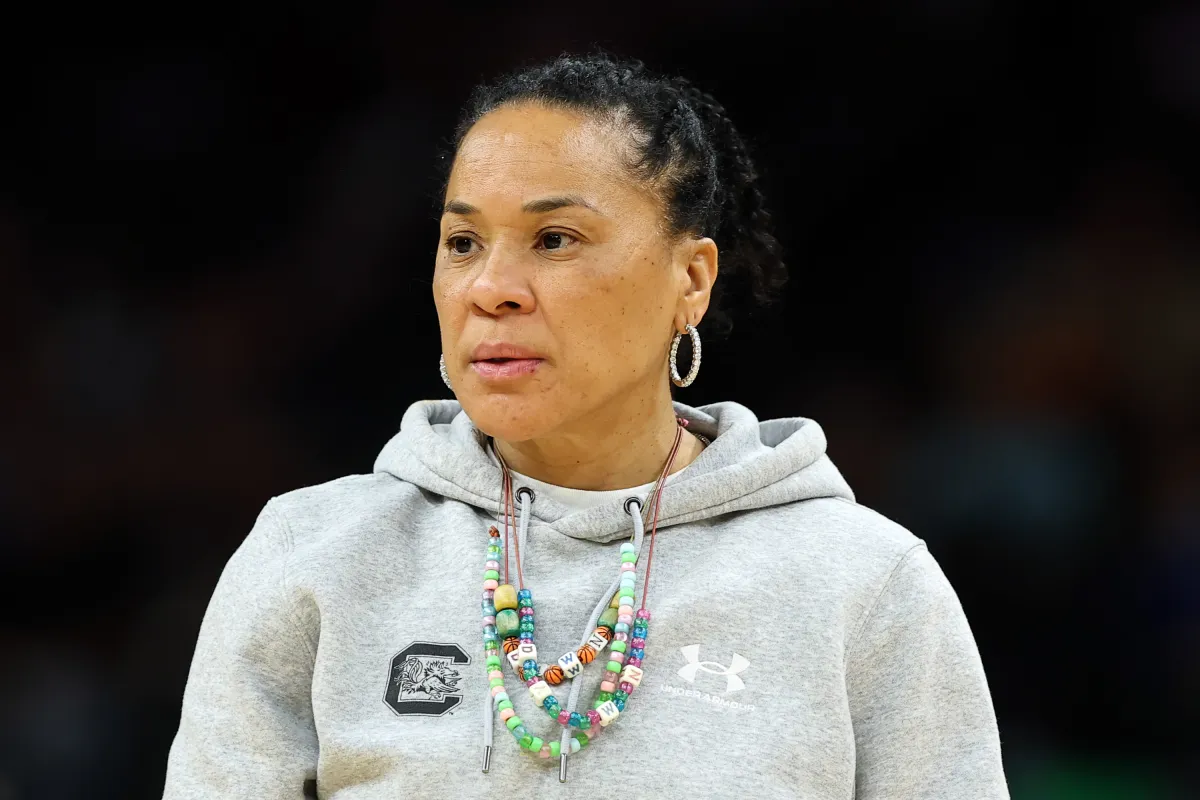
It is within this atmosphere of bold experimentation and high-stakes reinvention that one of the most exciting, paradigm-shifting names in basketball history has surfaced: Dawn Staley. To call Dawn Staley a mere candidate is to undersell the towering legacy of a woman who has spent her entire life dominating every single facet of the sport she touches. As a Naismith Memorial Basketball Hall of Famer, three-time NCAA national champion, and Olympic gold medalist, Staley has spent the last eighteen years building an absolute juggernaut with the South Carolina Gamecocks, turning a once-overlooked program into a modern dynasty characterized by suffocating physical defense, immaculate tactical discipline, and a deep-seated culture of sisterhood and personal accountability. Staley’s basketball journey began in the streets of North Philadelphia, where she forged the legendary, uncompromising toughness that defined her career as a six-time WNBA All-Star and three-time Olympic gold medal-winning point guard. When she transitioned to the sidelines, she brought that exact same player-first, gritty mentality with her, earning the reputation as one of the master communicators in modern sports. She does not just teach Xs and Os; she molds character, instills resilience, and commands safety and respect from everyone who enters her orbit. Her ability to connect with young athletes on a deeply human level, helping them navigate the dizzying pressures of sudden fame and immense athletic expectations, has made her a highly revered figure across the entire basketball universe, respected equally by coaches and athletes in both the men’s and women’s games.
The conceptual fit between a culture-builder of Dawn Staley’s caliber and a young, rebuilding NBA roster centered around Cooper Flagg is as brilliant as it is unconventional. Historically, the transition from college to the NBA has been fraught with challenges, but Staley possesses a rare, magnetic authority that transcends traditional boundaries, making her uniquely suited to guide young professionals through the grueling, eighty-two-game marathon of an NBA season. Her potential candidacy in Dallas is not a sudden, out-of-nowhere publicity stunt; she has been on the radar of NBA executives for years, notably interviewing for the highly pressurized New York Knicks head coaching vacancy back in 2025. Reflecting on that experience, Staley spoke with characteristic candor and self-assurance, admitting that if the Knicks had offered her the role, the sheer historical weight and competitive challenge of the job would have made it something she absolutely would have felt compelled to accept. For a young star like Cooper Flagg, being coached by someone of Staley’s stature would be an incredible asset; she knows precisely what it takes to carry the burden of franchise-altering expectations, and her track record of nurturing elite talent like A’ja Wilson into WNBA MVPs proves she can maximize generational talent. In a league where tactical execution often takes a backseat to player relationship management and psychological motivation, Staley’s unique blend of motherly fierce protectiveness, elite tactical understanding, and offensive pedigree represents a masterclass in modern, empathetic leadership that could unlock the Mavericks’ true potential.
By actively exploring the possibility of bringing a legend like Dawn Staley into the NBA fold, Masai Ujiri is once again demonstrating his fearless, progressive willingness to shatter the thickest glass ceilings in professional sports. This is a path Ujiri has trodden before; during his tenure in Toronto, he broke barriers by interviewing Becky Hammon, the championship-winning mastermind of the WNBA’s Las Vegas Aces, proving that his search for elite leadership has never been confined by outdated gender norms. The traditional NBA coaching hiring cycle has long been criticized for its repetitive, risk-averse nature, often recycling the same handful of experienced male coaches regardless of their actual cultural fit or modern strategic adaptability. By opening the door to visionary leaders from the collegiate and women’s ranks, Dallas is positioning itself at the absolute vanguard of a progressive, highly exciting evolution in sports administration. Hiring Dawn Staley would not merely be an emotional, historic milestone that would inspire millions of women and girls worldwide; it would be a cold, calculated, and incredibly smart business decision aimed at installing one of the most proven winners in athletic history at the helm of a young, ascending franchise. As the Mavericks embark on this highly anticipated new era, they stand at a historic crossroads where they can choose to tread the safe, well-worn path of convention, or they can choose to be courageous, leap into the future, and redefine what an NBA head coach can look like, proving once and for all that true greatness knows no boundaries.