





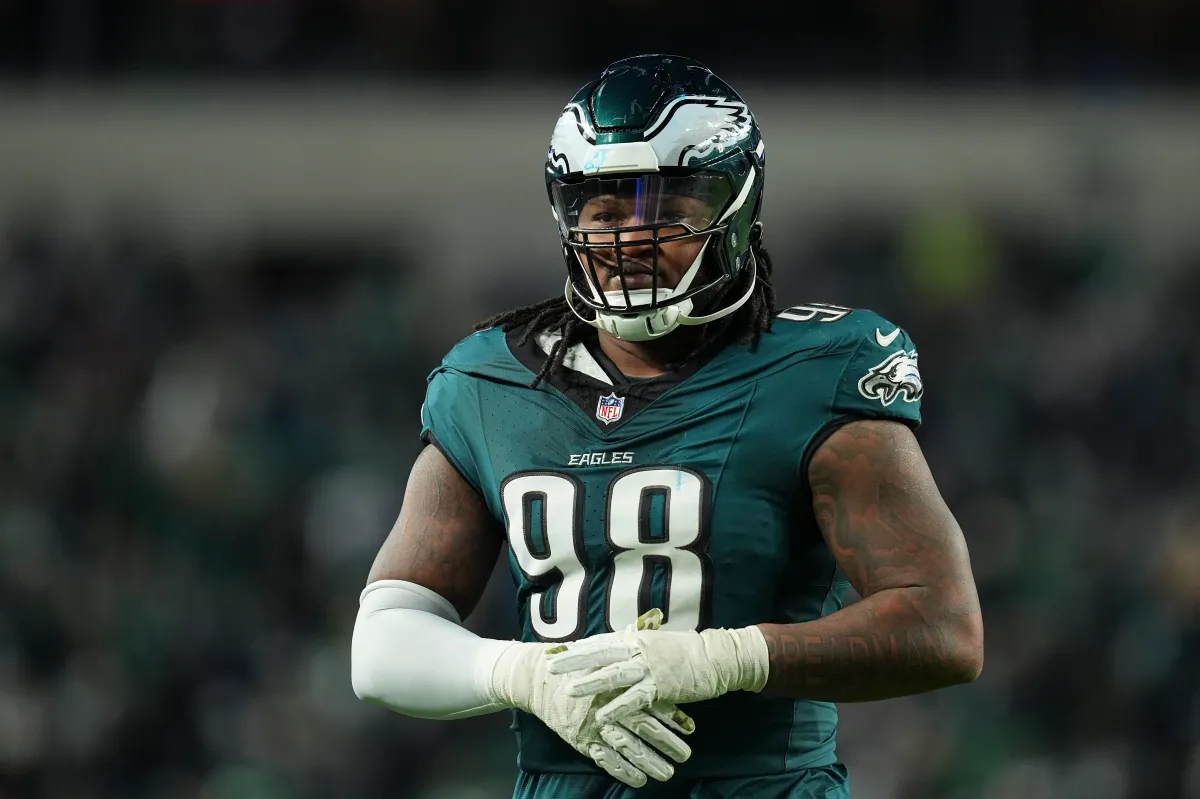
In the hyper-competitive arena of the National Football League, front-office decisions are rarely purely financial; they are deeply human dramas fueled by calculated gambles, legacy-building, and the fragile nature of athletic promise. Nowhere is this high-stakes chess match more apparent than in the City of Brotherly Love, where the Philadelphia Eagles recently found themselves at a fascinating crossroads during the blockbuster trade sweepstakes for superstar edge rusher Myles Garrett. While fans and analysts salivated at the prospect of landing a generational defensive disruptor like Garrett, the Eagles ultimately declined to pull the trigger due to a stubborn, protective stance over their young Pro Bowl defensive tackle, Jalen Carter. For a franchise known for its aggressive pursuit of elite talent, drawing a hard line in the sand to protect Carter seemed to signal that the young defender was regarded as an untouchable building block for the team’s defensive identity. Yet, this public display of loyalty has quickly collided with a much cooler, more calculating reality behind closed doors, revealing a complex tug-of-war between the emotional investment in a player’s immense ceiling and the cold, hard pragmatism of modern NFL business management. Fans who assumed Carter’s position on the roster was completely secure were soon forced to reevaluate their assumptions as insider reports began to trickle out, painting a far more complicated picture of his relationship with the front office. The juxtaposition of keeping him out of trade discussions while simultaneously dragging their feet on securing his long-term financial future has created a captivating narrative of hesitation, risk management, and strategic leverage. It raises the compelling question of how much a franchise is truly willing to invest in a talented but mercurial young star when the price of admission requires both historic financial compensation and an immense leap of faith in his future personal growth and maturity on and off the gridiron as this grand sports drama unfolds in our modern high-stakes corporate sports entertainment landscape, capturing the wild imagination of a passionate fan base.
The delicate cracks in this high-priced relationship were illuminated by veteran league insider Albert Breer of Sports Illustrated, who shed light on a quiet, underlying tension currently defining the negotiations between the Eagles and their star defender. According to Breer, the organization’s apparent reluctance to offer Carter a lucrative, path-clearing contract extension speaks volumes about their current state of apprehension. This internal hesitation is particularly glaring because it directly contradicts the long-established philosophy of Philadelphia’s front office, led by general manager Howie Roseman, who has earned a reputation across the league for being exceptionally proactive. Traditionally, the Eagles have prioritized identifying their core home-grown talents early in their careers and locking them down with long-term deals well before their rookie contracts expire, recognizing that early signings yield much friendlier price tags in a rapidly escalating market. By securing these agreements ahead of schedule, the team has historically managed to establish financial stability, build strong player relationships, and maintain crucial salary cap flexibility to build competitive rosters year after year. Consequently, the fact that the calendar has drifted into the summer months without Jalen Carter signing a massive new contract extension is not merely a bureaucratic delay; it is a highly significant, quiet statement about the team’s underlying uncertainty. In a league where silence often speaks louder than press conferences, this lack of urgency indicates that the Eagles are deliberately taking a step back to evaluate the long-term viability of their investment. By refusing to follow their typical playbook of early financial commitment, the front office is signaling that they are not yet fully convinced that Carter has earned the unconditional, franchise-altering payday he undoubtedly desires, shifting the pressure squarely back onto the young defender’s shoulders as the offseason marches forward toward an uncertain training camp, forcing everyone around the organization to carefully ponder if and when this cold corporate standoff will eventually resolve itself into a mutually beneficial agreement that respects both his prodigious physical gifts and the team’s absolute need for stability.
To put this unfolding drama into perspective, Breer drawing a direct parallel between Carter’s current financial limbo in Philadelphia and the high-profile situation surrounding dynamic wide receiver George Pickens with the division rival Dallas Cowboys is highly illuminating. Pickens is coming off an absolutely stellar, career-defining campaign during the 2025 season, a breakout year where he put up eye-popping numbers, securing 93 receptions for a staggering 1,429 yards and reaching the end zone nine times. Under normal circumstances, such elite production from a young offensive cornerstone would trigger an immediate rush to the negotiation table to secure a historic, bank-breaking contract extension. However, the Cowboys’ front office has adopted a remarkably disciplined, wait-and-see approach, demanding that Pickens prove his spectacular performance was not a temporary flash in the pan but rather a sustainable baseline of elite play before they commit to a massive, multi-year financial obligation. This strategy of demanding back-to-back dominance has increasingly become the preferred safety net for cautious front offices operating under the immense pressure of salary-cap constraints. Just like Pickens in Dallas, Jalen Carter is finding himself in a frustratingly similar professional boat, anchored by the cold reality that past achievements do not automatically guarantee future security in a “what have you done for me lately” league. Despite his undeniable on-field dominance, Carter must now navigate the psychological burden of having to validate his worth all over again, demonstrating to a skeptical front office that he is capable of maintaining his elite trajectory. This shared predicament highlights a broader, fascinating shift in NFL team-building philosophy, where even the most talented young stars are being forced to shoulder the financial risks of their own development while franchises sit back and wait for definitive proof of maturity and consistency, turning the negotiation process into a grueling test of mental fortitude and patience that challenges even the most confident players as they strive to balance the ultimate goals of athletic greatness with long-term personal stability, comfort, and lasting financial peace of mind.
For Carter, however, the hesitation from Philadelphia’s decision-makers is not merely a reflection of physical production, but rather a deeply human story of personal growth, accountability, and the heavy baggage of past mistakes. Despite earning two Pro Bowl selections and a prestigious All-Pro nod during his brief tenure, his journey has been shadowed by a series of off-the-field controversies and disciplinary lapses that have understandably forced the Eagles to pause and reflect. The memory of his high-profile suspension last season, which occurred after a highly publicized on-field altercation where he spit on rival Dallas Cowboys quarterback Dak Prescott, served as a stark reminder of the maturity issues that still occasionally threaten to derail his immense physical talent. Far more profound, however, is the lingering shadow of the tragic, pre-draft street racing accident in Athens, Georgia, which claimed the lives of his former University of Georgia teammate Devin Willock and recruiting staffer Chandler LeCroy. That devastating event, which occurred just as Carter was preparing to enter the professional ranks, has left an indelible mark on his reputation, raising persistent questions about his judgment, decision-making, and emotional readiness for the dizzying spotlight of NFL stardom. When a franchise prepares to commit tens of millions of dollars in guaranteed wealth to a single individual, they are buying more than just a defensive tackle who can collapse a pocket; they are investing in a brand representative, a locker room leader, and a human being whose character must withstand immense pressure. The Eagles’ current financial reluctance is a direct reflection of this delicate calculus, as they weigh his generational, game-wrecking abilities against the very real psychological and public relations risks associated with his turbulent personal history, forcing both parties to confront the uncomfortable reality that talent alone is sometimes not enough to guarantee long-term organizational trust, especially when the stakes involve the identity and cultural values of an entire metropolitan sports market that demands complete devotion, accountability, exemplary behavior, and unwavering focus on physical dominance and championship glory.
This strategic standoff has created an intricate, high-stakes game of financial chicken between Jalen Carter’s camp and the Philadelphia front office over the elusive concept of contract flexibility. Insider analysis suggests that if the Eagles do ultimately decide to offer Carter a contract extension before he enters his critical fourth year in the league, any proposed agreement will likely be heavily structured to protect the team’s long-term financial health. This means the contract would almost certainly feature creative escape hatches, performance-based triggers, and behavioral clauses designed to give the franchise maximum flexibility in case of future on-field or off-the-field setbacks. For a young athlete who risks his physical well-being every single Sunday on the gridiron, agreeing to a deal that prioritizes team flexibility over ironclad personal security is an incredibly difficult pill to swallow. Carter and his representatives understand that a player’s leverage is never higher than when they are healthy and coming off personal accolades, making them naturally resistant to signing any agreement that minimizes their guaranteed payout. If Carter refuses to grant the team this desired financial flexibility now, the most logical path forward is for him to simply reject any sub-optimal offers and play out the next season, betting on himself to force the team’s hand later. This decision, however, carries its own immense, stomach-churning risks, as a single severe injury or a dip in on-field production could permanently damage his earning potential in a brutal, unforgiving sport. The resulting negotiation stalemate is a classic human conflict of risk management, where a young athlete’s desire for immediate, life-changing financial security clashes directly with an organization’s systemic need to protect its assets from unforeseen catastrophe, leaving both sides locked in a waiting game that will test their resolve, strategic patience, and willingness to endure the compounding pressures of the public, the national sports media, and the high-stakes environment of a highly competitive Eastern division battleground, where every single snap on the field could either cement his legacy or shatter his financial dreams forever.
Ultimately, the upcoming 2026 NFL season is shaping up to be an absolutely pivotal, high-stakes battlefield that will determine the trajectory of Jalen Carter’s entire professional career and his future in Philadelphia. If Carter can channel his immense natural gifts, block out the external noise, and put together another undeniable, Pro Bowl-caliber performance, he will effectively strip the Eagles of all remaining leverage in future negotiations. In that scenario, the front office will find itself backed into a corner, forced to pay him top-of-the-market, historic numbers to prevent their premier defensive anchor from walking away in free agency. Conversely, any step backward, whether due to injuries, inconsistent play, or further disciplinary issues, will validate the franchise’s cautious approach and potentially cost Carter tens of millions of dollars in generational wealth. This makes the next chapter of his journey a truly compelling human drama, as a young man must perform under the double-sided pressure of validating his immense athletic worth while simultaneously proving his personal maturity to a watchful public. The Eagles are taking a massive gamble of their own, risking the possibility of paying a much higher premium down the line in exchange for the peace of mind that another year of evaluation provides. In the end, this situation serves as a powerful reminder that behind the sterile statistics and complex salary cap sheets of professional football are real people navigating trust, redemption, and the relentless pursuit of security. Whether Carter ultimately secures his dream contract in Philadelphia or is forced to seek his fortune elsewhere, his path forward will stand as a defining testament to how NFL franchises balance the seductive allure of elite talent against the essential need for character, trust, and long-term organizational stability in an industry where nothing is ever truly guaranteed for even the most exceptional athletes, leaving sports fans and executive leaders alike to copy and watch this fascinating personal and structural saga unfold, wondering what the eventual outcome will mean for the franchise’s legacy and championship aspirations moving forward.