



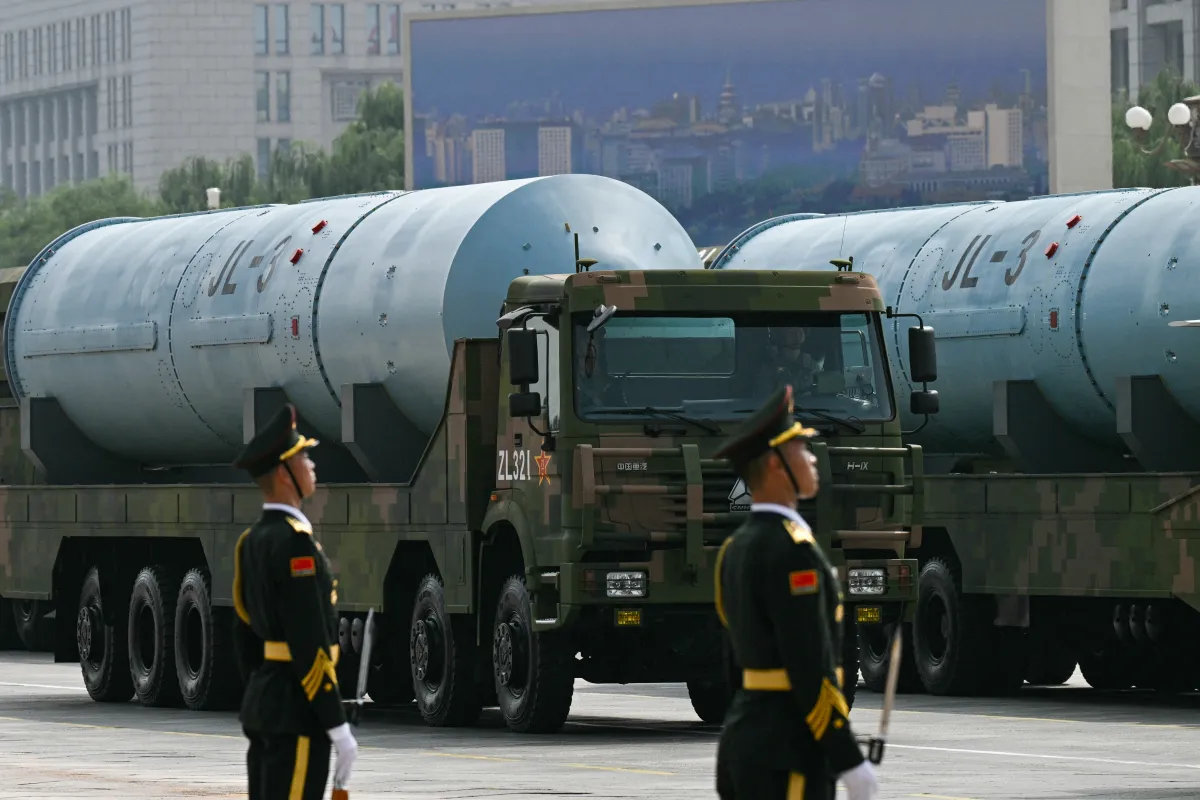
On a quiet Monday afternoon, the vast expanse of the Pacific Ocean became the backdrop for a stark demonstration of rising military might. China’s navy successfully launched a nuclear-capable ballistic missile from an undisclosed submarine, sending a dummy warhead hurtling across the sky to land precisely within a pre-designated zone in the South Pacific. While the Chinese state media, Xinhua, was quick to frame the 12:01 p.m. Beijing time launch as a routine, legally compliant component of its annual military training, the event has sent ripples of anxiety throughout the international community. This high-stakes demonstration marks the second major Chinese missile test in these waters in recent months, following a similar intercontinental ballistic missile launch by Beijing’s Rocket Force in September 2024, signaling a steady and confident ramp-up in China’s global defense posture.
Despite Beijing’s assertions that the exercise was completely natural, targeted no specific nation, and was preceded by proper international notifications, neighboring democratic partners in the Pacific did not hide their deep unease. Leadership across Australia and New Zealand spoke out quickly, viewing the test not as a routine drill, but as a provocative display of power. To these nations, the sudden appearance of a nuclear-capable weapon in their shared backyard serves as a stark reminder of the fragile balance of power in the Indo-Pacific. The timing of the launch, coming amidst broader geopolitical anxieties, has reignited long-standing debates over how to manage China’s growing security footprint and keep the peace in one of the world’s most vital maritime regions.
Expressing grave concern from Suva, the capital of Fiji, Australian Foreign Minister Penny Wong did not mince words, labeling the missile test as fundamentally “destabilizing to the region.” Wong pointed out that the test cannot be viewed in isolation; rather, it is part of a broader, rapid military buildup by Beijing that continues to lack the transparency and reassurance neighbor nations require to feel secure. From Canberra’s perspective, a rising military power must reassure its neighbors through open communication rather than sudden, dramatic displays of force. Without this transparency, such actions naturally breed suspicion, fueling a regional arms race that local leaders are desperately trying to avoid.
Echoing Australia’s frustrations, New Zealand’s top diplomat, Winston Peters, called the unannounced launch an “unwelcome and concerning development” that directly threatens the hard-won peace of the South Pacific. Peters specifically pulled focus to the localized geography of the incident, pointing out that the missile had been fired directly into the South Pacific’s designated nuclear-free zone. Established by the historic 1986 Treaty of Rarotonga, this zone bans the testing of nuclear explosive devices in the area. Though China signed on to protect this treaty’s protocols in 1987—promising not to test nuclear weapons in the region or threaten local nations—this latest high-tech delivery system test tests the spirit, if not the letter, of that long-term environmental and security commitment.
Meanwhile, Japan found itself caught in the immediate logistics of the military exercise. The Japanese government revealed that its coast guard received a last-minute warning from Chinese hydrographic authorities on Sunday regarding potential falling rocket debris within Japan’s exclusive economic waters, followed by a formal embassy notification just 90 minutes before the actual launch took place. This eleventh-hour notification did little to soothe Tokyo’s anxieties. Japanese officials quickly conveyed their “grave concern” to Beijing regarding the ever-intensifying nature of Chinese military activities in their shared waters, strongly urging China to reconsider the scale and frequency of these highly disruptive operations.
As the situation continues to unfold, the silence from major Western military hubs remains telling, with the Hawaii-based U.S. Pacific Command yet to release an official response to the launch. For now, this latest display of submarine-launched ballistic technology leaves the Pacific community grappling with an increasingly complex security environment. What Beijing views as a routine exercise in national defense, its neighbors see as an unsettling transformation of a peaceful ocean into a theater for great power competition. This escalating tension underscores a difficult road ahead for diplomacy, as regional leaders struggle to maintain stability, transparency, and trust in a rapidly changing Pacific.