


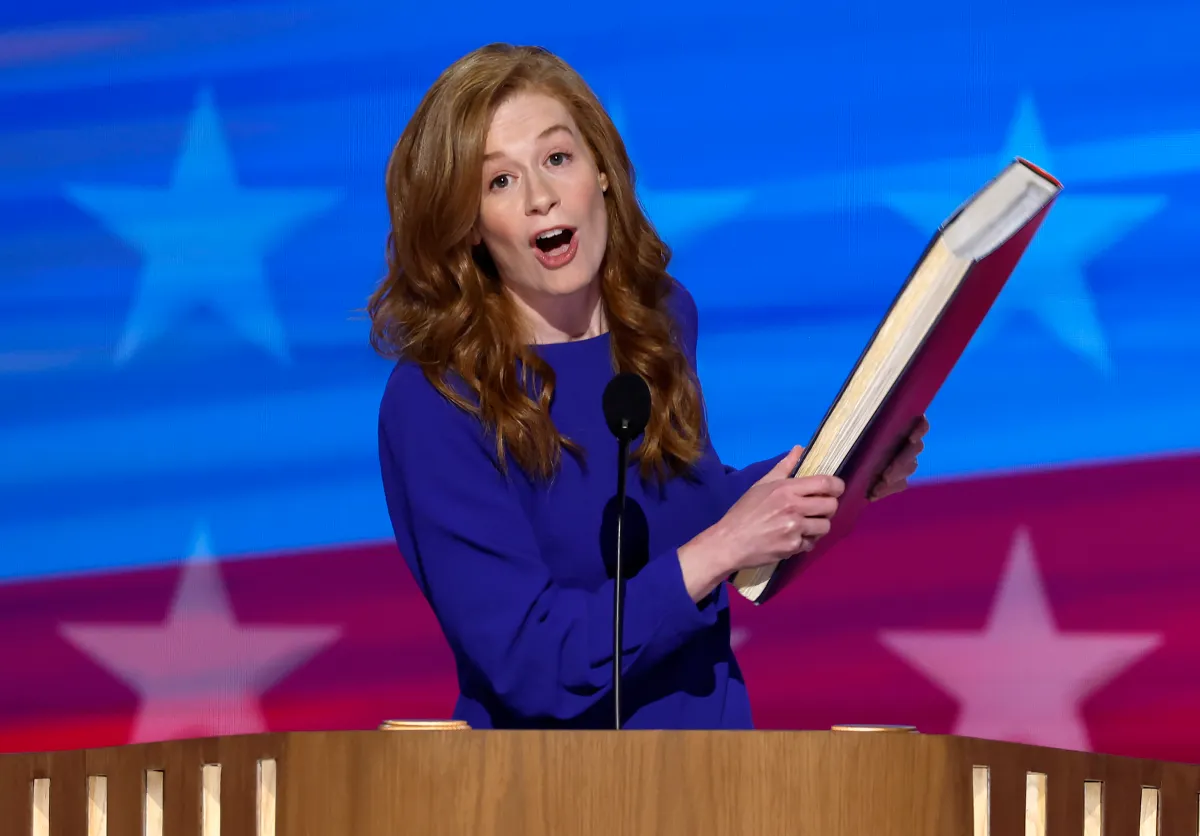
The landscape of Michigan’s high-stakes U.S. Senate race shifted dramatically on Sunday when Democratic State Senator Mallory McMorrow announced she was suspending her campaign, just one month before the August 4 primary. Her unexpected exit narrows the field to a head-to-head contest between progressive firebrand Abdul El-Sayed and establishment-backed Representative Haley Stevens. With retiring Democratic Senator Gary Peters leaving his seat open, this battleground has become a crucial must-win for Democrats fighting to reclaim the Senate majority. It also serves as a premium testing ground for whether the party’s progressive agenda can truly resonate statewide in a purple territory that Donald Trump carried during the 2024 presidential election.
In a heartfelt video address shared with her supporters, McMorrow expressed deep gratitude for her campaign team and volunteers, promising to put her full energy into helping the eventually selected Democratic nominee win in November. While she chose not to endorse either of her former rivals, her departure leaves voters with a stark, binary choice that highlights the ideological tug-of-war happening within the national Democratic Party. The remaining duo is scheduled to face off in a highly anticipated televised debate this week. The winner of this primary will go on to represent the party in a grueling general election cycle against the presumptive Republican nominee, former Representative Mike Rogers.
The race is now being viewed as a classic proxy war over the future direction of the Democratic platform. Representative Haley Stevens, a seasoned four-term congresswoman, represents the pragmatic, centrist wing of the party and enjoys robust backing from national party leaders, including Senate Minority Leader Chuck Schumer. Conversely, Abdul El-Sayed, a dynamic former public health commissioner, is championed by the progressive vanguard, carrying heavy-hitting endorsements from Senator Bernie Sanders and Representative Alexandria Ocasio-Cortez. While Stevens’ supporters argue that her moderate, coalition-building approach is the safest bet to defeat a conservative opponent in a swing state, El-Sayed’s camp insists that bold, progressive policies are exactly what is needed to energize disillusioned voters and drive historic turnouts.
This sudden consolidation of the race comes at a moment when El-Sayed had already been capturing significant momentum. Recent polling data, including a Quantus Insights survey, revealed El-Sayed leading the pack with 41 percent of the primary vote, while Stevens trailed at roughly 35.6 percent and McMorrow held just 7.5 percent. The progressive base received an additional jolt last Thursday when Alexandria Ocasio-Cortez formally endorsed El-Sayed, calling the election “existential” and framing him as the most viable candidate to defend the seat. Political strategists nationwide are watching closely to see if this progressive momentum can actually translate to a statewide victory in Michigan, a state known for its complex working-class dynamics and narrow electoral margins.
Beyond the local implications, the primary is a high-profile test of political star power, particularly for Ocasio-Cortez and her ability to elevate candidates outside of traditionally safe, deep-blue urban districts. Having allied with El-Sayed since his spirited 2018 gubernatorial run, her endorsement signifies a concentrated effort to prove that progressive policies are highly marketable to general Midwestern voters. Even so, moderate skeptics continue to worry openly that a candidate closely tied to democratic socialism might struggle in a general election matchup against a polished Republican moderate like Mike Rogers, making this primary a critical referendum on the party’s broader electability strategy.
Though McMorrow did not explicitly name financial obstacles as her reason for stepping down, insiders point to a staggering influx of outside capital as the decisive factor. Reports indicate that political action committees and mainstream donors poured approximately $32 million into the race to lift Stevens before McMorrow could even launch her first television advertising campaign. Seizing on the news, El-Sayed condemned the massive spending, urging Michigan voters not to let wealthy outside establishments dictate their local representation, while Stevens offered a gracious public nod to McMorrow’s dedication to public service. As the August primary rapidly approaches, Michigan primary voters now hold the keys to a decision that will reverberate far beyond their state lines.