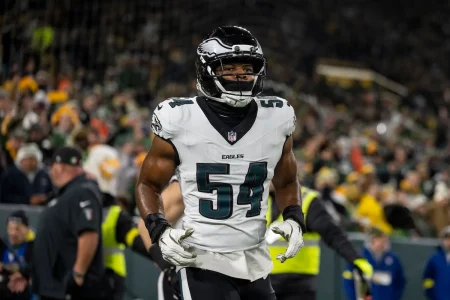



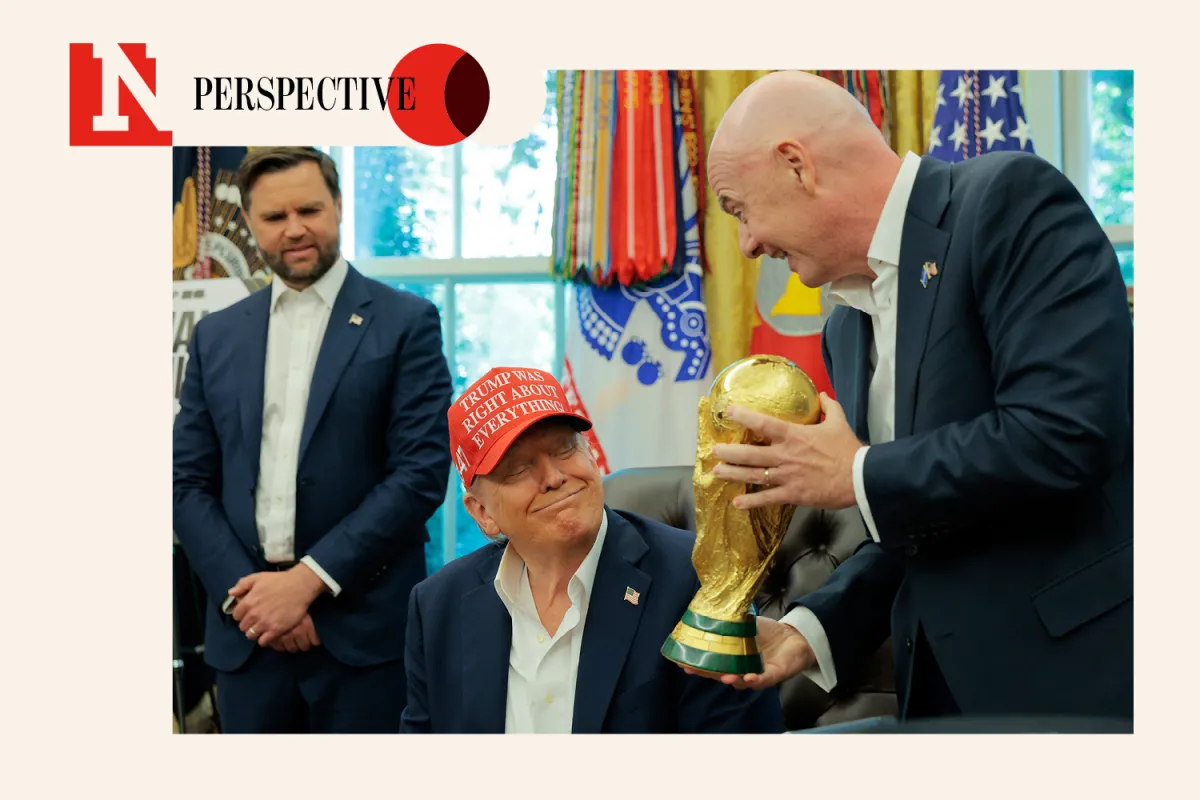
When the Video Assistant Referee (VAR) transformed a live-speed, non-foul collision into a straight red card for American star forward Folarin Balogun during a match against Bosnia in Santa Clara, it seemed the United States’ World Cup hopes had taken a devastating blow. The automated one-match ban meant the host nation would face Belgium in the Round of 16 without their leading goal-scorer. Rather than accepting the controversial ruling, President Donald Trump bypassed the traditional sports appeals process entirely. Spotting an opportunity for a high-profile win, Trump picked up the phone and called his close ally, FIFA President Gianni Infantino, demanding a review of the decision. Four days later, FIFA announced a highly unusual reprieve: Balogun’s suspension was deferred, freeing him to play. The intervention has sparked immense controversy, with critics arguing that it carries the unmistakable odor of political interference to favor a powerful World Cup host.
This unprecedented move highlights a glaring double standard in modern soccer’s governing class, exposing how the system can be manipulated when powerful leaders get involved. Soccer pundit and former Manchester United defender Gary Neville voiced the shared frustration of many in the sports community, calling the sudden, unexplained reprieve something that “absolutely stinks.” Yet, Neville also acknowledged a deeper, systemic paradox: the original red card was arguably a poor decision that deserved to be overturned. The issue is not merely that Balogun was freed to play, but that there is no transparent, standardized mechanism for teams to challenge flawed VAR decisions. Instead of an established judicial progression, justice was delivered via a personal favor between a head of state and the president of FIFA, leaving other nations without similar political leverage wondering where they fit into this new hierarchy.
Underneath the high-stakes political drama lies a deeper debate about the nature of VAR itself and how technology is altering the spirit of the game. During the match, referee Raphael Claus saw the challenge in real-time and chose not to blow his whistle. It was only after being summoned to the pitchside monitor to view slow-motion replays and isolated still frames that he upgraded the play to a straight red card. Former FIFA referee Mark Clattenburg pointed out that while the slow-motion footage made the contact look severe, the play lacked the speed, force, and malice required for a dismissal. This represents the ultimate flaw of video review: it often replaces human intuition and live context with a cold, distorted version of events. By freezing a split-second, accidental coming-together of players, VAR transformed an ordinary football clash into an aparentemente malicious assault, proving that technology often sees too much of the wrong things.
Adding a layer of rich political irony to the situation is the identity of the player Trump chose to champion. Balogun represents the quintessential American story of birthright citizenship—a concept that Trump and his political allies have frequently targeted and sought to restrict. Born in Brooklyn to Nigerian parents who were temporarily visiting the U.S., Balogun moved to England when he was just one month old, developed his skills in Arsenal’s youth academy, and only officially committed to playing for the United States national team in 2023. He has never played for an American club. Ironically, just days after the Supreme Court upheld the constitutional validity of birthright citizenship against challenges aligned with Trump’s platform, the president intervened to ensure this exact demographic of player could remain on the pitch. In a twist of sporting pragmatism, a political movement that has historically criticized citizenship-by-birthplace discovered that the policy can provide a massive competitive advantage on the global stage.
The procedural maneuvering FIFA used to keep Balogun on the field has only intensified the backlash. Because FIFA’s official World Cup regulations state that red-card suspensions are automatic and cannot be appealed, the disciplinary committee had to get creative. They utilized Article 27 of the FIFA disciplinary code, which allows a judicial body to suspend the implementation of a sanction, effectively placing Balogun’s ban on a one-year probation. While the red card technically remains on his record, the actual punishment was deferred past the critical match. While FIFA has used this legal loophole in the past for qualification matches, no player sent off during the actual tournament had received such a reprieve since Brazil’s Garrincha in 1962—an incident that also followed intense political pressure. The cozy relationship between Infantino and Trump, highlighted by Trump receiving the inaugural FIFA Peace Prize, paved the way for “Gianni’s flexible FIFA” to bend the rules when a powerful friend called.
Meanwhile, the Belgian national team has been left to deal with the fallout of this sudden decision, having spent days preparing a tactical game plan to face a U.S. squad without its star striker. Belgian coach Rudi Garcia did not hold back, comparing the July 5th announcement to an April Fool’s joke and asserting that his federation was fighting for the basic ethics of the sport. Other international managers, including England’s Thomas Tuchel, have expressed deep concern over the precedent this sets, asking where these presidential appeals will end and demanding consistency. If soccer is to maintain its integrity, it desperately needs a transparent, impartial appeals court to review contested VAR decisions, ensuring that a small nation like Bosnia or Burkina Faso receives the same fair treatment as a global superpower. Without a standardized system, video review will continue to be viewed not as a tool for objective justice, but as an instrument of favoritism.