





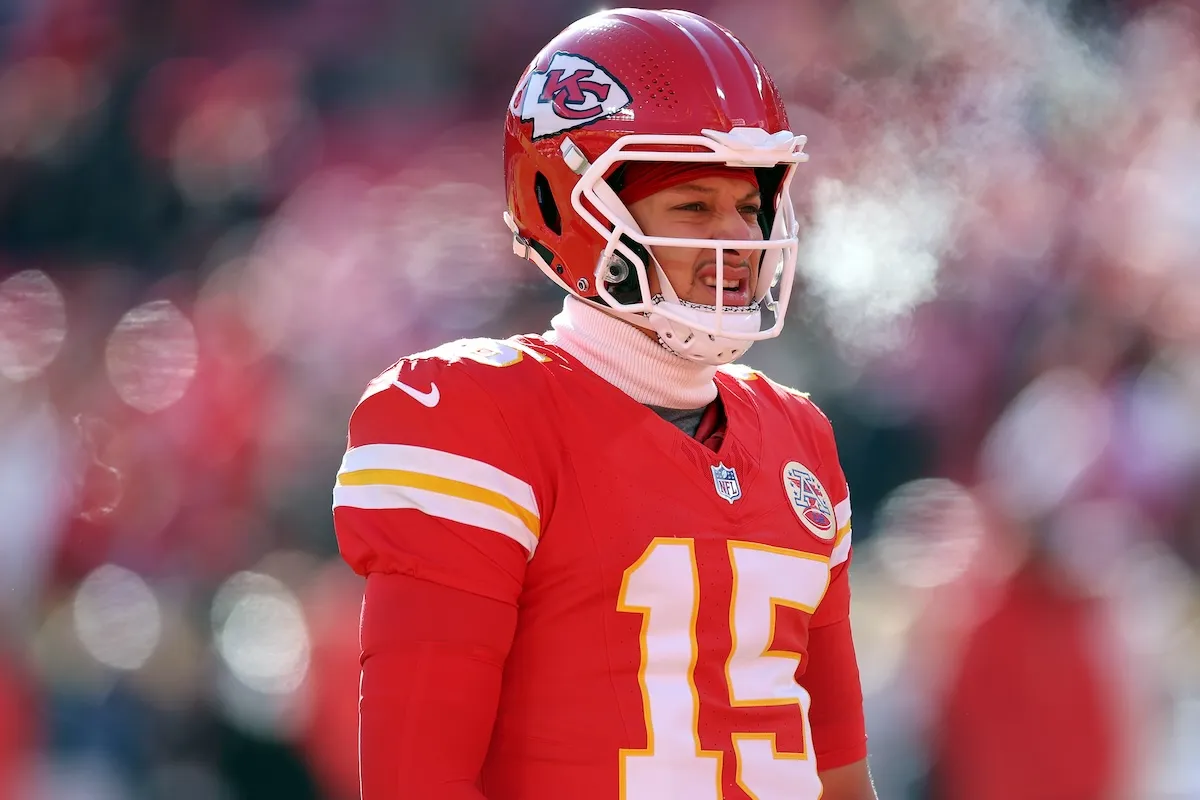
The sports world is often defined by its unforgiving and volatile nature, a harsh reality that the Kansas City Chiefs and their superstar quarterback, Patrick Mahomes, learned in the most grueling way imaginable during a devastating Week 15 matchup against the divisional rival Los Angeles Chargers. Up until that fateful December afternoon, Mahomes had existed in a rarefied quarterback air, universally celebrated as a three-time Super Bowl champion and two-time league Most Valuable Player whose on-field magic and physical durability seemed virtually invincible to the mortal eye. However, a torn anterior cruciate ligament (ACL) and lateral collateral ligament (LCL) brought his spectacular campaign to a sudden, heartbreaking halt, casting a somber shadow over a proud franchise and a passionate fanbase that had grown to view January dominance as an annual birthright. For the first time in twelve long, highly successful years, the postseason commenced without the Chiefs in the bracket, leaving a gaping void in the NFL landscape and forcing the organization into an unfamiliar, painful period of winter reflection. The subsequent offseason became a testament to human resilience and grit, defined not by the roar of packed stadiums or the thrill of game-winning touchdowns, but by the quiet, grueling, and often lonely hours spent in the athletic training facilities. Mahomes underwent complex reconstructive surgery to repair the structural damage in his knee, embarking on a grueling physical therapy journey that tested his psychological fortitude just as much as his physical endurance. Every morning was a quiet battle against his own physical limitations—a slow, agonizing process of rebuilding muscle mass, restoring his natural range of motion, and overcoming the mental hurdles that inevitably accompany a catastrophic joint injury. To see a competitor of Mahomes’ legendary caliber stripped of his elite mobility and forced to start from scratch is a sobering reminder of the physical vulnerability inherent in professional football, yet his steady progress has placed him on a direct path to reclaim his starting role when the season kicks off in September.
Behind every historic quarterback stands a dedicated offensive line, a unique brotherhood of overlooked giants whose entire professional existence is anchored in selflessness, physical grit, and an almost instinctual urge to protect their signal-caller from harm. Among these silent guardians is Pro Bowl offensive guard Trey Smith, who recently took the opportunity to shed light on the intense psychological and physical demands of his role during an insightful appearance on the NFL Network’s flagship news program, “The Insiders,” hosted by respected league analysts Tom Pelissero and Judy Battista. Speaking with a compelling mix of humility, respect, and under-the-radar determination, Smith articulated the profound sense of personal and collective accountability that he and his fellow linemen harbor as they prepare to welcome their franchise player back into the pressurized environment of the offensive huddle. Smith explained that when your job description involves shielding the absolute best quarterback in the game today, the standard of daily execution rises to a level where even the slightest mental lapse or physical misstep is entirely unacceptable. The primary objective of an elite offensive line is not merely to block opposing defenders, but to actively cultivate a sanctuary of calm within an incredibly chaotic pocket, ensuring that a physical virtuoso like Mahomes is granted the precious seconds required to orchestrate his signature brand of playmaking magic. To Smith, this responsibility is deeply personal and emotionally charged; it represents an unspoken vow to never let their captain feel vulnerable or helpless again, especially after witnessing the painful, abrupt conclusion of last year’s campaign. The offensive linemen thoroughly understand that their performance directly dictates the health of the franchise’s most valuable asset and, by extension, the hopes and dreams of millions of fans worldwide.
The mindset of an elite NFL offensive lineman is forged from a delicate, complex balance of protective instincts and calculated on-field aggression, a dynamic that Trey Smith illuminated beautifully when discussing the internal pressures weighing on the team. He emphasized that while external expectations from fans and media are always incredibly high, the true, motivating pressure is generated from within—both collectively as an offensive unit and individually as professional athletes who strive for absolute perfection in their craft every single day. Mahomes, whom Smith openly described as the most relentless and fierce competitor he has ever encountered on a football field, sets a daily baseline of personal excellence that naturally inspires everyone in the locker room to elevate their own performance. When the clear-cut leader of your franchise is willing to sacrifice everything to make a play, it creates a powerful, infectious cultural ripple effect where settling for anything less than greatness is simply not tolerated. The directive to “keep Pat healthy” is not merely a catchy slogan or an empty locker room cliché; it is the fundamental mission statement and guiding light of the entire Kansas City offensive line, a daily creed that governs every heavy repetition in the weight room, every minute of film study, and every single snap on the hot summer practice fields. The linemen are acutely and constantly aware that modern NFL defensive schemes are faster, more complex, and more violent than ever before, with defensive coordinators constantly designing exotic, confusing blitzes engineered specifically to exploit any minor weakness in the pocket. In this high-stakes, fast-paced chess match, Smith and his teammates must operate with a singular, unified brain, anticipating twists, stunts, and disguised rushes in real-time to maintain an impenetrable wall.
Despite the loftiness of their personal goals and the undeniable depth of their commitment to Mahomes, the Chiefs’ offensive line faces a storm of skepticism from the professional analytical community as the regular season draws near. A recent comprehensive league ranking published by the sports analytics giant FTN Fantasy placed the Kansas City offensive line at a mediocre 20th overall in the league, a sobering assessment that labeled the collective unit as “middle of the pack” in terms of overall pass protection and deemed the majority of the team’s starting linemen as relatively “unremarkable” during the course of the previous season. While the analytical report offered some praise for young tackle Josh Simmons, highlighting him as a strong, highly reliable pass protector capable of anchoring his side of the line with technical prowess, the overall report painted a troubling picture of a unit that fell far short of a championship standard. This statistical critique serves as a stark, cold reminder of the massive gulf that often exists between physical effort and external perception, providing plenty of ammunition for doubters who openly question whether this line possesses the necessary pass-blocking elite talent to keep their recovering quarterback upright and healthy. Rather than entirely dismissing these modern computational critiques, professional athletes often choose to internalize them, transforming the cold, clinical data of analytical databases into a burning, highly focused motivation to prove their vocal detractors wrong on the field. The tag of being labeled “unremarkable” serves as a direct, highly personal blow to the professional pride of these athletes, men who have dedicated their entire lives to dominating the trenches of professional football and who refuse to let their career legacies be defined by a spreadsheet algorithm.
The desperate urgency for the Kansas City offensive line to quickly find its footing is further intensified by the brutally competitive landscape of the broader American Football Conference (AFC), which promises to be an absolute gauntlet of elite teams in the coming months. The road back to the postseason mountaintop is heavily blocked by a formidable array of hungry, talented powerhouse franchises, none more immediately threatening than the Cincinnati Bengals, who are eagerly anticipating the healthy return of their own superstar quarterback, Joe Burrow, and are widely expected to make a massive, sustained push for conference supremacy. Beyond the dangerous threats in Cincinnati, the Chiefs must also contend with the physical prowess of the Buffalo Bills, a disciplined New England Patriots team looking to completely redefine its historical identity, and a highly competitive AFC West division where rival teams are eagerly looking to exploit any sign of vulnerability in the Kansas City armor. The margin for error in the modern NFL is virtually nonexistent, meaning that a sluggish start to the season or an unstable, collapsing pocket could easily derail the Chiefs’ grand championship aspirations before they even have a realistic chance to gain positive momentum. This epic, highly anticipated journey of physical and emotional redemption is scheduled to officially begin on September 14th, under the bright, dazzling lights of national television, in a high-stakes Monday Night Football clash against the divisional rival Denver Broncos. This season-opening matchup is far more than just another game on the calendar; it represents a massive national stage where the Chiefs can send a definitive, loud message to the rest of the football world that they are back.
Ultimately, the upcoming season for the Kansas City Chiefs is a deeply human narrative of physical resilience, professional brotherhood, and the relentless, unforgiving pursuit of sports greatness in the face of sudden, catastrophic adversity. It is a story about a legendary, once-in-a-generation quarterback who had to patiently rebuild his body from the absolute ground up, learning to trust his surgically repaired knee after experiencing the intense agony of a season-ending injury, and the massive, dedicated protector-brothers who feel a deep, soulful responsibility to ensure he never has to experience that physical pain again. The profound emotional bond between Patrick Mahomes and his offensive line, spearheaded by the vocal, passionate leadership of Trey Smith, represents the very beating heart of team sports, where collective physical sacrifice always outweighs individual glory and ultimate success is measured by the safety and health of a beloved teammate. The upcoming battles in the line of scrimmage will undoubtedly be physically punishing, mentally exhausting, and emotionally trying, but the Chiefs are armed with a newfound appreciation for the game and a desperate, burning hunger to completely rewrite their story after an incredibly rare and heartbreaking postseason absence. As the stadium lights ignite, the massive crowd erupts into a deafening roar, and the historic first snap of the season is delivered, all the difficult rehabilitative pain, the analytical criticisms, and the offseason anxieties will instantly fade into the background, leaving only the pure, unadulterated passion of elite competition. For Patrick Mahomes, Trey Smith, and the entire resilient Kansas City organization, the journey ahead is about far more than merely winning football games and hoisting trophies; it is a profound, inspiring quest to prove to the world that true champions are never defined by how they fall, but by the magnificent, unified, and undeniable way they stand back up together.