



For over two decades, the basketball-mad city of New York has chased a ghost, yearning for the glory days of the late 20th century. That phantom was finally exorcised in spectacular fashion as the New York Knicks didn’t just crawl into the NBA Finals—they stormed through the Eastern Conference gates like a relentless tide, crushing the Cleveland Cavaliers in a devastating 130-93 blowout to secure their first trip to the league’s grandest stage this century. This wasn’t merely a playoff win; it was the exclamation point on a historic, awe-inspiring ten-game rampage in which the Knicks outscored their postseason opponents by an astonishing 246 points. The sheer dominance displayed on the hardwood reflected a team operating at the absolute peak of its powers, executing with a telepathic synergy that left spectators breathless and opponents thoroughly demoralized. For a fan base that has weathered decades of rebuilding cycles, management overhauls, and heartbreaking draft lottery luck, the euphoric roar that echoed through the arena was a release of twenty-five years of pent-up sporting frustration. This squad, forged in the fires of massive expectations and relentless media scrutiny, has finally delivered the metropolitan area a tangible shot at holding the Larry O’Brien trophy once again, proving that New York basketball has officially reclaimed its elite status.
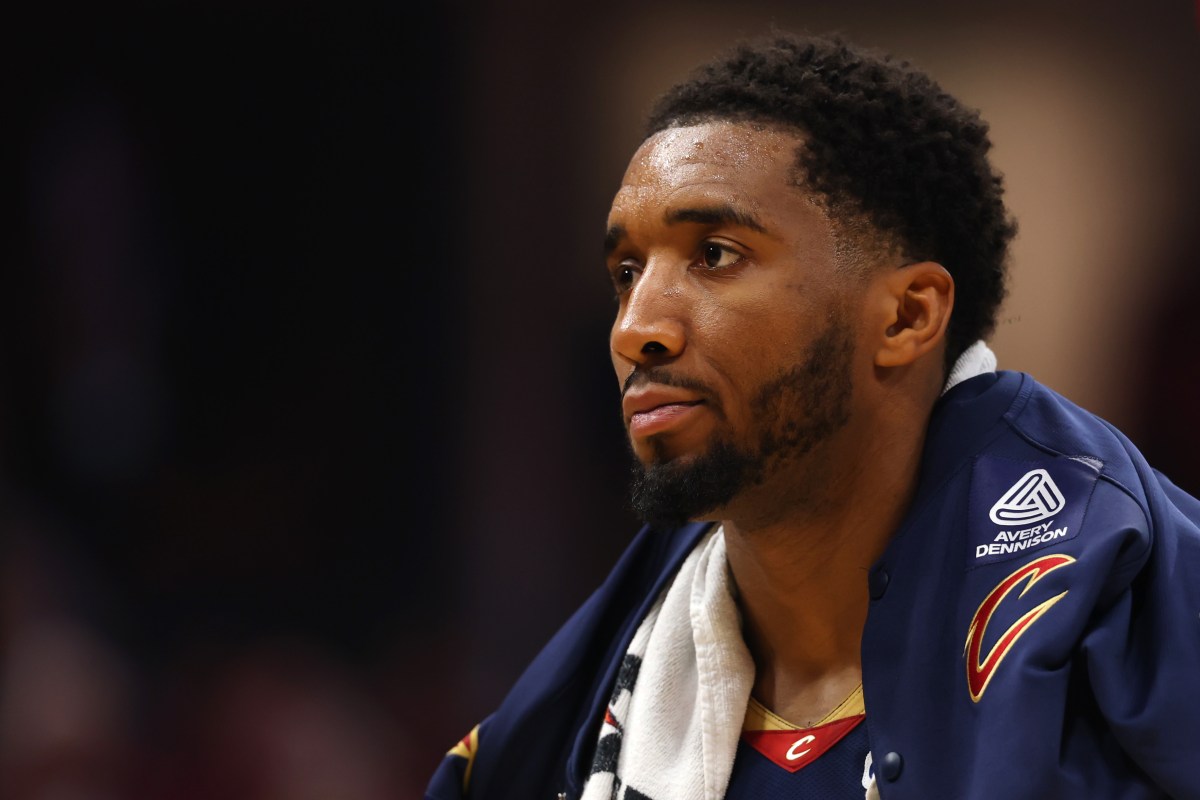
On the losing end of this historic onslaught was a heartbroken Cleveland Cavaliers squad, left to pick up the pieces of a season that shattered in a brutal four-game sweep. At the center of this emotional wreckage stood Donovan Mitchell, the franchise’s marquee guard, who bore the crushing weight of the defeat entirely on his shoulders. Speaking to reporters in the immediate aftermath of the Game 4 shellacking, Mitchell’s voice carried a mixture of raw grief, physical fatigue, and fierce accountability. He did not mince words or seek refuge in comforting athletic clichés, delivering instead a gut-wrenching apology directly to the Cleveland faithful who had dreamed of bringing another championship ring to Northeast Ohio. “I’m sorry for the city of Cleveland,” Mitchell lamented, his eyes reflecting the painful reality of a promising season cut short in such unceremonious fashion. He characterized the sweeping defeat in terms too raw for polite company, calling it “expletive,” a candid admission of the profound embarrassment that comes with being thoroughly outmatched on national television. For a competitor who has spent his entire career chasing the ultimate prize, the manner of this exit was a bitter pill to swallow, yet his willingness to stand at the podium and take the brunt of the criticism spoke volumes about his maturity and leadership.
Despite the sting of the sweep, Mitchell refused to let the darkness of the moment eclipse his enduring belief in his team’s ultimate trajectory. Channeling his disappointment into immediate fuel, he issued a defiant, iron-clad promise to his teammates and the city, declaring that this painful exit is merely a prologue to a triumphant resurrection. Mitchell insisted there is “unfinished business” in Cleveland, pointing to the upcoming 2026-27 campaign as the battleground where this young roster will redeem itself and finally deliver a championship ring to the city. This wasn’t empty posturing; it was the stubborn optimism of an elite athlete who understands that success in professional sports is rarely a linear journey. “But I told y’all last year, and I’ll say again, we’ll be back. We’ll be ready. We’ll be hungry. And we’ll be locked in,” Mitchell asserted with a quiet intensity that commanded the room. He emphasized that the primary objective for the Cavaliers now is to transform this devastating postseason blowout into a brutal but necessary learning crucible, reminding everyone that the toughest lessons often yield the greatest growth.
Indeed, Mitchell’s perspective is grounded in a deep respect for the very team that just vanquished them, recognizing that the Knicks’ current dominance was paved with its own historical roadblocks. He astutely pointed out that the juggernaut New York team they just faced is a product of continuity and hard-fought experience, having endured their own fair share of postseason agony and building a core group before reaching this pinnacle. “This team that we just faced had to go through this,” Mitchell observed, reflecting on the Knicks’ patience in keeping their roster together through seasons of trial and error. This insight humanizes the competitive nature of the NBA, where championship chemistry cannot be bought or rushed, but must be forged through collective suffering on the court. It is a slow, grueling process of learning how to win when the stakes are highest, understanding each other’s tendencies in moments of extreme pressure, and building a trust that only comes from losing together before you can win together. By framing the Cavaliers’ sweep not as a terminal failure but as their own mandatory rite of passage, Mitchell challenged his teammates to return for the 2026-27 season as battle-hardened contenders ready to claw their way back.
While New York celebrates its Eastern Conference crown, the team now enters a tense holding pattern as they await their opponent from the Western Conference Finals, a series that has devolved into an absolute dogfight. The Oklahoma City Thunder and the San Antonio Spurs are currently locked in a fierce, deadlocked battle tied at two games apiece, showcasing the brutal parity and high stakes of the postseason. The emotional toll of this playoff run is not unique to the Eastern Conference; indeed, the pressure has forced moments of profound self-reflection across both Western rosters. Following a blowout loss of their own in Game 4, young Thunder superstar Shai Gilgeous-Alexander stepped forward to publicly shoulder the blame for his team’s shortcomings, a vulnerable moment of accountability from one of the league’s brightest stars. His coach similarly displayed rare humility, openly admitting to critical tactical mistakes that contributed to their blowout defeat at the hands of the veteran-led Spurs. This high-stakes drama underscores the immense psychological burden that accompanies the quest for an NBA championship, where a single miscalculation or off-night can derail years of meticulous planning, leaving coaches and players alike fully exposed to public postmortems.
This universal struggle for athletic excellence, and the profound mental toll it extracts, is a recurring theme that transcends the boundaries of the NBA playoffs and touches every corner of professional sports. It echoes deeply in the words of WNBA icon Caitlin Clark, who recently opened up about the intense “mental challenge” she faced while navigating a grueling recovery from her 2025 injuries. Whether recovering from physical ailments on the sidelines or recovering from a demoralizing playoff sweep on the court, elite athletes must constantly fight an internal battle against doubt, fatigue, and the immense weight of public expectations. The path to sporting immortality is paved with broken bones, bruised egos, and sleepless nights spent agonizing over what could have been. As the New York Knicks prepare for their historic Finals appearance, and as Cleveland, Oklahoma City, and San Antonio contemplate their respective destinies, the sports world is reminded that behind the dazzling highlights and astronomical statistics lie human beings navigating the absolute peak of pressure. Ultimately, the championship trophy will only be hoisted by those who can survive this physical and mental gauntlet, turning their deepest scars into the very armor that carries them across the finish line.