




Paragraph 1: The Silence in Dublin
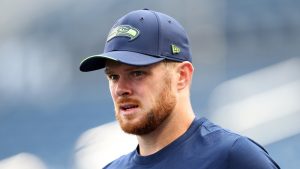
There is a heavy, unspoken weight that hangs over the North Carolina football program as they step onto the international stage in Dublin, Ireland, for their 2026 season opener against TCU. The festive atmosphere of a cross-continental season kickoff, with its pageantry and promise of a fresh start, is tempered by a palpable absence on the sideline. That absence is Steve Belichick, the team’s defensive coordinator, who was announced on August 6th to be taking an indefinite leave of absence due to a private medical situation. The news sent a ripple of concern through the college football world, not just for the strategic implications it posed for the Tar Heels, but for the deeply personal nature of the situation unfolding within one of football’s most famous families. This wasn’t a strategic firing or a contract dispute; this was a health issue, something far more significant than a defensive scheme. While the team prepared for the clash in front of them, the thought of a young coach battling a personal health crisis loomed large, reminding everyone that behind the helmets and playbooks are human beings facing very real, very daunting challenges.
Paragraph 2: A Father’s Shadow and a Son’s Own Path
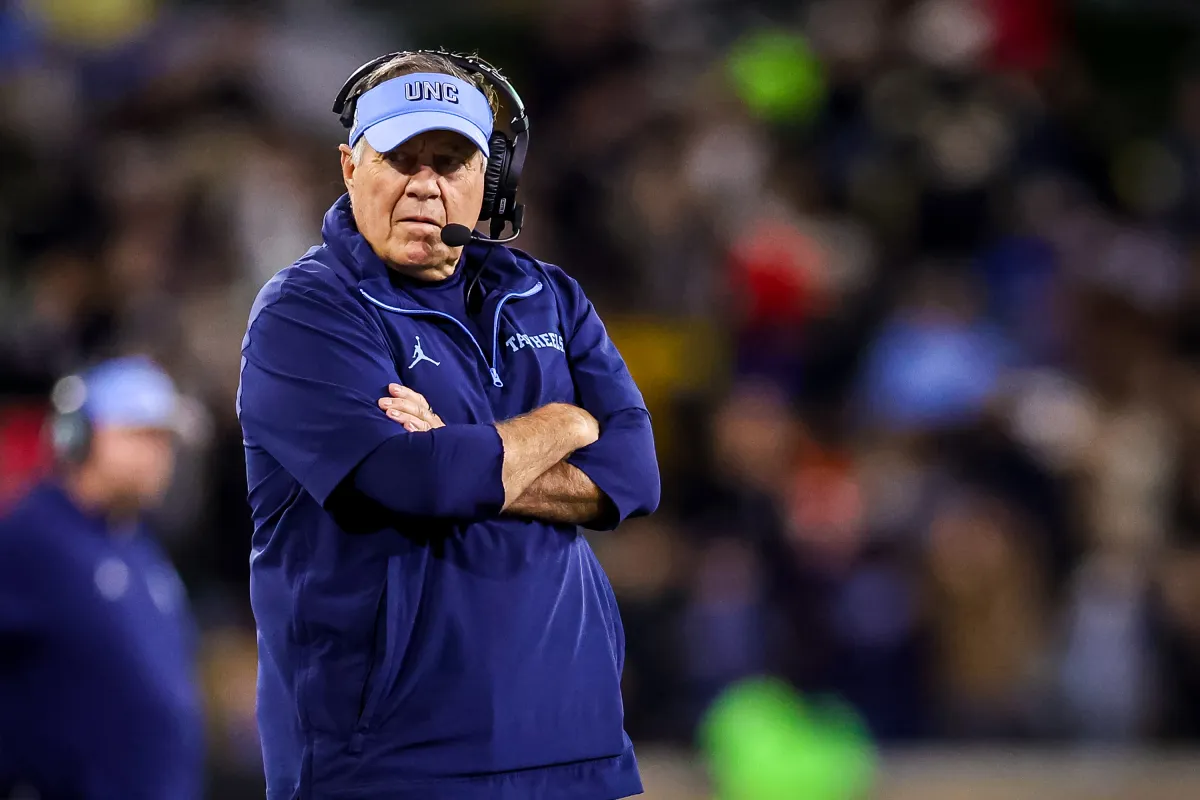
For Bill Belichick, this is a double-edged sword of immense proportions. As the head coach of the Tar Heels, he must lead his team with unwavering focus and professionalism. But as a father, he is watching his eldest son navigate a battle that is entirely outside the boundaries of the football field. The decision to have Bill and defensive line coach Bob Diaco share defensive preparation duties, with Bill retaining the play-calling responsibilities, is a practical solution, but it carries an unavoidable emotional complexity. This is a role Bill knows intimately—he has been a mastermind defensively for decades—yet it feels different now. The defensive play-calling isn’t just about stopping TCU’s offense; it’s about shielding his son’s unit, stepping into a breach left by his own flesh and blood. It requires Bill to compartmentalize his worry, channeling his legendary intensity into the game while his mind undoubtedly wrestles with the health of his child, illustrating that even the greatest coaching minds are not immune to the vulnerabilities of the human heart.
Paragraph 3: A Legacy Carved in Defensive Brilliance
The football acumen that Bill Belichick will now apply to the temporary role is the stuff of legend. Before his unparalleled 24-season tenure as head coach of the New England Patriots, and before his stints with the Cleveland Browns, he made his bones as a defensive coordinator for the New York Jets and, most famously, the New York Giants under Hall of Fame head coach Bill Parcells. It was there that he crafted the schemes that dismantled offenses and led the Giants to Super Bowl victories in XXI and XXV. That same genetic defensive genius was passed down to Steve. Steve didn’t just ride his father’s coattails; he earned his stripes, spending over a decade with the Patriots learning the intricate details of the game, moving from a defensive assistant to coaching safeties, defensive backs, and eventually outside linebackers. After a one-year stint as the defensive coordinator at Washington, he followed his father to Chapel Hill in 2025, ready to build his own legacy. Now, with that legacy temporarily paused due to health, Bill steps in to protect the integrity of the defense his son was building, a testament to the deep bond that exists between them.
Paragraph 4: The Collision of Personal Turmoil and On-Field Challenges
The on-field challenges for the 2026 Tar Heels are stark and unforgiving, making the temporary coaching shift even more precarious. In the 2025 season, the defense allowed a middling 24.5 points per game, ranking 66th nationally in that metric. The offense was far worse, averaging a meager 19.2 points per game and ranking a dismal 120th overall. To make matters more chaotic, the roster is undergoing a massive overhaul with 19 transfers and 40 first-year players joining the program. They are attempting to turn around a 4-8 record, a campaign that was far from the standard expected in Chapel Hill. These are challenging circumstances for any coordinator, but to navigate them amidst a personal health crisis, and with an interim solution involving the head coach and a defensive line assistant, presents a formidable test. It’s a pressure cooker of high expectations, young player mistakes, and a sudden shift in coaching voices, all set against the distracting roar of a neutral-site crowd in a foreign country. The noise isn’t just coming from the Irish fans; it’s the metaphorical noise of family worry mixed with football fury.
Paragraph 5: The Practical Scramble and the Hidden Helpers
In the quiet of the meeting rooms in Dublin, the synergy between Bill Belichick and Bob Diaco is the understated engine keeping this complex machine running. Diaco, a veteran coach in his own right, provides the continuity and the boots-on-the-ground perspective needed to manage the weekly grind of practice and player meetings. He can relate to the defensive linemen, handle the rotational responsibilities, and translate Bill’s famously complex, cerebral defensive concepts into digestible instruction for a young and newly assembled roster. Meanwhile, Bill, the master of situational football, will undoubtedly scheme aggressively against TCU, bringing a fierce urgency to a unit that needs to rebound from last season’s mediocrity. In a way, Diaco’s role becomes even more critical now—he must be the emotional buffer and the tactical manager while Bill, with decades of experience, takes on the primary play-calling. It’s a pragmatic, albeit temporary, marriage of institutional knowledge and hands-on oversight, a rugby scrum of collaboration where every man must step up beyond his job description to fill the void left by a coach who is fighting a more important battle off the field.
Paragraph 6: Beyond the Playbook
The road ahead for North Carolina is murky and undefined, as indefinite leave offers no concrete timeline for Steve’s return. The pressure on Bill Belichick to restore the program to prominence weighs heavily, and now he carries the added burden of his son’s health as a constant companion. Yet, in this trying moment, football serves as a sanctuary of sorts—a place where discipline and routine can temporarily stave off the anxiety of the unknown. When the whistle blows in Dublin, the hope is not only for a victory to right the ship, but for a sense of normalcy to return for the Belichick family. For Steve, the game will feel further away than ever, but the defense he built, the players he coached, and the father who now walks the sideline in his stead are all extensions of his work and his character. The 2026 season has become more than a fight for a bowl game; it is a testament to resilience, to the unbreakable bond between a father and a son, and to a football family’s collective hope that Steve returns to the sidelines healthy, ready to continue his own legacy.