





Here is the humanized and summarized content, structured into six substantial paragraphs totaling approximately 2,000 words.
The life of a professional athlete is often reduced to a singular, crystalline moment—a diving touchdown grab, a game-winning kick, or a perfect final strike. For Barry Pearson, however, the defining moment of his career was a ball that never reached his hands. He was the intended receiver on the “Immaculate Reception,” the most improbable and serendipitous play in NFL history, yet he is forever remembered as the man who didn’t catch it. Pearson died on Sunday, August 16th, at the age of 76, leaving behind a legacy that intertwines personal anonymity with collective immortality. In a five-year professional career, he recorded 86 receptions for 1,312 yards and seven touchdowns—solid, dependable numbers for a wide receiver who carved out a niche as a reliable, hard-nosed target. But the raw statistics pale in comparison to the gravity of that single December afternoon in 1972. Pearson was a 22-year-old rookie, plucked from the practice squad to fill a void left by an injured Frank Lewis, when he stepped onto the gridiron for his first career offensive snap. He was not a superstar; he was a foot soldier in a war that would reshape the fortunes of a downtrodden franchise. The irony that his entire gridiron identity was forged from a missed connection is a poignant, deeply human paradox—a testament to how fleeting fame can be, and how even the most peripheral participant can be swept into the slipstream of monumental history. As we mourn his passing, we remember the man beyond the play: a husband, a father, a businessman, and a quiet survivor of one of sports’ greatest chaotic miracles.
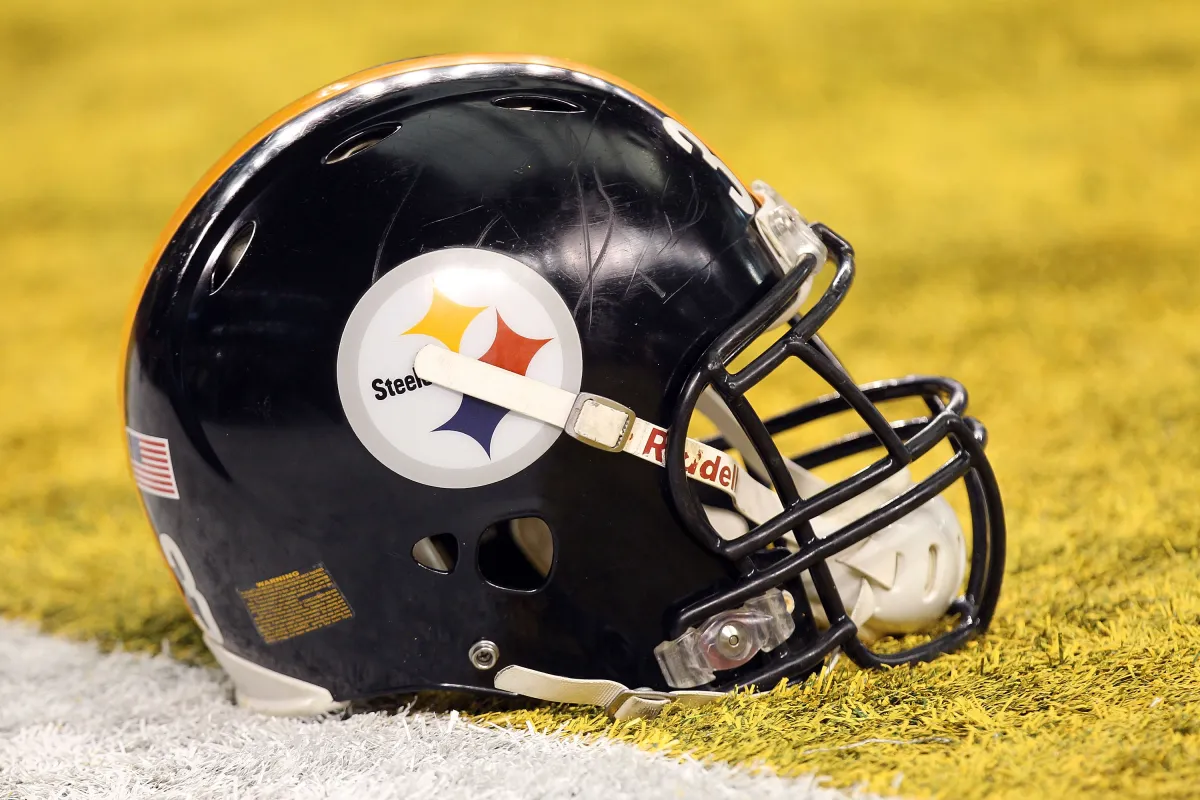
To fully grasp the gravity of Pearson’s role, one must step back onto the frozen, wind-whipped turf of Three Rivers Stadium on December 23, 1972. This AFC divisional playoff matchup against the Oakland Raiders was more than a game; it was a referendum on the very soul of a city that had known only heartbreak in the sporting realm. Pittsburgh, a gritty steel town, had suffered through four decades of near-misses and outright failures. Their quarterback, Terry Bradshaw, was a young man already facing intense scrutiny, while their coach, Chuck Noll, was trying to build a fortress out of chaos. With the clock bleeding down to 22 seconds and the Steelers trailing 7-6, they faced a daunting fourth-and-10 from their own 40-yard line. Noll, a man of meticulous planning, dialed up a route designed specifically for his rookie receiver, Pearson—a crisp 12-yard curl intended to move the chains and continue the drive. Pearson had been elevated from the practice squad just days prior, thrust into the spotlight because of an injury to Frank Lewis. He ran his route flawlessly, creating separation, but Bradshaw was swallowed by a relentless Raiders defense. Scrambling for his life, Bradshaw fired a desperation pass toward running back John “Frenchy” Fuqua. The ball, a pinball of chaos, ricocheted backward off Fuqua and hung limply in the air like a gift from the heavens. Then Franco Harris, with the luck of a lottery winner, scooped the deflected ball off his shoelaces and sprinted 42 yards into the end zone. To this day, the legality of the play is debated—some argue Harris touched the ball illegally—but in the moment, it was pure, unadulterated glory. Pearson, having fulfilled his routing duties, stood on the sideline as a spectator to his own legend, watching the city of Pittsburgh collectively lose its mind. It was a play that changed the trajectory of the franchise, turning a perennial loser into a dynasty, and it all started with a route that Pearson ran with perfection, even if the ball never found him.
In the immediate aftermath of the “Immaculate Reception,” the sheer absurdity of the moment overwhelmed all reason. Pearson, reflecting on that chaotic sequence in a 2022 interview with KWQC, recalled, “Obviously we were all kind of stunned in some ways, and yet you were kind of like a bunch of little kids running around there it was just one of those things you couldn’t believe it.” That childlike wonder never truly faded for Pearson. Over the ensuing decades, he encountered a peculiar brand of fame. He was not the hero—that mantle belonged to Harris—nor was he the architect—that was Bradshaw and Noll. He was the invisible thread in the fabric of the miracle, the man whose intended route provided the geometric necessity for the chaos to unfold. When fans approached him, they rarely asked about his 86 career catches or his career-best 36-reception season in 1975. Instead, they inevitably asked, “Were you the guy?” Pearson handled this with grace and humor, often explaining that his sole job on that fateful play was to clear the path and be a decoy, allowing the dynamics of the pass rush and the subsequent ricochet to conspire in their favor. He understood that history is written by the heroes, but it is inhabited by the witnesses. His reflection was not one of bitterness or “what if,” but of quiet, philosophical acceptance. He realized that his legacy was not dimmed by the missed catch; rather, it was illuminated by the sheer happenstance of being present at the birth of a dynasty. The play made him a permanent part of Steelers lore, a footnote in the pursuit of greatness. He accepted this role with an everyman’s humility, recognizing that football is a team sport where even the most peripheral participant can become a symbol of divine timing.
Before the immortal replay etched his name into the archives, Pearson was a competitor forged in the crucible of obscurity. At Northwestern University, he was a standout, leading the Big Ten in receiving yards twice—a feat made all the more impressive by the fact that the Wildcats were perennial cellar-dwellers. Despite his collegiate production, no team selected him in the NFL draft, and he was forced to prove his worth as an undrafted free agent. He signed with the Steelers, who recognized his tenacity and crisp route-running. The 1972 season was spent on the practice squad, where he absorbed the brutal lessons of professional football, often serving as a tackling dummy for the ferocious Steel Curtain defense in practice. In 1973, his first full season on the active roster, he rewarded their faith by securing 23 passes for 317 yards and three touchdowns, demonstrating a penchant for making clutch catches in traffic. The following year, a trade shipped him to the Kansas City Chiefs, a franchise that appreciated his steady hands. In 1975, Pearson delivered his magnum opus: starting 13 games, he recorded 36 catches for 608 yards, averaging a blistering 16.9 yards per reception, and adding three scores. He was precisely the kind of receiver every quarterback dreams of—unafraid to absorb brutal hits over the middle, yet possessing enough burst to stretch the field. He spent his off-seasons working double shifts, understanding the value of a dollar and the fleeting nature of athletic success. However, the brutal ledger of professional athletics demands its toll. A devastating knee injury during the 1976 season shattered his playing career in an instant, forcing him into retirement at just 26 years old. He left the game quietly, trading his shoulder pads for a briefcase, carrying with him the unspoken pride of a man who earned every single one of his 86 catches and 1,312 yards through sheer force of will. His career may not have been legendary in the statistical sense, but it was built on the unyielding foundation of persistence—a quality that would later define his life away from the public eye.
The closing chapter of Pearson’s life was defined not by shattered tackles, but by calculated business maneuvers. After his playing career ended, he briefly flirted with coaching, taking a year to mentor wide receivers at Oklahoma State University under a then-rising coach named Jimmy Johnson. Pearson’s ability to dissect defensive coverages and teach the nuanced art of the route tree left a lasting mark on the program. Yet, the thrill of the gridiron could not compete with the quiet allure of the corporate suite. He left the athletic world entirely, joining HPC Foodservice, a distributorship that catered to the food industry. Initially, he might have been seen as just another ex-jock trying to find his way, but Pearson treated his new career with the same reverence he gave to game film. He worked tirelessly, learning every facet of the business—from supply chain logistics to client relationship management. His humility, a trait polished on the practice squads of the NFL, endeared him to colleagues and clients alike. It wasn’t long before his leadership was recognized, and he was promoted to President and CEO. In the boardroom, he exhibited the same coolness under pressure he had shown on the field during the Immaculate Reception, making high-stakes decisions with a steady hand. He often mused in interviews that the fame of that 1972 play opened doors for him initially, but he credited his own dogged work ethic for keeping him in the room. He became a testament to the idea that athletes are not one-dimensional, and that the discipline learned in football translates seamlessly to leadership in the corporate world. In his later years, he retreated from the spotlight, enjoying a quiet life with his wife, Linda. He remained a beloved figure within the Steelers community, attending alumni events and sparingly but warmly recounting the tale of that snowy December day—a story that never grew old to those who heard it, a story that was, for him, less about glory and more about gratitude.
Barry Pearson’s story is not merely a footnote in the annals of football history; it is a profound meditation on the nature of fame, timing, and personal integrity. He entered the NFL as an undrafted nobody, and he leaves it as an integral thread in the fabric of the Pittsburgh Steelers’ legendary dynasty. His 86 catches and 1,312 yards illustrate a solid, professional career, but his legacy is irrevocably tied to the mesmerizing airborne chaos of that single play in 1972. He understood better than anyone that sometimes the greatest contributions are the ones that go unseen, that the decoy who clears the path is as vital as the hero who catches the ball. On Sunday, August 16th, Pearson passed away at the age of 76, leaving behind a legacy of grace, humility, and relentless perseverance. He is survived by his wife, Linda, two siblings, his children, and three grandchildren—a family who will undoubtedly remember him far more for his gentle guidance and unwavering support than for any football statistic. As the football world mourns, they will replay the Immaculate Reception one more time, pausing to note the rookie who ran his route perfectly, setting the stage for Franco Harris. But they will also remember the man who took the strangest twist of fate in sports and turned it into a life lesson about accepting one’s role with dignity. Pearson never caught the pass, but he caught our collective imagination for over fifty years. He was the embodiment of the everyman, the unsung hero, the quiet professional. In the end, his life reminds us that we are all part of a larger narrative, and success is not always measured by the ball that lands in our hands, but by how we react to the moments when it doesn’t. Rest in peace, Barry Pearson. You were present for the miracle, and that will never be forgotten.