


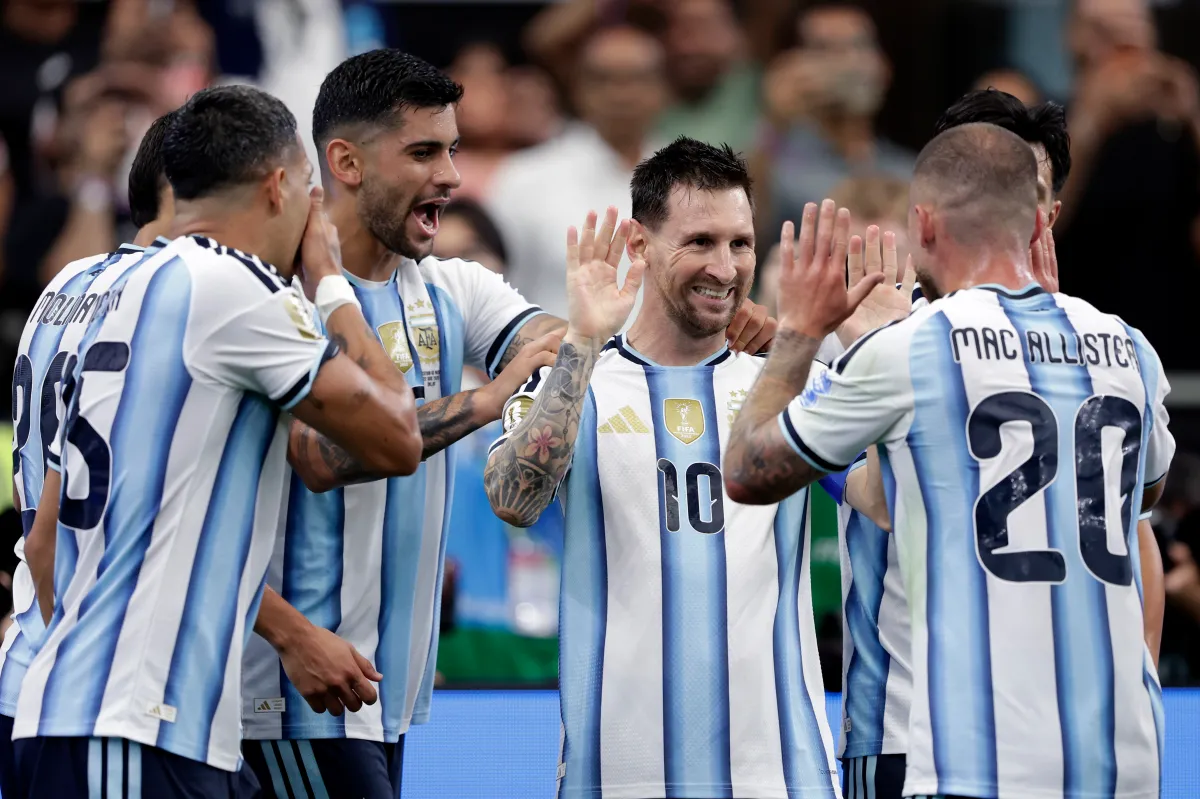
The romance of Argentine football has always been anchored in the extraordinary, a narrative traditionally written by transcendent individuals who seem to carry the hopes of an entire nation on their shoulders. Today, that narrative is spearheaded by Lionel Messi, the newly crowned all-time leading goal scorer in World Cup history, whose very presence on the pitch instills a mixture of awe and terror in opponents. Yet, beneath the blinding glare of Messi’s individual brilliance lies Argentina’s true superpower: an almost telepathic chemistry forged in the fires of shared triumph and continuity. Unlike squads that must constantly reinvent themselves in the turbulent four-year cycles between tournaments, La Albiceleste has chosen the path of stability, carrying over an astonishing seventeen players from the legendary squad that hoisted the trophy in Qatar in 2022 to the current 2026 World Cup roster. This deep-seated familiarity breeds a unique breed of brotherhood, a collective consciousness where every player knows exactly how their teammate will move, react, and sacrifice. They are not merely a collection of world-class athletes wearing the same jersey; they are a tightly knit family bound by a shared history of struggle and glory, striving to become the first men’s national team to successfully defend their World Cup title since the legendary Brazilian teams of 1958 and 1962.
However, even the most beautiful sporting family dynamics are vulnerable to the brutal physical realities of the beautiful game, a lesson Argentina was harshly reminded of during their recent encounter with Austria. What should have been a night of pure celebration, raw joy, and tactical dominance after securing a commanding 2-0 victory over the European side was quickly clouded by a collective gasp of anxiety in the fifty-seventh minute. Cristian “Cuti” Romero, the fearless and uncompromising center-back who serves as the emotional and physical anchor of the Argentine defense, was forced to exit the pitch, sending shockwaves of concern through the stadium and back home to Buenos Aires. Romero, renowned for his aggressive, front-foot defending and his willingness to put his body on the line for his country, limped off with a visible grimace, immediately casting a shadow over the team’s victory. As he made his way to the bench, the contrasting emotions of the night became starkly apparent: while the scoreboard read of triumph, the collective body language of the players and coaching staff betrayed a deep, human worry for their fallen warrior, whose presence in the backline is considered absolutely indispensable for the grueling tournament ahead.
The injury to Romero is not a sudden, freak accident, but rather the latest chapter in a long, agonizing battle against his own physical limits—a struggle that humanizes the immense sacrifices elite athletes make behind closed doors. To understand the gravity of this moment, one must look back to April, when Romero, wearing the captain’s armband for Tottenham Hotspur, suffered a devastating partial tear of his medial cruciate ligament during a high-stakes Premier League clash against Sunderland. At the time, media reports painted a bleak picture, suggesting the injury would not only end his domestic season but also derail his dreams of representing Argentina in this tournament. Yet, driven by an fierce determination and a relentless work ethic, Romero embarked on a grueling, accelerated rehabilitation process, defying the cautious estimates of medical experts to declare himself fit just in time for the World Cup’s opening match. He started the first two games of this campaign, playing through the lingering whispers of discomfort because he simply could not bear the thought of watching his brothers fight without him. This latest setback, occurring in the exact same knee, is a cruel reminder of how thin the line is between heroic resilience and physical vulnerability, leaving fans and teammates wondering if the defender’s brave rush to return has finally caught up with him.
In the immediate aftermath of the Austria match, the atmosphere in the post-game press conference was one of tentative optimism mixed with realistic caution, embodied by the measured words of Argentina’s mastermind, coach Lionel Scaloni. Addressing the media with the quiet intensity that has characterized his highly successful tenure, Scaloni admitted that the coaching staff remains in the dark regarding the true severity of the knee issue. “We don’t know the extent of the issue,” Scaloni conceded, his voice carrying the heavy burden of a manager who must balance tactical ambition with the duty of care for his players’ long-term well-being. He went on to confirm that while this was indeed a recurring issue that Romero had been quietly managing behind the scenes, the defender would undergo comprehensive medical testing to evaluate the internal state of the joint. Scaloni’s refusal to speculate on a timeline for Romero’s return speaks volumes about the delicate nature of knee injuries, where a single millimeter of ligament stability can determine whether a player can continue their tournament dream or be forced into months of grueling rehabilitation.
Adding to the anxiety surrounding the center-back’s health, prominent sports journalist Gaston Edul reported that Romero had felt a familiar, sharp discomfort in the knee during the match, a detail that immediately raised red flags for everyone familiar with the player’s medical history. For an athlete of Romero’s caliber, who relies so heavily on explosive bursts of speed, sudden changes of direction, and powerful physical challenges to neutralize the world’s best attackers, any compromise in knee stability is a massive psychological and physical hurdle. The mental toll of such an injury cannot be overstated; to battle back from a partial ligament tear, to regain one’s confidence on the big stage, and to then feel that same joint betray you during a crucial World Cup match is a heartbreaking experience that tests the psychological resolve of even the strongest competitors. As the team medical staff prepares to analyze the upcoming scan results, the entire Argentine delegation sits in a state of suspended animation, knowing that Romero’s potential absence would require a massive tactical recalibration and force another player to step into the massive shoes of a player who plays with the heart of a lion.
Despite the palpable concern clouding the camp, Argentina finds itself in a remarkably privileged position that offers a comforting silver lining during this period of uncertainty. Thanks to their clinical, professional victories over both Algeria and Austria in their opening matches, La Albiceleste has already secured their ticket to the coveted knockout stage of the tournament with a game to spare. Their upcoming group-stage finale against Jordan is, for all intents and purposes, a low-stakes affair that allows Scaloni the luxury of squad rotation and, most importantly, provides Romero with a golden opportunity to rest. If the medical exams reveal that the knee has escaped structural damage and simply requires rest to reduce inflammation, Romero can sit out the Jordan match with absolutely zero negative consequences for his team’s tournament standings. This breathing room is a testament to the squad’s efficiency and depth, allowing them to shift their focus toward getting their defensive centerpiece as close to one hundred percent as possible for the single-elimination battles ahead, where Romero’s warrior spirit will be desperately needed if Argentina is to successfully defend their crown and write their names permanently into the annals of football history.