



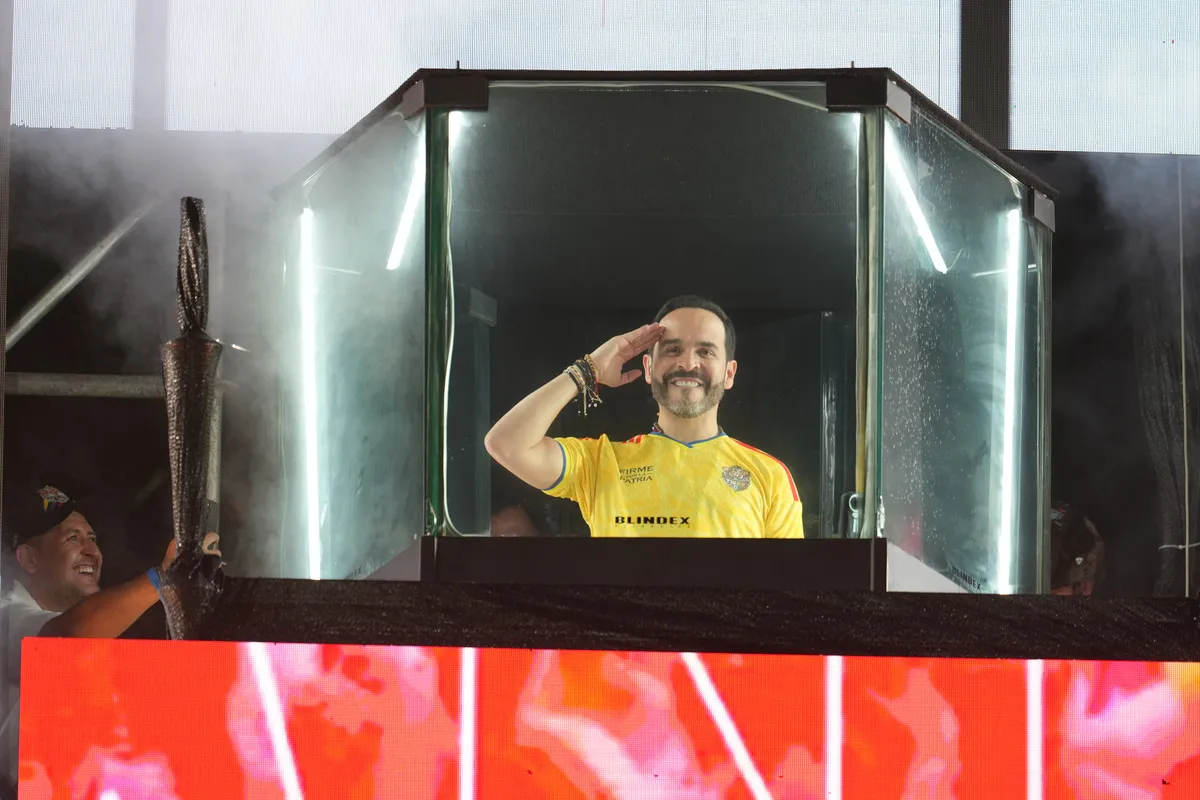
The air in Bogotá was thick with an almost suffocating anxiety on Sunday night, humming with the raw, nervous energy of a nation standing on a critical geopolitical knife-edge as the preliminary results of a grueling presidential run-off election began to trickle in. In a razor-thin finish that has sent immediate shockwaves through both the local South American corridors of power and the bureaucratic halls of Washington, D.C., Abelardo de la Espriella, a flamboyant millionaire lawyer and political outsider, narrowly snatched a historic victory from his left-wing rival, the reformist Senator Iván Cepeda. According to regional media outlets and national broadcasts, de la Espriella secured a razor-thin 49.6 percent of the vote, barely edging out Cepeda’s 48.7 percent share in an election that exposes the deep, bleeding social, political, and economic fractures within the modern Colombian electorate. This highly contested outcome represents far more than a simple changing of the guard in the historic, stone-clad presidential palace of Casa de Nariño; it marks a defining, watershed moment in Latin America’s broader, agonizing pivot back toward the political right. For months, the campaign trail was defined by fierce ideological battles, deeply personal smear campaigns, and a profound sense of existential dread on both sides, culminating in an election night where entire families sat glued to television screens and radio broadcasts, watching the percentage points fluctuate by mere fractions. The whisper of change was palpable, underwritten by a heavy, incredibly watchful gaze from the United States government, which has actively sought to reassert its historic dominance over the region’s shifting political tides. As the final preliminary tallies solidified, the immediate reality set in: Colombia, a crucial historical ally of the United States that had briefly flirted with a progressive social agenda under the leftist President Gustavo Petro, had swung dramatically back into the conservative fold, leaving a deeply polarized populace to grapple with what this aggressive ideological u-turn will mean for their daily lives, their fragile peace agreements, their local economies, and their standing on the global stage.
Known to his passionate supporters and bitter detractors alike by his self-coined, predatory moniker “El Tigre” (The Tiger), de la Espriella has successfully cultivated an image of ruthless physical strength, unyielding patriotism, and media-savvy charisma that resonates deeply with a population exhausted by decades of systemic corruption, economic stagnation, and rampant organized crime. A high-profile defense attorney who built his immense personal fortune representing controversial elite figures, he entered the political arena not as a polished or diplomatic statesman, but as a disruptive elite outsider, promising to unleash an iron fist against the drug cartels, street gangs, and dissident guerrilla networks that still haunt Colombia’s urban neighborhoods and deep rural valleys alike. His campaign was a masterclass in modern right-wing populism, carefully modeling his rhetoric, wardrobe, and political persona after other regional strongmen who have captured the contemporary Latin American imagination, most notably Argentina’s anarcho-capitalist iconoclast Javier Milei and El Salvador’s iron-fisted president, Nayib Bukele. De la Espriella did not shy away from his complete lack of traditional public sector experience; instead, he wore his political outsider status as a badge of honor, arguing that only a ruthless, corporate-minded leader could dismantle the bloated and corrupt bureaucracy of Bogotá and restore order to a country plagued by safety concerns. Flamboyant, deeply religious, and unapologetically wealthy, “El Tigre” tapped directly into the underlying anxieties of the middle and upper classes, painting his leftist opponent as an agent of communist ruin while promising to lower corporate taxes, privatize public services, and rebuild Colombia’s domestic security through sheer, uncompromising force of will. In doing so, he positioned himself as the ultimate defender of traditional family values and national stability, openly professing his deep admiration for Donald Trump and declaring that Colombia’s economic and physical salvation lies in a tight, unyielding alliance with Washington’s conservative establishment, which he believes is the only power capable of shielding the nation from systemic collapse.
This ideological triumph in Colombia cannot be viewed in isolation; rather, it represents the crown jewel in a coordinated, highly aggressive geopolitical strategy orchestrated by the Trump administration to reassert a sphere of undisputed American influence across the Western Hemisphere. Under the banner of what Washington insiders have boldly coined the “Donroe Doctrine”—a modern, Trump-centric reimagining of the 19th-century Monroe Doctrine that originally declared the Americas off-limits to European colonial powers—the United States has actively sought to dismantle progressive movements across Latin America. This policy has materialized through the creation of the “Shield of the Americas” initiative, an elite, ideological coalition of more than a dozen center-right and hard-right regional leaders who subscribe to a fiercely nationalistic, populist political philosophy. The structural landscape of U.S. foreign intervention underwent a massive transformation in July 2025 with the official shuttering of the U.S. Agency for International Development (USAID), a move heavily championed by conservative lawmakers who viewed the traditional aid organization as an inefficient, ideologically compromised vehicle for liberal globalist agendas. Republican Representative Anna Paulina Luna of Florida noted that the dismantling of USAID has paradoxically coincided with—and perhaps accelerated—a massive, historic swing toward conservative, America-first governance across South America, pointing out that no fewer than four robust right-wing administrations have surged to power in the region between June 2023 and June 2026, creating an unbroken wall of conservative allies stretching from the Andes to the Atlantic. Through these shifting dynamics, the United States has engineered a profound geopolitical pivot, replacing traditional, soft-power diplomatic aid with raw ideological alignment, security-focused partnerships, and a clear message to Latin American nations that economic prosperity is directly contingent on their willingness to align their political systems with the conservative doctrines of their powerful northern neighbor, thus ensuring complete regional compliance.
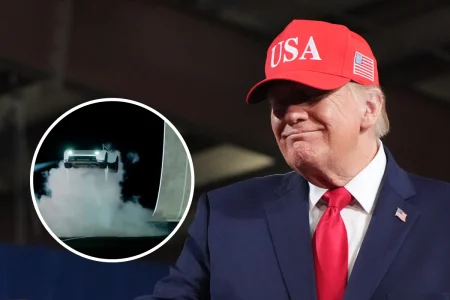
The path to de la Espriella’s victory was paved with fierce, public vitriol between the current administration in Bogotá and the power players in Washington, turning the election into a bitter proxy war of ideologies played out on the global stage. President Donald Trump took an active, highly vocal interest in the Colombian presidential race, using his massive social media megaphone to brand the left-leaning Iván Cepeda—the hand-picked political heir of outgoing President Gustavo Petro—as a dangerous, “Radical Left Marxist” bent on dragging Colombia down the path of economic ruin. This incendiary rhetoric was the culmination of years of escalating tension between Trump and Petro, who had repeatedly locked horns in highly publicized, bitter social media spats that laid bare the deep ideological chasm between them. A primary flashpoint in this digital war was the U.S. military’s controversial and highly unilateral strike campaigns targeting suspected drug running vessels in the Caribbean and eastern Pacific, actions that Petro condemned as flagrant violations of Colombian sovereignty and heavy-handed acts of American imperialism. Trump, conversely, framed these military operations as necessary steps to protect American borders from the poison of Colombian cocaine, accusing Petro’s administration of being soft on drug lords and complicit in cosmic levels of corruption. For the average Colombian voter, these high-level international spats transformed the ballot box into a stark choice between national sovereignty and the economic and military security that comes with being a protected, albeit subservient, client state of a rejuvenated American empire. The relentless pressure from Washington cast a long shadow over the voting booths, leaving citizens with the distinct, unsettling understanding that a vote for Cepeda would trigger economic isolation and diplomatic hostility from the world’s most powerful nation, a risk many voters simply felt they could not afford to take in such uncertain times.
Despite the raucous celebrations emanating from de la Espriella’s camp, the official outcome of the election remains suspended in a tense, dangerous state of political limbo, with the actual transfer of power hanging by a thread as the nation holds its collective breath. Outgoing President Gustavo Petro immediately stepped forward to challenge the legitimacy of the preliminary count, insisting that the razor-thin margin—less than a single percentage point—makes an exhaustive, independent verification of the vote tallies absolutely mandatory before any winner can be certified. Petro went further, stoking the flames of domestic suspicion by claiming on social media that several key polling stations in remote, politically sensitive regions of the country had been “compromised,” though he notably failed to provide any immediate, concrete evidence to back up these serious allegations of electoral fraud. Iván Cepeda, echoing this cautious and defensive stance, announced that he would refuse to concede the race or recognize his opponent’s claim to the presidency until a formal, legally binding judgment is delivered by Colombia’s national electoral authorities, who have so far remained conspicuously silent. Yet, this official ambiguity did nothing to stop de la Espriella from prematurely declaring himself the undisputed president-elect of Colombia, taking to the stage to passionately proclaim that his newly formed “Defenders of the Homeland” party had achieved a “historic, irreversible victory” for the soul of the country. This self-declared triumph was instantly validated from across the Gulf of Mexico by Donald Trump, who took to his platform, Truth Social, to jubilantly announce to his followers that “El Tigre” had “Won, BIG!”, effectively cementing de la Espriella’s legitimacy in the eyes of Washington long before the official Colombian authorities could even finish verifying the paper ballots, thereby complicating any potential transition and setting the stage for a prolonged constitutional crisis.
As the political elites in Bogotá and Washington trade barbs, the raw, human consequence of this deeply polarized election has erupted onto the streets of Colombia, painting a terrifying picture of a society tearing itself apart at the seams. In Cali, the country’s turbulent third-largest city and a historic stronghold of progressive, anti-establishment resistance, the atmosphere turned violent almost as soon as the preliminary results were broadcast on Sunday night. Hundreds of outraged citizens, seeing the hand of American intervention in the razor-thin victory of “El Tigre,” gathered in public squares to burn the star-spangled banner, sending plumes of black smoke into the night sky as a symbolic rejection of what they view as a puppet government controlled by the architects of the “Donroe Doctrine.” Peaceful demonstrations quickly deteriorated into chaotic, tear-gas-choked clashes as riot police sought to disperse crowds of anti-de la Espriella protesters who had erected burning barricades across major transit arteries. For many working-class Colombians, rural farmers, and indigenous communities, the return of an ultra-nationalist, U.S.-backed strongman brings a profound sense of terror, evoking memories of the country’s darkest decades of state-sponsored violence, paramilitary dominance, and unchecked economic inequality. On the other side of these barricades, de la Espriella’s supporters celebrate what they believe is a hard-fought rescue of their homeland from the precipice of socialist decay, viewing his victory as the dawn of a safe, prosperous era where the rule of law will finally prevail under the protective shield of their powerful northern ally. As the smoke clears over Cali and the threat of civil unrest looms large across the country, Colombia stands as a stark, tragic monument to a hemisphere divided, where the struggle for self-determination and the relentless pressure of global superpowers have transformed the basic act of democracy into a battlefield of survival for millions of ordinary people caught in the crossfire.