



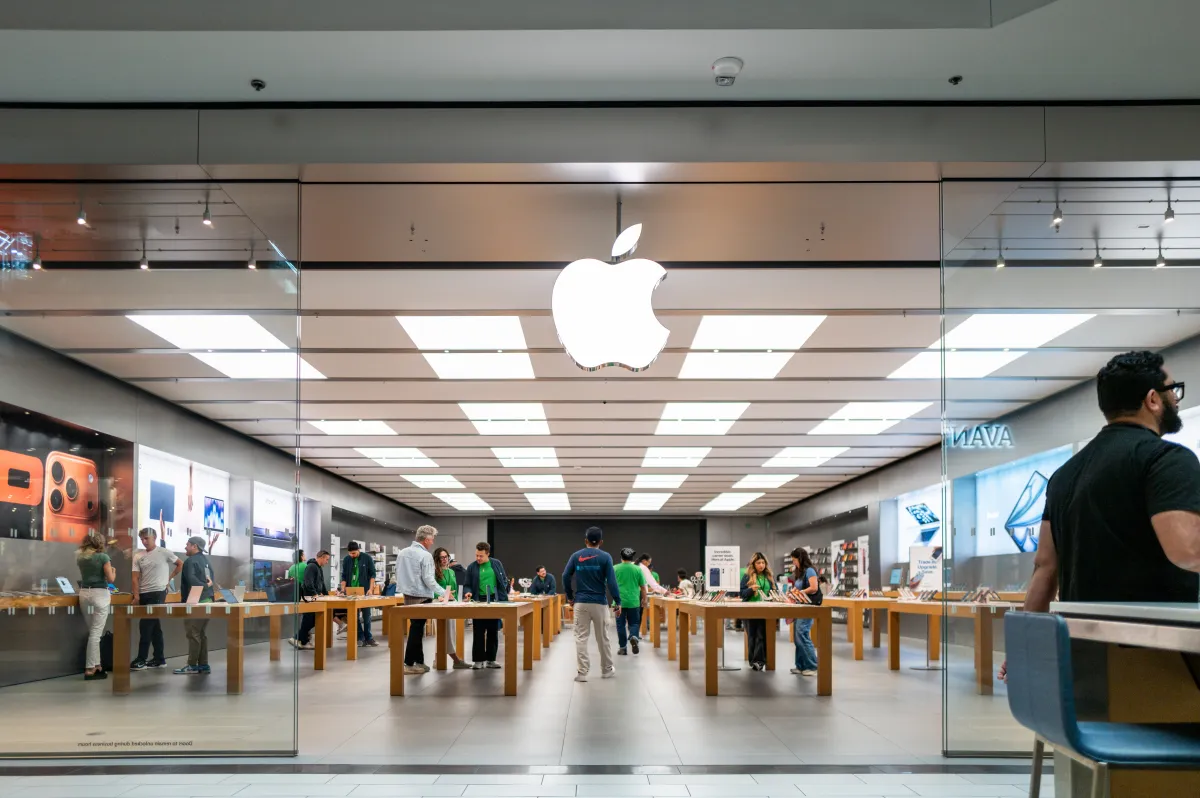
Apple’s latest third-quarter financial results read less like a dry corporate spreadsheet and more like a triumphant masterclass in economic resilience, showcasing a staggering $29.8 billion in net income and easily beating Wall Street’s cautious expectations. CEO Tim Cook proudly celebrated what he coined as the company’s “strongest June quarter ever,” an achievement bolstered by a massive $15 billion year-over-year jump in net sales. However, beneath the glittering surface of these record-breaking figures lay an unexpected financial booster shot: a colossal windfall of tariff refunds, estimated by market analysts to range anywhere from $1.1 billion to $2.2 billion. For the average person, finding a forgotten twenty-dollar bill tucked away in the pocket of an old winter coat brings a fleeting spark of joy; for Apple, this metaphorical “lost money” arrived in the form of billions of dollars clawed back from the federal government. This massive rebate single-handedly lifted the company’s gross margin by a crucial two percent and added eleven cents to its diluted earnings per share (EPS), pushing its overall performance well beyond the $1.89 target predicted by Wall Street. While industry analysts marveled at how this sudden injection of federal cash transformed what would have been an ordinary quarter into a historic victory, it highlighted a deeper, more fascinating narrative. It proved that even in times of systemic global instability, Apple possesses an almost supernatural ability to convert geopolitical chaos into pure, unadulterated profitability, keeping its financial engine humming at a frequency most corporations can only dream of.
To truly appreciate how Apple came to find itself sitting on this sudden mountain of government cash, one must look back to the tumultuous trade wars of the late 2010s. Under the banner of economic nationalism, the Trump administration utilized a highly aggressive interpretation of the 1977 International Emergency Economic Powers Act to levy heavy tariffs on a vast array of imported goods, particularly those originating from China. This policy sent shockwaves through the global supply chain, forcing thousands of American companies to pay eye-watering sums just to import the essential components needed to keep their businesses running. Yet, this high-stakes game of geopolitical chicken met its match in February, when the U.S. Supreme Court struck down the majority of these tariffs. The high court ruled that the executive branch had vastly overstepped its legal authority by using an overly expansive reading of the decades-old emergency act. This landmark judicial decision transformed what was once government revenue into an illegal tax, leaving federal customs officials with the dizzying task of returning an estimated $166 billion to approximately 330,000 corporate importers. Though Customs and Border Protection has worked frantically to process these rebates—authorizing over $100 billion in refunds, including a staggering $49.2 billion in the month of June alone—the Treasury Department still owes over $100.7 billion to businesses, resulting in a monumental administrative headache that continues to play out in federal courts.
While many corporate executives reacted to the initial tariff announcements with public outrage, threat of immediate consumer price hikes, or retaliatory lawsuits filed in the Court of International Trade, Apple’s leadership chose a far more calculated and diplomatic path. Tim Cook, a supply-chain virtuoso who spent years optimizing Apple’s manufacturing empire, refused to engage in public shouting matches with Washington. Instead, Cook leveraged his personal relationship with political leaders and engaged in quiet, backroom lobbying to secure specific product exemptions, all while quietly shifting parts of Apple’s manufacturing footprint from China to countries like India and Vietnam. Rather than passing the tariff costs directly onto the shoulders of loyal customers through immediate, reactionary price hikes on iPhones and MacBooks, Apple chose to absorb the financial blow within its incredibly healthy profit margins. Cook calmly stated that Apple would simply follow the “established process” to seek its eventual financial rebates, choosing strategic patience over performative litigation. This quiet confidence has now paid off handsomely, proving that Apple’s deep pockets and long-term vision allow it to weather regulatory storms that would easily crush smaller competitors. By absorbing the initial pain and waiting out the legal system, Apple managed to protect its brand reputation, keep its consumer base loyal, and ultimately walk away with billions of dollars returned directly to its coffers.
Naturally, the news of this massive government payout has sparked an obvious and hopeful question among everyday shoppers: will Apple share this multi-billion-dollar windfall with the very people who keep its ecosystem thriving? With inflation continuing to squeeze household budgets and the cost of premium technology climbing higher each year, a modest price reduction or a series of consumer rebates would feel like a welcome oasis in a harsh economic desert. Unfortunately for the consumer, Apple has given absolutely no indication that it intends to lower retail prices or offer any form of financial relief. From a psychological and branding perspective, Apple has spent decades positioning itself as a luxury-adjacent brand, cultivating an ecosystem where premium pricing is tied directly to perceived status, innovation, and quality. Lowering prices would run counter to this carefully managed identity, potentially devaluing the brand in the eyes of consumers. Furthermore, because Apple chose to absorb the initial tariff costs rather than officially raising prices specifically to offset them, its executive team can reasonably argue that consumers were never directly penalized in the first place, meaning there is no financial harm to rectify. Consequently, the dream of a cheaper iPhone funded by government refund checks remains a fantasy, serving as a stark reminder of the division between massive corporate triumphs and everyday consumer reality.
This decision to keep the tariff windfall stands in stark contrast to the strategies adopted by several other retail and logistics giants who also received substantial refunds. Companies like Costco, UPS, and FedEx have openly signaled their intentions to return portions of their rebates to the public, recognizing that their customers directly felt the pinch of supply chain disruptions and increased operational costs. Even retail behemoth Walmart, through its Chief Financial Officer John David Rainey, explicitly stated that the company would “definitely bias and prioritize price investment” to ensure that customers felt the relief of these returned funds at the checkout counter. Apple, however, operates on a completely different philosophical plane, prioritizing institutional reinvestment over direct consumer handouts. Tim Cook clarified this vision during recent earnings calls, explaining that every single dollar recovered from the tariff rebates will be funneled directly back into the company’s ambitious domestic growth plans. Specifically, these billions will be folded into Apple’s staggering $600 billion, four-year American investment strategy, driving cutting-edge research in artificial intelligence, expanding advanced manufacturing facilities across the United States, and funding the next generation of American-engineered technological innovations that will shape the future. While this approach may disappoint bargain-hunting consumers, it aligns perfectly with Apple’s identity as an engine of national innovation.
Ultimately, the saga of Apple’s tariff windfall offers a profound look into the complex dynamics of modern global economics, corporate governance, and the state of consumerism. It highlights how a modern tech empire can successfully navigate geopolitical warfare, judicial upheavals, and shifting supply chains, coming out of the crucible wealthier and more powerful than ever. While some may criticize Apple for keeping the cash rather than easing the financial burden on its massive user base, others will argue that investing billions back into domestic manufacturing and technological innovation serves a greater collective good by creating high-paying jobs and securing America’s competitive edge in the global tech landscape. Yet, for the average consumer holding an increasingly expensive device, this story leaves a familiar, bittersweet taste. It is a reminder that in the grand theater of global trade and high-stakes policy, everyday citizens are often relegated to the role of onlookers, watching the tides of wealth flow back and forth between governments and mega-corporations. In this high-stakes game where billions are lost and found in the blink of an eye, the house—and Apple—invariably wins, leaving the rest of us to marvel at the sheer scale of the machinery and the enduring power of a brand that remains virtually untouchable.