


The Fever’s Crossroads: When Basketball Becomes a Battleground
The Indiana Fever’s playoff exit at the hands of the Las Vegas Aces wasn’t just the end of a season—it was the detonation of a powder keg that had been building for months. While most teams would be licking their wounds and quietly planning for next year, the Fever find themselves at the center of a swirling controversy that has less to do with basketball and more to do with identity, politics, and a fan base battling over the soul of the franchise. As Caitlin Clark’s remarkable rookie season gave way to the harsh reality of playoff elimination, the spotlight didn’t dim on the team; instead, it refocused on the off-court drama that has plagued them all year. The question that now looms over the franchise isn’t just about strategy or player development, but about who gets to define what this team represents and, more contentiously, who gets to be part of it moving forward. The Fever have become a mirror reflecting the increasingly polarized world of American sports culture, where the game on the court sometimes feels like the least interesting part of the story.
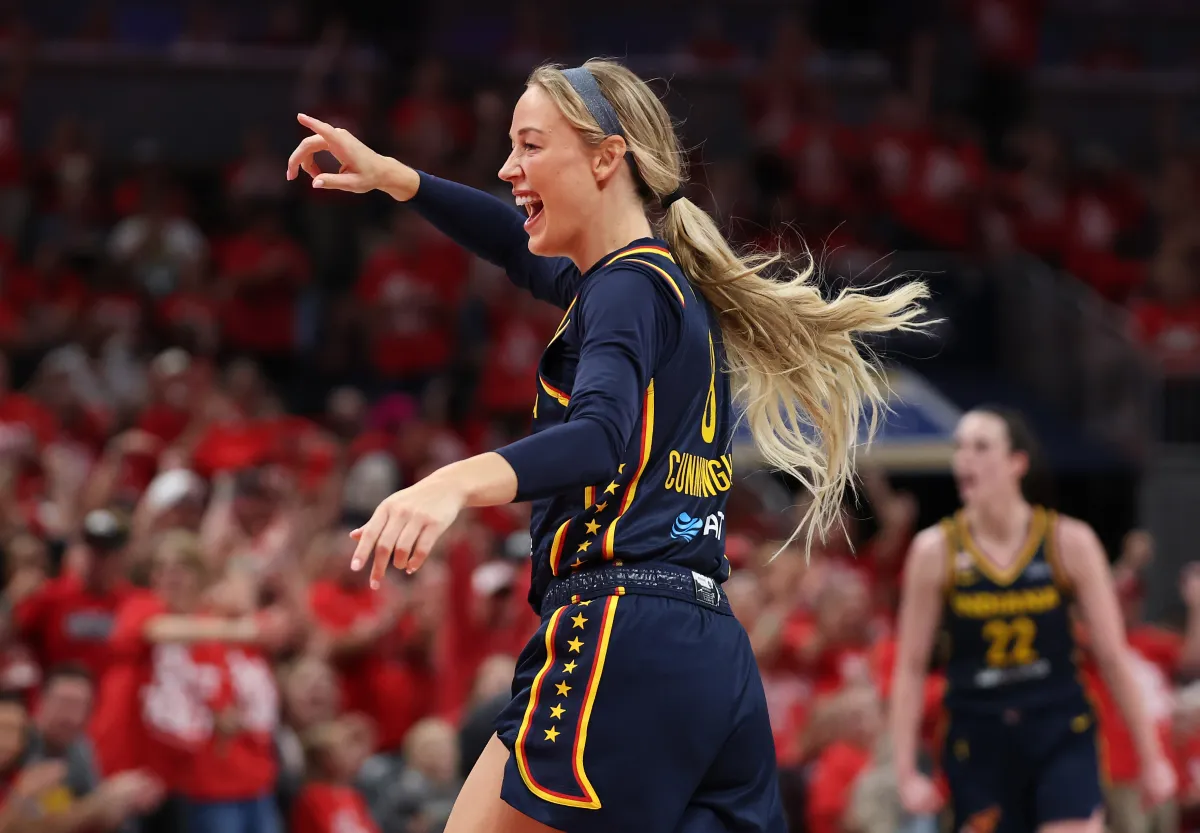
The recent firestorm began with an opinion column from Candace Buckner of The Athletic and New York Times, who delivered a scathing assessment of the Fever’s roster situation, specifically targeting forward Sophie Cunningham. Buckner’s argument was straightforward: Cunningham’s presence, with her “big opinions” and polarizing persona, has become a distraction the Fever can no longer afford. Her suggestion that the team needs to prioritize basketball over controversy sent shockwaves through the Fever’s passionate—and increasingly vocal—fan community. According to Buckner, if the Fever have any hope of returning to being “a basketball team again” and following the lead of rivals who have successfully navigated the league’s evolving landscape, then Cunningham must be shown the door. The column wasn’t just a critique of a role player’s performance; it was a commentary on the very identity of this team, framing Cunningham as a symbol of the forces that have hijacked the league’s narrative this season, drawing attention away from the court and into a murky world of social media battles and personal beliefs.
What happened next was a stark illustration of the dilemma Buckner was addressing. Instead of sparking a thoughtful discussion about the Fever’s future, her column unleashed a torrent of comments and reactions on X (formerly Twitter) that ranged from supportive to deeply troubling. Fans flooded the platform with responses, many of which defended Cunningham with language that, ironically, seemed to validate the criticisms of the team’s fanbase as “toxic.” Some commenters attacked Buckner’s journalistic integrity, suggesting her critique was rooted in left-wing bias or a personal vendetta against a player who “affirms biological reality.” Others dove into outright racism, with one user sarcastically suggesting that the WNBA shouldn’t allow “attractive white women with personalities” to play because they generate interest in the league. The comments section became a battlefield, a microcosm of the broader culture wars that have latched onto Clark’s stardom. For those following the Fever’s journey this season, it was a familiar sight—affirmation that the team exists in a pressure cooker where every decision, every player, and every comment is filtered through a political and cultural lens that has nothing to do with basketball.
The players on the team have felt this tension personally throughout the season, and they’re not mincing words about it. Aliyah Boston and Kelsey Mitchell have both spoken out about the difficult environment created by the fan base, acknowledging the strange paradox of giving your all for an audience that often seems more invested in tearing you down than lifting you up. Mitchell’s reflection was particularly poignant: “Showing up every day to compete for fans that may or may not like you is hard. Playing with CC and having the eyes that she got, we get a lot of flack for just being on her team.” This isn’t just an internal footnote; it’s a public admission that the immense attention focused on Clark has created a ripple effect, subjecting her teammates to disproportionate scrutiny and hostility simply by association. The pressure isn’t just from opposing teams trying to shut down Clark on the court; it’s from the very people in the stands who are supposed to be supporting them. General manager Amber Cox has pushed back against the narrative that the fanbase is inherently toxic, defending them in a post-season press conference and insisting that the attacks on them have “no basis in reality.” Yet, the sheer volume of ugliness bubbling to the surface in response to any criticism of the team suggests that denying the problem isn’t making it go away.
Amidst this chaos, the question of Sophie Cunningham’s future with the team takes on a significance that goes far beyond her on-court statistics. Statistically, Cunningham is a solid, though unspectacular contributor, averaging 7.9 points, 2.3 rebounds, and 1.2 assists per game. She’s the type of player who provides depth, energy, and a physical edge that is valuable in a long season, and her fearless approach to basketball has earned her fans. But her outspoken nature, which surfaced throughout the season, has made her a lightning rod. For some, she is the tough-as-nails teammate every championship team needs—someone unaffected by the constant drama, who thrives under the spotlight. This contingent of supporters argues that her tenacity is exactly what’s needed to navigate the treacherous waters of what the Fever franchise has become. For others, including Buckner, she represents a liability that the organization can no longer afford, a polarizing figure whose opinions overshadow her contributions and contribute to the very toxicity that is driving a wedge between the team and its broader digital audience. As Cunningham is set to become a free agent this offseason, the Fever’s decision on her future will be a clear signal about their priorities. It will tell the league whether they intend to sacrifice their identity to appease a volatile segment of their fanbase, or whether they are willing to make the difficult choices required to foster a healthy, basketball-first culture.
With a full season of this drama in the rearview mirror, the Fever’s offseason is shaping up to be as consequential as their on-court rebuild. The team has a superstar in Caitlin Clark, a dynamic talent who has shattered records and drawn unprecedented attention to the league. But surrounding her with the right pieces is only half the battle; creating an environment where the team can function without the constant interference of external noise is another. The ownership and front office are now faced with a classic dilemma: do you bet on the fiery personalities and undeniable edge that Cunningham brings, or do you prioritize cohesion and a clean slate, knowing that, the player herself isn’t the sole cause of the tension, but merely a symbol of it? The Fever’s answer will shape the narrative of the 2026 season far before a single game is played. It is a test case for the entire WNBA on how to manage the collision between skyrocketing popularity, intense cultural polarization, and the fundamental goal of competitive basketball. A franchise that historically has been known for its stability and tradition is now navigating uncharted waters, trying to find a way to channel the incredible energy of its new era without being consumed by its darker undercurrents.
In the end, the story of the Indiana Fever is no longer just a sports story; it’s a reflection of the wider zeitgeist—a culture divided, where every action is a political statement and every identity is a battleground. The players talk about “showing up to compete for fans that may or may not like you,” and that sentiment cuts to the heart of the modern sports experience. It speaks to a growing disconnect between the purity of athletic competition and the increasingly tribal allegiances of fans who see the game through a lens of cultural warfare. The Fever, with Caitlin Clark at the forefront, have inadvertently become the epicenter of this national conversation, and their decisions this offseason will send a powerful message. Whether they–and the league–can learn to navigate this new landscape without losing the soul of the game remains to be seen. For the players, the staff, and the fans who truly love basketball, the hope is that the drama will eventually subside, and the focus can return to where it should be: on the game itself. But until that day, the Fever remain a fascinating, heartbreaking, and controversial case study of a team forced to play as much for its future as for its present. They are, in equal measure, the most exciting and most exhausting team in the WNBA, and their journey is far from over.