





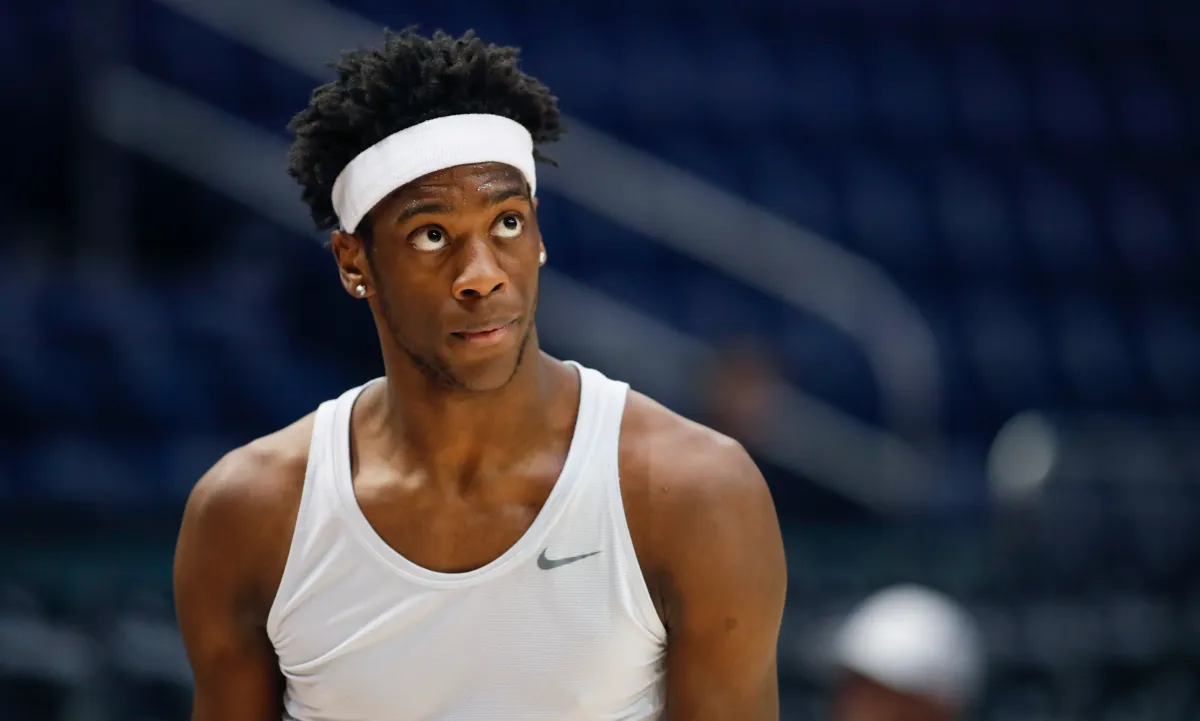
The modern landscape of professional basketball is undergoing a quiet but seismic revolution, one where the traditional pathways to success are being rewritten by a generation of athletes who understand their own worth long before they ever step onto an NBA hardwood. At the center of this cultural shift is AJ Dybantsa, a player whose singular, spectacular season with the BYU Cougars served as a masterclass in modern basketball dominance. Despite an intensely competitive but ultimately brief collegiate campaign that saw his team fall short of a deep run in the highly coveted NCAA Tournament, Dybantsa’s individual brilliance remained utterly untarnished in the eyes of professional scouts and front-office executives. His games were not merely athletic exhibitions; they were statements of intent, marked by explosive, high-scoring outbursts that showcased a rare blend of fluid athleticism, polished shooting range, and an innate basketball IQ that simply cannot be taught. To watch Dybantsa command the court at BYU was to witness a player who was already operating on a professional wavelength, rendering the typical team-success metrics of college basketball virtually obsolete when assessing his future. For months, eager scouts and high-level executives flocked to Provo, Utah, not to evaluate whether Dybantsa was ready for the next level, but rather to marvel at the certainty with which he would soon dominate it. His collegiate resume, compiled in just a single season, built an ironclad case for him to be selected as one of the very top prospects, if not the undisputed first overall pick, in the upcoming NBA Draft. Yet, behind the scenes of this seemingly conventional ascent lay an entirely unconventional approach to the pre-draft process, one that would soon challenge decades of established basketball orthodoxy and spark an intense debate about the dynamics of power between billionaire franchises and the teenage phenoms they hope will save them. This transition from a BYU campus hero to a potential franchise savior represents more than just a personal milestone; it serves as a fascinating case study in how athletic brilliance can grant a young man the leverage to dictate his own terms to an industry that has historically demanded absolute submission.
The very first public crack in the traditional pre-draft facade appeared during a seemingly routine media appearance by Dybantsa on the popular “Baseline Banter” podcast, where his breezy, unfiltered candor sent shockwaves through the basketball landscape. When quizzed about his upcoming schedule and how many high-stakes, sweat-inducing team workouts he had lined up with prospective franchises, Dybantsa offered a stunningly calm revelation: he had not participated in a single one. To the collective gasp of the hosts, one of whom could only stammer out an incredulous “Excuse me?”, the young prospect explained that his pre-draft calendar consisted not of grueling, three-hour draft drills under the intensely watchful, critical eyes of coaches and general managers, but of pleasant city tours, high-end dinners, and engaging conversations. “Take me to the facility. You know, take me to dinner. Talk. I don’t gotta work out,” Dybantsa remarked with a self-assured shrug that perfectly captured the essence of modern athlete empowerment, adding the definitive kicker, “They know what I can do.” This direct, unapologetic assertion of status effectively dismantled the long-standing ritual of the pre-draft workout, a grueling process typically designed to test a prospect’s physical limits, mental fortitude, and willingness to conform to a team’s demands. By completely replacing sweat-stained practice jerseys and intense shuttle runs with fine dining and casual conversations, Dybantsa subverted the traditional power dynamic, treating his visits to NBA cities more like a free-agent tour than a high-pressure job audition. This bold stance sends a clear message to the league: his years of game film, AAU domination, and collegiate excellence are his resume, and he has no intention of treating a lifetime of proven skill as if it were a trial that still requires external validation. It is a posture that demands respect, signaling to the basketball world that the era of elite prospects desperately begging for a chance is rapidly giving way to an era where teams must court the talent just as fiercely.
Dybantsa’s refusal to participate in the traditional draft gauntlet is not an isolated incident of individual defiance, but rather part of a broader, emerging trend among the absolute upper echelon of basketball prospects who are reclaiming agency over their careers. This foundational paradigm shift was further illustrated when fellow elite prospect Darryn Peterson, the dynamic guard out of Kansas, likewise reportedly declined to conduct a private workout for the Utah Jazz, a team holding the prestigious number two overall pick in the draft. For months, the consensus narrative constructed by mock draft creators and mainstream basketball analysts had projected a neat, predictable hierarchy: AJ Dybantsa going number one overall to the Washington Wizards, immediately followed by Peterson at number two. By making the deliberate choice to bypass these workouts, both young men are actively challenging the conventional wisdom that a prospect must historically jump through every hoop, run every drill, and answer every intrusive psychological question just to preserve their draft stock. This collective shift suggests that today’s top prospects harbor a deep, unshakeable confidence in their body of work, preferring to let their extensive high-definition digital footprints and collegiate statistics speak for themselves rather than risking injury or a bad day in an isolated, artificial workout setting. In a world where every single game, practice, and physical metric has been meticulously documented since they were early teenagers, these players understand that an hour-long workout in an empty gym adds very little genuine information to a team’s scouting report while carrying immense reputational and physical risk. Consequently, the decision to opt out of the physical portion of these visits is a highly calculated business decision, one that highlights a sophisticated understanding of brand preservation and personal leverage that would have been unthinkable for prospects of previous generations who felt entirely beholden to the whims of NBA front offices.
This dramatic evolution in player behavior has naturally forced a reckoning among draft analysts and franchise executives who must now navigate a landscape where their traditional evaluation tools are being systematically rejected. This ongoing tension was recently highlighted on ESPN’s flagship show “NBA Today,” where respected draft insider Jeremy Woo unveiled a significant shake-up in his personal Top 100 big board by officially elevating Darryn Peterson to the number-one spot ahead of Dybantsa. Woo comprehensively justified this major adjustment by pointing to Peterson’s status as arguably the most gifted, natural offensive threat in the entire draft class, emphasizing that his raw shooting ability is among the best he has ever witnessed for a player of his age group. Furthermore, Woo noted that NBA front offices have grown increasingly comfortable with Peterson’s medical background, successfully moving past concerns regarding the physical cramping issues that occasionally hindered him during his collegiate career at Kansas. Crucially, however, Woo went to great lengths to clarify the vital distinction between his personal Top 100 tier list—which ranks players strictly on individual talent, upside, and projected skill translation—and his actual mock draft, which attempts to predict the real-world decisions made by teams. In his highly anticipated mock draft, Dybantsa remains firmly entrenched as the projected first overall selection for the Washington Wizards, suggesting that despite Peterson’s incredible offensive rating and rising stock, Dybantsa’s unique combination of size, versatility, and sheer athletic ceiling makes him the most logical cornerstone for a franchise desperately seeking to rebuild its identity from the ground up. This duality of draft projection highlights the complex calculus that teams must perform, balancing raw, unvarnished talent against the specific organizational needs and cultural fit of a franchise during a critical and highly scrutinized rebuilding phase.
The competition at the very top of the draft board has thus transformed into a captivating, psychological study of two deeply talented athletes who have chosen very different paths during the final stretch of their journey to the NBA. As sports journalist Jeremy Woo astutely pointed out, the separation between Dybantsa and Peterson is characterized by a “razor-thin margin,” a competitive reality where the smallest details can dramatically shift a franchise’s ultimate decision on draft night. Interestingly, while Dybantsa completely shut down all his physical activities in favor of executive dinners and facility tours, Peterson chose a slightly different path by agreeing to work out for select franchises, a decision that could ultimately serve as a pivotal tiebreaker for front offices hesitant to commit millions of dollars to a player they have never seen perform in their own gym. This subtle difference in methodology has reignited a fierce debate within NBA war rooms regarding the psychological implications of these pre-draft strategies: does a player’s refusal to work out indicate supreme, justified confidence, or does it hint at a sense of entitlement that might make them difficult to coach at the professional level? For risk-averse general managers whose jobs depend on the success of these high-stakes lottery picks, the opportunity to see Peterson run drills, interact with coaching staff in real-time, and display his work ethic in person provides a level of comfort that Dybantsa’s hands-off, dinner-only approach simply cannot replicate. Yet, this dynamic also humanizes the immense, suffocating pressure placed upon these young men, who must carefully balance the preservation of their health and draft value against the deeply ingrained expectations of older league executives who still value traditional demonstrations of grit, hunger, and deference to authority.
Ultimately, the upcoming luxury event of the draft will serve as a fascinating referendum on how elite NBA franchises prioritize talent in this new era of player empowerment, testing whether they will choose to draft based on immediate cultural fit or simply take the best available player regardless of pre-draft compliance. For a franchise like the Washington Wizards, holding the keys to the first overall pick represents both a golden opportunity and a high-stakes gamble, as selecting a player of AJ Dybantsa’s caliber could instantly alter the trajectory of the team for the next decade. If Dybantsa indeed hears his name called out first, it will represent a historic victory for his modern, business-first approach to the draft process, proving that supreme talent and an unshakeable belief in one’s own worth can successfully rewrite the traditional rules of engagement. However, this revolutionary path also guarantees that from the very moment he drapes an NBA cap over his head, Dybantsa will face an extraordinary level of scrutiny from critics eager to see if his professional output matches the supreme confidence he displayed during his pre-draft tour. The transition from the warm, collegiate atmosphere of BYU to the unforgiving spotlight of the NBA is steep, and Dybantsa’s quiet insistence that “they know what I can do” will finally be put to the ultimate test against the best basketball players on the planet. As the basketball world watches this high-stakes drama unfold, one thing remains abundantly clear: the journey of these young athletes is no longer a submissive job interview, but a profound declaration of independence, demonstrating that the future stars of the NBA are ready to step onto the court not just as employees, but as equal partners in a multi-billion-dollar global entertainment industry.