



Paragraph 1: The Weight of an Apology in Lansing
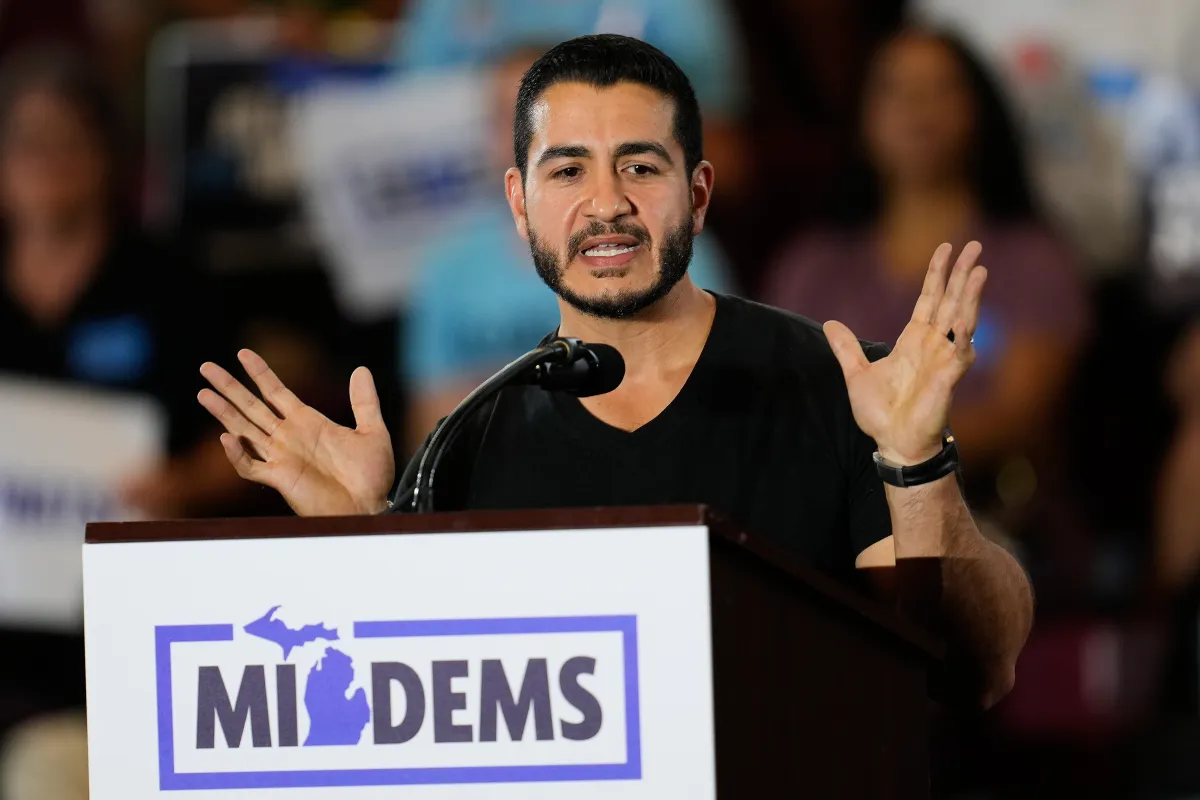
On a recent Saturday afternoon in Lansing, Michigan, the air inside the room where the Michigan Democratic Jewish Caucus had gathered was thick with tension and unspoken grievances. Abdul El-Sayed, the Democratic nominee for the U.S. Senate, stood before the group with a heavy heart, knowing that the words he was about to speak could either mend fragile bridges or shatter them beyond repair. This was not a typical campaign stop filled with handshakes and policy applause; this was a moment of profound reckoning. Months earlier, in the wake of a horrifying attack on a suburban Detroit synagogue, El-Sayed had offered a statement that, while intended to convey empathy for a broken world, had instead landed like a cold slap on a community already reeling from fear and grief. As he addressed the caucus, he acknowledged a painful truth: his initial comments had been misconstrued, and more importantly, they had caused real, visceral hurt. In a steady but vulnerable voice, El-Sayed issued a formal apology, admitting that he had failed to adequately recognize the pain and terror experienced by the Jewish community. He explained that his earlier remarks were an attempt to understand the broader societal context of violence, but in doing so, he had inadvertently minimized the evil of the act itself. The apology was raw, personal, and devoid of political spin—a stark contrast to the often cautious, poll-tested language of modern campaigns. He spoke of trampling on people’s pain, a phrase that captured the essence of his misstep, and he did not ask for forgiveness but simply offered his genuine remorse. The room, filled with voters, activists, and community leaders, listened intently, weighing every syllable, searching for sincerity in a political landscape where authenticity is often the first casualty.
Paragraph 2: The Attack on Temple Israel and a Misguided Attempt at Context
To fully understand the gravity of El-Sayed’s apology, one must revisit the terrifying events of that March day in West Bloomfield Township. A man named Ayman Ghazali, a 41-year-old resident of Dearborn Heights, drove his pickup truck to Temple Israel, a prominent synagogue in the quiet, leafy suburbs northwest of Detroit. He sat in his vehicle in the parking lot for hours, watching, waiting, and preparing. When he finally acted, he crashed his truck through the synagogue’s closed doors, barreling into a hallway that led directly to an early childhood education center—a place where parents drop off their toddlers, where laughter and lullabies typically echo. The violent intrusion was halted only when a security guard confronted him. Ghazali exchanged gunfire with the guard before turning the weapon on himself, ending his own life in a final act of terror. The FBI, led at the time by Special Agent in Charge Jennifer Runyan, swiftly concluded that the attack was inspired by Hezbollah, the Iran-backed militant group, labeling it an act of terrorism explicitly targeting the Jewish community. The trauma was immediate and profound. In the aftermath, as the community struggled to process the near-massacre of innocent children, politicians and leaders rushed to issue statements of solidarity and condemnation. El-Sayed, a progressive with a background in public health and a penchant for analyzing systemic root causes, offered a comment that included the phrase “hurt people hurt people.” His intention, he later explained, was to highlight the cycle of violence and the societal factors that radicalize individuals. But to the Jewish community, still in the raw throes of shock, those words sounded like an excuse—an attempt to rationalize the actions of a terrorist who had tried to kill preschoolers simply because of their faith. The backlash was swift, cutting through the usual party lines and igniting a firestorm within his own base.
Paragraph 3: The Sharp Critique from Attorney General Dana Nessel
The criticism did not come solely from political opponents or distant pundits; it came from within the highest echelons of Michigan’s Democratic establishment. Attorney General Dana Nessel, a prominent Jewish leader and a fierce advocate for civil rights, did not mince words when she addressed El-Sayed’s initial statement in an interview with The Atlantic’s David Frum. Nessel expressed that the phrase “hurt people hurt people” was deeply problematic, stating that it came across as “making excuses for somebody who sought to murder over 100 pre-K schoolchildren.” Her words carried immense weight, not just because of her political office, but because she represented the very community that felt betrayed. For many Jewish Democrats, the attack on Temple Israel was not an abstract news story; it was a direct assault on their sanctuaries, their families, and their sense of safety in a country they called home. Nessel’s public rebuke signaled that El-Sayed’s misstep was not a minor gaffe that could be brushed aside with a generic clarification. It was a fundamental failure of empathy at a critical moment, and it threatened to undermine his candidacy among a crucial voting bloc. The controversy highlighted the delicate tightrope that progressive candidates walk when discussing issues related to the Middle East and domestic antisemitism. El-Sayed, who has been an outspoken critic of Israeli government policies regarding Palestine, had already faced scrutiny from some Jewish groups who feared his positions might veer into intolerance. His “hurt people hurt people” comment became a lightning rod, confirming the worst fears of his detractors while leaving his supporters scrambling to defend him. The political fallout was immediate, with polls and pundits speculating whether this single moment would define his campaign and doom his chances in a state where the Jewish vote, though not massive in number, is highly organized and influential in Democratic primaries and general elections alike.
Paragraph 4: The Sincere Reckoning and a Community’s Tentative Acceptance
In his apology before the Michigan Democratic Jewish Caucus, El-Sayed directly addressed the pain he had caused, moving beyond defensive explanations and into a place of genuine contrition. He reiterated that he and his campaign had unequivocally condemned the terrorist attack from the very beginning, but admitted that his subsequent attempt to offer context had overshadowed that condemnation. “We condemned that terrorist attack. We condemned it outright,” he said, his voice breaking slightly. “What I was trying to do is offer context for why it happened, but it wasn’t the time for context. And you don’t ever want to trample somebody’s pain.” It was a poignant acknowledgment that sometimes, in the face of unspeakable evil, the only appropriate response is unvarnished horror and solidarity, not sociological analysis. The reaction from those in the room was cautiously optimistic. Daniel Rivkin, a communications staffer at the University of Michigan and a delegate at the party’s convention, spoke to reporters afterward, characterizing the apology as sincere. Rivkin noted that it was the first time El-Sayed had explicitly acknowledged the error in such a direct way, and that this admission went a long way toward rebuilding trust. The apology felt less like a calculated political maneuver and more like a genuine human reckoning—a moment where a candidate looked into the eyes of those he had hurt and said, “I was wrong.” While the scars of the initial statement may take time to heal, the sincerity of this apology offered a path forward. It demonstrated that El-Sayed was willing to listen, to learn, and to prioritize the safety and dignity of the Jewish community over his own intellectual pride. For a campaign that hinges on building a broad, diverse coalition, this moment of humility was not just important; it was essential for political survival.
Paragraph 5: The Razor-Thin Margins of a Pivotal Senate Race
The stakes of this apology extend far beyond the walls of a caucus meeting in Lansing; they are inextricably linked to the fiercely competitive race for the U.S. Senate in Michigan, a contest that could very well determine which party controls the upper chamber after the 2026 midterms. The seat is open due to the retirement of longtime Democratic Senator Gary Peters, creating a high-stakes battleground in a state that has become a bellwether for national politics. El-Sayed, with his progressive platform and his outspoken criticism of Israeli policies, faces Republican nominee Mike Rogers, a former FBI agent and congressman. The polling data paints a picture of an extraordinarily tight race, where every voter, every demographic, and every misstep counts. According to a RealClearPolitics average published this week, El-Sayed holds a slight lead of 1.8 percentage points, with 46.3 percent support to Rogers’ 44.5 percent. However, this narrow advantage is well within the margin of error, making the race essentially a statistical dead heat. A closer look at individual surveys reveals the volatility of the electorate. An EPIC-MRA survey conducted from August 22-28 among 600 likely voters found El-Sayed leading by a more comfortable four points, 47 to 43, but that poll carried a margin of error of four percentage points, rendering the lead statistically insignificant. Meanwhile, a Fabrizio/Anzalone survey from earlier in August showed El-Sayed ahead by just a single point, 48 to 47, with a margin of error of 3.3 points. On the other side, a Fox News poll of 1,006 registered voters released in mid-August put Rogers ahead by four points, 51 to 47, demonstrating that the Republican has a viable path to victory. These numbers underscore the fragility of El-Sayed’s campaign and explain why the controversy over his March comments posed such an existential threat.
Paragraph 6: The Fragile Coalition and the Human Element of Politics
In the end, El-Sayed’s apology is not merely about rectifying a single misstatement; it is about the fundamental challenge of holding together a fractious Democratic coalition in a pivotal swing state. Michigan is home to one of the largest Arab American and Muslim populations in the country, particularly in cities like Dearborn, where communities are deeply affected by U.S. foreign policy in the Middle East. El-Sayed’s progressive stance and his willingness to criticize Israeli government actions have earned him significant support within these communities, who see him as a champion of their concerns. However, he cannot win a general election without the support of Jewish voters, suburban moderates, and those who view Israel’s security as paramount. This puts him in an incredibly delicate position, trying to balance the competing demands of two constituencies that are often at odds on this issue. Furthermore, the political environment in Michigan is already challenging for Democrats; former President Donald Trump carried the state in the 2024 presidential election, signaling a shift in the electorate that Democrats cannot afford to ignore. In this context, every vote is precious, and alienating even a small but influential bloc could tip the scales toward Rogers. But beyond the calculations of electoral math and demographic strategy, this moment reminds us that politics is ultimately about human beings—their fears, their traumas, and their desire to be heard. El-Sayed’s willingness to admit that he was wrong, to step outside the protection of political talking points and simply say “I am sorry,” revealed a depth of character that cannot be measured in polling averages. It is a small but significant step toward rebuilding the trust that is essential for any leader, and it speaks to the hope that even in the most polarized of times, empathy and humility can still find a place in the public square. Whether this apology will be enough to secure his victory remains an open question, but it has, at the very least, given the people of Michigan a glimpse of the man behind the candidate.