


Ask a Gen Z or Millennial traveler where they’re heading this year, and you might receive vastly different answers—and it’s not just about age, but about entirely different worldviews, budgets, and sources of inspiration. New research from the youth travel specialist Adventure360, which analyzed over 4,700 bookings from the past year, reveals a fascinating generational divide in travel preferences. The data shows that these two demographics, while often lumped together as “young people,” are actually seeking profoundly different experiences from their journeys. For Gen Z, the allure of Southeast Asia’s affordability and viral social media fame is almost irresistible, with Thailand taking the top spot, featuring in a staggering 29.2% of their bookings. Meanwhile, Millennials, who are generally further along in their careers and have more disposable income, are gravitating toward a different set of destinations, with Australia claiming the crown at 17.8% of bookings, followed closely by Thailand. The study’s methodology, which measured the share of bookings for each country within each age group, paints a clear picture: Gen Z is chasing trending, budget-friendly adventures, while Millennials are prioritizing more established, and often more expensive, bucket-list destinations.
The divergence becomes even more pronounced when examining the full top 10 lists for each generation. While Thailand is a common favorite, the rest of the rankings showcase starkly different priorities. Gen Z’s top 10 is dominated by Southeast Asian nations like Indonesia, Vietnam, Cambodia, and Laos, with the latter two not even making a dent in the Millennial list. New Zealand also ranks ninth for Gen Z, a popularity largely attributed to its accessible working holiday visa, while it fails to chart for Millennials, many of whom have aged out of eligibility. On the other hand, the Millennial top 10 includes Japan, Greece, and Iceland, destinations that are noticeably absent from Gen Z’s top picks. This clear dichotomy suggests that Millennials are drawn to the cultural richness of Japan, the historic beauty of Greece, and the dramatic landscapes of Iceland—places that command a higher price tag but offer a different kind of travel experience. The “why” behind these choices is multifaceted, but it’s clear that while Gen Z is laser-focused on affordability and social media trends, Millennials are willing to pay a premium for experiences they may have been dreaming of for a longer time, often valuing iconic sights and comfort over raw adventure.
Experts at Adventure360 point to the powerful influence of social media, particularly TikTok, as a primary driver for Gen Z’s travel decisions. The platform has become a significant travel inspiration source, transforming lesser-known spots into viral sensations overnight. For instance, video clips recreating the mobile game Temple Run through the ancient corridors of Angkor Wat in Cambodia have amassed over two million views, directly boosting the country’s appeal. Similarly, Long Beach on the island of Koh Rong, also in Cambodia, has gone viral this year after being named among the world’s best beaches, while the Kuang Si waterfalls in Laos draw millions of views from travelers adding them to their bucket lists. This cause-and-effect relationship between online trends and actual bookings is a hallmark of Gen Z travel behavior. They are not just picking destinations from a guidebook; they are following the digital footprints of influencers and peers, eager to experience the next hidden gem before it becomes mainstream. This desire for discovery and authenticity is also reflected in the data, with 76% of Gen Z travelers saying they are open to choosing a lesser-known destination over a popular one, and a striking 51% having actively planned a quieter trip to avoid crowds, with one in three admitting that overcrowding has previously spoiled a holiday.
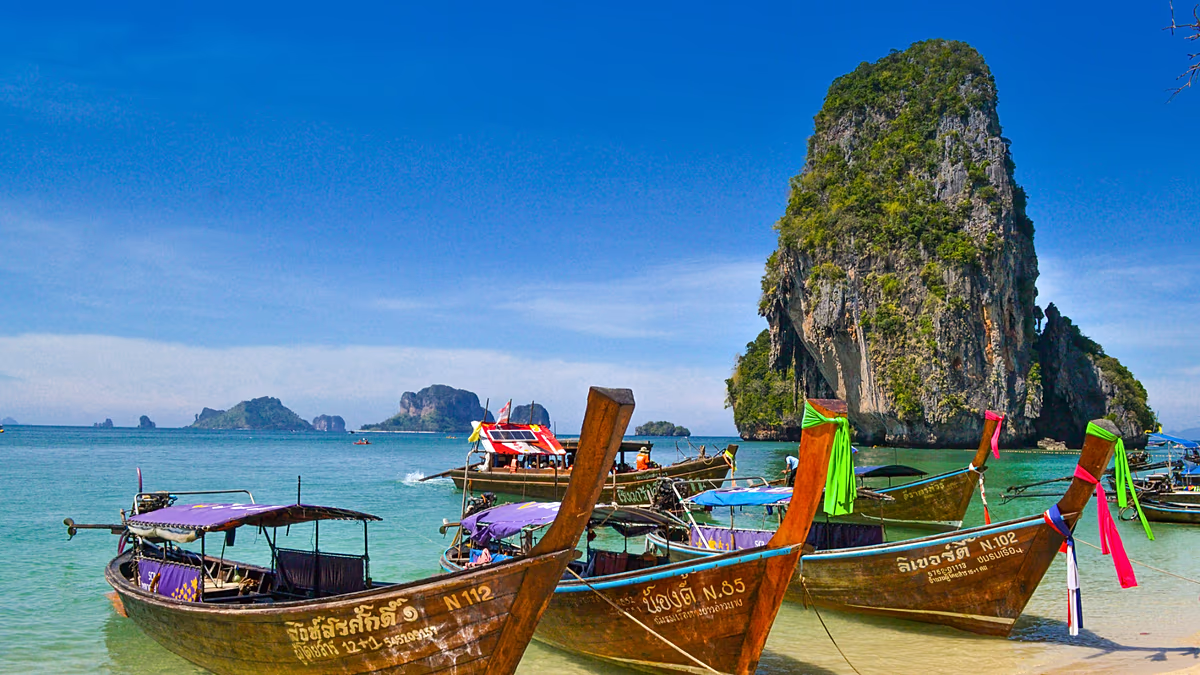
But while the allure of the “new” is strong for Gen Z, the fundamental drivers are often practical. The overwhelming popularity of Thailand for both generations is a testament to its long-standing reputation for affordability, from budget-friendly street food to cheap accommodation. Cambodia and Laos, once considered mere add-ons to a larger Southeast Asian tour, are now being booked deliberately and individually, thanks in part to their rock-bottom prices and a cozy, off-the-beaten-path vibe. The case of New Zealand is also a prime example of policy shaping travel patterns. Its working holiday visa, which allows many passport holders aged 18 to 35 to stay for up to 36 months, presents an unbeatable opportunity for extended travel and work, a draw that Millennials, who are largely ineligible, cannot capitalize on. This financial pragmatism is a defining characteristic of the Gen Z traveler. The study found that while 60% of UK-based Gen Zs expect to travel abroad more this year, only 45% plan to spend more on flights to do so. This budget-consciousness inherently steers them away from pricier destinations and towards places where their money will stretch further, making the higher price points of Japan, Greece, and Iceland a harder sell.
The financial differences between the generations are perhaps best encapsulated by the observations of travel experts working directly with these demographics. Jane McLellan-Green, a travel expert at Adventure360, notes a clear pattern in her consultations: “Iceland and Japan are the two I get asked about most frequently by millennial customers.” She elaborates on the fundamental economic disconnect, saying, “A £5 (€5.85) coffee in Reykjavík is a hard sell for Gen Z when the same money covers a bed for the night in Vientiane (the capital of Laos), but millennials are much happier to pay the price.” This simple comparison highlights the core tension: for Gen Z, the value proposition is about maximizing the quantity and intensity of their travel experiences for as little money as possible. For Millennials, who might have saved up for a significant trip or are taking a career break, the value is in the quality and comfort of the experience itself. They are often more established in their careers, may be traveling with a partner, and are willing to pay for conveniences and unique, once-in-a-lifetime experiences in pricier destinations, viewing them as a reward for their years of hard work.
In the end, the top 10 lists for each generation serve as a perfect summary of their distinct travel philosophies. Gen Z’s list—Thailand, Australia, Indonesia, Vietnam, Cambodia, Laos, Peru, Philippines, New Zealand, and Morocco—is a mix of budget-friendly Asian adventures, a few long-haul working-holiday options, and culturally rich but affordable destinations in South America and Africa. In contrast, the Millennial list—Australia, Thailand, Philippines, Japan, Indonesia, Peru, Morocco, Greece, Iceland, and Vietnam—while sharing a few commonalities, includes the more expensive, higher-end destinations of Japan, Greece, and Iceland. This isn’t to say one generation is “right” and the other “wrong”; rather, they are at different life stages with different priorities. Gen Z is in the exploration phase, eager to discover new corners of the world on a shoestring budget, fueled by the digital world around them. Millennials are in a refinement phase, ready to invest in iconic experiences with a bit more comfort and cultural depth. Understanding this evolving landscape is key for the travel industry, which must cater to both the adventurous, budget-conscious spirit of Gen Z and the experience-seeking, financially secure desires of Millennials. The world of travel is not a monolith, and this data beautifully illustrates that the journey we choose is deeply personal, reflecting not just where we want to go, but who we are and the stage of life we find ourselves in.