


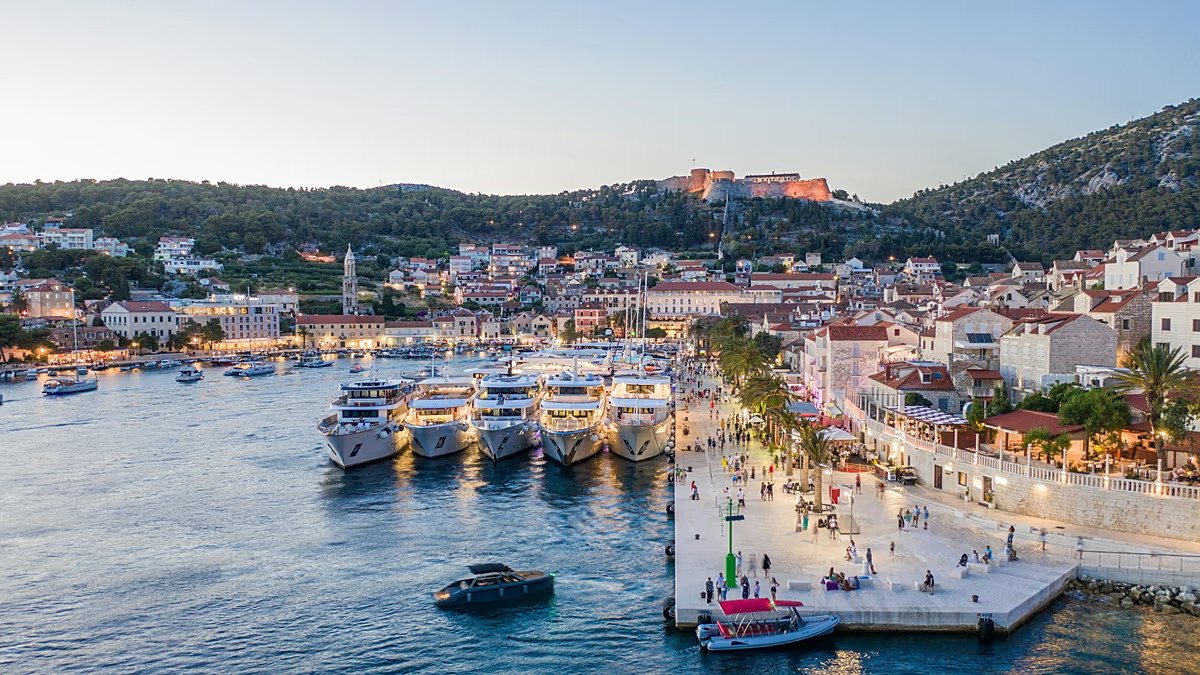
As the golden warmth of early summer sweeps across the Adriatic, Croatia has vibrantly crossed the threshold into its peak tourist season, welcoming a staggering wave of global wanderers. During the final, sun-stretched weekend of June alone, more than 600,000 travelers unpacked their bags in historic coastal towns, sun-drenched islands, and verdant inland retreats. While this collective presence nudged slightly below the historic highs of the previous year, the overall trajectory remains remarkably robust: tourist arrivals have climbed by a steady five percent, while overnight stays have surged by an impressive seven percent, indicating that once people arrive, they are choosing to linger far longer. Even in the face of tectonic shifts within the global tourism economy, geopolitical turbulence, and unpredictable travel disruptions that have characterized the mid-2020s, legendary strongholds like Dubrovnik continue to see their fortunes rise. This resilience is a hard-won victory of enduring charm and careful planning, as noted by Miro Drašković, the visionary director of the Dubrovnik Tourist Board. Speaking candidly to Croatian Radio and Television, Drašković observed that maintaining even a modest one percent growth rate under contemporary global pressures is a profound testament to the country’s reliable allure and cultural safety. This steady enthusiasm is mirrored further up the Dalmatian coast in Split, where the pulse of electronic music is drawing a different kind of seeker. In the feverish, colorful buildup to the legendary three-day Ultra Europe festival in July, airwaves and streets are humming with anticipatory energy. With heavyweights like Calvin Harris, Afrojack, and the hypnotic Miss Monique set to command the massive open-air electronic dance music stage, Split’s visitor numbers are keeping perfect pace with last year’s record-breaking crowds, reflecting a destination that seamlessly balances ancient stone-walled history with the ecstatic, modern thrum of global festival culture.
While the dramatic, cliffside settings immortalized in visual epics like “Game of Thrones” remain an undeniable draw along the rugged Dalmatian Coast, the true magic of Croatia increasingly lies in the whisper of its quiet, unexplored corners. According to Saša Popovac, the visionary Director of Strategic Planning, Sustainability, and Tourist Experience at the Croatian National Tourist Board, the country’s most profound evolution is its rise as a year-round refuge where travelers can step off the well-trodden path to discover a slower, more authentic rhythm. For those dreaming of a journey here, Popovac’s guidance is remarkably reassuring: there is simply no wrong season to experience this land. High summer arrives in July with a brilliant, blazing sun that routinely pushes temperatures past thirty degrees Celsius—and during recent, intense summer heatwaves, up to a scorching thirty-five or thirty-six degrees—making the cool, crystalline embrace of the Adriatic Sea an absolute necessity. Travelers seek out coastal masterpieces like Zlatni Rat on the island of Brač, a spectacular finger of golden pebbles that shifts and curves with the whims of wind and sea currents, offering a playground of windsurfing, fresh, locally caught seafood, and lazy afternoons cradled in deck chairs beneath the shade of fragrant pines. Yet, when the summer sun softens into the mild, contemplative months of November through February, a different kind of beauty emerges. Temperatures rarely drop below ten to fifteen degrees on the coast, while the mountainous domestic heartland transforms into a snow-covered winter wonderland. In the majestic, pine-scented highlands of Gorski Kotar, the unique Platak ski resort allows winter sports enthusiasts to carve down snowy slopes while gazing directly out at the blue expanse of the Adriatic Sea, while the charming trails of Čelimbaša offer peaceful ski and sledging runs tailored for pure family joy. Popovac notes that while the eternal call of the sea (holding sway over ninety-two percent of visitors) and the majesty of untouched nature (captivating sixty-one percent) remain the country’s primary magnets, there is an undeniable, heartwarming surge of travelers arriving for the soul-stirring romance of city breaks, local culinary retreats, historical artistry, and authentic cultural festivals.
For travelers seeking a sanctuary where historic grandeur meets contemporary elegance, this summer marks the highly anticipated resurrection of one of Dubrovnik’s most legendary architectural crown jewels. This coming August, the iconic Villa Argentina will gracefully reopen its doors to the public following an ambitious, multi-year restoration project that has meticulously transformed the historic property into a premier five-star luxury retreat. Nestled dramatically into the cliffside just a short, scenic stroll from the limestone streets of Dubrovnik’s UNESCO-listed Old Town, the hotel comprises ninety-five exquisitely redesigned rooms and suites, each crafted to offer panoramic views of the shimmering Adriatic Sea, the wild, pine-forested silhouette of Lokrum Island, and the ancient stone ramparts of the city itself. Guests looking for a more intimate, boutique atmosphere can opt to stay in the adjacent sister property, the beautifully restored thirteen-room Villa Orsula, which serves as a private, romantic enclave of understated luxury. Days at the renovated estate are designed around slow-paced indulgence: guests can wander through terraced, fragrant gardens filled with native flora and centuries-old cypress trees, enjoy private, direct access to the sea, or retreat to the expansive sanctuary of the Anima Wellbeing & Spa. This state-of-the-art wellness haven, complete with soothing indoor and outdoor pools, a restorative Finnish sauna, and specialized local botanical treatments, is designed to align the body and spirit with the calm rhythm of the coastline. The culinary journey at the estate is equally transportive; the signature restaurant, LIZ, champions local, seasonal ingredients by serving the freshest daily catches alongside artisanal Croatian cheeses, local fruits, and cured Dalmatian ham. Meanwhile, at Villa Orsula’s intimate Marea restaurant, diners are treated to a brilliant gastronomic dialogue, where traditional Mediterranean sensibilities are playfully reimagined through the vibrant, citrus-bright lens of Peruvian coastal heritage, curated masterfully by executive chef Roberto Chavez.
To truly understand the beating heart of Croatia, one must dive into the rich, communal celebrations that paint its calendar with music, theater, and athletic triumphs from the heat of summer deep into the golden hues of autumn. The Croatian National Tourist Board highlights several landmark gatherings that transform the travel experience from simple sightseeing into deep cultural participation. Chief among these is the legendary Dubrovnik Summer Festival, running from mid-July to late August, an extraordinary time when the ancient stone fortresses, piazzas, and quiet courtyards of the Old Town are transformed into high-drama open-air stages for classical masterworks, avant-garde theater, and graceful ballet performances under the stars. Concurrently, the venerable Split Summer Festival—now entering its remarkable seventy-second year—presents a vibrant, three-week feast of performing arts, offering locals and travelers alike an eclectic mix of open-air jazz concerts, cinematic screenings, and spontaneous street theater inside the ancient, monumental palace walls of Diocletian. As the summer heat yellows, the celebration shifts inward and northward; the Vinkovci Autumn Festival in September emerges as a breathtaking tribute to Slavonian heritage, showcasing elaborate traditional costumes, centuries-old folk songs, and the legendary warmth of eastern Croatian hospitality. Simultaneously, the northern town of Varaždin bursts into a kaleidoscope of creative energy with Špancirfest, one of the nation’s largest and most whimsical street festivals, where puppeteers, acrobats, and musicians reclaim the baroque streets. For those whose spirits are fueled by physical endurance and outdoor challenge rather than theatrical drama, the middle of October presents the Plava Laguna IRONMAN 70.3 in Poreč. This internationally acclaimed triathlon draws thousands of elite athletes, everyday competitors, and enthusiastic spectators to the pristine, green-and-blue peninsula of Istria, where the cool, gentle mid-autumn climate provides the perfect backdrop for a grueling yet scenic swim, bike, and run through olive-strewn landscapes.
For those who have already fallen in love with the iconic silhouettes of Dubrovnik, Zagreb, and Split, Croatia beckons with a second, deeply rewarding layer of travel—a treasury of lesser-known destinations where one can live like a local and feel the ancient heartbeat of the land. Saša Popovac passionately recommends stepping off the beaten path to explore places like Hrvatsko Zagorje, a rolling, green paradise situated just an hour’s drive north of the capital city. Often described as a living fairytale, Zagorje is a region of soft, mist-veiled hills crowned with majestic medieval castles and thermal springs, where time seems to slow down over glasses of crisp, local white wine. Further west lies Gorski Kotar, a dense, mountainous plateau of unspoiled emerald forests and deep gorges, perfect for travelers looking to silence the noise of modern life through quiet woodland hikes. In the legendary peninsula of Istria, Popovac steeringly points travelers toward the romantic, mist-wrapped hilltop towns of Motovun and Grožnjan; famed for their medieval stone walls and artistic communities, these ancient villages double as culinary havens where gourmands can feast on rich, earth-grown truffles, hand-rolled pasta, and local seasonal specialties like tender spring cuttlefish braised with sweet young fava beans. Further down the coast, the sun-baked plains of Ravni Kotari in the Zadar hinterland offer a beautifully rustic side of Dalmatia, characterized by sprawling, silver-leafed olive orchards, quiet freshwater lakes, and family-run stone homesteads serving slow-roasted meats. For an absolute escape from modern speeds, the historic limestone town of Šibenik stands as a beacon for intentional travel, serving as the gateway to a quiet, car-free archipelago. On the tranquil islands of Zlarin, Prvić, and Krapanj, the modern world fades entirely, replaced by the gentle lap of the tide, the scent of wild rosemary, and a traditional island lifestyle deeply rooted in sponge harvesting and coral craftsmanship.
Ultimately, this quiet, immersive frontier extends into the dramatic canyons and fertile valleys of the Dalmatian hinterland, known as Dalmatinska zagora, where the wild, rushing waters of the Cetina River carve through steep limestone cliffs, offering high-adrenaline rafting and peaceful, meditative fishing in equal measure. Similarly, just a short distance from the bustling walls of Dubrovnik lies the gorgeous valley of Konavle, a rich tapestry of traditional silk production, historic watermills, and family-owned vineyards that thrive in perfect harmony with the dramatic slopes of the Sniježnica mountain range. It is within these overlooked sanctuaries, according to the Croatian National Tourist Board, that travelers find the highest “value of time”—a profound metric where vacations cease to be a checklist of crowded monuments and instead become a collection of deep, slow, and transformative human experiences. The modern traveler is increasingly looking for a return to authenticity, turning away from the frenetic pace of over-tourism to seek out sustainable, off-season journeys that actively support and respect local communities. Popovac beautifully summarizes this shifting philosophy, noting that Croatia is uniquely positioned to fulfill this global yearning by showing travelers that the most enduring, soul-stirring memories are often born from the absolute simplest things: a quiet conversation with an islander, the taste of freshly pressed olive oil, or the cool shadow of a centuries-old pine tree leaning over a quiet, empty cove. In a world of constant motion, Croatia’s true luxury is its open invitation to slow down, breathe deeply, and discover that the most profound journeys are not measured by miles traveled, but by the quiet spaces where our spirits are restored.