




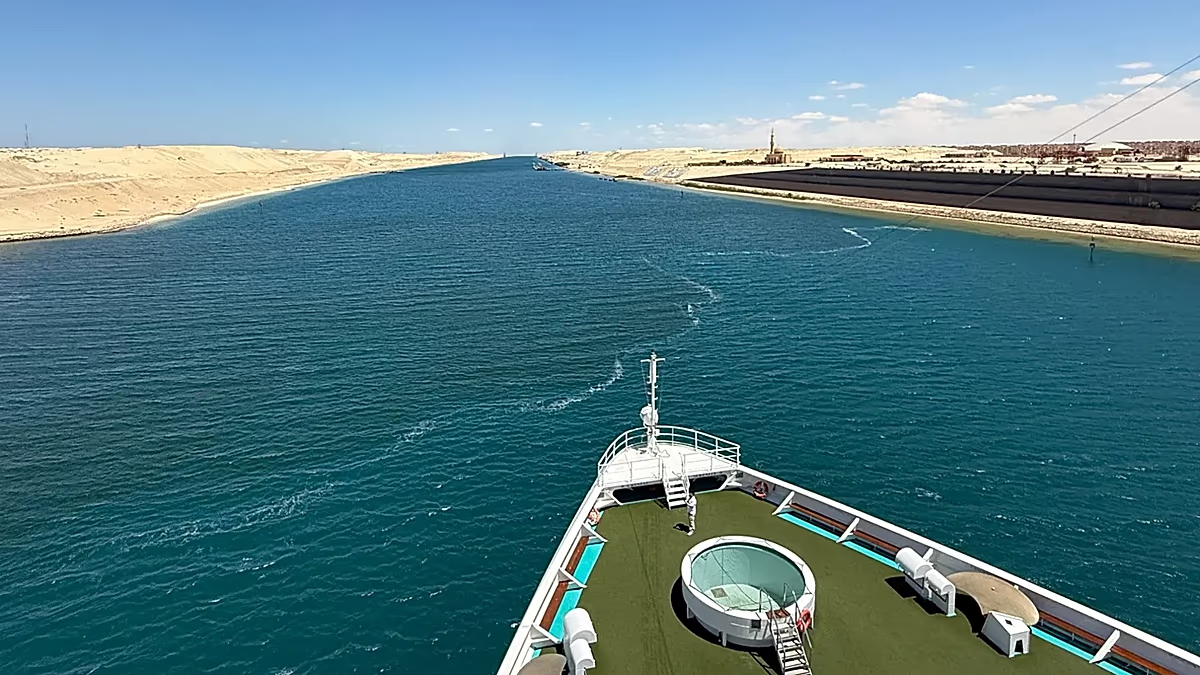
The Suez Canal has long been a place of heavy transit, a narrow strip of water cutting through the desert sands to link East and West in a seamless flow of global commerce. Yet, on a warm day in May, this historic canal became the backdrop for a different kind of passage—one where the primary cargo was not consumer goods, but the intellectual capital and strategic vision of the global travel sector. Onboard a luxury cruise vessel gliding through these serene waters, three hundred of the world’s most influential public and private tourism leaders gathered under the banner of the World Travel & Tourism Council (WTTC). Although this floating summit took place some 3,700 kilometers away from the geopolitical flashpoint of the Strait of Hormuz, the specter of that distant crisis dominated every conversation, panel, and quiet hallway whisper. The industry, still tender from the deep wounds of the early 2020s, now finds itself staring down what many delegates openly describe as a “perfect storm.” Just as the peak summer travel season beckoned with the promise of record-breaking numbers, a volatile mix of fuel shortages, escalating ticket prices, sudden flight cancellations, and a systemic breakdown in global air connectivity threatened to derail the momentum of global mobility. This floating enclave of luxury stood as both a fortress of optimism and a vulnerability chamber, showcasing the industry’s desperate need to find immediate, actionable answers to a world growing increasingly fragmented and unpredictable. The contrast was stark: outside, the calm, shimmering waters of the Suez; inside, an intense, quiet panic over how to navigate an impending economic iceberg. These three days of dialogue were not merely about high-altitude strategy; they were a collective search for a lifeline, an attempt to decipher how the simple human act of journeying across borders can survive when the physical and financial pathways of travel are rapidly constricting.
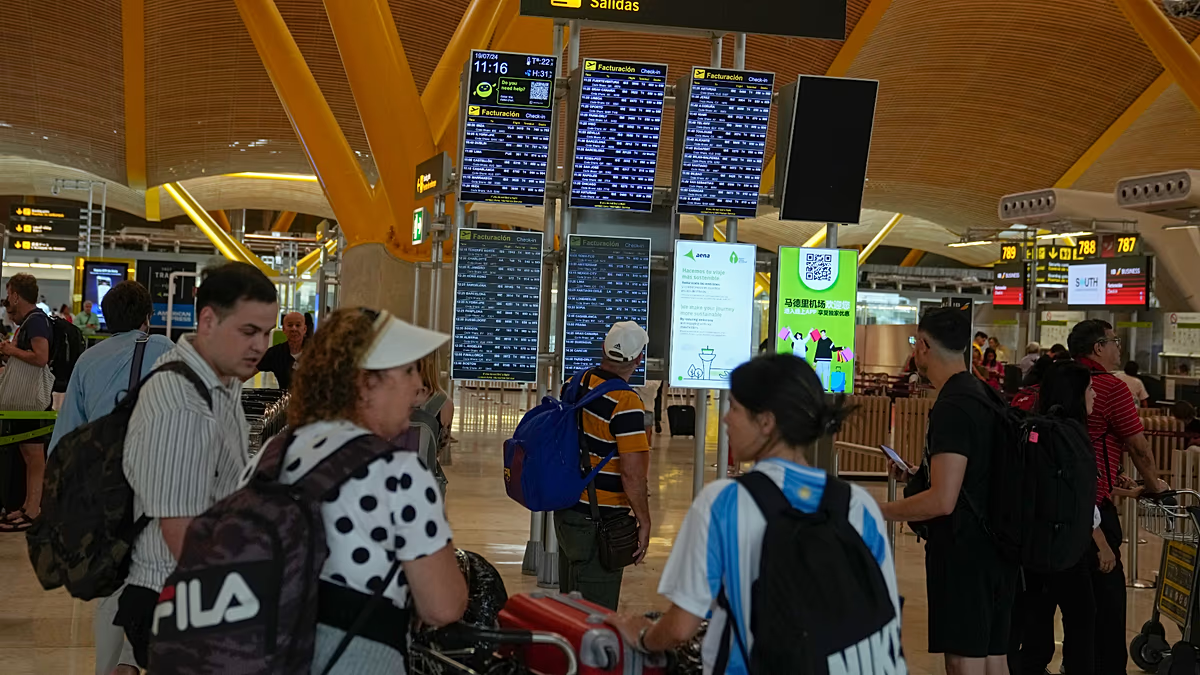
The primary battleground of this crisis is not on land, but in the skies, where the air connectivity that binds our modern world together is experiencing a sudden, severe cardiac arrest. At the center of this structural collapse is the blockade of the Strait of Hormuz, an event that has sent shockwaves through the global energy market and struck the aviation sector at its most vulnerable point. Commercial airlines, already operating on razor-thin margins, are watching their balance sheets disintegrate as shortages of critical aviation fuel—specifically paraffin—drive oil prices to historic highs. Historically, fuel accounts for roughly thirty percent of an airline’s total operational expenditures; today, those expenses have tripled, placing an unsustainable burden on carriers worldwide. Gloria Guevara, the assertive President and CEO of the WTTC, has been vocal about the devastating ripple effects of this supply crunch, noting that the immediate casualty is the sheer volume of available seats in the sky. Yet, her concern extends past corporate losses to the actual human traveling public, whom she identifies as the most vital, yet incredibly fragile, link in this global economic chain. The European Commission has echoed this grim reality in its transport reports, warning of a summer defined by systemic disruptions, cascading delays, unexpected cancellations, and agonizingly long transit routes. To prevent a complete freeze in global movement, Guevara is championing a pragmatic yet controversial policy shift, urgently calling on national governments to slash taxes levied on the aviation sector. Her argument is grounded in basic human economics: if governments absorb some of the financial shock by lowering regulatory burdens, airlines will not be forced to pass the exorbitant fuel bills onto the average vacationer, thereby preserving the fundamental freedom of global mobility without completely decimating flight supply. Furthermore, Guevara remains deeply optimistic about the resilience of the Middle Eastern market, projecting a rapid two-month recovery window once geopolitical tensions subside, proving her belief that humanity’s inherent urge to explore cannot be easily suppressed.
Nowhere are the consequences of this logistical bottleneck felt more acutely than in Egypt itself, a nation whose very identity and modern economy are deeply intertwined with the footsteps of foreign travelers. From the quiet decks of the cruise ship, Egypt’s Minister of Tourism, Sherif Fathi, offered a candid and sobering look at how these international tensions translate into domestic hardship. Speaking in an exclusive interview, Fathi reconfigured the typical economic narrative, arguing that the true crisis facing the international tourism industry today is not a lack of human desire or consumer demand, but rather a catastrophic failure in the supply of safe, affordable transport. The statistical reality is already stark; Egypt witnessed a painful sixteen percent drop in international arrivals during the month of April alone, a direct consequence of international airlines cutting flights and reducing seating capacities. Fathi emphasized that this crisis does not stop at the airport tarmac; it has a migratory effect, bleeding heavily into maritime shipping, transcontinental rail networks, and overland commercial transit, creating a domino effect that inflates the cost of living and degrades the quality of tourism services worldwide. His words served as a poignant reminder that tourism is not a luxury silo, but an integrated ecosystem of global transport that feeds local artisans, hotel staff, and cultural custodians across the globe. The empty tables at historical cafes, the idle tour guides waiting by the Pyramids, and the unusually quiet hotel lobbies across the Red Sea resorts are the true, human face of a drop in flight percentages. Fathi’s perspective calls for a holistic view of the travel network, reminding global policymakers that transport infrastructure is the lifeforce of international relations and cultural exchange, and when it is choked, the cultural and economic vitality of entire host nations begins to wither.
Across the Mediterranean, European regulators and coordinators are watching these developments with an intensity born of deep concern, fully aware that an unstable summer could destabilize their own fragile economic recoveries. Eduardo Santander, the Executive Director of the European Travel Commission (ETC), has been a leading voice in articulating the continent’s strategic anxieties and emergency plans. He revealed that the European Commission is monitoring the situation with such high gravity that they are preparing unprecedented contingency plans, even contemplating forcing member states to share their sovereign strategic oil reserves to keep the aviation sector aloft. This proposed measure of state-mandated resource sharing carries a heavy historical resonance, drawing immediate and vivid parallels to the desperate collective actions taken during the darkest days of the COVID-19 pandemic, when vaccines were rationed and distributed across borders to save lives. Santander pointed out that the geographic distribution of vulnerability across the European continent is highly uneven, with island nations like the United Kingdom standing at the precipice of extreme vulnerability due to their near-total reliance on long-distance air corridors. In contrast, countries like Spain find themselves in a slightly more insulated position, protected by robust domestic fuel reserves and diversified logistical entry points. This discrepancy is poised to fundamentally alter the behavior of summer vacationers, driving a massive wave of hyper-localized travel where Europeans choose to journey much closer to home, opting for train rides and domestic road trips over high-altitude flights. This forced localized migration represents a profound shift in the psychological geography of leisure, transforming how an entire continent conceptualizes adventure and relaxation. Instead of boarding multi-layover flights to distant tropical paradises, families are looking toward their neighboring countries, rediscovering regional routes and injecting vital capital back into neighboring economies.
In the crucible of this geopolitical crisis, however, industry leaders are identifying a unique opportunity to address a long-standing structural flaw in modern global tourism: the unsustainable concentration of travelers during the peak summer months. Eduardo Santander and his colleagues view this summer’s constraints as a catalyst for “deseasonalisation,” the ambitious plan to spread tourist traffic more evenly throughout the autumn, winter, and spring months. For decades, the travel industry has struggled with the environmental degradation and infrastructural strain caused by overtourism during a single, suffocating summer window; by forcing travelers to reconsider their summer plans, this crisis could inadvertently accelerate a healthier, year-round model of tourism. This silver lining is crucial, because the human stakes involved in the collapse or survival of this industry are monumentally high, transcending sterile business balance sheets. As Gloria Guevara frequently reminds the global community, tourism is not merely a leisure activity for the wealthy, but a massive engine of global equity, accounting for nearly ten percent of the entire global gross domestic product. More importantly, it is one of the world’s greatest employers, supporting approximately 376 million jobs across the planet, which translates to a staggering one out of every nine jobs in existence. Behind these massive macroeconomic figures are real human stories of hospitality workers, airport ground crews, cleaning staff, bus drivers, and street food vendors whose direct daily survival depends entirely on the steady flow of global travelers. A shift toward year-round travel not only reduces the ecological footprint on overcrowded historic cities but also provides stable, permanent incomes to seasonal workers who have spent generations living hand-to-mouth between summer rushes. By transforming this acute crisis into a driver of sustainable reform, the industry seeks to rewrite the covenant between traveler and host, ensuring that tourism becomes a regenerative force rather than an extractive one.
As the luxury cruise liner completed its symbolic journey along the Suez Canal, leaving the placid waters behind, the participants of this extraordinary floating summit prepared to return to their respective nations, carrying with them a profound sense of shared destiny. This historic event, operating as a floating island of diplomacy in a sea of regional tension, succeeded in broadcasting a powerful and defiant message of confidence to a highly anxious world. It reminded observers that the global tourism sector is not a fragile entity easily shattered by conflict, but a remarkably resilient force that has spent decades navigating the turbulent waters of world wars, economic recessions, natural disasters, and global pandemics. Yet, beneath the official declarations of optimism and solidarity, the atmosphere remains thick with anticipation, as corporate and political leaders collectively hold their breath, watching the daily developments in the Middle East. They understand that the events unfolding in the coming weeks will do more than just dictate the cost of a summer vacation; they have the potential to permanently redraw the global tourism map and dictate the trajectory of the broader international economy. Ultimately, the floating summit on the Suez Canal was a microcosm of humanity’s ongoing journey—navigating a narrow and difficult bottleneck, surrounded by dry deserts of geopolitical uncertainty, yet moving persistently forward with the enduring hope that open borders, cultural exchange, and the basic human freedom to travel will always triumph over the forces of division and isolation. In this delicate balancing act, the industry is not just fighting for profit margins, but for the fundamental human connection that travel fosters. As the delegates disembark and the ship’s wake fades into the canal’s quiet waters, the true test begins: turning strategic promises into localized safety nets that can weather the storm, assuring every nervous traveler that despite the clouds on the horizon, the world remains open, welcoming, and deeply worth exploring.