




Picture a getaway: no alarm clock, no Slack notifications, no calendar reminders. Just the soft sound of water, the scent of eucalyptus, and the feeling of your shoulders finally dropping away from your ears. This is the spa weekend fantasy, and I am completely here for it. Hollywood clearly agrees. Earlier in August, a new comedy called Spa Weekend hit big screens, following the misadventures of four lifelong friends who realize that between juggling careers, family duties, and everyday responsibilities, they have lost track of taking care of themselves and each other. Burnout has reached a breaking point, so they do the only sensible thing: book a spa weekend. It’s a familiar story. Who hasn’t looked around at their own life and thought, “I need a pause button”? The timing could not be better. Luxury travel specialists Virtuoso report that wellness bookings have increased by 28 percent year-on-year. That means people are not just daydreaming about mineral pools and hot stone massages—they are actually going. I have to admit, I do not need any convincing. You could point me at a warm towel and a dimly lit treatment room and I would be in heaven. But if you are someone who needs a little push to prioritize your own wellbeing, Europe is full of places where rejuvenation is not an afterthought. It is the whole point. From historic spa towns to modern wellness resorts, there is a destination for every kind of tired soul.
One of the most fascinating things about Europe is that it treats spa culture as heritage. UNESCO has recognized the “Great Spa Towns of Europe,” a collection of 11 towns spread across seven countries that helped shape the very idea of wellness tourism. These are not just places with hot springs; they are architectural and cultural landmarks. The list includes Baden bei Wien in Austria; Spa in Belgium; three Czech towns—Františkovy Lázně, Karlovy Vary, and Mariánské Lázně; Vichy in France; three German towns—Bad Ems, Baden-Baden, and Bad Kissingen; Montecatini Terme in Italy; and the City of Bath in the United Kingdom. According to UNESCO, each town created its own “spa architecture,” pioneering a style of urban design centered on medical care as well as modern health and wellness tourism. They were selected for their “outstanding universal value,” which is a fancy way of saying that taking the waters is a cultural achievement worth preserving. I love that. It validates the idea that rest is not lazy; it is civilized. Bath, for example, has been drawing visitors since Roman times. Baden-Baden was once the playground of European aristocrats. Karlovy Vary was a meeting place for composers and emperors. Walking through these towns feels like stepping into a centuries-old wellness ritual. You can soak in thermal waters that people have believed in for generations, then stroll through elegant colonnades and manicured parks designed to calm the mind. It is not just a spa day; it is a deep immersion in the history of human self-care.
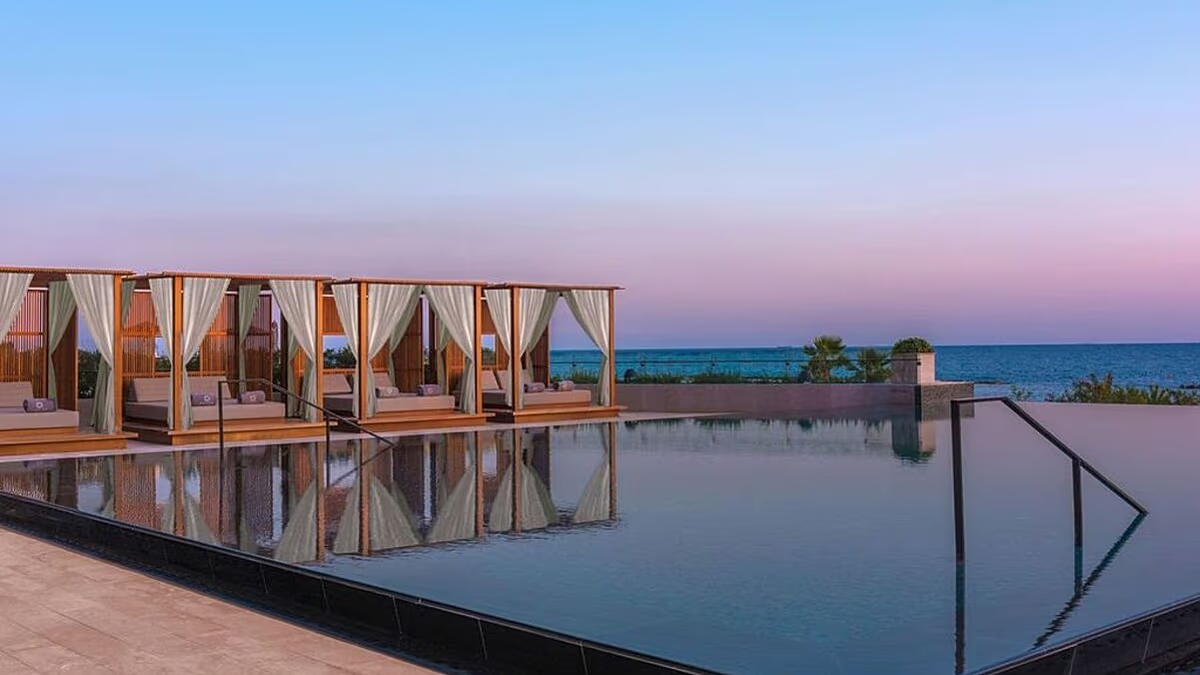
Of course, you do not have to visit a UNESCO site to find a transformative spa experience. Europe is overflowing with hotels and resorts that have elevated wellness into an art form. Take Finn Lough in Northern Ireland, a self-styled luxury hideaway tucked into ancient Irish woodland on the edge of the Lough Erne lake system. The whole philosophy here is about reconnecting with nature. You can soak at the Shoreline Spa, which sits right on the banks of Lough Erne, or enjoy a sauna session with panoramic lake views. The forest feels close, the air is clean, and there are no bright screens in sight. It is the kind of place where you remember what silence sounds like. Then there is Lefay Resort & Spa Lago di Garda in Italy. This property in Gargnano calls itself a temple of wellness, and the scale is impressive: more than 4,300 square meters dedicated to treatments. What I love is the East-meets-West approach. You can choose from Thalassotherapy, including seaweed facial purifying, to Western massages designed to release tension, or go deeper into Eastern practices like Chinese Gua Sha and Tibetan hot sponging and cupping. It is like a global tour of healing traditions without leaving Lake Garda. For something a little warmer, AMARA in Limassol, Cyprus, sits on the island’s southern coast. The five-star hotel’s spa hosts three- and five-day wellness retreats built around an adults-only seawater infinity pool. The therapies highlight local ingredients—organic olive oil and citrus—and there are countless rituals, therapeutic massages, and facials to experience. I can already picture myself floating in that pool, looking out at the Mediterranean, with nowhere to be and nothing to do.
If you want to go beyond simple pampering and actually optimize your body, ZEM Wellness Clinic Altea in Alicante, Spain, is a serious contender. Its wellness and spa facility spans an expansive 4,000 square meters. You can book Signature treatments that celebrate Mediterranean traditions, or try technology-based therapies that promise to boost metabolism and support physical recovery. There are aquatic therapies, manual therapies, and facials. It is the kind of place where wellness feels both ancient and futuristic. But you do not have to stick to the well-known destinations. Bulgaria is emerging as a spa powerhouse. The country is home to more than 700 mineral springs known for their healing properties, and Deputy Tourism Minister Irena Georgieva says demand for spa tourism has risen by 15 percent. If you want to fully immerse yourself in rest and relaxation, Bulgaria Travel describes Velingrad as the “spa capital of the Balkans.” It sits about 130 kilometers from Sofia, tucked away in the pine-covered Rhodope Mountains, and is home to some 80 springs—including the country’s largest karst spring, Lake Kleptuza. The setting alone is enough to lower your blood pressure. At Spa Hotel Santé, you can enjoy steam bathing, halotherapy in a salt room, or a traditional Turkish bath. The pools are all filled with mineral-rich water and kept at a minimum of 33 degrees Celsius. The outdoor dipper pool is even warmer, at 38 degrees, perfect for quick, restorative dips. There are also contrast pools divided into two temperature zones: a 40-degree section for deep relaxation and an 18-degree section to stimulate blood circulation. The hot-cold ritual is bracing, invigorating, and deeply satisfying.
If you are drawn to the idea of forest bathing and island quiet, Estonia’s Hiiumaa Island is an ideal escape. Encircled by the Baltic Sea and known for natural beaches, small harbors, and hiking routes, the island has a slow rhythm marked by nature reserves and coastal forests of dense woodland. It is the perfect place to unplug. That is why Eha Retreat, scheduled to open its doors in autumn, is such an intriguing new addition. The retreat is designed around Estonia’s so-called “five seasons,” a concept that honors the in-between times of the year that shape local life. Everything here is designed to support deep rest and regenerative wellbeing. Guests can choose between a three-, five-, or seven-night experience, beginning with a consultation to create a personalized programme for individual wellbeing. The Thermal Suite is the heart of the experience, with multiple saunas, steam rooms, and hydrotherapy pools. But Eha goes beyond the spa building. You can forage for ingredients and learn about food as medicine, explore traditional Estonian food conservation techniques, tend the land, garden, take guided walks through the estate, and join forest tea ceremonies. It is a full reset for the senses. I find the idea of participating in your own wellbeing—rather than just lying passively on a treatment table—deeply appealing. The retreat seems to understand that true rejuvenation comes from reconnecting with the natural world and with your own hands. By the time you leave, you have not just been pampered; you have been grounded.
At the end of the day, a spa weekend is more than a luxury; it is a reminder that you are not a machine. The characters in Spa Weekend learn this the hard way, but you do not have to wait until burnout becomes a breaking point. Europe makes it easy to weave a little healing into your travel plans. You can soak in the same thermal waters as Roman emperors in Bath, wander the elegant colonnades of Baden-Baden, or lose yourself in the pine forests of Bulgaria. You can float in an infinity pool on the coast of Cyprus, have your body worked over by a skilled massage therapist in Italy, or practice forest bathing on a quiet Estonian island. The destinations are varied, but the goal is the same: to slow down, breathe, and remember what it feels like to be human. And with wellness bookings on the rise, it is clear that many of us are hungry for exactly that. I know I am. So if you have been feeling that familiar itch of exhaustion, consider this your sign. Plan the trip. Pick a spa town, a lakeside retreat, or a mountain hideaway. Let someone else cook your meals, wrap you in warm towels, and tell you to rest. You deserve it. After all, as the movie reminds us, we are all juggling careers, responsibilities, and the people we love—but we also need to take care of ourselves. A spa weekend is not an escape from life; it is a way to return to it with a little more clarity, a little more energy, and a lot more peace. Now, if you will excuse me, I have a mineral bath to book.