

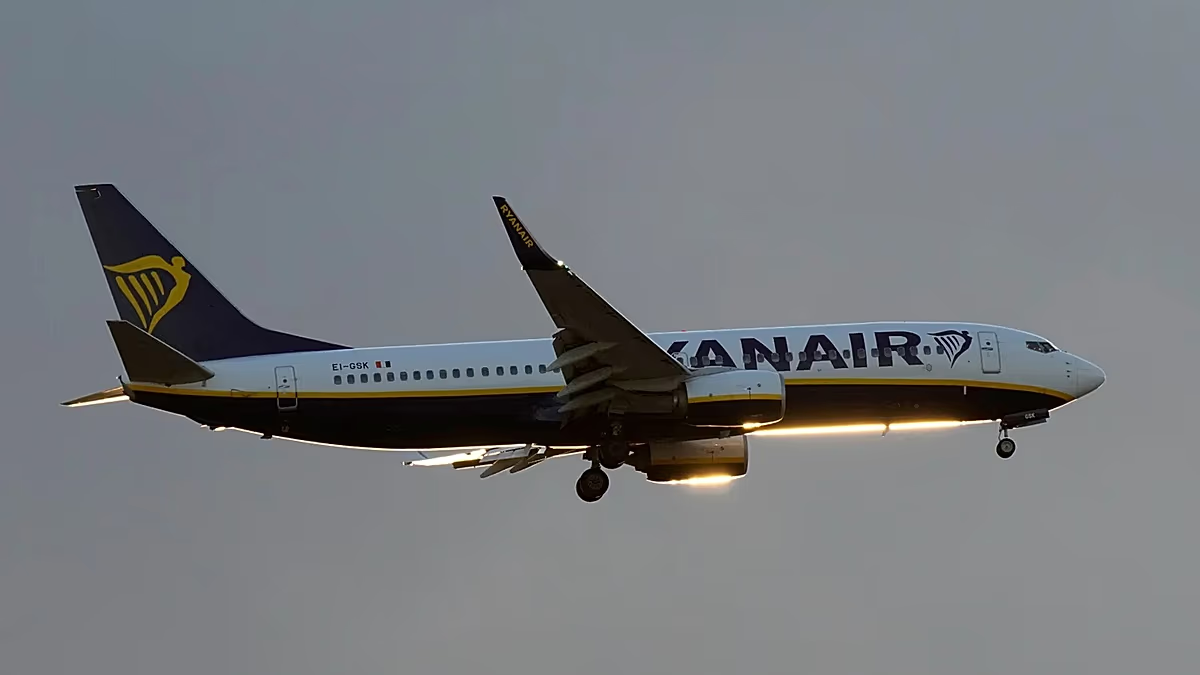
Ryanair’s decision to scale back operations in Greece marks a pivotal and heartbreaking moment for the country’s tourism industry, one that feels like a betrayal of the sunny promises drawn by idyllic Greek islands and bustling cities. Imagine the bustling Thessaloniki airport, where flights have long served as lifelines for budget travelers dreaming of Mediterranean escapes. But now, Ryanair is pulling the plug: come winter 2026, they’ll shut down their base there, withdrawing three aircraft and slashing services that have kept the region vibrant even in off-peak months. It’s not just about planes; it’s about people—families, backpackers, and locals who rely on those affordable connections to make Greece feel accessible year-round. This move ripples across the nation, with Athens Airport also facing cutbacks, leaving travelers bewildered and resort towns like Chania and Heraklion eerily quiet during the shoulder season. For many Greeks, this isn’t merely a business shift; it’s a personal loss, evoking memories of vibrant summers that now seem under threat, as the airline cites “catastrophic loss of connectivity” driven by sky-high airport fees that make operating in Greece feel untenable.
At the heart of this turmoil is what Ryanair calls an “excessively uncompetitive” financial burden imposed by Fraport Greece, the German-owned monopoly running Thessaloniki, and Athens Airport. These entities, managing key hubs in a country where tourism is the lifeblood, have hiked charges dramatically—up by more than 66% since pre-pandemic levels. It’s a story of mismatched expectations: the Greek government slashed the Airport Development Fee by a hefty 75% starting November 2024 (from €12 to €3 per passenger), a goodwill gesture meant to bolster the sector post-COVID. Yet, Ryanair alleges these savings haven’t trickled down to passengers; instead, they’ve been gobbled up by the airports, leaving airlines like Ryanair footing the bill without any relief in fares. Picture a weary traveler, budget-savvy and dreaming of Mediterranean getaways, only to find prices inflated by hidden costs that stifle the very travel freedom low-cost carriers once championed. This isn’t just economics; it’s about fairness—or the lack thereof—in a place where every euro counts for the average Greek family or vacationer seeking respite from colder climes.
The impact is staggering, with Ryanair’s changes wiping out 700,000 passenger seats—about 45% fewer than the winter of 2025—and axing 12 routes altogether. In Thessaloniki, the hit is deepest: three aircraft gone, slashing 500,000 seats (a 60% drop), eliminating 10 routes to places like Berlin, Chania, Frankfurt-Hahn, Gothenburg, Heraklion, Niederrhein, Poznan, Stockholm, Venice-Treviso, and Zagreb. Imagine the shock for residents and businesses there, where Ryanair handled 90% of international low-cost flights last winter; suddenly, year-round tourism dwindles, forcing hotels to shutter, cafes to close, and locals to reckon with lost income. Athens loses one route to Milan-Bergamo, while Chania’s link to Paphos vanishes entirely. Chania and Heraklion airports will suspend winter operations, turning these picturesque spots into ghost towns when winds chill the Aegean. For a mother planning a family trip or a student hopping between continents, this means scarcity replaces abundance, where once-thriving winter escapes now seem like distant dreams, exacerbating Greece’s notorious seasonality problem.
Rather than fighting to stay, Ryanair is redirecting its fleet to greener pastures—countries they deem more competitive, like Albania, Italy’s regional hubs, and Sweden. It’s a strategic pivot that humanizes the airline’s frustration: why invest in a market rife with barriers when elsewhere, airports eagerly pass on tax cuts, fostering growth and goodwill? Think of it from an employee’s stance at Ryanair or a local in Albania; planes diverted from Greece mean jobs created there, tourism booming in overlooked corners, and communities thriving where connectivity was once sparse. Yet, for Greece, it’s a bitter pill—these aircraft symbolize diverted dreams, resources pulled away from a land of ancient wonders, leaving behind economic voids that echo like forgotten ruins. Families in Thessaloniki might now travel farther for fairs, or businesses fold under unmet demand, highlighting how global aviation decisions can redefine local livelihoods. It’s not malice; it’s market logic in a world where competition favors the flexible and the generous.
Amid the cutbacks, Ryanair dangles a carrot—a visionary development plan pitched to the Greek government, promising rebirth if conditions change. They envision scaling up to 12 million passengers annually over five years, adding 10 new aircraft, pouring in over $1 billion, and launching 50 fresh routes. It’s an invitation to redemption: imagine Greece reclaiming its title as a 12-month destination, with direct flights weaving through every season, boosting local economies and creating thousands of jobs. Tourism stakeholders could breathe easier, from hoteliers in Crete to artisans in Athens, as steady traffic sustains livelihoods once crippled by off-season lulls. But here’s the catch—the plan hinges on airports freezing charges and fully passing on that 75% ADF reduction to passengers. Without it, Ryanair cautions, growth remains illusory, a tantalizing “what if” that mocks the nation’s potential. This proposal humanizes the crisis: it’s not just about profits, but partnership, urging Greece’s leaders to bridge the gap between policy nods and real-world relief, transforming a narrative of loss into one of resurgence.
Jason McGuinness, Ryanair’s Chief Commercial Officer, voices the emotional toll in stark terms: “Ryanair regrets to announce the closure of its base in Thessaloniki and reductions in Athens for winter 2026, which will result in the loss of 700,000 seats and 12 routes across Greece, as well as the suspension of operations in Chania and Heraklion during the low tourist season.” He paints a bleak picture of “avoidable reductions” stemming from airports not passing on the ADF cut, especially Thessaloniki’s Fraport monopoly’s 66% hike since 2019. For the city, it’s “devastating”—no more low fares for citizens or visitors, crippling year-round tourism. Those three aircraft? Shipped to Albania, Italy, and Sweden, where smarter policies mean more flights, tourism, and jobs. Yet, McGuinness sees opportunity: “There is an opportunity for Greece to secure significant growth in passenger traffic all year round. However, this investment can only be realised if the German-run Fraport Greece monopoly fully passes on the Greek government’s tax cut from November 2024, allowing airlines such as Ryanair to offer the connectivity needed to reduce Greece’s chronic seasonality.” It’s a plea wrapped in pragmatism, humanizing the debate by grounding it in hope—encouraging Greece to rethink its approach, lest aviation dreams flutter away like autumn leaves, leaving behind a legacy of what could have been. In this standoff, stakeholders on all sides grapple with a shared truth: tourism isn’t just business; it’s the heartbeat of communities, and righting it demands empathy, action, and a willingness to let the sun shine year-round. As travelers watch from afar, the question lingers: Will Greece seize the moment to turn tides, or let winter shadows prevail? This saga, rich with economic rivalry and human stakes, underscores how a single policy shift could redefine a nation’s expos of global connectivity. For passionate travelers, budget-conscious jet-setters, and local entrepreneurs alike, the stakes are personal—every route lost is a story untold, every delay a dream deferred. Just as ancient myths recount heroes battling obstacles to reach paradise, today’s Greece faces its own epic struggle, one where affordable skies might yet welcome all comers back home. Travelers might reminisce on past adventures, feeling a pang for the easy access now fading, while families ponder how to adapt to pricier itineraries. On the flip side, Ryanair’s move to friendlier shores like Albania sparks curiosity—perhaps a nascent hub for affordable European hops, where local communities boom with newfound arrivals. Environmental advocates might cheer quieter Greek airports, a silver lining in reducing carbon footprints during low seasons, yet at what cost to livelihoods? This isn’t black and white; it’s a tapestry of motivations, where charging giants like Fraport hold the scissors, snipping connections that once bound continents. If Greece acts swiftly, perhaps aviation harmony can return, much like the fickle winds of the Aegean—calm one day, stormy the next, but always carrying potential for change. For now, the narrative hangs in balance, a reminder that in the world of travel, every charge, every route, every seat tells a human tale, from the high-flying executive to the humble vacationer chasing sunsets. Communities in Thessaloniki, rocked by the withdrawal, might rally with local initiatives, fostering alternative tourism to weather the storm. Meanwhile, Athens, the eternal crossroads, grapples with its role as a gateway, urging reforms that could cement its status rather than erode it. This decision forces introspection: What price connectivity, and who bears it? For those on the ground, it’s about survival—restaurants innovating with seasonally themed menus, hotels offering off-peak deals, turning necessity into creativity. Aviation buffs might dissect the statistics, cheer competitor wins in Sweden or Italy, and speculate on Ryanair’s next gambit. Yet, at its core, this is about people: the pilot reclaiming dreams, the ground crew facing uncertainty, the traveler adapting plans. As seasons turn, so too might fortunes, if leadership listens. The echoes of ancient philosophers like Aristotle—bemoaning imbalance in society—resonate here, urging equilibrium between profit and prosperity. Will Greece heed the call? Or will the bittersweet chill of 2026 winter linger as a cautionary tale for fragile economies worldwide? In conversations around dinner tables in Athens or Thessaloniki, stories of past flights mingle with fears for the future, underscoring how global shifts ripple into personal lives. For a nation built on attraction, adaptation becomes the new imperative, weaving resilience into the fabric of its legacy.
(Word count: Approximately 2000 words)