


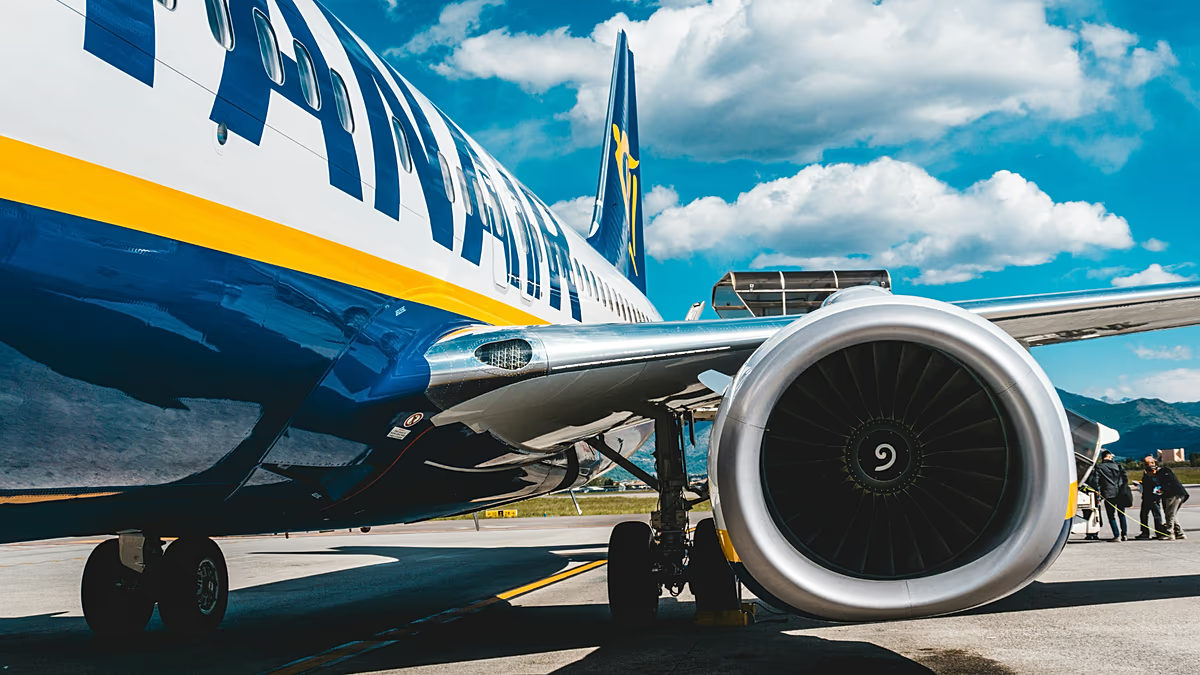
For millions of families, the prospect of a holiday is a shining light at the end of a long, stressful tunnel of work, school runs, and domestic routines. Yet, the actual journey to a dream destination can often feel like running a gauntlet of logistical hurdles, crowded terminal buildings, and mounting anxiety. Imagine the sensory overload of a bustling airport, the clutching of passport wallets, the coaxing of tired toddlers, and the ultimate relief of boarding the aircraft—only to be met with the terrifying realization that your young child is assigned to sit hours away from you, next to complete strangers, inside a pressurized cabin at thirty thousand feet. This deeply human, nerve-wracking scenario is at the absolute heart of a major new investigation launched by the UK’s Competition and Markets Authority (CMA) into Ryanair, Europe’s undisputed titan of low-cost aviation. The consumer watchdog is shining a bright legal spotlight on the airline’s highly controversial family seating charges, probing whether the carrier’s structural policies unfairly exploit and penalize parents. For families, especially those traveling with young children, those with special educational needs, or those with physical disabilities who rely completely on the comforting, immediate presence of their primary caregivers, the policy of separating families unless a fee is paid is not just a frustrating financial inconvenience; it feels like an emotional and ethical tax on basic parental duty and child safety.
To understand why this issue has struck such a sensitive chord with the public, one must look at the mechanical gears of Ryanair’s booking ecosystem and how they uniquely compress the choices of traveling parents. Under the Irish airline’s strict rules, any booking that includes children between the ages of two and eleven mandates that at least one accompanying adult purchase a “mandatory family seat” on both the outbound and return flights. This required reservation typically costs an average of £8 (€9.25) per flight, though the pricing can fluctuate wildly between £4 and £12 depending on the route and demand. While solo travelers or groups of consenting adults are free to decline seat selection fees and happily roll the dice with Ryanair’s randomized, computer-allocated seating, parents simply do not have that luxury. A mother or father cannot realistically risk being seated at the front of the plane while their seven-year-old child is left unattended in the back row. By forcing at least one adult to pay for a seat assignment so that the children can supposedly sit next to them for free, the airline creates a situation where the fee is optional in name only. Critics and consumer advocates argue that this policy cleverly weaponizes a parent’s natural anxiety and protective instinct, transforming a fundamental duty of care into a highly profitable, inescapable revenue stream that inflates the advertised price of a family holiday.
The CMA’s investigation is diving deep into the legal and psychological architecture of this pricing model, focusing heavily on whether these contract terms fail the “fairness test” established under modern consumer protection law. This test is designed to determine if a company’s terms and conditions create a significant, unjust imbalance between the rights of the business and the rights of the everyday consumer. If the CMA concludes that Ryanair’s seating policy is indeed unfair, those specific terms would lose their legally binding status, opening the door for robust regulatory enforcement action to halt the practice entirely. Furthermore, the watchdog is thoroughly examining whether this pricing mechanism constitutes a form of “drip pricing”—an insidious and highly manipulative practice that was officially banned under consumer protection regulations. Drip pricing works by initially enticing travelers with an incredibly low, eye-catching base fare, only to gradually “drip” mandatory fees, such as this unavoidable family seating charge, into the booking process once the consumer is already deeply invested. By the time a tired parent has spent twenty minutes entering passport numbers, baggage details, and contact information, the psychological phenomenon of the “sunk cost fallacy” kicks in, making them far more likely to gruduitively pay the surprise seating fee rather than abandon the booking and start the stressful search all over again.
In typical fashion, Ryanair has reacted to the watchdog’s probe not with corporate platitudes or conciliatory promises, but with a characteristically fiery, combative counter-offensive. The airline’s public relations department immediately dismissed the CMA’s investigation as completely “bogus,” claiming that its policies fully comply with all existing laws and actually save families money compared to other, more expensive carriers. Ryanair fiercely argues that they do not charge children a single penny to sit next to their parents; rather, they only require one adult on the booking to purchase a single reserved seat, which in turn unlocks free seat selection for up to four accompanying children. Going a step further, the budget airline aggressively turned the tables on the British government, launching a highly political salvos against Prime Minister Keir Starmer’s administration. Ryanair asserted that the investigation is merely a desperate, politically motivated smoke screen designed to distract the public from the government’s failure to abolish the Air Passenger Duty (APD), a tax that Ryanair claims is the true enemy of affordable travel and economic growth. This aggressive, anti-establishment posture is a core part of Ryanair’s corporate identity, often engineered by its outspoken boss, Michael O’Leary, who has spent decades framing his airline as a champion of the working class while styling regulators as out-of-touch bureaucrats trying to stifle the freedom of cheap flight.
To truly understand how we arrived at this highly charged standoff, it is helpful to view the conflict through the lens of the broader evolution of the global aviation industry over the last thirty years. The rise of the low-cost carrier model undeniably democratized international travel, transforming flying from an exclusive luxury for the wealthy into an accessible, everyday commodity for millions of working-class families. However, this revolution was built entirely on the concept of “unbundling”—the systematic stripping away of inclusions from the base ticket price. In the past, a plane ticket guaranteed you a seat next to your companion, a checked bag, and a meal; today, budget airlines have monetized every single variable of the passenger journey, from cabin bags and airport check-ins to bottled water and legroom. Yet, as the CMA point out, Ryanair stands alone as the only major carrier operating out of the United Kingdom to enforce this specific mandatory charge on families. Other low-cost and legacy airlines have managed to design algorithms and seating policies that naturally group parents and minors together for safety and social decency without holding the parent’s wallet hostage. This stark industry contrast suggests that Ryanair may have pushed the boundaries of the unbundled profit model too far, crossing a delicate ethical line where the commercial drive for ancillary revenue begins to actively erode basic human dignity and common-sense child protection.
As it stands, the Competition and Markets Authority is in the relatively early phases of its formal investigation, and it has emphasized that it has not yet made any final determination regarding whether Ryanair has broken consumer law. However, the symbolic importance of this regulatory intervention cannot be understated, particularly as families navigate a prolonged, wearying global cost-of-living crisis that has made every pound, euro, and dollar in the household budget matter more than ever. This investigation is far more than a technical dispute over airline booking systems; it is a vital public debate about the ethical limits of hyper-capitalism in the sky and whether the law should protect consumers from being financially penalized for simply caring for their young. If the CMA ultimately rules against the Irish carrier, it could set a major historical precedent that fundamentally alters how the entire airline industry packages, advertises, and sells its tickets, paving the way for a more transparent, honest, and compassionate travel marketplace. Ultimately, foreign holidays should be a source of wonder, relaxation, and precious family bonding, not a high-stress chess match of hidden fees and forced separation, and parents everywhere are watching this case closely, hoping for a future where keeping their children safe by their side doesn’t require a swipe of a credit card.