





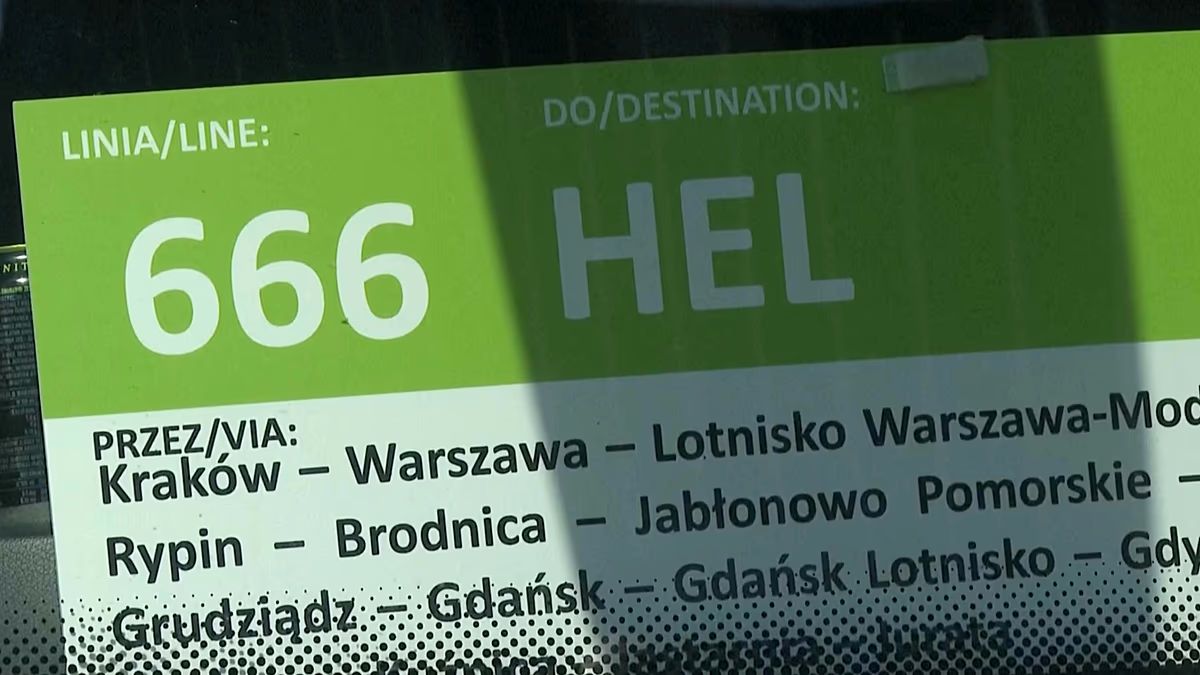
Nestled on the edge of the Baltic Sea, the picturesque, wind-swept sandbar known as the Hel Peninsula has long been one of Poland’s most scenic summer getaways. Yet, for many international travelers and lighthearted internet enthusiasts, the destination’s geographical beauty has often taken a back seat to a brilliant, coincidental linguistic joke. For decades, the local bus route running along this scenic corridor was officially designated as Line 666, creating a perfect storm of dark irony: a direct public transit route to “Hel.” What began as an accidental alignment of a route number and an English homophone quickly evolved into a beloved piece of local folklore and a viral global phenomenon. Passengers from all walks of life, from hardcore heavy metal fans to curious backpackers, began flocking to the region not just to enjoy the sandy beaches, but to buy a ticket stamped with the legendary destination “666 Hel,” proudly clutching it as a badge of honor.
However, in a deeply traditional country where religious sentiments run deep, the continuous association of a state-sanctioned transit route with the biblical “Number of the Beast” eventually sparked a fierce cultural debate. Catholic publications and conservative groups argued for years that the joke was spiritually insensitive, unnecessary, and offensive to Poland’s Christian heritage, claiming that public transport should not glorify satanic imagery or treat hell as a laughing matter. Despite passionate pushback from tourists and secular locals who defended the route as harmless, lighthearted fun that boosted local commerce, the authorities finally yielded to the mounting religious pressure. In the summer of 2023, the transport operator took the controversial step of retiring the infamous number, dryly rebranding the service as Line 669. While the change pacified critics, it broke the hearts of travel enthusiasts worldwide, who lamented the loss of an iconic, quirky piece of modern European travel culture.
Fortunately for lovers of the unusual, legends have a habit of resurrecting themselves, and the market quickly recognized the immense void left by the loss of the legendary route. Stepping into the spotlight, the global long-distance transport operator FlixBus decided to revive the mythic “666” service, bringing it back to life as a direct route stretching all the way from the historic city of Kraków in the south to the Baltic coast in the north. This triumphant comeback was met with widespread celebration across social media, where travelers rejoiced that corporate pragmatism and a love for pop-culture irony had triumphed over bureaucratic caution. By restoring the iconic number, the service instantly regained its cult-like appeal, proving that the public’s appetite for a little bit of cheeky, harmless rebellion on the highway of life was far from dead.
The revived route is far more than just a brief public-relations stunt; it is a grand, thirteen-hour pilgrimage that stretches across the entire geographical and cultural spine of Poland. Traveling from the historic, cobblestoned streets of Kraków—a city steeped in medieval lore and royal history—the bus embarks on a massive journey through lush rolling hills, modern metropolis skylines, rural villages, and dense forests before finally approaching the salty, wind-battered coast of the north. Over the course of this marathon thirteen-hour journey, the bus transforms into a unique, moving community where strangers share snacks, pass the time telling stories, and gaze out at the shifting Polish landscape. The sheer length of the journey only adds to its mythic, trial-like quality, turning a standard domestic bus ride into a memorable travel epic that binds passengers together in shared exhaustion and excitement.
Aboard this unusual coaster, the human dynamics are as fascinating as the journey itself, reflecting a spectrum of human curiosity, excitement, and lingering superstition. On one side are the joyful thrill-seekers and novelty hunters who treat the trip as a festive bucket-list experience; these passengers proudly take selfies in front of the glowing red digital “666” display on the bus’s front windshield, hum along to classic rock anthems like AC/DC’s “Highway to Hell,” and swap lighthearted jokes about their ultimate destination. On the other side of the coin, however, the heavy weight of local superstition still lingers, with some traditional residents and older travelers admitting that they would actively avoid traveling on a bus carrying such a loaded number. For these cautious souls, the number is not a joke but an unwanted omen, and many choose to wait hours for a different schedule rather than step foot inside a coach running under the banner of the beast.
Ultimately, the captivating saga of the 666 bus to Hel highlights the profound way in which modern tourism is shaped by narrative, internet culture, and the human desire for shared, offbeat experiences. As documented in compelling video stories by editors like Yolaine De Kerchove Dexaerde and reported globally by news agencies like AFP and AP, this thirteen-hour transit line is no longer just a way to get from point A to point B, but a symbol of cultural identity and the joy of finding humor in the mundane. It stands as a testament to the power of a good story, securing its place in the annals of odd world travel as a journey where the destination, despite its fiery name, is secondary to the sheer, delightful absurdity of the ride itself.