






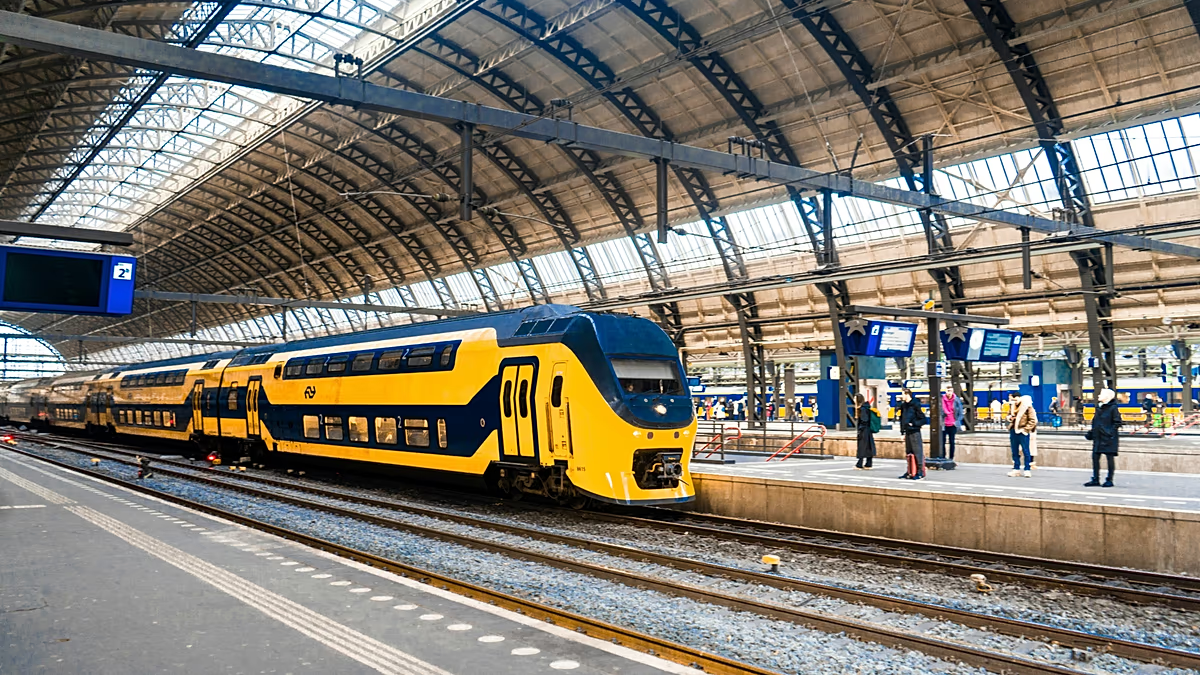
In our fast-paced, hyper-connected world, the way we travel is undergoing a quiet but profound revolution. For years, tourism was measured by the speed at which we could tick off famous landmarks, leading to rushed weekend getaways, stressful airport security lines, and a fleeting sense of connection to the places we visited. Today, however, more travelers are choosing to step off the global conveyor belt and embrace the art of “slow travel.” This mindful movement encourages us to settle into a single region, unpack our bags just once, and truly weave ourselves into the local fabric of life. Recognizing this collective desire to slow down, the Netherlands has introduced an extraordinary initiative that serves as the perfect catalyst for mindful exploration. In an exciting collaboration with the national government, the country’s national railway company, Nederlandse Spoorwegen (NS), has unveiled a summer train subscription called the NS Flex Dal Vrij pass. Available for just €49 a month—a staggering discount from its standard price of €127.95—this pass unlocks unlimited nationwide train travel for up to two consecutive months, provided it is purchased by the end of June. By removing the financial anxiety of long-distance rail fares, this initiative invites both locals and curious global adventurers to treat the entire country as their backyard. From the sprawling, wind-swept northern farmlands of Groningen to the historic, southern coastal reaches of Middelburg, the Dutch rail network essentially lays the entire nation at your feet. It is an open invitation to look out the window, watch the iconic windmills and tulip fields drift by, and discover that the journey itself can be just as enriching as the final destination.
To truly appreciate the genius of the NS Flex Dal Vrij pass, one must understand how effortlessly it integrates into the daily flow of Dutch life. Intentionally structured to encourage travel during calmer periods, the subscription is valid during designated off-peak hours on weekdays, running from 9:00 AM to 4:00 PM, and again during the quiet evening and early morning hours from 6:30 PM to 6:30 AM. For those seeking weekend escapes, the pass grants uninterrupted freedom from Friday evening at 6:30 PM all the way through to early Monday morning at 4:00 AM. This deliberate timing not only keeps your travel relaxed and uncrowded, but it also aligns perfectly with the slower rhythm of an immersive vacation. Operating on almost all domestic trains with the exception of international Eurostar routes, the pass transforms travel into a seamless, spontaneous adventure. Imagine sitting in a cozy café in Amsterdam, deciding on a whim to explore the medieval streets of Utrecht, and finding yourself stepping onto a platform there just thirty minutes later. Perhaps you fancy a stroll along the historic political corridors of The Hague; a mere fifty-minute train journey is all that separates you from its majestic coastal breeze. This unparalleled ease of movement is supported by an incredibly sophisticated transit ecosystem of roughly 400 stations. Older hubs, such as the architectural jewels of Haarlem Central and Leiden, still echo with the romantic whispers of the past, while ultra-modern terminals like Utrecht and Amsterdam feature spacious carriages equipped with high-speed Wi-Fi, USB charging ports, and interactive digital displays. Upon arriving at your destination, the adventure continues seamlessly; you can easily tap your way onto a local tram, bus, or metro at standard fares, or rent one of the country’s ubiquitous blue-and-yellow bicycles to explore hidden alleyways and scenic canals like a true local.
Because the train stations themselves are deeply woven into the country’s cultural identity, the journey frequently feels like walking through an open-air museum. The Netherlands possesses a rich, royal history, dotted with roughly 600 historic castles and sweeping country estates that offer an enchanting window into the lives of old-world aristocracy. Nestled directly in the green heart of the country is the charming town of Baarn, home to the breathtaking Soestdijk Palace. Here, travelers will find Soestdijk station, a beautifully preserved railway stop that once catered exclusively to the Dutch royal family. Despite its intimate size, the station radiates an undeniable, regal charm, and visitors can easily rent a bicycle at the platform to enjoy a picturesque, ten-minute ride through leafy canopies directly to the palace gates. On the opposite end of the aesthetic spectrum lies Groningen Central, which was triumphantly voted the “Most Beautiful Station in the Netherlands” in a nationwide poll organized by NS. This stunning northern terminal captivates visitors with its breathtaking ceiling and incredibly intricate, hand-painted ceramic tile panels crafted by local artist F.H. Bach—a visual masterpiece that turns a simple morning commute into an inspiring artistic experience. For those who appreciate bold, forward-thinking design, Rotterdam Blaak station offers an entirely different kind of sensory marvel. At ground level, visitors are greeted by a spectacular, 35-meter-wide transparent glass and steel dome that resembles a futuristic flying saucer hovercraft, designed by the visionary architect LI Vákár. Stepping beneath this magnificent canopy, passengers descend into a multi-layered transit hub where regional trains, subways, trams, and buses converge in a perfectly synchronized dance of modern engineering. These stations are not mere points of departure or arrival; they are destinations in their own right, beckoning travelers to linger, admire, and absorb the unique spirit of each community.
This inspiring spirit of accessible, slow-paced rail travel is rapidly catching fire across European borders, encouraging neighboring countries to redesign their own transit offerings. Just across the eastern border, Germany’s Deutsche Bahn is revolutionizing spontaneous domestic trips with its incredibly popular “Super Sparpreis Last Minute” scheme, which runs through the peak summer travel season until September. Recognizing that modern travelers often crave spontaneous, unstructured weekend getaways, the German railway company offers deep discounts for those who book their journeys on Saturdays or Sundays for trips scheduled during the following week. Under this dynamic pricing model, second-class tickets on high-quality Intercity trains can be secured for as little as €6.99, making travel incredibly affordable and accessible. This low-barrier pricing model breathes new life into the concept of weekend wandering, allowing budget-conscious travelers to seamlessly journey from the industrial-turned-artistic hubs of the Ruhr valley to the dramatic, whispering pine forests of Bavaria. It removes the stress of rigid, long-term vacation planning, offering instead the thrill of stepping onto a train with nothing but a light backpack and an open mind. For a fraction of the cost of a rental car or a budget flight, passengers can settle into a spacious German train compartment, plug in their headphones, and watch the legendary Rhine River or the majestic peaks of the Black Forest roll slowly past their window. It is a powerful reminder that when we lower the financial barriers to exploration, we don’t just help people travel more affordably—we foster a richer, deeper curiosity about the world that lies just beyond our immediate horizons.
If your wandering heart yearns for the warm sun, rich history, and golden coastlines of Southern Europe, Spain’s national railway network, Renfe, offers an equally compelling invitation to embrace the joys of slow travel. Designed specifically with international adventure-seekers in mind, the Spain Rail Pass provides non-residents with a highly flexible and affordable ticket to explore the country’s vast, modern rail network. This specialized pass empowers travelers to customize their journeys based on their own personal travel style, allowing them to choose a set number of trips, select their preferred class of comfort, and curate their own dream routes across the Iberian Peninsula. Whether you choose to travel aboard the incredibly fast and quiet AVE high-speed trains or opt for the slower, winding scenic regional routes, the pass transforms the logistics of Spanish travel into an absolute pleasure. Spain is a land of vivid contrasts, where the ancient world rubs shoulders with modern cityscapes, and the rail network acts as an iron thread connecting these diverse worlds. Within a single trip, you can travel from the modern, vibrant energy of Madrid or Barcelona to Spain’s most treasured World Heritage cities, each holding centuries of human history within its borders. Imagine taking a smooth, comfortable train ride to the striking clifftop city of Cuenca, wandering through the ancient Roman aqueducts of Segovia, or exploring the imposing medieval stone walls of Ávila. The pass also opens up the sun-drenched southern region of Andalusia, allowing you to easily lose yourself in the breathtaking Moorish architecture of Granada’s Alhambra or the winding, flower-lined stone alleys of Córdoba. By eliminating the hassle of buying individual point-to-point tickets, this pass encourages tourists to linger in lesser-known towns, dine at family-run local tapas bars, and build authentic connections with the land and its people.
To complete this grand European rail journey, one can easily cross the English Channel to experience the timeless, poetic landscapes of the United Kingdom through the BritRail Great Britain Pass. This comprehensive pass transforms the entire National Rail network of England, Scotland, and Wales into a single, open road of endless possibility. Recognizing that different travelers have different rhythms, the pass offers two distinct styles of travel: a flexible pass that allows you to choose specific travel days within a two-month window, or a consecutive pass for uninterrupted daily travel over a set period, with prices for second-class and first-class journeys starting at €141. There is an unmatched, romantic nostalgia to traveling by train across Great Britain, a feeling of stepping directly into the pages of a classic novel as the train gently snakes through diverse terrains. You can easily board a train amidst the historic hustle and bustle of London’s King’s Cross, watch the rolling, green, sheep-dotted hills of the English Cotswolds slip past, and find yourself watching the misty, dramatic peaks of the Scottish Highlands loom in the distance. The pass also invites you to explore the rugged, romantic valleys of Wales, where ancient castles stand guard over dramatic coastlines. Ultimately, these diverse rail initiatives across the Netherlands, Germany, Spain, and Great Britain represent far more than simple discount schemes or clever tourism promotions; they are a vital foundation for a more sustainable, human-centric way of moving through the world. By choosing the gentle, rhythmic cadence of the train over the hurried chaos of flights and highways, we reclaim our time, reduce our environmental impact, and rediscover the true thrill of wanderlust. In the end, slow travel teaches us a timeless lesson that the most beautiful, lasting memories are never caught in a rush, but are found in the soft hum of the tracks, the changing landscape outside the window, and the unexpected conversations with fellow travelers along the way.