





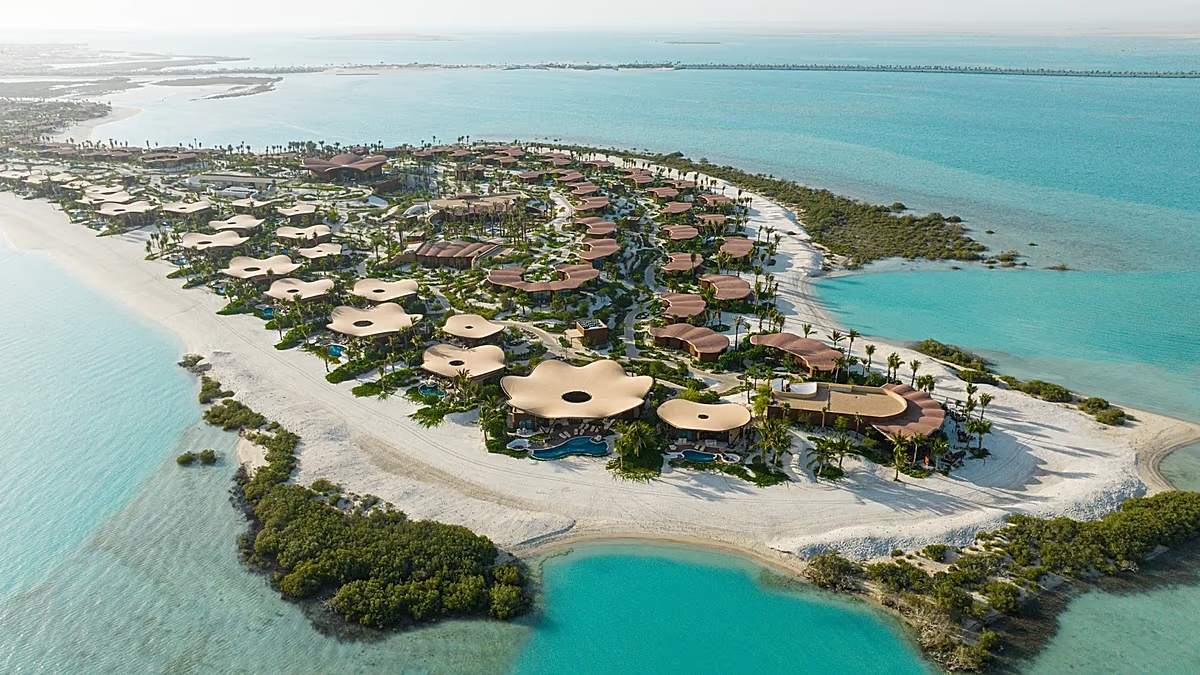
When we picture the ultimate seaside escape, our minds almost instantly drift to the Maldives, with its iconic overwater bungalows, blindingly white sands, and endless horizons of brilliant blue. Yet, along Saudi Arabia’s western coastline, a monumental vision is quietly coming to life that aims to challenge this monopoly on paradise. The Red Sea project is a breathtakingly ambitious ultra-luxury development spanning an incredible 28,000 square kilometres. It features an untouched archipelago of more than 90 pristine islands, yet in an deliberate effort to protect the fragile local ecosystem and preserve a sense of absolute exclusivity, developers are only stepping foot on 22 of them. It is a bold, multi-billion-dollar love letter to the natural world, orchestrated by Red Sea Global, where the ultimate goal is not just to build another playground for the wealthy, but to completely rewrite the rules of high-end travel.
According to Stephen Cheesebrough, the Head of Development at Red Sea Global, comparing this spectacular project to the Maldives only scratches the surface of what is actually on offer. While both destinations share that postcard-perfect, crystal-clear water and powdery white sand, the Saudi coastline boasts a dramatic physical diversity that few places on Earth can match. Here, the ocean does not exist in isolation; it is bordered by ancient volcanic fields, sweeping desert dunes, and rugged mountain ranges. This unique geography allows a traveler to spend a thrilling morning scuba diving among some of the world’s most pristine, untouched coral reefs, and by the afternoon, find themselves trekking through quiet desert canyons or dining under a canopy of stars high in the mountains. It is this rare, compact contrast of land and sea that Saudi Arabia is banking on to captivate seasoned travelers who have already seen the classic luxury hotspots of the Caribbean or the Indian Ocean and are hungry for a deeper, more varied adventure.
What truly sets this destination apart, however, is its fierce commitment to “regenerative tourism”—a philosophy that boldly goes beyond the passive concept of traditional sustainability. Cheesebrough points out that in a post-pandemic world, luxury travelers have evolved; they no longer just want to minimize their footprint, they want their very presence to have a positive impact. To meet this demand, The Red Sea is designed to actively heal and enhance its environment rather than merely occupy it. The entire massive complex is powered 100% by renewable energy, utilizes advanced water-recycling systems to ensure zero waste goes to landfill, and actively works to restore nearby marine and land habitats. It is a heavy investment in the future of the planet, proving to a skeptical world that grand-scale tourism and aggressive environmental conservation can actually walk hand-in-hand, making luxury feel not like an indulgence, but an eco-conscious alliance.
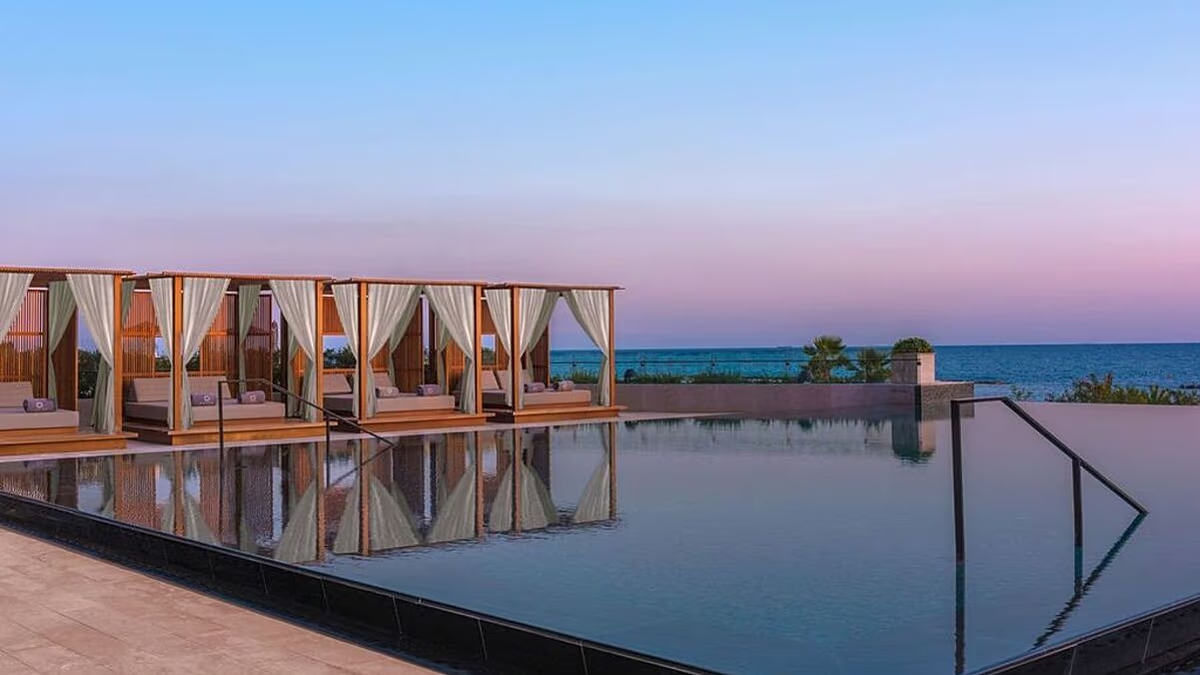
Currently, the destination is already alive with 11 operating hotels, with many more highly anticipated resorts preparing to open their doors on Shura Island, the vibrant, beating heart of the project. Shura is designed to be a hub of activity, boasting a world-class marina, high-end boutiques, gourmet dining, and a championship 18-hole golf course. For those seeking adrenaline over relaxation, the newly introduced ADRENA district offers over 20 thrill-seeking activities, including the country’s largest saltwater surf pool, alongside sailing, hiking, and deep-sea diving. Yet, the visionaries behind the project do not want their guests to stay cocooned inside these lavish resorts. The hope is that The Red Sea will serve as a breathtaking gateway to the rest of Saudi Arabia, encouraging international visitors to extend their journeys inward to discover the rich history of AlUla, the bustling cultural hub of Jeddah, and the diverse landscapes beyond the coast.
To make this grand vision a seamless reality, connectivity is rapidly expanding through the newly minted Red Sea International Airport, which has already welcomed tens of thousands of local and international travelers since the start of 2026. By establishing direct routes to major hubs like Riyadh, Jeddah, Dubai, Doha, and Milan, and actively negotiating with major European airlines, the project is working hard to dispel the myth that the region is only a winter destination. Positioned as a year-round haven for seekers of luxury, outdoor adventure, and authentic cultural exchange, the resort is designed to remain vibrant through all four seasons. Looking forward to the year 2030, the master plan is set to culminate in a thriving community of 50 luxury hotels offering around 8,000 rooms, alongside more than 1,000 private residential properties, all carefully managed to welcome up to one million guests annually without ever overcrowding the delicate landscape.
Ultimately, The Red Sea represents far more than just a collection of five-star villas resting on the water; it is a profound experiment in how humanity can interact with the natural world. By blending uncompromised hospitality with a deep respect for the Earth, Saudi Arabia is opening up a brand-new frontier for global travelers who crave authentic, transformative experiences. If this visionary project succeeds in living up to its massive expectations, it will do more than just put a new destination on the map. It will serve as a shining, global proof-of-concept that high-end tourism can successfully become a powerful guardian for some of the most beautiful and vulnerable ecosystems on our planet, leaving them far better than we found them.