

It’s strange to think that two years have already slipped by since the Paris Olympics closed with fireworks over the Seine, leaving the world with memories of magnificent athletes, iconic venues, and the unmistakable hum of a city transformed by sport. But time moves quickly, and now Los Angeles is already deep in preparation for its turn in the global spotlight in 2028. If you’ve ever visited Los Angeles, or even watched a car chase scene filmed there, you know the city has one great, grinding, frustrating equalizer: traffic. It’s the kind of traffic that turns a fifteen-minute errand into an hour-long pilgrimage, and it has broken countless visitors, commuters, and even locals who swear they know the “secret back routes.” For fans planning a trip to the LA28 Games, the prospect of navigating that famous gridlock during the largest sporting event on Earth is daunting, to say the least. But there is new hope on the horizon, and it is arriving from the sky above. Los Angeles is set to develop its very first “vertiport,” a purpose-built takeoff and landing site for electric air taxis, and the project promises to turn the city’s biggest weakness into an invitation to look up, not ahead.
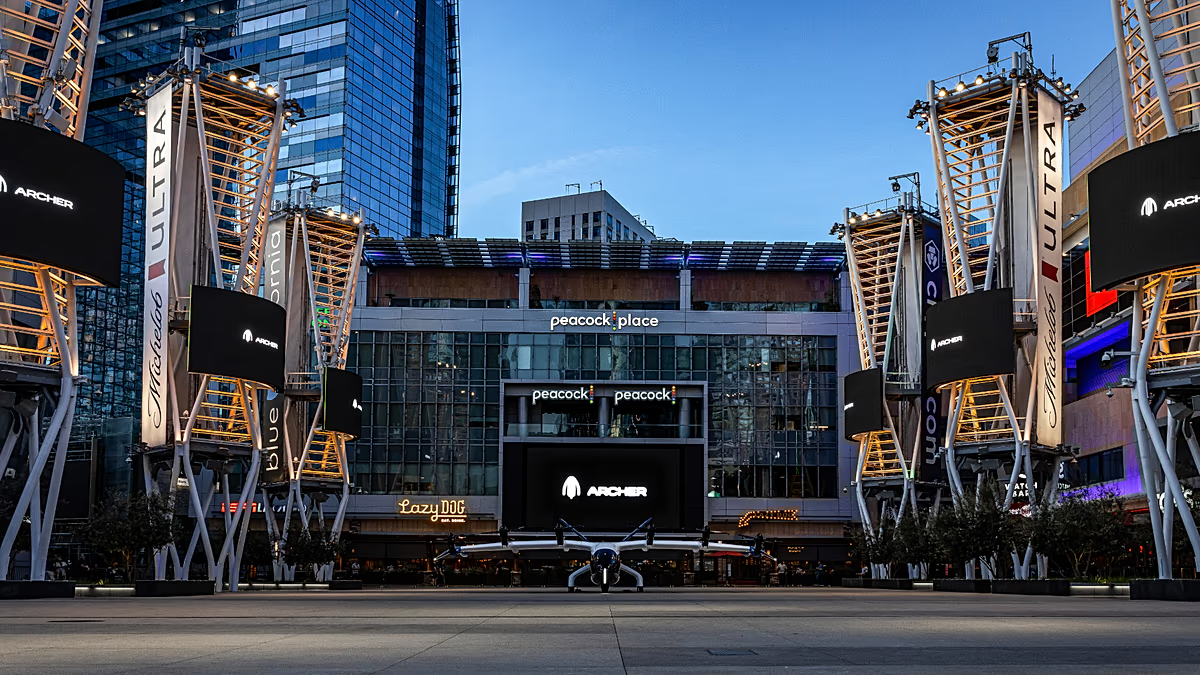
Spearheaded by AEG, the powerhouse behind sports and entertainment venues around the world, and Archer Aviation, a leader in cutting-edge electric aircraft, the vertiport will be located at L.A. Live, the sprawling four-million-square-foot sports and entertainment district in the heart of downtown Los Angeles. L.A. Live is already a magnet for visitors, with its theaters, restaurants, movie theaters, and the shimmering glow of its many screens and marquees. Now it will also serve as a vertical gateway to the skies, where travelers can step into sleek, battery-powered aircraft instead of climbing into another ride-share car. The appeal is almost too obvious to state: when you’re in a city like Los Angeles during an event like the Olympics, the difference between being early and being late can mean seeing the moment or missing it entirely. Rather than sitting in a river of brake lights, you’ll be able to literally fly over the mess, high above the honking horns and creeping freeways, and arrive at your destination with time to spare. There’s something thrilling about that image, and it’s not just about convenience; it’s about transforming the entire experience of visiting a famously car-bound city.
The aircraft at the center of this vision is Archer’s Midnight, a fully electric, four-passenger air taxi designed with exactly this kind of urban mission in mind. With a top speed of 241.4 kilometers per hour, it’s not just a novelty; it’s a practical alternative to driving, at least for certain routes and distances. Imagine stepping into a quiet, clean cabin, taking your seat, and feeling the gentle lift as the rotors spin up and the ground falls away. In a few minutes, you’re gliding past palm trees and skyscrapers, watching the ribbons of highway below clogged with cars, each one stuck in the very congestion you’ve just escaped. The company has already released sample trip times to illustrate just how game-changing this could be. For example, a flight from Hawthorne Airport to Orange County, an area famous for its beautiful coastline and cruises out of Newport Harbor in search of dolphins and whales, would take about twelve minutes. By car, that same journey can stretch to nearly an hour. Likewise, a flight from Hollywood Burbank Airport to SoFi Stadium in Inglewood would take just fourteen minutes, compared to an almost hour-long grind on wheels. For anyone who has ever watched the minutes tick away while stuck on the 405 freeway, those numbers feel almost too good to be true.
And this is especially significant because of what’s coming in 2028. SoFi Stadium, already a landmark of modern sports architecture, has been renamed “2028 Stadium” for the Los Angeles Games, and it is set to become the largest swimming venue in Olympic history. That’s a remarkable feat, turning the home of the NFL’s Rams and Chargers into an aquatic arena that will host some of the most anticipated finals of the Games. In addition, SoFi Stadium will co-host the Olympics opening ceremony alongside the legendary Los Angeles Memorial Coliseum, and it will also host the Paralympics opening ceremony. This means that huge numbers of athletes, officials, media, and fans will need to move quickly and reliably between venues, hotels, airports, and event sites across a vast, sprawling city. Last year, Archer Aviation was handpicked as the Official Air Taxi Provider of the LA28 Games and Team USA, cementing its role in what promises to be one of the most ambitious transportation efforts in Olympic history. To celebrate the partnership, Archer unveiled a striking Team USA livery on its Midnight aircraft at L.A. Live, giving the public a glimpse of the future: national pride celebrated not just on tracks and podiums, but in the very machines that carry athletes and supporters through the sky.
Of course, this bold vision also raises bigger questions about what urban transportation will look like in the years ahead. Electric air taxis aren’t just for the Olympics; they represent a possible shift in how we think about cities, mobility, and sustainability. With fully electric powertrains, these aircraft produce zero direct emissions, offering an alternative to the gas-burning cars that have choked Los Angeles for generations. In a city where air quality is a constant concern, any move toward cleaner travel is a welcome one. But there are challenges too. Building vertiports across a city requires significant investment, thoughtful planning, and new regulations to ensure safety in crowded skies. There are questions about noise, public acceptance, and whether air taxis will be accessible to everyone or only to those who can afford the premium fare. In its earliest days, aviation was a luxury for the few; it took decades for flying to become accessible to the many. Air taxis may follow a similar arc, starting as a premium service for special events and high-value journeys before slowly becoming part of the broader transit mix. The Olympics, with its intense demands and global audience, is the perfect proving ground, a place to show the world not just what these machines can do, but how they can fit into everyday life.
In the end, the story of Los Angeles’ first vertiport is about more than cutting travel times or avoiding a few traffic jams. It’s about reimagining the way we experience major events and, ultimately, the way we move through the modern world. For the fans who will travel to the LA28 Games, the dream is to spend less time stuck in shuttle lanes and more time soaking in the excitement, cheering for their heroes, and exploring everything the city has to offer. And for Angelenos themselves, it’s a sign that the city is willing to embrace new ideas, to solve its most stubborn problems with creativity and ambition rather than simply accept them as part of the landscape. There’s a certain poetry to the image: a city so famously horizontal, so sprawling and car-centric, finally beginning to take to the air. When those first electric air taxis rise from the vertiport at L.A. Live, carrying athletes, officials, and fans over the sunlit grid of downtown and toward the soaring architecture of SoFi Stadium, it will feel less like science fiction and more like the next chapter in a story that began a long time ago. The traffic will still be there, as stubborn as ever. But for the first time, a significant number of people will simply rise above it, not out of impatience but out of opportunity, and catch a view of Los Angeles that few have ever seen. And when the Olympics finally arrive, with the world watching, that might just be the most inspiring sight of all.