


Choosing a holiday destination used to be an exercise in logistics, a balancing act of flight times, accommodation budgets, and a scramble through endless lists of tourist attractions that often blend into a blur of monuments and museums. But lately, a seismic shift has occurred in the way we think about travel. The frantic pace of modern life has made us acutely aware of our own mental and physical exhaustion, and so a new, profound question has started to guide our decisions: “Where can I genuinely feel happy?” This evolution in travel philosophy—prioritizing holistic well-being over mere sightseeing—has been given a brilliant, validated framework by the wellness platform BookRetreats. Their exhaustive “Holiday Happiness Index” recently set out to scientifically define what makes a destination emotionally nourishing, analyzing 47 of the world’s most visited cities under the guidance of Natalie Dattilo-Ryan, a Harvard-affiliated clinical psychologist specializing in holistic happiness. After scrutinizing everything from sun exposure and walkability to the availability of green spaces and the quality of local food, the index has rendered a stunning, sun-drenched verdict: the happiest destination on Earth is Lisbon, Portugal. This isn’t just a victory for the Portuguese capital; it’s a beautiful confirmation that our travel instincts are intuitively steering us toward places that fortify our biology and soothe our spirits, rather than simply dazzling our eyes. The choice feels right—like remembering a warm memory you didn’t know you had—and it invites us to unpack the recipe for this remarkable joy.
To understand why Lisbon soars above the competition, we must first explore the precise methodology that crowned it, with food emerging as a superstar ingredient. The study operates on the fundamental principle that happiness is not an abstract concept but a physiological response, a delicate cocktail of dopamine, serotonin, and endorphins released when our bodies receive specific, positive stimuli. In this regard, Lisbon is a master chef. The index reveals a captivating statistic: nearly 10% of all restaurants in Lisbon are classified as “healthy,” a share that ranks second highest in the entire world, deftly placing the city ahead of global gastronomic capitols like Paris, Tokyo, and New York. But this “healthy” designation isn’t about restrictive fad diets or inaccessible, trendy juice bars. It refers to a culture of nourishment that is deeply embedded in the Portuguese way of life. Sitting on the edge of the Atlantic, Lisbon is blessed with a bounty of pristine seafood—think fresh grilled sardines, garlic-kissed octopus, and the ubiquitous, beloved bacalhau—paired with sun-ripened vegetables and citrus fruits that burst with flavor. The study enthusiastically notes that eating well here is remarkably affordable, arguing that “from fresh seafood to traditional taverns, eating well in the city is affordable and within most people’s budget.” In a world where dining out in major cities often carries a side of financial anxiety, Lisbon offers a gastronomic democracy where you can slip into a rustic tasca, or tavern, and enjoy a hearty bowl of caldo verde soup, crusty bread, and a glass of local wine without breaking the bank. This combination of fresh, unprocessed ingredients and accessible pricing means that every meal becomes a low-stress, high-pleasure ritual. Travelers can fuel their bodies with the exact nutrients needed for stable energy and a sunny outlook, transforming the simple act of eating from a mundane necessity into a daily celebration of flavor and well-being.
Beyond the seduction of the table, Lisbon’s physical geography is a masterclass in happiness engineering, cleverly turning potential drawbacks into delightful assets. The city is famously built upon seven hills, and while some tourists may initially groan at the prospect of uneven terrain, the study celebrates this topography as a natural, built-in invitation to move. The “hard work” of climbing steep, cobblestone streets is metabolically rewarding, releasing endorphins that naturally elevate mood. But the true genius of Lisbon’s design lies in how it rewards this exertion. As you navigate the compact, car-free-friendly center, you are constantly confronted with the city’s famous miradouros—panoramic viewpoints that gaze out over a breathtaking mosaic of terracotta rooftops, the shimmering expanse of the Tagus River, and the endless blue of the Atlantic. These terraces, like Portas do Sol or the view from São Pedro de Alcântara, are not just photo stops; they are restorative sanctuaries that demand you pause, catch your breath, and soak in the sheer beauty of the vista. The study’s conclusions highlight this exact ease of movement, noting that “the city is compact and easy to explore on foot, offering panoramic viewpoints that reward those who prefer a more relaxed pace.” Furthermore, Lisbon integrates nature into its urban fabric with astonishing generosity. The index highlights that the city boasts a remarkable 49 square meters of green space per resident—nearly four times what Madrid offers—from the manicured elegance of Eduardo VII Park to the wild, overgrown charm of the Estrela Garden. And for those craving untamed nature, the golden sands of Cascais and the surf-friendly waves of Costa da Caparica are merely a short, scenic train or ferry ride away. This seamless transition from city bustle to coastal calm—from walking to swimming to napping in the shade—provides a holistic balance that actively lowers cortisol, the body’s primary stress hormone. In Lisbon, moving your body doesn’t feel like exercise; it feels like an adventure, a continuous, joyful negotiation with the landscape that leaves you feeling invigorated rather than drained.
Of course, this entire idyllic scenario—the long walks, the crowded tavern terraces, the dips in the ocean—would be impossible without the third pillar of Lisbon’s happiness: its legendary sunlight. The study shines a literal spotlight on the fact that Lisbon enjoys a staggering 2,828 hours of sunshine per year. This is not just pleasant meteorological trivia; it is the biological key that unlocks the city’s entire mood. Sunlight triggers our skin to produce vitamin D, a crucial hormone that regulates mood and combats depression. Moreover, bright daylight stimulates our retinas to signal the brain to release serotonin—the “feel-good” neurotransmitter—while simultaneously helping to regulate our circadian rhythm for deeper, more restorative sleep. This abundance of luminosity stretches the days, making it feel as though time is slower and more abundant. Evenings in Lisbon linger; the sun hangs low over the horizon until late, casting a golden glow that turns the entire city into a romantic painting and encouraging a vibrant outdoor social culture where strangers connect in candlelit plazas. The sheer visual warmth alters your perception of time; days feel longer, more productive, and infinitely more beautiful. This unique atmosphere is fully recognized by the city’s guardians. António Valle, the Director-General of the Lisbon Tourism Association, articulated this deeply human approach perfectly in a statement following the ranking. He noted that “Lisbon is different from all other destinations, and that is exactly what the Lisbon Tourism Association values in its strategy. The ability to offer different ways of experiencing and discovering Lisbon, while preserving what sets the destination apart and creates value for those who visit and those who live here.” This philosophy is the secret sauce. The city isn’t pandering to tourists with gimmicks; it is protecting its authentic, human-scale characteristics that generate genuine contentment for its inhabitants. By prioritizing the quality of life for locals—safeguarding public spaces, championing local markets, and resisting the homogenization of its historic neighborhoods—Lisbon inadvertently creates a supremely welcoming environment for visitors, proving that true hospitality is born from a place of genuine, everyday happiness.
While Lisbon takes the gold, the silver and bronze medals offer fascinating counterpoints, proving that happiness is symbolic of a life well-lived, but the specifics can vary wildly. Coming in at a close second is Helsinki, Finland—a city that utterly redefines the equation, proving that joy doesn’t require perpetual sunshine. As the capital of a nation repeatedly crowned the happiest in the world, its placement surprises no one. Helsinki’s happiness is rooted in a deeper, quieter sanctuary: nature and societal trust. The study highlights a breathtaking 126 square meters of green space per person—more than fifty times the proportion in Hong Kong—where dense, lush forests and serene parklands seamlessly merge with the urban grid. But the city’s true magic, according to the report, lies in its culture of trust. The study praises the city’s “safe streets, efficient transport, and a culture based on trust,” noting that this environment “create[s] an environment where visitors can really switch off and recharge.” In Helsinki, you can leave your backpack on a café chair while you order; you can trust the trams to be punctual; you can rely on a quiet, benign social contract. This psychological safety lowers baseline anxiety, allowing visitors to decompress on a profound level. Contrast this with third place, Orlando, Florida. Known overwhelmingly for its manufactured thrills at Disney World and Universal Studios, Orlando’s inclusion in the top three initially seems jarring. Yet, the study looks past the theme parks to find a very different kind of natural happiness. Orlando enjoys 2,930 hours of sunshine a year, even more than Lisbon, and is punctuated by extensive lakes and green spaces. In Orlando, the hyper-stimulated joy of the rollercoaster coexists with the slow, meditative happiness of a sunset over Lake Eola. These three top-tier destinations demonstrate that the index isn’t prescribing a single blueprint for joy; it’s honoring different delicious flavors of well-being—the vibrant, Mediterranean social static of Lisbon, the calm, serene trust of Helsinki, and the energetic, sun-soaked playfulness of Orlando.
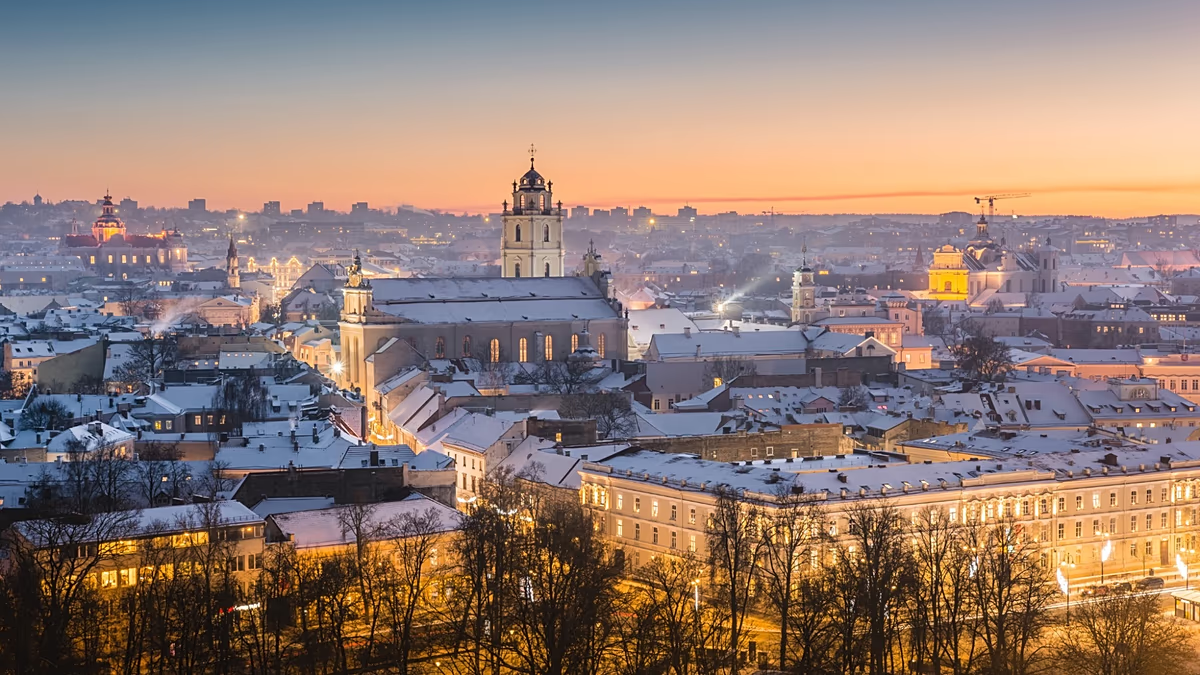
Looking at the entire top ten list, a striking global pattern emerges that speaks to the design of our urban environments. With the exception of Orlando, every single destination in the top ten is European—Athens, Edinburgh, Madrid, Vienna, Budapest, Oslo, and Vilnius round out the list in descending order. This continental dominance is far from coincidence; it is a testament to European city planning philosophy, which has historically prioritized human connection and public health over the automobile and corporate skyscrapers. European cities grew organically around human-scaled plazas, charming walkable corridors, and integrated green belts. They are dense, encouraging foot traffic, and furnished with robust public transport that relieves the stress of navigation. The ubiquitous café culture, the long, unhurried lunch, the evening paseo or stroll—these aren’t just tourist rituals, but the foundational architecture of daily European life. This inherent walkability, proximity to nature, and emphasis on slow, communal living that define these cities—from the royal botanical parks of Madrid to the thermal baths of Budapest—creates an environment where residents and tourists alike can effortlessly engage in the exact physical and social behaviors that trigger our happiness hormones. Ultimately, the Holiday Happiness Index delivers a profound, wonderfully humanizing message that transcends the world of travel statistics. It reminds us that the secret to a fulfilling vacation—and perhaps a fulfilling daily existence—is rarely found in the glitz of a five-star resort or the exclusivity of a private yacht. It lies in the simple, sacred, accessible interactions with light, food, nature, and community. It lies in climbing a hill in Lisbon for the golden sunset. It lies in trusting the quiet, safe streets of Helsinki while you wander. It lies in soaking up the vitamin D on a sunny lake in Orlando. By shifting our focus to these fundamental ingredients of joy, we can make more conscious, enriching travel choices that truly feed our souls. As you contemplate your next escape, look past the glossy brochures and ask the important questions: Is it sunny? Is it green? Can I walk it? Will it feed me well? If the answer is yes, you may have just found your own path to a genuinely happy escape, and a passport to a brighter, lighter way of living.