





There is an undeniable magic to a city built on water, where the gentle lap of waves against stone and the shimmering reflection of historic facades create an atmosphere of timeless romance. For decades, this allure has drawn millions of travelers to iconic destinations like Venice and Amsterdam. However, our collective love affair with these aquatic wonderlands has pushed them to a breaking point. Today, the dream of a peaceful gondola ride or a quiet stroll along a historic canal is often shattered by the reality of overwhelming crowds and soaring prices. In response to suffocating crowds, Venice has introduced a controversial entry fee for daytrippers on peak days, with current rates ranging between five and ten euros, and growing demands from frustrated residents to raise this penalty to fifty euros to deter casual visitors. Meanwhile, Amsterdam has launched aggressive advertising campaigns pleading with rowdy tourists to behave or stay away, culminating in local residents taking the unprecedented step of suing their own municipal government over the decline in their quality of life. As travelers, we are left with a profound ethical dilemma: how do we satisfy our yearning for beautiful waterfront cities without contributing to the destructive forces of overtourism? The answer lies in shifting our gaze toward Europe’s lesser-known, equally picturesque canal cities, where we can rediscover the slow, authentic joy of travel while giving these oversaturated hotspots some much-needed breathing room.
To find a city where water is woven into the very fabric of daily life, one must look north to the German port city of Hamburg. Boasting more canals than Venice and Amsterdam combined, Hamburg offers a striking alternative that marries industrial grandeur with modern elegance. As Europe’s third-largest port, behind only Rotterdam and Antwerp, Hamburg’s waterways have historically served a pragmatic purpose rather than a purely aesthetic one, giving the city a raw, authentic energy. The crown jewel of this aquatic metropolis is the Speicherstadt, the world’s largest historic warehouse district and a designated UNESCO World Heritage Site. Here, towering red-brick warehouses built on oak log foundations rise majestically from the water, their neo-Gothic turrets casting long shadows across the narrow canals, known locally as fleets. Although nearly half of these historic structures were tragically destroyed during the heavy bombings of the Second World War, the city’s meticulous reconstruction efforts have preserved their enduring grandeur. A boat tour through these narrow, shadowy channels offers an intimate glimpse into Hamburg’s soul, where the scent of imported spices, cocoa, and coffee still seems to linger in the cool air, reminding visitors of a time when these waterways were the lifeblood of global trade.
Further north, Stockholm presents a vastly different but equally enchanting relationship with the water, characterized by clean Scandinavian design and a deep harmony with nature. Spread across an archipelago of fourteen distinct islands connected by more than fifty bridges, the Swedish capital is a masterclass in urban geography, earning it the historic moniker of “The Town between the Bridges.” In Stockholm, the water is so clean and pristine that locals can swim and fish right in the heart of the city center. While the vibrant Old Town of Gamla Stan offers plenty of architectural beauty, those seeking a quiet, meditative escape should wander toward the Djurgårdsbrunnskanalen Canal. This peaceful waterway, stretching five kilometers between the museum-rich island of Djurgården and the Swedish mainland, is a lush sanctuary of weeping willows, historic wooden villas, and manicured parklands. Walking along its meandering, tree-lined towpaths, the frenetic pace of modern life melts away, replaced by the gentle rustle of leaves and the occasional soft splash of a passing kayak. It is a place that embodies the Swedish concept of lagom—not too little, not too much, but just enough—offering a perfectly balanced travel experience far removed from the chaotic tourist corridors of Southern Europe.
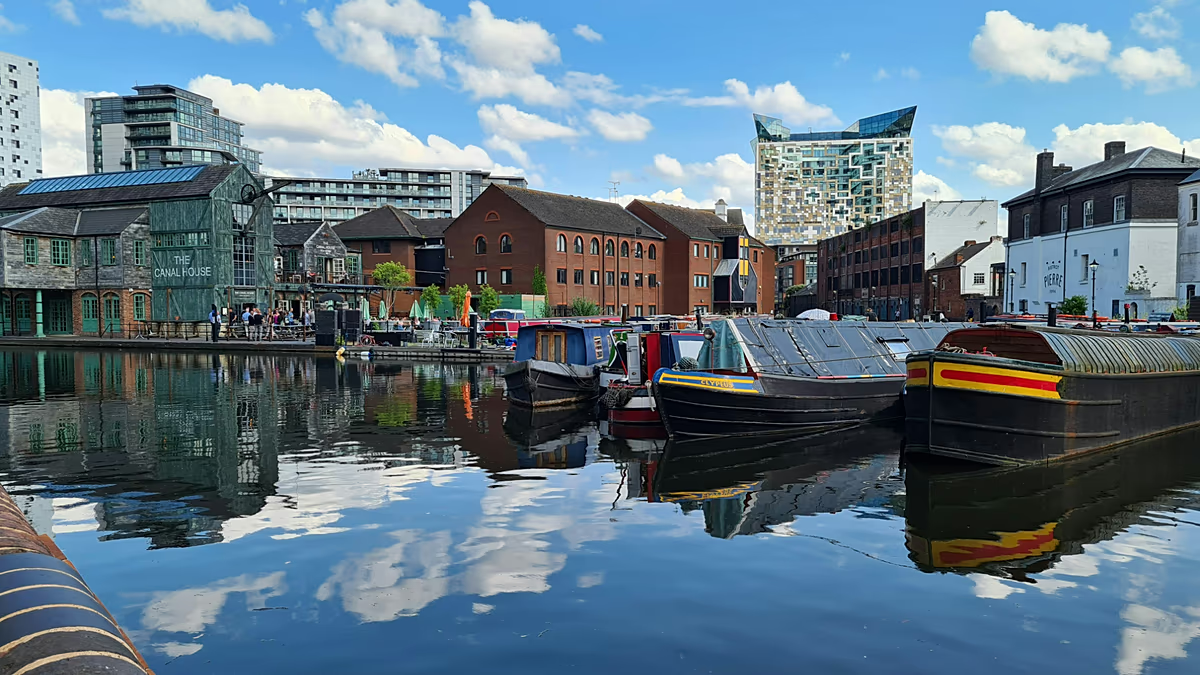
Across the North Sea, the United Kingdom harbors its own unexpected canal champion in the post-industrial heartland of Birmingham. For years, locals have proudly boasted that Birmingham has more kilometers of canal than Venice, a claim that was once dismissed by outsiders but has now become a source of immense civic pride and tourist appeal. Built during the height of the Industrial Revolution to transport coal, iron, and manufactured goods to the corners of the British Empire, these historic waterways have undergone an extraordinary aesthetic transformation. The dark, soot-stained industrial channels of the nineteenth century have been reimagined as vibrant, modern cultural hubs. At the heart of this revival is Gas Street Basin, where the city’s heritage and contemporary lifestyle seamlessly converge. Here, brightly painted traditional narrowboats bob gently alongside bustling canal-side bars, trendy cafes, and converted red-brick warehouses. As evening falls, the basin lights up with the warm glow of outdoor terraces, where locals gather to enjoy craft beers and lively conversation. For those seeking solitude, the gently curving towpaths stretch far beyond the bustling city center, offering a quiet, bucolic escape that leads travelers through hidden green corridors all the way to the historic campus of the University of Birmingham.
In Denmark, the concept of cozy contentment, or hygge, finds its ultimate expression along the historic waterfront of Copenhagen. At the center of the city’s maritime identity is Nyhavn, a breathtaking seventeenth-century canal district characterized by its iconic, brightly colored townhouses and majestic wooden ships. Walking down Nyhavn on a warm summer afternoon feels like stepping into a living painting, where the vibrant yellows, blues, and reds of the buildings reflect beautifully on the shimmering water below. Yet, beneath this sophisticated veneer lies a fascinating, rebellious history. Established in the late 1670s as a gateway for merchants, Nyhavn was for centuries a notorious, raucous district filled with hedonistic sailors, cheap alehouses, and houses of ill repute. It was also a place of immense creativity, serving as the home of legendary fairy tale author Hans Christian Andersen, who wrote some of his most famous stories while living at numbers 18, 20, and 67 Nyhavn. In 1980, the canal was fully pedestrianized, transforming it from a neglected, gritty harbor into one of the world’s most beloved waterfront promenades, where visitors can enjoy fresh seafood, listen to live jazz, or embark on a guided boat tour through the city’s intricate network of clean, peaceful canals.
Ultimately, exploring these alternative water-bound cities is about more than just avoiding long lines and tourist taxes; it is about embracing a more mindful, sustainable, and deeply rewarding philosophy of travel. By choosing to wander through the red-brick canals of Hamburg, walk the tranquil island shores of Stockholm, sip craft beer along the historic towpaths of Birmingham, or bask in the colorful history of Copenhagen, we help distribute the economic benefits of tourism more evenly across the continent. More importantly, we reclaim the true spirit of exploration—the joy of discovering the unexpected, of connecting with local communities on a human scale, and of finding beauty in the quiet corners of the world. The next time you feel the irresistible pull of the water, resist the urge to follow the crowds to overcrowded hotspots. Instead, seek out these unsung aquatic sanctuaries, where the canals flow just as beautifully, the history is just as rich, and the welcome is genuinely warm.