


For those who spend their lives navigating the world of luxury travel, certain brand names become synonymous with specific expectations. Travel enthusiasts often have a soft spot for the classic elegance of a Four Seasons, or they might pledge allegiance to the holistic wellness of a Six Senses. Others collect stays like badges of honor, hopping from one Edition hotel to the next to sample their unique, signature bath amenities. It’s a landscape of personal preference, but amidst this sea of choices, there is one name that consistently sparks a unique kind of excitement whenever a new project is unveiled: Ritz-Carlton Reserve. This isn’t just another hotel chain; it’s a collection of sanctuaries, each one intentionally designed to be a world unto itself, offering an experience that feels far removed from the standard luxury hotel mold.
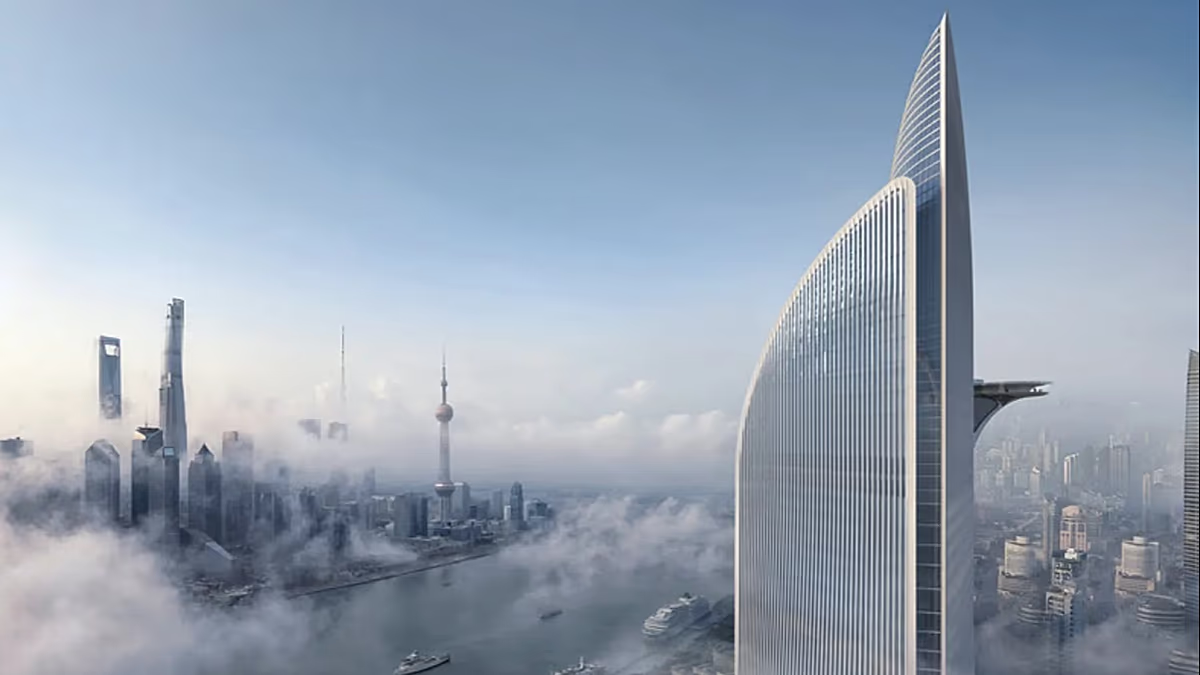
The excitement surrounding this brand is about to reach a fever pitch with the announcement of its most ambitious project to date. For the first time in its history, a Ritz-Carlton Reserve is breaking from its traditional mold of secluded, remote hideaways to plant its flag in the heart of a major metropolis. The new property is set to open its doors in Shanghai in 2030, marking a pivotal moment for the brand. This isn’t a beachfront villa or a mountain retreat; it’s an urban sanctuary located along the city’s vibrant North Bund. The hotel will occupy a significant portion of a stunning skyscraper, featuring 110 exquisitely appointed guest rooms and suites. This move signals a bold new chapter for the Reserve brand, proving that the philosophy of “sanctuary” can be just as powerfully realized amidst the electric energy of a global financial hub as it can be on a deserted coastline.
At the heart of this expansion is the brand’s unwavering core philosophy. A Ritz-Carlton Reserve has never been about just providing a place to sleep; it’s about crafting a deeply personal and rare journey for each guest. The leadership at Marriott International, the parent company, understands this intrinsic value perfectly. Tina Edmundson, the President of Luxury at Marriott International, perfectly encapsulates the brand’s essence: it’s about creating experiences that can only exist in their specific destination. This means moving beyond generic luxury to forge a genuine, deep connection with the local culture, a sense of discovery around every corner, and a feeling of personal wellbeing that extends far beyond a spa treatment. The Shanghai property will be a testament to this, promising to offer a perspective on the city that is completely unique, allowing guests to experience its extraordinary heritage and ambitious future in an entirely different way.
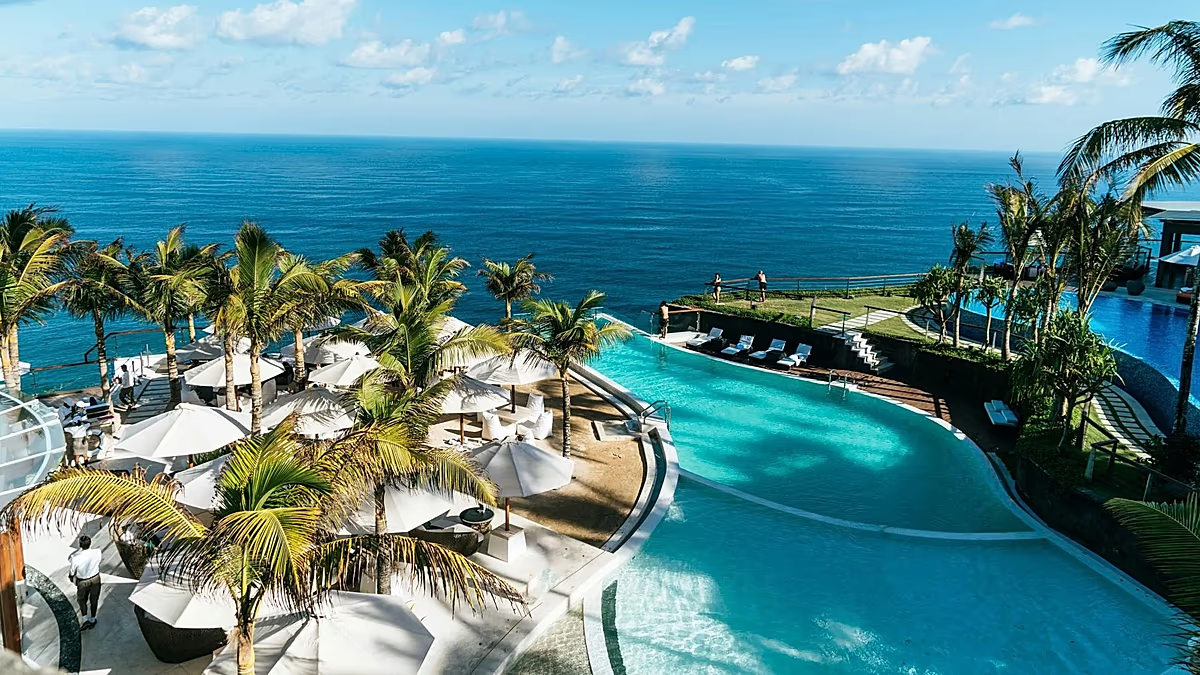
To truly understand the significance of this urban debut, one must look at the brand’s remarkable, albeit small, portfolio of existing properties. Since its inception in 2009 with the opening of Phulay Bay in Thailand, the Ritz-Carlton Reserve collection has been intentionally exclusive, with only nine properties worldwide. Each one is not a hotel, but rather an immersion into its surroundings. For example, Mandapa in Bali, Indonesia, is not just a resort; it is a sanctuary nestled within an indigenous Balinese village. Here, the cultural immersion is authentic and profound. Guests can book experiences like the ancient practice of Hasta Samudrika, a traditional palm reading, or receive guidance on their life’s path through Wariga, a form of numerological divination. These are not surface-level tourist activities but are integral parts of the local spiritual tradition, offered to provide genuine insight and connection.
The expansion of the brand is a carefully considered strategy, moving from the remote and natural to the sophisticated and urban. The most recent addition, Siari in Mexico’s Riviera Nayarit, opened its doors in November 2025, further cementing the brand’s dedication to extraordinary, off-the-beaten-path locations. However, the blueprint for the future is clear: to bring this signature philosophy of intimate luxury to the world’s most iconic cities. While Shanghai will be the first, the announcement confirms that more “urban reserves” are planned for other leading global gateway cities. The specific details and locations of these future projects are being kept tightly under wraps, creating an air of immense anticipation and speculation within the travel community about where this revolutionary concept will land next, transforming the idea of what a luxury city hotel can be.
In essence, the announcement of the Shanghai Ritz-Carlton Reserve is more than just the unveiling of a new hotel; it is a philosophical statement. It challenges the long-held belief that true sanctuary requires isolation. The brand is proving that with the right vision, a hotel can be an oasis of calm and personal discovery, even in the middle of a bustling metropolis. For the discerning traveler, this is an incredibly exciting prospect. It promises the same level of intimacy, cultural depth, and personalized service that has made the Reserve name so revered, but now set against the dynamic backdrop of a modern city. The 2030 opening is now a date marked on the calendar for luxury travel aficionados, a moment that will likely redefine the standards for high-end urban hospitality and prove that even in the world of skyscrapers, a genuinely rare and personal experience can be found.