




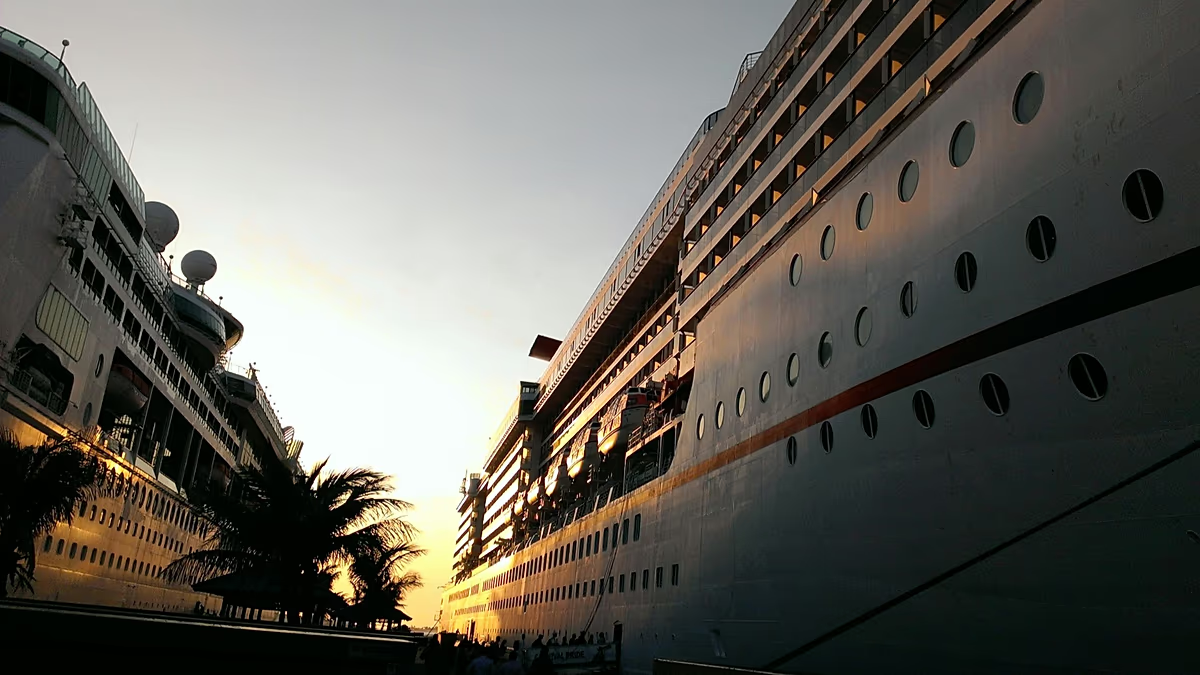
Imagine stepping off a luxury cruise ship onto a sun-drenched European pier, ready to explore historic streets. It feels like the ultimate dream vacation, but behind the romance of the open sea lies a jarring economic reality. While you might feel you are paying a premium for this floating paradise, a revealing new study by the environmental group Transport & Environment (T&E) exposes a massive tax loophole. A night aboard a European cruise ship is actually taxed nearly 40 percent less than a standard night in a land-based hotel. This startling disparity means that while local communities bear the heavy burdens of overcrowding and environmental damage, the cruise industry slips through the tax net, avoiding the financial responsibilities that traditional hotels face daily.
At the heart of this issue is a classic case of outdated rules failing to keep up with modern luxury. Under current maritime laws, cruise liners are legally categorized as a form of essential transport—just like a cargo ship carrying vital goods. However, in reality, these vessels are massive, self-contained holiday resorts. By exploiting this legal classification, cruise companies are exempted from standard value-added taxes (VAT) and fuel levies. When T&E compared a €100-a-night hotel stay in tourist hotspots like France, Italy, and Spain to a similarly priced cruise, the results were eye-opening. Hotel guests contribute about 23 percent of their room price to local taxes, whereas cruise passengers pay a meager 12 percent, leaving coastal cities to foot the bill for the infrastructure these visitors crowd.
This tax holiday comes at an incredibly high cost to our planet and local communities. Cruise ships are notorious contributors to overtourism, releasing thousands of passengers into fragile historic ports all at once, often without spending much money in the local economy since their meals and lodging are pre-paid onboard. Even more concerning is the invisible toll of pollution. The research reveals that in France, Spain, and Italy alone, the real-world climate and air pollution damage caused by cruises is projected to range between €790 million and €1.3 billion. The greenhouse gases and toxic air pollutants spewed by these vessels largely escape current taxation, with the sector’s climate-related costs outstripping what they pay into the EU’s carbon trading system by up to three times.
To fix this lopsided system, advocates are calling for immediate and commonsense tax reforms to ensure these floating giants pay their fair share. T&E proposes introducing a sensible €15 tax per passenger at every port of call. If implemented across Italy, France, and Spain, this modest fee could raise an estimated €335 million annually. This is not about punishing travelers, but about restoring balance. The revenue generated from these port fees could be funneled directly back into local communities—helping governments restore fragile coastal ecosystems, upgrade public infrastructure, or fund green technologies like onshore power grids so ships can plug in rather than idle their dirty engines while docked.
However, raising taxes alone will not entirely heal the environmental rift. Experts warn that financial penalties must be paired with direct action to curb the industry’s massive ecological footprint. Governments need to adopt a broader mix of policies, which includes setting much stricter regulations on sustainable marine fuels and forcing cruise lines to dramatically improve their energy efficiency. Furthermore, popular destinations must have the authority to protect themselves by putting strict limits on cruise traffic. This could mean capping the number of giant ships allowed to dock each day or limiting annual port visits to prevent charming coastal towns from being completely overwhelmed by waves of tourism.
Ultimately, the goal of these proposed reforms is to create a more honest and sustainable tourism industry where everyone plays by the same rules. It is no longer fair to treat luxury cruise liners like essential cargo transport while taxing local family-run hotels at much higher rates. By aligning cruise ship VAT with land-based tourism and closing fuel tax loopholes, Europe can protect its beautiful coastlines and ensure that local communities are supported, rather than exploited. Traveling by sea is a wonderful way to experience the world, but it shouldn’t come at the expense of the destinations we love. It is time to level the playing field so that the true cost of a vacation is paid by those who enjoy it, rather than the planet and the people left behind on shore.