






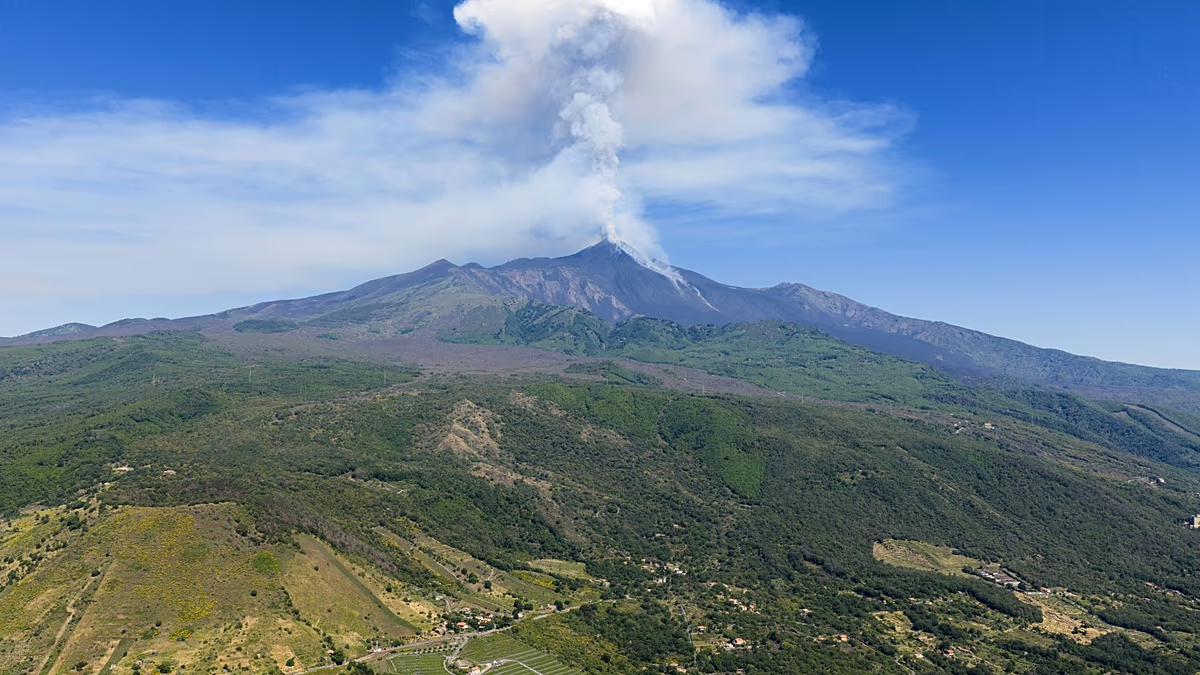
Travel plans for thousands of vacationers heading to and from Sicily have been thrown into chaos today as Mount Etna, Europe’s most active and notoriously unpredictable volcano, made its presence felt once again. In the early hours of the morning, a sudden and dramatic increase in volcanic activity forced authorities at Catania Airport—the busiest gateway to the sun-drenched Italian island—to completely suspend all flight operations. With a massive cloud of thick, dark volcanic ash billowing thousands of meters into the Mediterranean sky, aviation officials quickly realized that flying in the area was simply too hazardous, leading to an immediate halt of both arrivals and departures.
For eager travelers expecting a smooth journey, the scene at the airport has turned into one of frustrating uncertainty and waiting around. Airport management issued an urgent plea to passengers, advising them to stay away from the terminal and to check directly with their airlines before even attempting to travel to the airport. The official suspension of flights is currently slated to last until at least 6:00 pm CEST, though the unpredictable nature of volcanic plumes means this timeline remains highly subject to change depending on which way the wind blows and how long the mountain continues its fiery tantrum.
In the meantime, the regional aviation network is scrambling to manage the fallout and keep people moving. Air traffic controllers have been forced to divert numerous flights to Palermo Airport on the opposite side of the island. Palermo’s airport has graciously stepped up to handle the sudden influx, welcoming dozens of unexpected incoming flights and sharing real-time schedule updates on social media to keep anxious families informed. To bridge the gap, transport operators and airlines are quickly organizing fleets of buses to ferry tired, displaced tourists across the Sicilian countryside to their original destinations.
This latest disruption comes on the heels of a steady build-up of warning signs from the towering peak, which stands just 45 kilometers from Catania’s runways. The Italian Department of Civil Protection had actually raised its alert level from green to yellow in late June following a noticeable rise in underground volcanic tremors. Over the past week, breathtaking yet cautionary drone footage captured mesmerizing rivers of bright red lava flowing down the volcano’s slopes, serving as a reminder of the raw power simmering beneath the island’s picturesque landscape.
Currently, the scientific experts at the Volcano Observatory Notice for Aviation have confirmed that a heavy, continuous emission of ash is actively pumping into the atmosphere. The towering volcanic cloud has reached an estimated altitude of roughly 4,500 meters, which poses a severe threat to jet engines that can easily choke on the abrasive, glassy particles present in volcanic dust. With such a massive column of debris drifting through local airspace, safety must take precedence over holiday schedules.
The timing of the eruption is particularly challenging as it coincides with the busy summer tourist season when airlines like Ryanair, easyJet, Wizz Air, KLM, and Lufthansa are operating at peak capacity. For now, stranded passengers can only watch the skies, stay in close contact with their carriers, and wait for Europe’s most famous volcano to quiet down so they can finally get their vacations back on track.