


Here is the content, summarized and humanized into six paragraphs.
—
In a world where travel has become synonymous with the search for the extraordinary, there is something deeply comforting about the familiar. This sentiment is perhaps nowhere more evident than in Germany, where the most popular vacation destination is, quite simply, Germany itself. The nation’s love affair with its own diverse landscapes—from the windswept shores of the Baltic Sea to the dramatic peaks of the Alps—has blossomed into an unprecedented era of domestic tourism. The first half of 2026 has shattered all previous records, with the Federal Statistical Office reporting a staggering 223.8 million overnight stays in hotels, guesthouses, and campsites. This remarkable number speaks to a collective desire to rediscover the beauty that lies just beyond one’s own doorstep, a trend that has been steadily building for years and shows no signs of slowing down. It’s a powerful testament to the simple, enduring appeal of exploring one’s own backyard.
This affinity for domestic travel is not just a passing fancy but a fully established cultural phenomenon. The allure of a weekend getaway to a charming Bavarian village, a hiking trip in the Harz mountains, or a beach holiday on the North Sea coast continues to captivate the German public. The official statistics only paint part of the picture, as the growing popularity of holiday apartments booked through online platforms like Airbnb adds an uncounted, invisible layer of travelers eager for more independent and home-like accommodation. Interestingly, this trend is mirrored online, where German users top the rankings for booking holiday rentals, leading the charge ahead of visitors from the Netherlands, Poland, and the United States. This data suggests a sophisticated and proactive traveler, one who is comfortable with technology yet deeply rooted in a desire for authentic, localized experiences. It is a powerful combination that is reshaping the German travel landscape, creating a vibrant and resilient domestic sector.
Yet, beneath this wave of national pride and local discovery, a fascinating and more complex story is unfolding in the country’s southwest, revealing how global forces like climate change are redrawing the traditional maps of tourism. While the entire nation is enjoying a tourism boom, a distinctly new demographic is flocking to the region’s iconic Black Forest, and they are arriving from the sun-scorched countries of Southern Europe. The region, renowned worldwide for its namesake chocolate-cherry cake, the Schwarzwälder Kirschtorte, is now attracting a wave of visitors from Spain and Italy for a very different, and far more pressing, reason: the urgent search for a cooler climate. This isn’t about indulging in a slice of cake anymore; it’s about finding a sanctuary of pleasant temperatures and verdant landscapes in an era of increasingly intense and frequent European heatwaves. The once-aspirational Mediterranean summer of relentless sunshine has, for many, transformed into a threat, and in response, travelers are turning their gaze northward in droves.
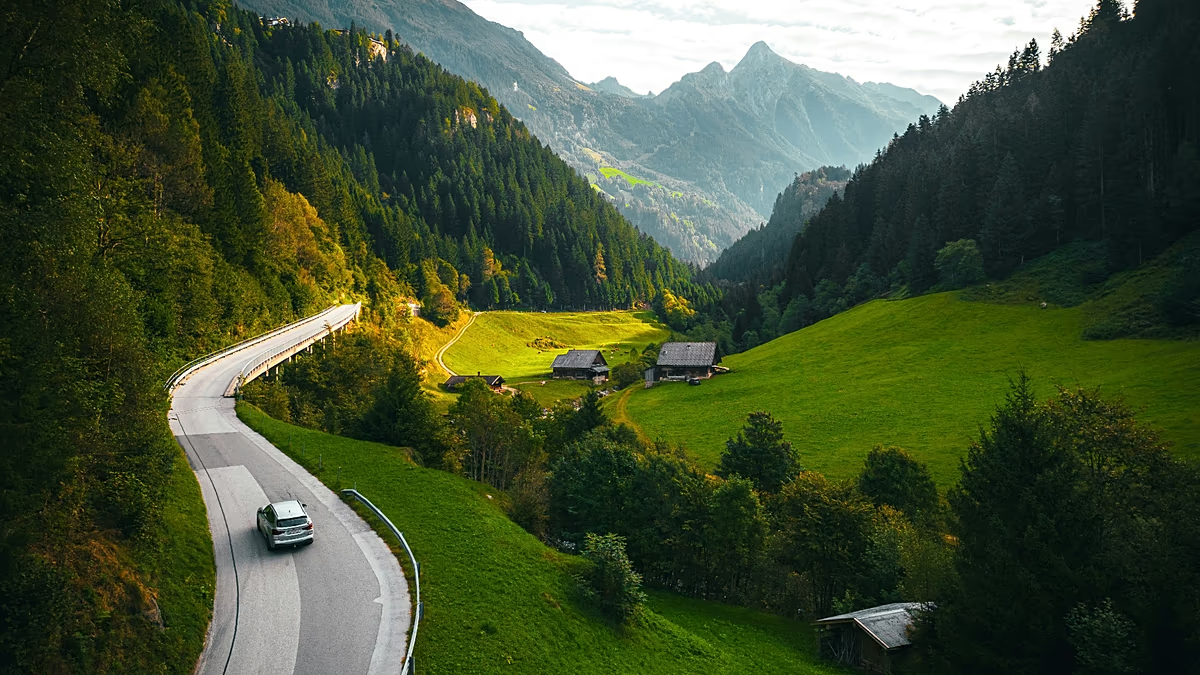
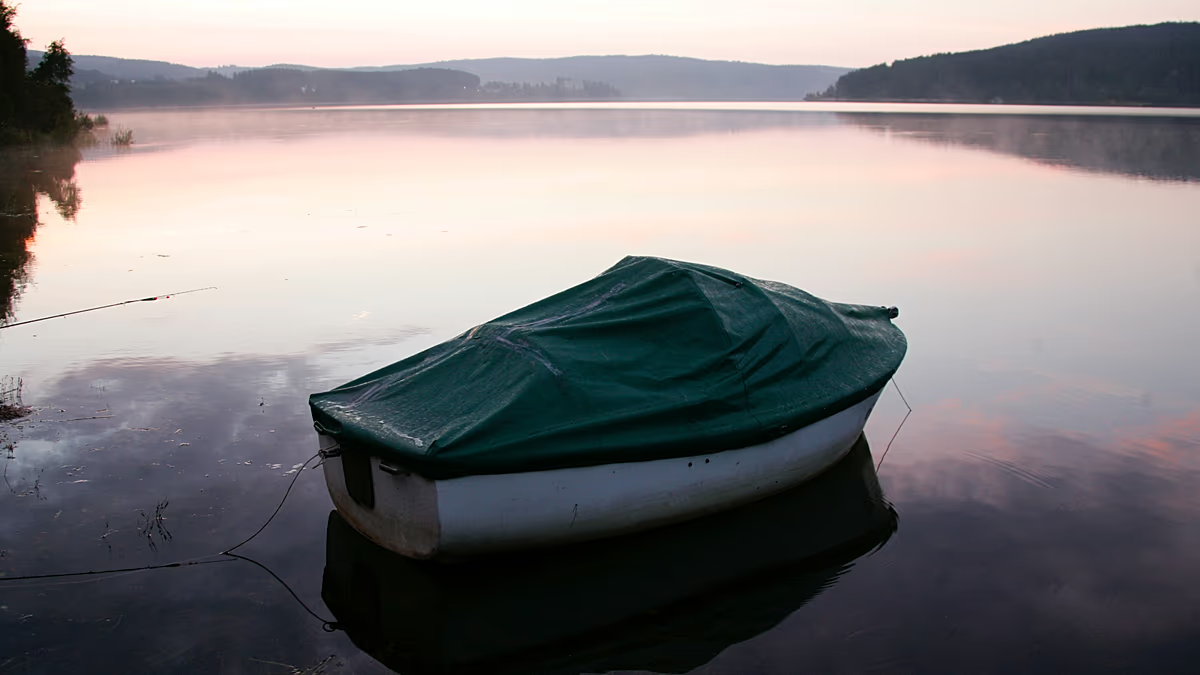
The Black Forest, with its towering 1,493-meter Feldberg mountain peak, crystal-clear lakes like the postcard-perfect Titisee, and vast expanses of shady, centuries-old woodland, has emerged as the quintessential “coolcation” destination customs. Alongside other northern European getaways like Scandinavia and Scotland, it offers a reprieve from the oppressive heat, a place where a summer’s day can be spent hiking through fragrant pine forests without the fear of heatstroke and where nights are cool enough for a restful sleep. Even the fact that the summer of 2026 in southwestern Germany, much like in neighboring France, has been punctuated by its own heatwaves has done little to temper its newly acquired reputation as a refuge from the heat. The image of a cool, misty, and refreshingly temperate landscape persists, proving to be more powerful than the actual weather patterns of a single season She expects that this climate-driven migration will only intensify. This is not merely a vacation but a strategic move for wellbeing, a deliberate choice to prioritize comfort and safety over the traditional allure of seaside sun.
The numbers tell the story of this dramatic shift with compelling clarity. According to Schwarzwald Tourismus GmbH, the regional tourism board, the influx of Spanish visitors has been nothing short of spectacular, with a staggering 64 percent increase in visitor numbers since 2015. Last year alone, the State Statistical Office recorded nearly 200,000 overnight stays by Spanish guests eager to experience the region’s charms. Italian travelers have not been far behind, with their numbers also soaring to 194,000 overnight stays. This isn’t just a statistical blip; it’s a major cultural exchange unfolding in the heart of the forest. These new visitors are not just seeking cool air; they are also discovering a landscape steeped in a different kind of magic Bull, so it also helps with the climate and App.
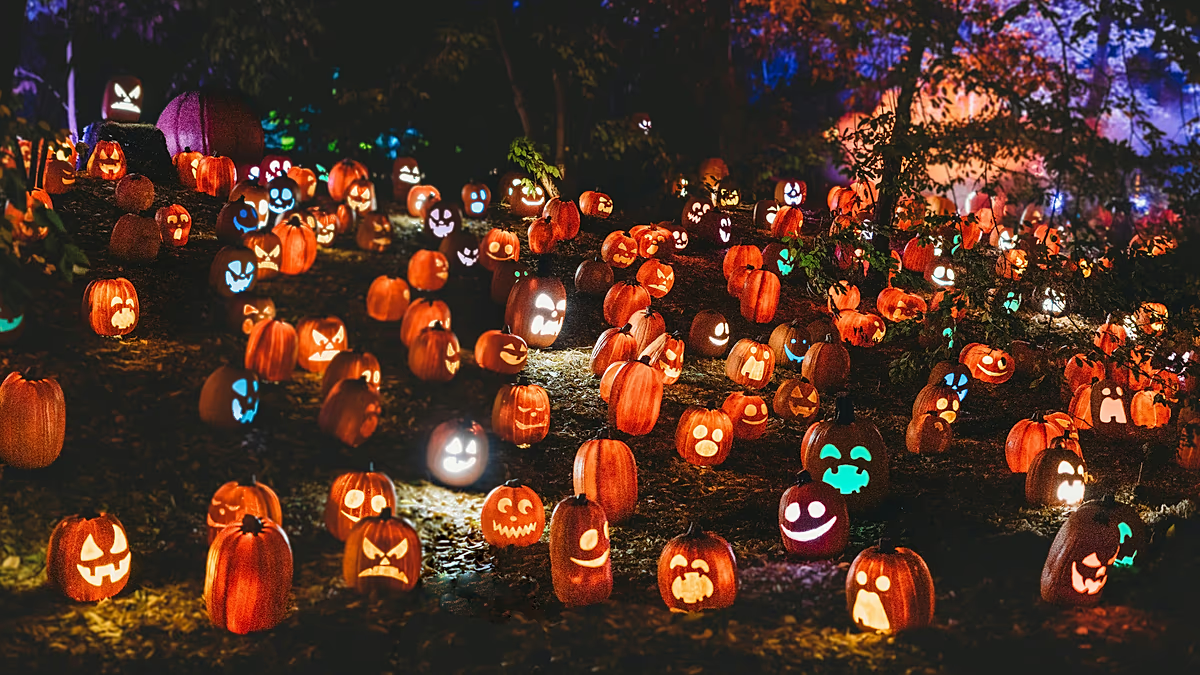
This magical quality is, of course, inextricably linked to the Brothers Grimm, Jacob and Wilhelm, who grew up in the 19th century not far from this very forest. The fairy tales they so famously collected from across Germany are imbued with the slightly eerie, mystical atmosphere that still permeates these woods today. The tales of “Hansel and Gretel” stumbling upon a witch’s gingerbread house or “Little Red Riding Hood” encountering a wolf on her way through the trees have cast a long and enchanting shadow over the landscape. This gothic, fairytale spirit is a powerful draw for international visitors, not just around Halloween, but year-round. A summer walk through the forest’s more secluded and shadowy corners offers a tangible connection to these timeless stories, allowing visitors to step directly into the pages of a book. There is a unique thrill in imagining the faintest whisper of a witch or the shadow of a wolf lurking in the dim light between the ancient pines, a sensation that is as much a part of the Black Forest’s appeal as its cool air and scenic vistas.
In the end, the story of the Black Forest’s booming international appeal is a two-fold narrative of preservation and adaptation. It highlights how the German domestic tourism boom is being enriched by a wave of international visitors driven by necessityconstruct, their new “cool” identity is a direct result of a warming planet. The forest is now a destination where different cultures meet, where a Spanish family might find solace from the heat, an Italian couple could revel in the fairytale lore, and a German family from Berlin can enjoy a classic mountain holiday, all sharing the same breathtaking scenery. The Black Forest is no longer just a beloved German retreat; it has become a symbol of how travel is evolving in response to the world around us, offering both a beautiful escape and a profound lesson in adaptation. The forest stands as a quiet, ancient witness to this modern migration, its trees offering shade, its paths offering solace, and its stories offering a shared cultural heritage to all who wander beneath its canopy. The record-breaking numbers in Germany overall, and this specific influx in the southwest, are two sides of the same coin: a reaffirmation of the power and importance of travel to connect us with our worldahan—even if that world is right around the corner or a short flight away, all in search of a perfect, cool, and restorative summer.