






There is an undeniable, time-honored romance associated with boarding a commercial airliner, rising high above the clouds, and watching the world below shrink into a quiet mosaic of miniature fields and winding rivers. In our hyper-digital age of air travel—where paper tickets have been replaced by glowing pixels on lock screens, checked baggage is tracked via invisible signals, and loyalty status is marked by a virtual sequence of numbers on a corporate app—the passenger experience can occasionally feel somewhat sterile and automated. Yet, the human heart still deeply yearns for physical touches and real, tangible memories to anchor its wanderlust to the real world. This emotional longing has birthed a passionate global community of aviation enthusiasts, affectionately known as “AvGeeks,” alongside millions of casual travelers who look forward to the subtle, beautifully crafted tokens that airlines offer to commemorate their journeys. These items are far more than mere marketing gimmicks or inexpensive cabin handouts; they are beloved symbols of curiosity, adventure, and the shared magic of human flight. From the comforting clink of miniature ceramic houses to the secret, whispered requests for historical pilot trading cards, these whimsical collectibles offer travelers a physical piece of the sky to take home. They fulfill a profound psychological need to hold onto the fleeting, ephemeral moments spent traveling at thirty-five thousand feet. These artifacts act as personal bridges between the fast-paced, high-stress realities of modern life and the nostalgic magic of exploring our vast blue planet. For many, sharing these collectibles with children and grandchildren becomes a precious ritual, passing down a love for global geography and technological progress. By transforming standard flights into active treasure hunts, airlines have tapped into a deep well of human passion, ensuring that the wonderful spirit of exploration remains alive, tactile, and close to our hearts even long after we have returned to solid ground.
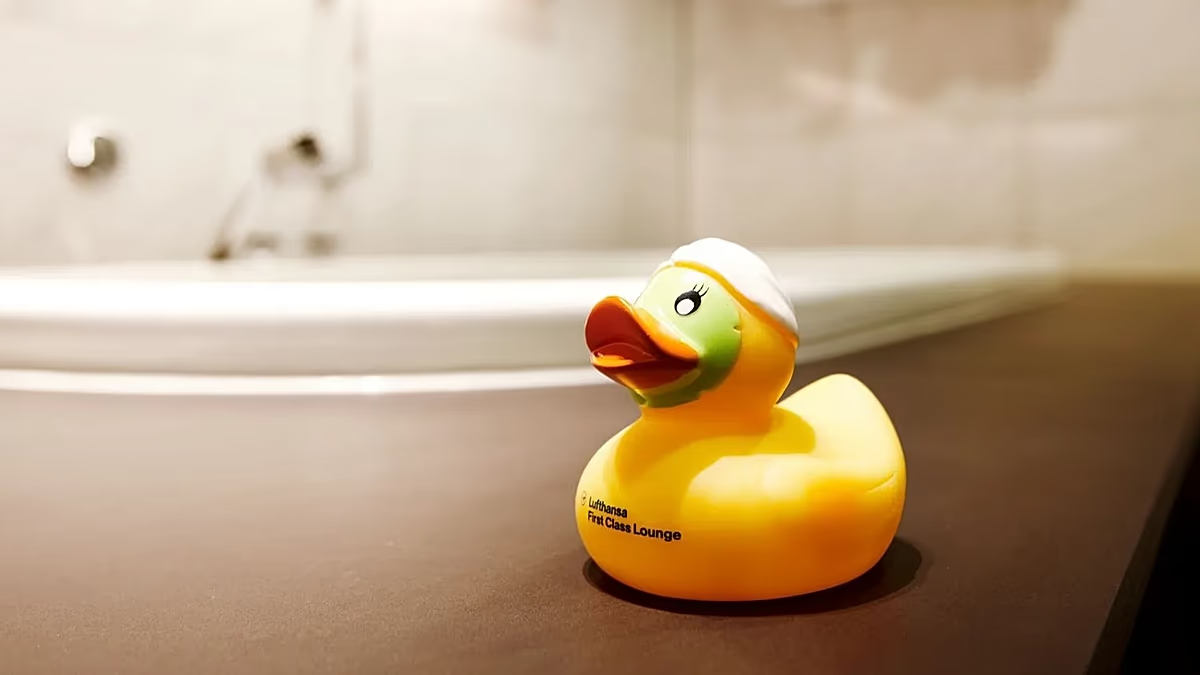
Perhaps no global airline understands this human desire for physical continuity and cultural storytelling better than KLM Royal Dutch Airlines, whose iconic Delft Blue miniature houses have set the golden standard for aviation memorabilia since their whimsical debut in the 1950s. Far more than mere porcelain shelf ornaments, these delicate, hand-painted canal houses—exclusively gifted to Business Class passengers on intercontinental routes—serve as clever vessels for travel history, historically filled with traditional, juniper-scented Dutch Bols Genever gin. This tradition began with a brilliant legal loophole: when international regulations banned airlines from giving expensive promotional gifts to passengers to prevent price-undercutting wars, KLM cheekily argued they were simply serving a standard Dutch cocktail in a remarkably creative glass, which passengers were allowed to keep. Every year on the seventh of October, marking the airline’s founding anniversary, KLM unveils a newly numbered house in the collection based on a real, culturally significant historic building in the Netherlands. Collectors display their growing villages in illuminated custom cabinets, turning their flights into architectural histories. The latest release is a miniature replica of Villa Rameau in Leiden, a magnificent sexton’s house erected in 1645, carefully chosen to celebrate the upcoming United States semiquincentennial by highlighting Leiden’s legacy of welcoming religious refugees, including the English Pilgrims who lived there before boarding the Mayflower. Across the border in Germany, Lufthansa has fostered an equally obsessive cult following through an entirely different and lighthearted medium: the humble rubber duck. Since 2004, first-class passengers walking through the luxurious lounges of Frankfurt and Munich have been delighted to find these playful bathing toys waiting for them. While standard yellow ducks are always a joy, the airline regularly releases themed variations celebrating traditional events like Munich’s Oktoberfest with ducks dressed in traditional lederhosen, festive holiday designs wearing Santa hats, and athletic ducks holding soccer balls for the FIFA World Cup. These simple ducks have evolved into serious collectibles, with rare, limited-edition designs fetching hundreds of dollars on secondary online markets, showing that even serious business leaders cannot resist childlike joy.
While some airlines lean into the historic elegance of painted porcelain or the exclusive luxury of private lounges, others have won the hearts of millions by embracing a delightfully rebellious sense of humor. In 2002, Virgin Atlantic set out to redefine the experience of in-flight dining by introducing a pair of sleek, airplane-shaped salt and pepper shakers, affectionately named Wilbur and Orville in a loving tribute to the pioneering Wright brothers who first conquered the skies. These charming culinary companions, cast in polished metallic silver and bold gunmetal black, became an instant sensation on dining trays, turning the simple act of seasoning a meal into a memorable sensory moment. However, the design was so irresistibly cute that passengers began quietly slipping the shakers into their pockets and carry-on bags at an unprecedented rate, leaving the cabin crew with chronically empty trays. In 2011, facing mounting replacement costs, the airline made the difficult decision to pull Wilbur and Orville from active cabin service, only to face an immediate, passionate wave of public protest from travelers who felt that a crucial piece of the airline’s playful soul had been lost. Recognizing that this widespread “thievery” was actually a massive, passionate testament to customer love, Virgin Atlantic triumphantly brought the shakers back to life the very next year with a brilliant, self-aware branding twist: they permanently engraved the cheeky words “Pinched from Virgin Atlantic” right onto the bottom of their little metallic feet. This clever move transformed a minor economic headache into a brilliant marketing victory, transforming every single “stolen” shaker sitting on a kitchen table worldwide into a humorous badge of honor and a highly effective, organic conversation starter about the airline’s unique, counter-cultural personality. Today, Wilbur and Orville remain central icons in global travel social media posts, with world travelers taking playful pictures of their pinched shakers on exotic beaches and dining tables spanning all seven continents.
For those travelers who hold deep, nostalgic memories of collecting cards during their childhood, a quiet revolution has been unfolding behind the heavily reinforced cockpit doors of major United States carriers, where pilots are hand-delivering analog joy in our digital world. Major airlines have quietly revived the classic tradition of collectible trading cards, empowering their captains and first officers to hand them out to passengers of all ages who simply have the courage and curiosity to ask before or after their flights. Hawaiian Airlines, for example, offers beautifully detailed cards for each of the four distinct aircraft in its island-hopping fleet—comprising the robust Boeing 717, the efficient Airbus A321neo, the long-range Airbus A330, and the magnificent, newly introduced Boeing 787-9 Dreamliner—each featuring rich technical facts, performance metrics, and a dedicated blank space for the pilot to sign their actual autograph as a personal memento. Similarly, Delta Air Lines recently caused a major sensation across the global travel community by releasing a stunning, retro-themed trading card collection to celebrate a remarkable one hundred years of flight history, capturing the imagination of both young children and adult collectors alike. This wonderful tradition serves a vital humanizing purpose: in a modern travel landscape where intense security rules can make the flight deck seem distant and unapproachable, asking for a trading card acts as a gentle, warm bridge of connection between the traveling public and the crew safely guiding them home. It encourages passengers to pause and appreciate the immense human skill involved in piloting these multi-ton modern marvels through the high winds of the upper atmosphere. It turns what could be a sterile, automated transport experience into a warm, shared human moment of mutual wonder, reminding us that every machine soaring through the sky is guided by passionate people who still love the pure magic of flight.
As we step into the premium cabins of global airlines, we find that the humble amenity kit—long dismissed as a disposable, single-use plastic bag filled with generic cosmetics—has undergone a stunning creative evolution, transforming into a high-fashion canvas for artistic expression and sustainable design. To keep frequent flyers excited and engaged, forward-thinking airlines are partnering with boundary-pushing artists and luxury skincare brands to create stunning, limited-edition kits that double as gorgeous lifestyle collectibles. On its routes out of London Gatwick, British Airways recently made headlines by collaborating with a handpicked group of highly talented local British artists, creating four uniquely vivid, beautifully patterned pouches that bring regional artistic voices directly to the sky and celebrate diverse cultural landscapes. Meanwhile, Etihad Airways has turned heads by partnering with prestigious global skincare brand LANEIGE to launch highly collectible amenity pouches, with each bag’s color palette meticulously inspired by the energetic vibes and natural landscapes of the specific destinations they fly to. Not to be outdone, American Airlines has introduced a brilliantly functional, soccer-themed amenity kit designed in celebration of US Soccer, complete with a trendy, detachable crossbody strap that allows travelers to immediately repurpose the high-quality pouch into a stylish, reusable street bag after their journey ends. This clever transition from disposable packaging to wearable street fashion perfectly reflects a modern, eco-conscious philosophy of travel luxury, proving that the best collectibles are not meant to sit on a dark shelf. Instead, they are designed to blend seamlessly into our daily post-flight lives as stylish, practical reminders of our dynamic travel histories, bridging the gap between aviation comfort and daily utility. By championing beautiful, reusable designs, airlines are actively lowering single-use waste, demonstrating that luxury and environmental stewardship can beautifully coexist at cruising altitude.
For the ultimate aviation connoisseur who wishes to carry the actual physical elements of flight history with them everywhere they go, the pinnacle of collecting has moved beyond cabin giveaways and into the realm of masterfully crafted, wearable luxury. This is the visionary mission of AIM Watches, an innovative brand founded in the United Arab Emirates that beautifully salvages the actual metallic skins of retired commercial airplanes and hand-assembles them in Switzerland into breathtaking, limited-edition timepieces. Each watch face is cut directly from the fuselage of a historic workhorse, currently featuring a stunning “Frankfurt” model crafted from a Lufthansa Airbus A380 skin and an “Abu Dhabi” model cut from the very first double-decker A380 flown by Etihad Airways, giving these giant metals a second life on the wrists of passionate dreamers. The brand’s upcoming projects are even more historically thrilling, as they prepare to release an incredibly exclusive series of just thirty pieces crafted from the legendary British Airways and Air France supersonic Concordes, complete with watch straps meticulously fashioned from the original leather seats of these iconic, boundary-breaking birds. Among these masterpieces, the brand is also launching an eagerly awaited Beta Series constructed from the fuselage of G-CIVP, the iconic British Airways Boeing 747 that set the Guinness World Record for the fastest subsonic transatlantic flight in history during a massive winter storm in 2020. Glancing down at an AIM watch is like holding a piece of a cloud, knowing that the metal resting on your wrist has traveled millions of miles and witnessed sunrises from altitudes most humans will never reach. Ultimately, whether it is a precision Swiss watch forged from the wings of a supersonic legend, a porcelain Dutch canal house filled with traditional gin, or a pair of cheeky, “pinched” salt shakers setting the dinner table, these wonderful collectibles prove that commercial aviation is far more than a business of moving bodies through space. These physical pieces represent our collective human stories, our shared memories of high-altitude adventure, and our eternal, romantic connection to the infinite, open blue skies.