


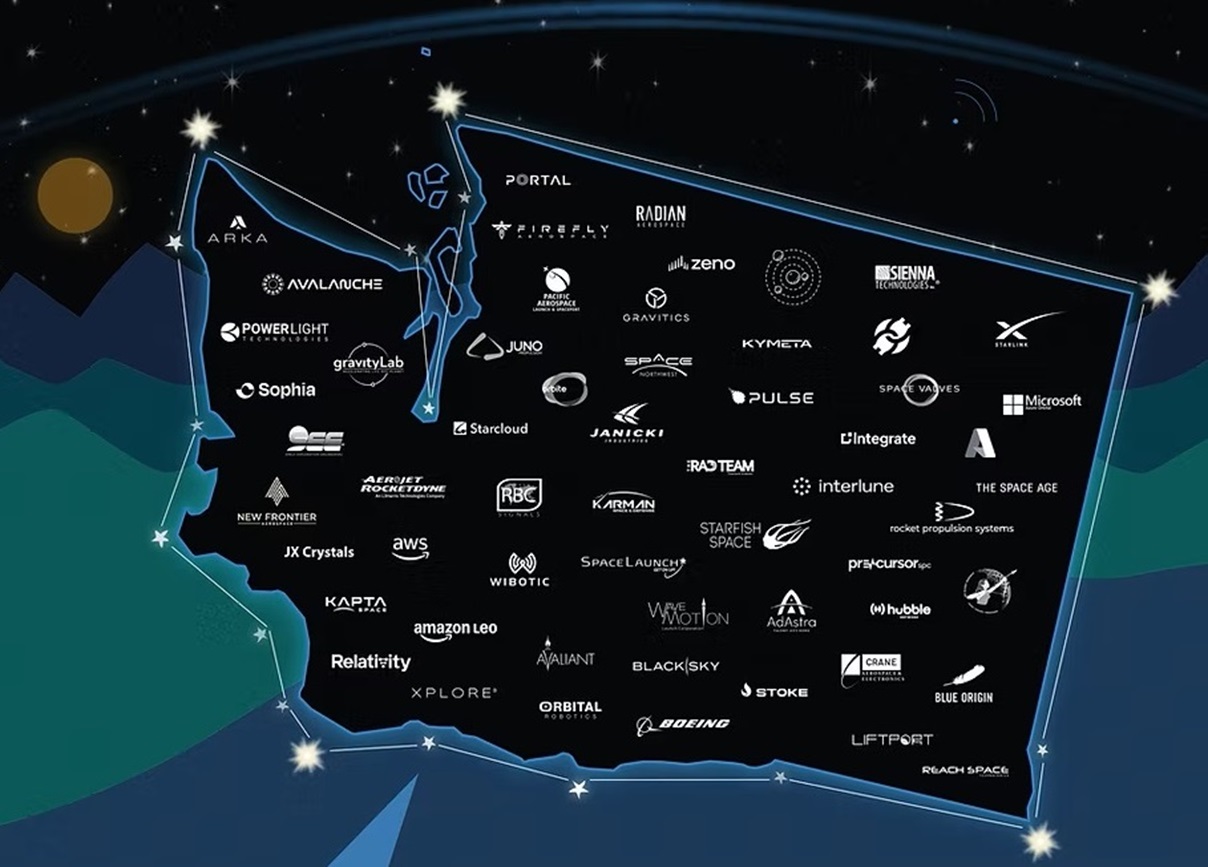
In a state often celebrated for its towering evergreens, endless coffee shops, and the unmistakable hum of tech giants like Microsoft and Amazon, a quieter but equally profound revolution is taking place—one that is literally reaching for the stars. While most people know Washington as the home of software and aviation, a recent study has lifted the veil on a booming secret: the Evergreen State is, in fact, a massive, undisputed powerhouse in the global space economy. The preliminary results from a study commissioned by Space Northwest, a regional association dedicated to fostering space ventures, reveal a staggering financial footprint. Washington state’s space economy now generates an astonishing $8.1 billion in direct economic output every single year. This isn’t just incremental growth; it’s a supernova of expansion. To put that into perspective, that number has nearly doubled since a similar study was conducted just two years prior, in 2022, when the output was pegged at $4.6 billion. Even more incredible is the long-term trajectory: back in 2018, the same sector was worth just $1.8 billion. This meteoric rise—a quadrupling in just eight years—signals that the space industry in Washington has moved far beyond the realm of niche engineering and is now a foundational pillar of the state’s economy, quenching a thirst for innovation that few regions can match.
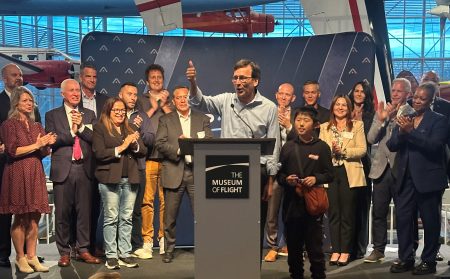
The economic muscle of the space sector doesn’t just exist on a spreadsheet; it translates directly into real, life-changing opportunities for thousands of workers across the region. Kelly Maloney, the co-founder and chair of Space Northwest’s board of directors, unveiled these fresh figures at the Space Northwest Symposium in Federal Way, Washington. Her presentation painted a vibrant picture of a thriving workforce. According to the data, the state’s space sector directly supports roughly 12,300 high-tech jobs and contributes a staggering $2.3 billion in labor income. But the numbers get even more impressive when you consider the ripple effect. When you account for the indirect jobs created in supply chains and the induced economic activity generated as those workers spend their paychecks, the total footprint skyrockets to an estimated 34,200 jobs sustained across the state, pumping a combined $12.4 billion into the statewide economy. This staggering multiplier effect means that for every single direct space job—every engineer, every machinist, every assembly technician—another 1.8 jobs are supported elsewhere in the broader economy. This isn’t simply isolated prosperity; it’s a cascading tide that lifts hotels, restaurants, logistics companies, and local communities. Perhaps the most humanizing statistic of all is the sheer earning power of these workers. The direct labor income in the space sector averages about $188,000 per worker each year—a figure that is precisely double the average salary in Washington state. This means that these jobs aren’t just intellectually stimulating; they’re remarkably wealthy, offering a path to a robust middle-class lifestyle and securing Washington’s status as a destination for the world’s best engineering and scientific minds.
The immense scale of Washington’s space economy is driven by a stunning concentration of specialization and cutting-edge technical competence. Maloney highlighted that a whopping 94% of the state’s direct space employment is packed into three highly sophisticated technical domains. First, nearly 6,500 individuals are employed in the heavy-lifting world of space vehicle and propulsion manufacturing—the people who physically build the hardware that defies gravity. Second, over 3,000 workers are engaged in research, engineering, and computing, the intellectual core that designs the complex systems and software. Finally, just over 2,000 workers are dedicated to the delicate field of space electronics and hardware, crafting the resilient circuitry that must survive the harsh vacuum of space. This concentrated expertise has positioned Washington at the absolute center of the satellite industry, arguably the most commercially active segment of the space sector today. The analysis revealed a simply jaw-dropping statistic: more than 68% of all active satellites currently orbiting Earth were constructed right here in Washington state. While that number might seem impossible, the explanation is rooted in the massive scale of SpaceX’s Starlink operation located in Redmond, which has been churning out internet-beaming satellites at a rate that has transformed the global satellite landscape. Beyond manufacturing, the state’s financial confidence in its future is undeniable. The study found that 24 space startups either headquartered in or operating within Washington have collectively amassed a formidable war chest of over $4.3 billion in investments, with a staggering $3.7 billion of that flowing in since 2021 alone. This influx of capital proves that investors are betting heavily on Washington’s talent pool and infrastructure to lead the next phase of commercial space exploration.
In a bid to nurture the next generation of pioneers and ensure this growth continues, Space Northwest is not content to simply count the success of the past; they are actively seeding the future. In conjunction with the symposium, the association announced robust support for eight emerging space startups through a brand-new initiative called the Space Technology Accelerator for Growing Entrepreneurship, appropriately abbreviated as STAGE. This program is a 12-week intensive boot camp designed to give fledgling companies the rocket fuel they need to blast off. Rather than generic advice, each startup is provided with a highly personalized touch: three hours of one-on-one coaching tailored to their specific business challenges, paired with specialized workshops covering everything from regulatory hurdles to fundraising strategies. The first cohort of STAGE reads like a Who’s Who of ambitious, visionary problem-solvers. There’s Beyonders, whose founder, Mike Antares, is democratizing access to space by making “gram-scale picosatellites”—tiny, low-cost spacecraft that could allow virtually anyone to participate in cosmic discovery. Then there is Godel Space, named after the legendary mathematician Kurt Gödel, with founder Vikash Kodati leading the charge to build autonomous AI agents that can act as the brains inside satellite payloads, making orbital operations smarter and more self-sufficient. The cohort also includes Kynthos, co-founded by Selvan Viswanathan and Priya Srinavasa, who are tackling a critical security issue by developing software to maintain continuous “custody” of high-value assets in space and track non-cooperative objects—a crucial capability in an increasingly crowded orbital environment.
The human stories behind these cutting-edge startups reveal a deep passion for solving real-world problems that extend far beyond the stars. Tammy Payne of Luthien Space is focused on safety, stating her company is “in the business of making lunar landings and missions safe” by building a decision-grade intelligence tool that is rigorously physics-validated, ensuring that maneuvers near the Moon don’t end in disaster. Ben Blue, co-founder and CEO of Ora Biomedical, is turning his gaze inward to the human body, headlining his company’s mission to create therapies that enable longer, safer spaceflight for astronauts—pushing the boundaries of human endurance as we contemplate missions to Mars and beyond. Signal Sights takes a user-centric approach to data, developing systems that convert complex radio frequency signals into intuitive, visual information, thereby drastically improving situational awareness and decision-making for ground operators. Meanwhile, SQK, a three-year-old startup, is using guided computational AI to reconstruct and validate incredibly complex scientific datasets from noisy, incomplete, or alarmingly low-signal measurements, essentially helping researchers find hidden truths in the static. Finally, James Penna of Wave Motion is pursuing a concept that sounds like science fiction: turning the rocket equation on its head. Rather than carrying massive amounts of fuel, Wave Motion aims to “beam” the fuel to the rocket as it needs it, potentially slashing launch costs and opening up a new era of access to space. These eight diverse companies are a microcosm of the state’s innovative spirit, tackling everything from lunar landings to data analysis.
Looking forward, these numbers and initiatives represent more than just a successful tech cluster; they signal a profound shift in the human narrative of exploration. The preliminary findings presented by Space Northwest—compiled by the consulting firms BERK Consulting and Alliance Velocity, with additional data sourced from company reports, Crunchbase, and satellite tracking expert Jonathan McDowell—are still awaiting their final polish, but they already paint a crystal-clear picture. Maloney’s declaration that Washington is effectively the “Space Tech State” no longer seems like hyperbole but a simple statement of fact. As the region gears up for the broader festivities of Seattle Space Week, the full report is eagerly anticipated by industry insiders and policymakers alike, who will use its data to inform infrastructure investments and educational initiatives. What is certain is that Washington has managed to create the perfect launchpad for the space economy. It has woven together the academic rigor of its universities, the financial might of its private investors, and a deeply skilled manufacturing base to create an ecosystem that is uniquely capable of turning the most audacious dreams into hardware that orbits the Earth. The 12,300 direct jobs and the innovative startups taking root through programs like STAGE are deeply intertwined with our collective future. They are the modern-day pioneers, the shipwrights, and the cartographers of a new frontier, and they are building their vessels right here in the shadow of Mount Rainier. As we look up and wonder about the lights moving across the night sky, we can take pride in knowing that a significant portion of those lights were dreamed, designed, and built by the people of Washington state, proving that while our feet may be on the ground, our industrial and intellectual capabilities are firmly fixed on the stars.