





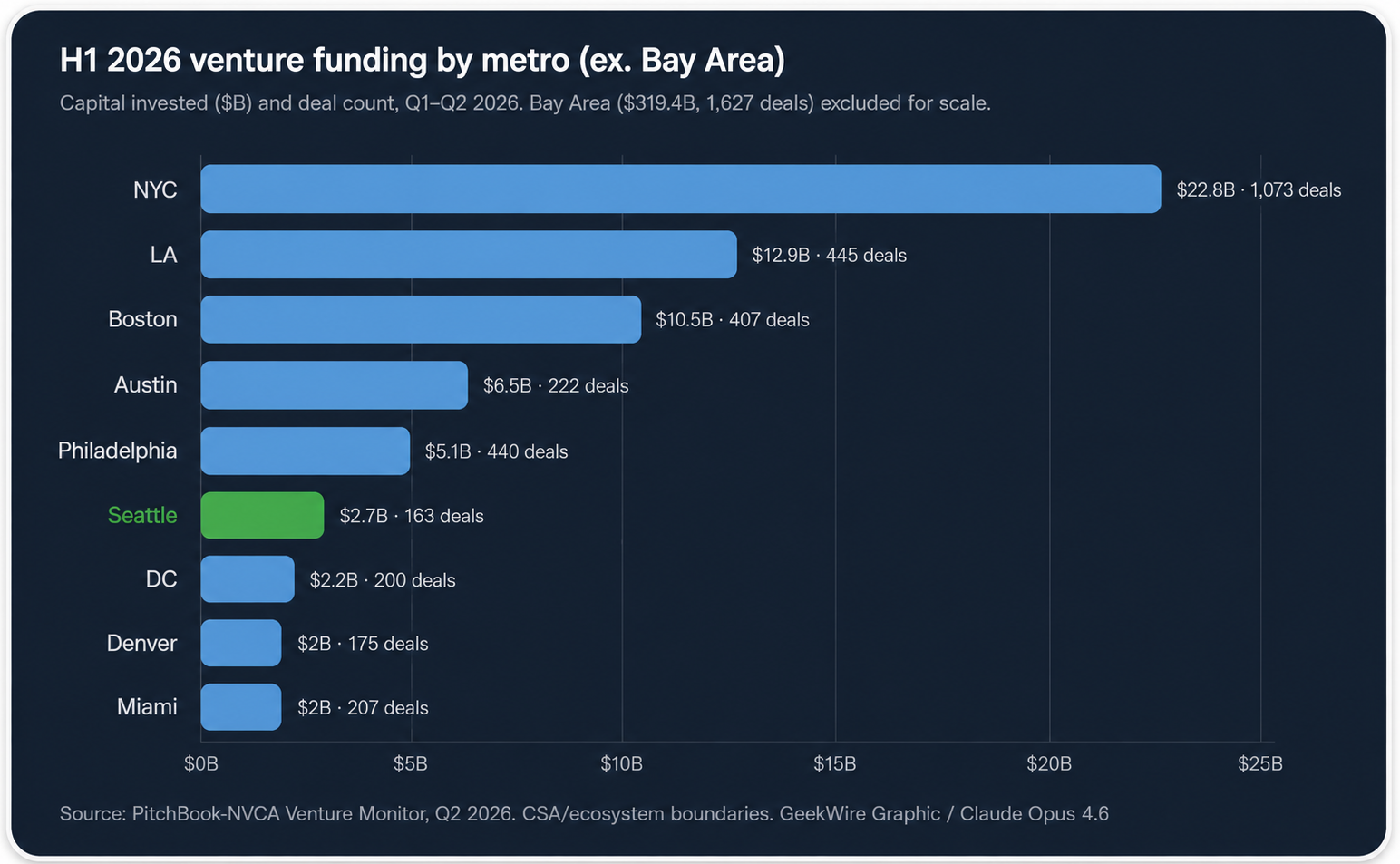
Even amid the relentless chatter of a global artificial intelligence boom, the startup ecosystem in the Pacific Northwest is experiencing a sobering reality check. According to the latest PitchBook-NVCA Venture Monitor report, Seattle-area startups raised $2.7 billion across 163 deals during the first half of 2026. This represents a steep 40% decline from the $4.5 billion secured across 210 deals during the same timeframe last year. While the second quarter of 2026 did show a modest recovery with $1.5 billion raised across 85 deals—up from the revised $1.2 billion in the first quarter—the regional momentum has undeniably cooled. Rather than a broad tide lifting all boats, the bulk of this local capital was concentrated in a small group of heavy-hitting deals favoring deep-tech sectors like clean energy, aerospace, and cybersecurity.
This local slowdown highlights a fascinating paradox. Seattle is globally recognized as an epicenter of cloud computing and artificial intelligence, thanks to the massive infrastructure investments and corporate gravity of tech giants Microsoft and Amazon. Yet, the region’s pure-play AI startups are not capturing venture capital at the eye-watering scale seen in other major tech hubs. Meanwhile, the broader U.S. market closed out a record-shattering first half of the year, with national startups raising an unprecedented $412.7 billion through June—already eclipsing the previous full-year record set during the hyper-inflated market of 2021. However, these national figures tell a highly distorted story of the economic landscape, masking a starkly uneven distribution of capital that leaves many early-stage founders out in the cold.
The reality behind the record-breaking nationwide numbers is a massive concentration of capital at the very top, driven almost entirely by the insatiable appetite for artificial intelligence. Deals of $100 million or more accounted for a staggering 87.5% of all U.S. venture dollars, with AI enterprises capturing 86 cents of every single dollar invested in the first half of the year. Silicon Valley giants OpenAI and Anthropic alone dominated the landscape, reportedly absorbing roughly 43% of all global venture capital in the first half of 2026. Backed by this duo, the San Francisco Bay Area pooled a colossal $319 billion, nearly tripling its total from the same period last year. Strip away these highly unique megadeals, and the underlying venture market looks remarkably fragile, characterized by a 27% drop in national seed funding and a dramatic slump in new fund creations.
Because Seattle’s startup community is historically diverse and less prone to speculative bubbles, it is mirroring this broader, more restrained reality rather than the inflated AI-centric narrative. However, this has also caused the region to slide in national standings. Among the top ten U.S. metropolitan areas for venture funding, the Seattle-Tacoma combined statistical area fell to seventh place by total capital invested during the first half of the year, down from fifth place in 2025. Even more telling of the local quiet phase is that the region ranked dead last among those top ten hubs when measured by overall deal count. Investors are simply writing fewer checks, reserving their capital for more mature, capital-intensive businesses rather than placing a wide net of early-stage bets.
Adding to the region’s headwinds is a shifting political and regulatory climate in Washington state, which has injected a layer of anxiety into the local investment community. Founders and investors are navigating a relatively new 9.9% state tax on high-value capital gains, alongside an upcoming millionaires’ tax set to take effect in 2028. Tensions flared further this year when state legislators floated a proposal to tax the federal Qualified Small Business Stock (QSBS) exemption—a crucial financial incentive that startup founders and early employees rely on during acquisition or IPO exits. While that specific bill failed to pass, its mere introduction sent a chill through the local tech ecosystem, prompting vocal pushback from community leaders who worry these shifting policies might push entrepreneurial talent toward more tax-friendly states.
Despite the current market recalibration and regulatory concerns, the Pacific Northwest startup scene remains highly resilient, with massive, market-defining deals looming on the horizon. Most notably, Kent-based aerospace company Blue Origin, founded by Jeff Bezos, is reportedly exploring its first-ever outside funding round, seeking a staggering $10 billion. If a deal of that historic magnitude closes, it would instantly eclipse the combined value of every other Seattle-area venture round raised so far this year. This prospective megadeal serves as a powerful reminder that while the local market may currently look quieter on paper, Seattle’s deeply ingrained culture of building complex, world-changing technology is far from slowing down.