





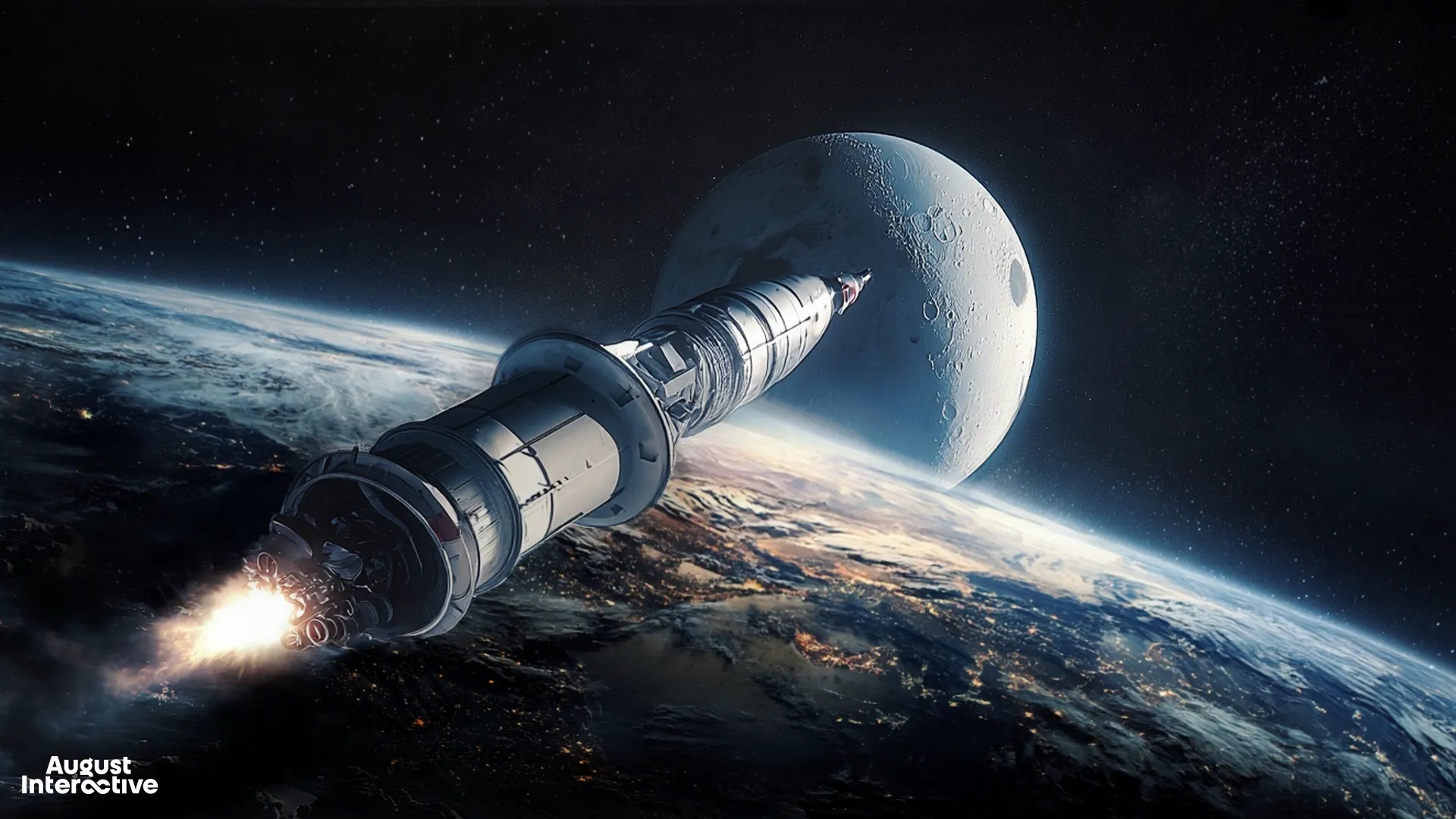
The human impulse to look up at the night sky and dream of what lies beyond has defined our species for millennia, but as we move closer to the mid-21st century, those dreams are rapidly transforming into concrete construction plans. At the forefront of this celestial transition is August Interactive, an innovative video game studio nestled in the tech-forward ecosystem of Seattle, Washington. In a remarkable collaboration with NASA, the studio is currently developing a groundbreaking educational multiplayer experience titled Moonbase Y. Far from a simple escapist fantasy or a superficial space-themed novelty, this cooperative exploration game is being built as a bridge between terrestrial teenagers and the actual future of off-world colonization. Designed specifically for players aged thirteen and older, Moonbase Y places its audience directly into the shoes of the architects, engineers, planners, and logistics experts who will be tasked with orchestrating humanity’s permanent return to the lunar surface. The game carefully structures this journey into a series of highly collaborative milestones, beginning with the monumental task of breaking through the bounds of Earth’s atmosphere and executing a safe, controlled descent onto the unpredictable, dust-choked lunar terrain. By grounding every aspect of the experience in authentic, raw scientific data and high-resolution imagery provided directly by NASA, August Interactive is ensuring that players are not merely playing a game, but are actively engaging with the natural physics, geological challenges, and physical realities of the Moon. Once their boots are metaphorically dirtied by virtual lunar regolith, players must work in unison to gather resources, research life-support technologies, build self-sustaining habitats, and devise highly creative, cooperative solutions to the relentless environmental hazards that will inevitably confront any off-world settlement.
To truly appreciate the depth of Moonbase Y, one must look at how it transforms the traditional gaming landscape of resource-gathering and crafting into a simulator of genuine scientific discovery and technological innovation. The project departs radically from the standard tropes of mainstream survival titles by insisting that every tool, habitat wall, oxygen recycler, and power grid constructed within the game operates on principles that could theoretically function in the real world. This rigorous scientific integration is particularly crucial when viewed through the lens of NASA’s ambitious long-term timeline, which aims to establish a permanently inhabited, functional lunar base by the year 2040 as a vital stepping stone for eventual crewed missions to Mars. According to August Interactive’s Chief Executive Officer, Kristin Wood, achieving this near-future reality will require the development and perfection of approximately 187 entirely new, highly specialized technologies that do not currently exist. Rather than attempting to crowdsource the actual engineering of these complex mechanisms through the game itself, Moonbase Y is designed to cultivate the foundational cognitive, soft-skill, and technical methodologies necessary to solve such monumental puzzles. It is an immersive educational laboratory where the passive, textbook-heavy learning of the past is replaced by active, hand-on experimentation. By confronting players with the actual problems of cosmic radiation, extreme temperature fluctuations, power distribution limits, and resource scarcity, the game forces them to think like interdisciplinary systems engineers, learning how to balance fragile life-support systems with the logistical realities of transport and material limitations on a barren world.
At the heart of this ambitious project is a profound philosophy of “radical optimism,” spearheaded by the studio’s Chief Experience Officer, Sarah Kneller, who firmly believes that the generation currently sitting in middle school classrooms will be the very individuals who live, work, and thrive on the lunar surface. In a contemporary media landscape saturated with bleak, post-apocalyptic, and deeply cynical representations of the future, August Interactive has made a deliberate, conscious decision to steer in the polar opposite direction. Kneller notes that while it is incredibly easy for the entertainment industry to market a terrifying, dystopian vision of tomorrow, such narratives can induce a sense of paralysis and despair in young minds. Moonbase Y serves as an antidote to this cultural malaise, presenting the formidable challenges of space exploration not as a terrifying prelude to doom, but as an exciting, collaborative, and entirely solvable puzzle that invites participation from every corner of society. The game’s emotional design ensures that while failure is a frequent and natural outcome of complex engineering, it is never treated as a final, discouraging “game over” screen; instead, failure is reframed as an indispensable step in the iterative scientific process of learning, adapting, and trying again with superior knowledge. Crucially, the game is built to show young players that contributing to humanity’s greatest endeavors does not require them to be hyper-specialized rocket scientists from day one. Whether a player’s natural talents lie in the cold calculations of mathematical optimization, the creative spatial organization of architectural drafting, or the vital social work of team coordination, communication, and emotional leadership, Moonbase Y creates an environment where every single skillset is validated, valued, and shown to be an essential piece of a grander, collective human triumph.
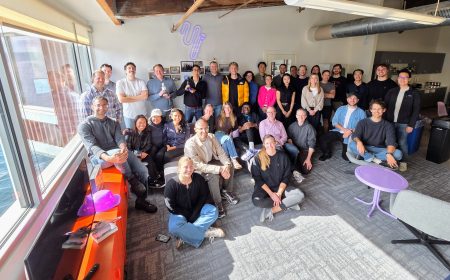
This deeply humanistic and scientifically rigorous approach to game design is a direct reflection of the eclectic, uniquely accomplished leadership team driving August Interactive forward. Chief Experience Officer Sarah Kneller brings to the studio a wealth of experience from her highly successful decade-long tenure at Valve Software in Bellevue, Washington, where she served as an executive producer overseeing the massive, high-pressure competitive landscape of the globally renowned Dota 2 esports circuit before co-founding August Interactive in 2023. This background in managing highly complex, multi-layered online ecosystems is perfectly complemented by the distinct background of CEO Kristin Wood, a former CIA officer who smoothly transitioned into the technology sector as an entrepreneur, bringing with her a sophisticated understanding of geopolitical strategy, operational resource management, and the vital role of human intelligence and collaboration under pressure. To ground the gameplay loop in authentic human psychology and cognitive science, the team enlisted Chief Research Officer Mike Ambinder, a former experimental research scientist from Valve whose career has focused heavily on the intersection of biological feedback, behavioral psychology, and interactive game design. Rounding out this powerhouse leadership group is Creative Director Jon Pierre Yousef, a highly respected visual artist based in Florida whose previous contributions to massive cultural touchstones like Fortnite and Call of Duty ensure that Moonbase Y will possess the visual grandeur, polished player feedback loops, and engaging mechanical design necessary to capture and retain the attention of a highly sophisticated, modern gaming audience.
While Moonbase Y remains the studio’s highly anticipated long-term endeavor, August Interactive has already begun demonstrating its unique philosophy regarding player mastery, skill development, and community support through its debut product, Spire, which officially launched on July 21. Described as a sophisticated “performance intelligence layer,” Spire is designed to run seamlessly alongside highly competitive, mechanically demanding multiplayer games such as Rocket League and Dota 2, where the barrier to entry can often feel incredibly daunting and hostile to newcomers. By utilizing advanced behavioral and psychological metrics, Spire carefully analyzes a user’s specific, highly individual style of play, pinpointing physiological and cognitive bottlenecks, repetitive strategic errors, and unhelpful mechanical habits before offering personalized, constructive, and highly actionable suggestions to help the player improve. This innovative software aims to entirely demystify the arduous onboarding process that so frequently plagues competitive gaming, transforming what has traditionally been a frustrating, isolating trial-by-fire into an inclusive, highly encouraging educational journey. The intellectual and technological infrastructure that August Interactive has built for Spire serves as a direct conceptual blueprint for Moonbase Y, reinforcing the studio’s core belief that games should not be designed to gatekeep knowledge, but should instead serve as compassionate, highly responsive engines of human growth, empowerment, and self-actualization.
Ultimately, the creation of Moonbase Y highlights a profound cultural shift in how we prepare our youth for the looming realities of the next century, acknowledging that the future of space exploration will not be defined by solitary, heroic figures operating in isolation, but by diverse, global communities working in absolute harmony. As the game continues its quiet, meticulous journey through active production, the team at August Interactive remains steadfastly focused on the long-term impact of their work, recognizing that the thirteen-year-olds who eventually download Moonbase Y will be precisely the age of mature mission commanders, lead engineers, and habitat technicians when the year 2040 arrives. By providing these young minds with the virtual keys to a lunar colony today, the studio is doing far more than keeping them entertained on a rainy afternoon; they are actively nurturing the collective imagination, building the collaborative resilience, and instilling the deep, unshakable optimism that will be required to take our species permanently off the earth. In a world frequently divided by terrestrial conflicts and clouded by ecological uncertainty, Moonbase Y shines brightly as a digital lighthouse, reminding us that when human beings combine their diverse talents, embrace the constructive nature of scientific failure, and look toward the stars with hope rather than fear, there is truly no horizon we cannot reach.