


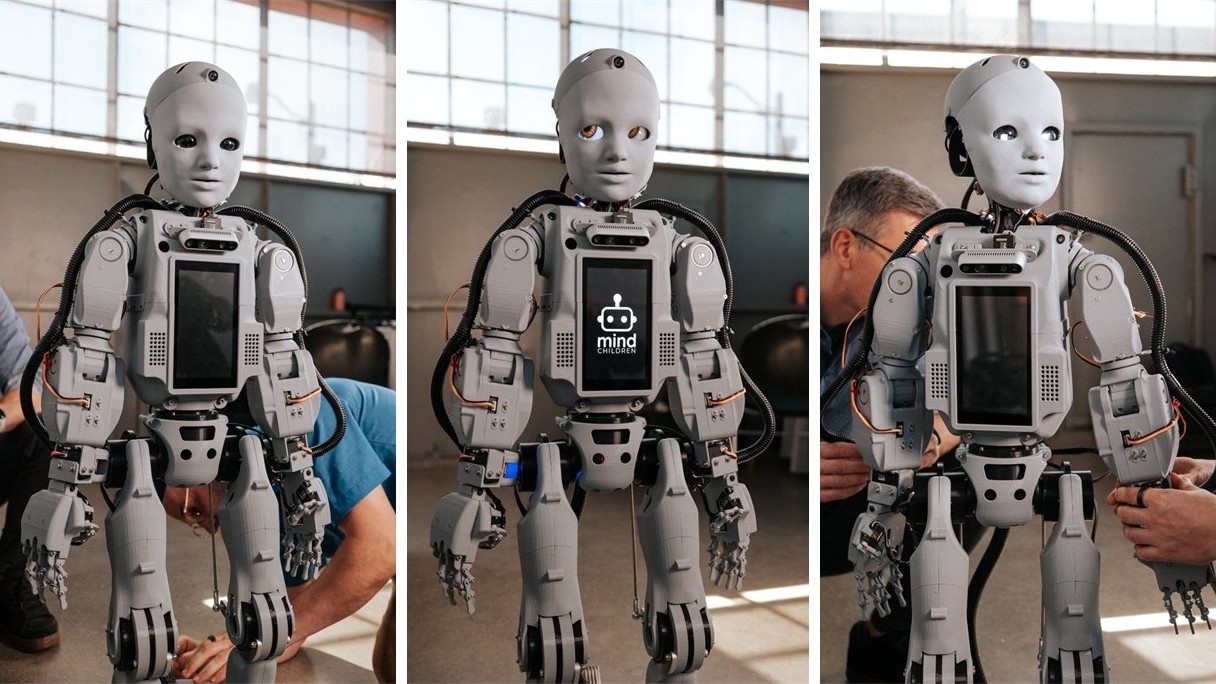
At a bustling robotics exhibition in the heart of New York City, a young girl, overwhelmed by the crowd and the unfamiliar hum of technology, instinctively shrank back to hide behind the protective fold of her mother’s coat. Just a few feet away stood Codey, a three-foot-tall, child-sized humanoid robot with expressive digital eyes. Instead of presenting a cold, mechanical facade, Codey leaned slightly forward, noticed the child, and warmly complimented the colorful graphic on her shirt. Within moments, the invisible barrier of fear dissolved into pure wonder; forty-five minutes later, the little girl was still there, sitting cross-legged on the floor, enthusiastically explaining the entire, intricate plot of Disney’s Frozen to her new mechanical companion. This tender, quiet moment of connection is the foundational inspiration behind Seattle-area startup Mind Children Robotics. Founded by artificial intelligence pioneer Ben Goertzel, mechanical engineer Chris Kudla, and a dedicated team of innovators, the company designed Codey not to replace human presence, but to serve as a warm, responsive bridge over the widening chasms of social isolation. By combining modular, consumer-friendly physical design with cutting-edge open-source AI, they aim to produce a social robot with a planned price tag of under $10,000—a radical departure from the prohibitively expensive research platforms currently on the market, making empathetic robotics accessible to those who need them most.
The arrival of Codey comes at a pivotal turning point in global demographics, marked by what sociologists and public health officials increasingly describe as a devastating epidemic of loneliness. In the United States alone, rising burnout and low wages have triggered historic turnover rates among school teachers, while the senior care sector faces a looming catastrophe, with estimates projecting a deficit of at least nine million unfulfilled direct care jobs by the year 2031. Concurrently, nearly forty percent of older adults report feeling chronically isolated, a state of living that carries immense risks for physical and mental decline. To address this crisis, Mind Children has positioned Codey as a supportive ally—a “teaching assistant’s assistant” in overcrowded classrooms, a cheerful presence in quiet hospital corridors, or an attentive companion in senior living facilities reminding residents to take their medication while offering lighthearted banter. This effort is part of a growing international movement toward therapeutic robotics; in Japan, the fluffy, bio-feedback-enabled harp seal robot Paro has long been used to reduce stress and blood pressure in dementia patients, while South Korea has deployed thousands of Hyodol companion puppets to watch over isolated elders. Similarly, in America, senior citizens using Intuition Robotics’ ElliQ companion have reported profound reductions in loneliness, with many openly describing the device not merely as an appliance, but as an essential personal confidant, therapist, and life partner.
Structurally, Codey is a triumph of pragmatic, safety-first engineering designed specifically to avoid the “uncanny valley”—that unsettling psychological space where artificial figures look too close to human beings but feel unnervingly wrong. Moving smoothly on a wheeled base rather than complex, fall-prone legs, Codey’s current prototype is built from modular, 3D-printed parts that allow the team to achieve eighty percent of the premium physical functionality of conventional robots at a mere fraction of the manufacturing cost. Instead of prioritizing heavy labor tasks like lifting boxes or navigating treacherous terrain, the developers focused on the subtleties of human communication: eye contact, expressive gestures, head tilts, and vocal inflections. Under the hood, Codey’s conversational abilities are currently powered by OpenAI’s models, heavily reinforced with proprietary guardrails to keep interactions safe and age-appropriate. However, the true cognitive breakthrough is slated for this autumn with the integration of “OmegaClaw,” a sophisticated software system developed in partnership with SingularityNET. OmegaClaw combines the smooth reasoning of large language models with the logical structure of symbolic AI to grant Codey long-term, cumulative memory. This means the robot will no longer suffer from digital amnesia, beginning every conversation as a stranger; instead, it will remember a child’s favorite story, a senior’s family history, and past discussions over weeks and months, fostering a genuine sense of evolving, continuous friendship.
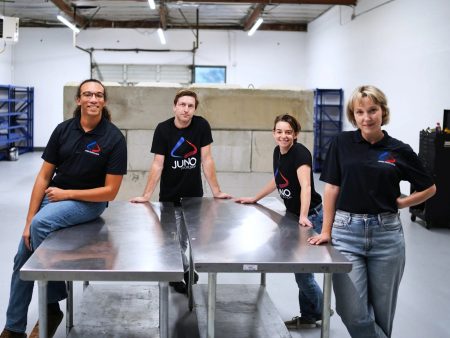
The visionary path of Mind Children is deeply intertwined with the colorful history of its co-founder, Ben Goertzel, a figure synonymous with the rise of modern artificial general intelligence (AGI). Before establishing this startup on Vashon Island near Seattle, Goertzel was the chief scientific mind behind Hanson Robotics, the Hong Kong-based creators of Sophia, a humanoid robot that captured global media attention, sparked fierce debates on robot citizenship, and occasionally drew criticism for sensationalizing AI capabilities. Seeking a more holistic, grounded approach to social robotics, Goertzel began recruiting brilliant local minds, including Kudla and engineer Nile Fahmy, initially to help repair and maintain Desdemona, a humanoid robot that lives with Goertzel and acts as the lead vocalist in his progressive rock band, Desdemona’s Dream. Their shared experiments blossomed in 2023 into Mind Children, an organization dedicated to the belief that while other tech giants are successfully teaching robots to walk and stack warehouse shelves, the world desperately needs robots that can laugh, comfort, and understand. Goertzel, a long-time advocate for the “Singularity”—the hypothetical future point where machine intelligence surpasses human capability—strives to ensure this rapid technological transition is decentralized and benevolent, working closely with organizations like SingularityNET and the OpenCog Hyperon project to keep the underlying intelligence open-source and democratically accessible.
Yet, the prospect of introducing artificial companions into the delicate lives of vulnerable populations raises profound ethical questions that society has only begun to grapple with. Learning scientists like Julie Carpenter, who has spent over two decades researching human-machine bonding, warn that there is no such thing as “neutral technology,” emphasizing that the ethical stakes of social AI in healthcare and education are infinitely higher than on a promotional talk show stage. There is a deep, unsettling worry about the psychological consequences when children or lonely seniors form deep emotional attachments to machines that mimic empathy but do not truly possess feelings or lived experiences. Furthermore, data privacy remains a significant hurdle; Clara Berridge, an associate professor at the University of Washington, points out that a substantial portion of older adults resist companion robots due to fears of surveillance, data harvesting, and the potential replacement of genuine human care with cheap digital substitutes. This skepticism is exacerbated by the absence of comprehensive federal data privacy laws in the United States, leaving consumers vulnerable to corporate overreach. In response, Mind Children emphatically guarantees that Codey’s design prioritizes absolute user privacy; all visual and auditory data are rigorously encrypted using the client’s private cryptographic keys before any cloud backup occurs, and the company’s business model depends on subscription software fees rather than selling user behavior profiles to advertising giants.
Mindful of these diverse sociological perspectives and regulatory landscapes, Mind Children is executing a highly strategic, phased global rollout. Recognizing that educational bureaucracies, school board budget constraints, and cultural anxieties will make the adoption of social robots in American classrooms a slow, multi-year conversation, the startup is launching its first major pilots overseas in South Korea. The East Asian nation boasts an incredibly rapid rate of AI integration and has established powerful, top-down initiatives to incorporate advanced technology within its public schools, aided by the company’s manufacturing partnerships and connections to the country’s Ministry of Education. Meanwhile, Nile Fahmy has recently completed a second, refined prototype named Joy in Seoul to support these educational pilots. For the American market, Mind Children plans to introduce Codey through lower-stakes, highly visible environments first, such as hotel lobbies, museums, and art galleries, where the robot can guide tours, answer questions, and ease the public into interacting with humanoid shapes. As they raise seed funding through community-focused platforms like WeFunder, the creators of Codey remain convinced that the transition to a hybrid human-robot society is inevitable. Through their work, they hope to prove that technology, when guided by empathy, safety, and a commitment to genuine connection, can help restore a sense of warmth to an increasingly isolated world.