


In the glitzy, fast-paced world of early 2000s technology, a humble and fascinating conversation took place backstage at a Seattle tech event that would come to define the slow-burning, relentless philosophy of Impinj. Standing next to Amazon founder Jeff Bezos, who was already on his way to transforming global commerce, Impinj co-founder Chris Diorio made a startingly audacious prediction: he told Bezos that while Amazon had a massive near-term opportunity, Impinj possessed a far greater long-term trajectory. Diorio’s wild confidence was rooted not in immediate market trends, but in a profound scientific breakthrough he had pioneered alongside his mentor Carver Mead at Caltech. Together, they had discovered a way to manipulate a transistor’s electrical properties post-manufacturing through a quantum-mechanical phenomenon called “impact-ionized hot electron injection”—a mouth-watering scientific mouthful that eventually yielded the company name “Impinj.” When Diorio relocated to the University of Washington’s computer science department under the enthusiastic advocacy of academic local champions like Ed Lazowska, the intellectual seeds for a computing revolution were officially planted in Pacific Northwest soil. Rather than chasing the hyper-accelerated timelines of Silicon Valley, Diorio and Mead relied on patient, homegrown Seattle venture capital, negotiating their initial fifteen-million-dollar funding round with Arch Venture Partners and Madrona during a long, scenic walking meeting through the leafy pathways of the University of Washington Arboretum.
With a bank account full of venture capital but lacking a definitive commercial blueprint, the fledgling Impinj team moved into a cramped, unglamorous office in Seattle’s University District to find their true calling. Led by newly hired CEO Bill Colleran, a collection of trusted engineering companions from Diorio’s defense-contracting past assembled to explore how their low-power quantum-semiconductor chips could solve real-world problems. Initially, they sets their sights on powering 3G wireless stations, cell phone radios, and even GPS units, only to realize that their technology was either mismatched for those industries or simply too small to compete with global tech giants. Their stroke of destiny arrived when they pivoted toward Radio-Frequency Identification (RFID), a young wireless tracking landscape that perfectly leveraged their chips’ ultra-low power consumption. When Walmart sent shockwaves through the global supply chain in 2003 by mandating that its top suppliers tag all shipping pallets with RFID, the Impinj team triumphantly high-fived, believing a massive public offering was just eighteen months away. Instead, they were hurtled directly into a devastating, billion-dollar industry hype cycle that ultimately collapsed under the weight of unformed global standards and immature products. As nearly every other cash-rich RFID competitor ran out of money and perished in the subsequent economic freeze, Impinj survived on sheer grit and the steadfast patience of local backers who understood that changing the physical world takes time.
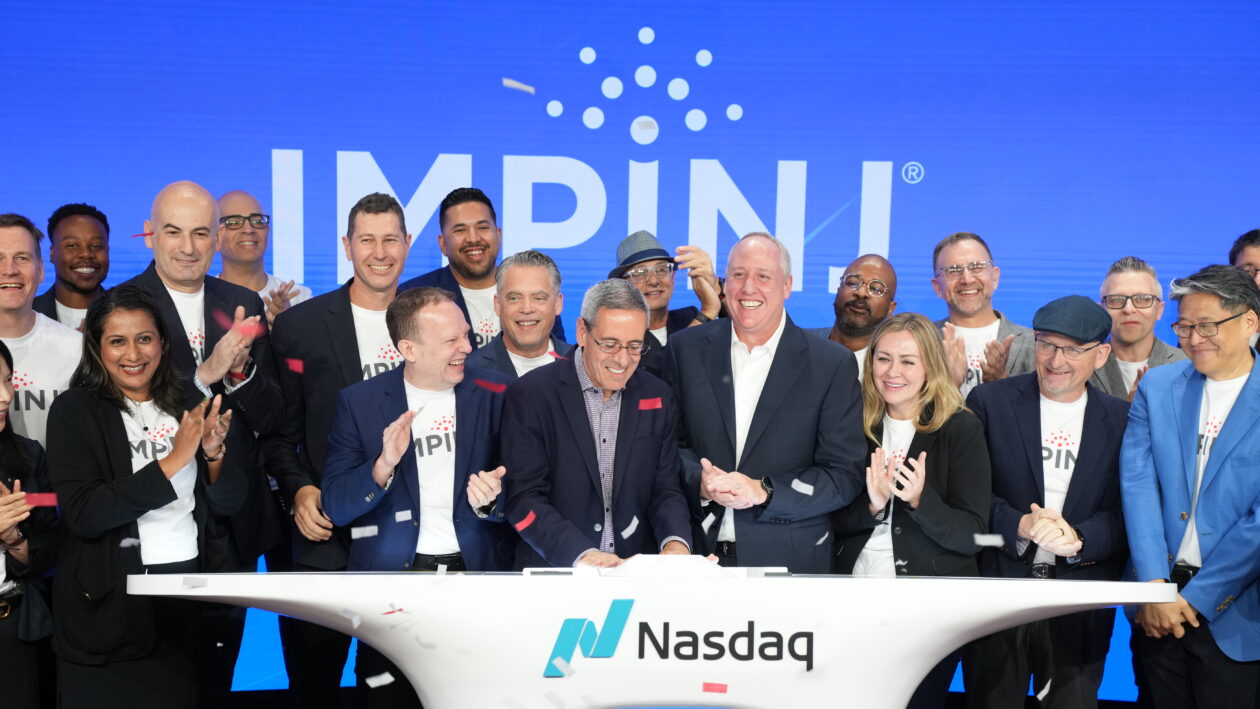
The painful, winding journey to a public listing took a staggering sixteen years from the company’s inception, demanding immense resilience from its creators. By 2010, the RFID industry had finally matured as retailers began tagging individual items rather than just bulk pallets, proving they could slash inventory errors and boost sales simply by knowing exactly what was sitting in their backrooms. When Bill Colleran stepped down in 2014 after fourteen years at the helm, Chris Diorio stepped out of the laboratory and into the CEO’s office, carrying the heavy responsibility of finding liquidity for investors who had been waiting nearly a generation. The road to the public market remained incredibly turbulent, interrupted by macroeconomic hurdles like the global market panic surrounding the historic Brexit vote in Europe. When Impinj finally debuted on the Nasdaq on July 21, 2016, at a modest fourteen dollars a share, the late Seattle venture icon Tom Alberg made the highly unusual and deeply symbolic decision to invest an additional half-million dollars of his own money, signaling to Wall Street that this was a company built to go the distance. Yet, in a beautifully human twisting of fate that Diorio still recalls with a laugh, the final negotiation with investment bankers on the eve of the IPO ran so late into the night that he and his CFO, Evan Fine, missed their flight out of Chicago’s O’Hare airport, leaving the company’s Chief Technology Officer to ring the iconic opening bell in New York without them.
The honeymoon period of public company life was brutally brief, giving way to an era that Diorio recalls as the darkest and most emotionally draining chapter of his professional life. Following the IPO, global demand for RFID surged, but the thinly capitalized Seattle chipmaker struggled to scale its inventory operations fast enough to satisfy hungry retail markets. Sensing vulnerability, the Dutch semiconductor giant NXP—a corporate titan fifteen times the size of Impinj—launched an aggressive predatory pricing campaign that stripped away key customers, causing Impinj’s wildly successful stock to crater by forty-seven percent in a single devastating day in early 2018. The company was forced to lay off nearly ten percent of its beloved workforce, and a painful internal investigation triggered by a former employee’s complex accounting complaint dragged them into a regulatory nightmare of missed SEC deadlines and threatened Nasdaq delistings. For agonizing months, executives could not trade stock, millions of dollars were funneled to silent outside lawyers, and Diorio had to lead a demoralized team while completely in the dark regarding the final outcome of the probe. Yet, the crisis forged an unbreakable internal bond; the audit ultimately cleared the company of any wrongdoing, and a emboldened Impinj went on the offensive by launching a massive patent infringement lawsuit against NXP that resulted in a triumphant, multi-million-dollar cash settlement and ongoing royalties.
Today, Impinj stands as the undisputed king of its domain, commanding an incredible fifty-one percent of the global market for what is now known as “RAIN RFID”—a term Diorio himself helped coin to describe battery-free, ultra-low-cost microchips that can be read wirelessly from thirty feet away at a blistering speed of one thousand items per second. Operating from their bustling corporate headquarters in Seattle, with a specialized engineering and test laboratory nestled on Beacon Hill, the company’s incredibly tight-knit team of just four hundred and fifty employees has successfully outmaneuvered global conglomerates. Their tiny silicon chips, which are smaller than a single grain of sand and cost mere pennies to produce, have been seamlessly embedded into more than one hundred and sixty billion physical objects worldwide, tracking everything from airline luggage and life-saving pharmaceutical vials to retail clothing. While early consumer privacy concerns initially threatened to derail the industry in the mid-2000s, Diorio and his team defused those anxieties by keeping their tags strictly anonymous—carrying only identification numbers rather than tracking personal data—with future ambitions of engineering advanced cryptographic security to combat the massive global trade in counterfeit goods. Though their heavy reliance on the volatile retail apparel market has occasionally caused dramatic swings in their stock price and financial sheets, Diorio maintains that clothing is merely a tiny drop in an incredibly vast bucket.
Looking to the future, Diorio views the current achievements of Impinj not as a final destination, but as the very beginning of a “Pacific-sized” blue ocean of untapped technological potential that will redefine how humanity interacts with physical matter. The company is actively moving beyond manual inventory practices by deploying autonomous ceiling-mounted readers, transforming every tagged item into a constant stream of clean, highly accurate data feeding directly into artificial intelligence models. This integration of physical intelligence and machine learning is paving the way for revolutionary advancements in the global food sector, where American grocery giants like Walmart and Kroger are piloting RFID programs to track expiration dates in real time, drastically reducing environmental food waste by discounting items before they spoil. At the same time, European supermarkets are using Impinj’s technology to pioneer automated checkout systems where entire baskets of groceries are read and paid for instantly, completely removing the need for manual scanning. Returning to New York City to finally ring the Nasdaq opening bell in person on the tenth anniversary of their IPO, Diorio reflected on the wild, twenty-five-year journey with immense humility and gratitude for the long-term support of the Seattle community. For him, the story of Impinj has never been about the triumph of a single piece of science, but about a dedicated, stubborn team of human beings who looked at a seemingly impossible problem and chose to stick together and solve it over a quarter-century.